Colonialism

The good, the bad and the grotesque: the mind-blowing diversity of parasites

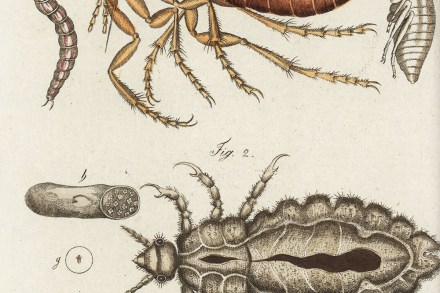
The oldest surviving sentence ever written in the first alphabet is inscribed on an ivory comb found in the ruins of the Canaanite city of Lachish in what today is Israel. Dating back around 3,700 years, it offers the owner a blessing of sorts: “May this tusk root out the lice of the hair and the beard.” As Dino J. Martins points out in his marvelously entertaining tour of the netherworld of parasites, the comb (the design of which is almost indistinguishable from the plastic ones we use for the same purpose today) speaks of the depth of the human relationship with lice – creatures that have traveled with us, fed on us and multiplied with us for millions of years. Martins is the perfect guide.

The good, the bad and the grotesque: the mind-blowing diversity of parasites

The oldest surviving sentence ever written in the first alphabet is inscribed on an ivory comb found in the ruins of the Canaanite city of Lachish in what today is Israel. Dating back around 3,700 years, it offers the owner a blessing of sorts: ‘May this tusk root out the lice of the hair and the beard.’ As Dino J. Martins points out in his marvellously entertaining tour of the netherworld of parasites, the comb (the design of which is almost indistinguishable from the plastic ones we use for the same purpose today) speaks of the depth of the human relationship with lice – creatures that have travelled with us, fed on us and multiplied with us for millions of years. Martins is the perfect guide.

The Welsh government’s mad decolonization plans

A teenager in Wales might want to play video games, hang out with friends or even, dare I suggest it, read a book. The Welsh government, however, would prefer they put on a headset and confront their “unconscious bias.” It has created a £1.2 million metaverse, the “world’s first anti-racist virtual world,” to teach Welsh teens about their “white privilege.” But this is only one element of an official commitment to end racism by 2030. Not today, not yesterday, but a specific year in the future. The idea for an Anti-racist Wales Action Plan – ArWAP – was born following fervor around the Black Lives Matter movement, and an official plan followed in 2022.

arwap

Why is the New York Times celebrating the slave-trading Vikings?

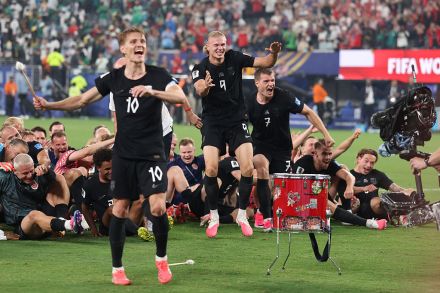
Norway plays the Ivory Coast tomorrow afternoon in the first knockout phase of the soccer World Cup, and one suspects the New York Times will be backing the Norsemen. The Gray Lady has gone gaga for Norway’s "Viking Row," a synchronized routine where fans mime the rowing of a Viking longboat to the bang of a drum. It’s caught on among the Norwegian players as well as politicians back in Norway, who performed the row in parliament last week. For the last two weeks the NYT has been publishing breathless pieces about the zany Norwegians and their Viking antics. “The 'Viking Row' is in full flow” was one headline on June 18; five days later they described how it "has taken the World Cup by storm." And their editorial office from the sound of things.

vikings

The fertile chaos of Albert Camus’s mind

From our UK edition

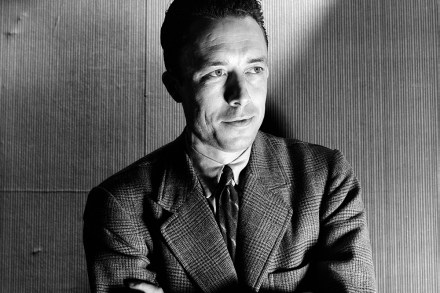
To read Albert Camus’s Notebooks – comprehensive, newly translated and expertly annotated by Ryan Bloom – is to enter the engine room of the writer’s mind and to glimpse its complex workings and components stripped back to their essentials. They comprise an intellectual and spiritual autobiography, not an account of his life. But of course they contain seductive vignettes lifted straight from experience among the aphorisms, observations, drafts and schemas for writings, stitched together in a collage that reflects a remarkably agile mind in constant motion. The Notebooks bring to mind the fertile chaos of an artist’s studio.

The case for MAGA imperialism

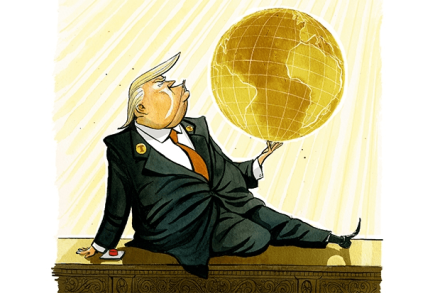
Empire has always been part of the American tradition. We are a sequel state to the greatest empire in world history. Our period of colonial tutelage under that empire taught the lessons of legitimate territorial expansion against French and Spanish rivals. Our continental aggrandizement after independence was necessary. Later overseas expansion, including periods of imperial apprenticeship in places such as Liberia, the Philippines and Panama, was further evidence of our colonial métier. Like it or not, imperialism and colonialism are congenital to the American experiment. This has been the case since 1779, when the Continental Congress branded a proposal to limit westward expansion an “intolerable despotism.

Imperialism

What a slippery, hateful toad Fred Goodwin was

From our UK edition

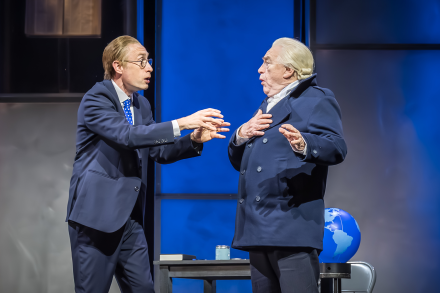
Make It Happen is a portrait of a bullying control freak, Fred Goodwin, who turned RBS into the largest bank in the world until it came crashing down in 2008. Fred the Shred’s character makes him a tough subject for a drama. His morning meetings were called ‘morning beatings’ by terrified staff. He ordered executives to pitch him an idea in the time it took him to eat a banana. Inciting arguments between staff amused him and he once sacked an employee for saying ‘I tried’ instead of ‘I succeeded’. He was obsessed with colours and fabrics and he personally oversaw the design of the carpets and even the handwash at the bank’s headquarters. But James Graham’s play offers us very few clues about the origins of his character flaws.

The crimes of Cecil Rhodes were every bit as sinister as those of the Nazis

From our UK edition

This is a brave and learned book. I would recommend it to anyone interested in the history of Africa; who has taken sides in the recent quarrel about ‘Rhodes Must Fall’, in Oxford or other parts of the world; or who wants to entrench themselves in contrary positions in our apparent ‘culture wars’. It is the biography of a vicar’s son, born in Bishop’s Stortford, Hertfordshire in 1853, who went as a teenager to Africa to join his elder brother who’d bought a plot of land in Natal. One day, walking past a stream by the side of a field, he noticed some pebbles gleaming especially brightly. They were diamonds. By the time Cecil Rhodes enrolled as an undergraduate at Oriel College, Oxford, aged 20, he had an annual income of £23,000 – the equivalent of about £1.

The weakening case against museum restitution

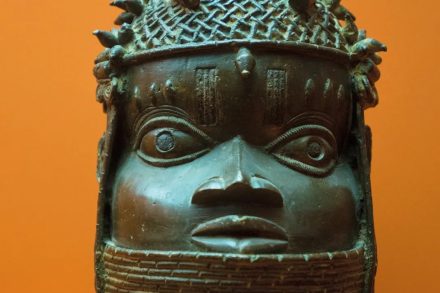
When passions are aroused, all of us are liable to overstate our case. Dan Hicks, a curator at Oxford’s extraordinary Aladdin’s Cave of anthropology, the Pitt-Rivers Museum, is perhaps a case in point. A Swedish academic, Staffan Lunden, has convincingly argued that Hicks is guilty of "distortion" when writing about the British raid on Benin in 1897, which brought several thousand objects, including finely wrought brass statuettes, to museums across the world. Hicks published his uncompromising views in 2020 in a prize-winning book, The Brutish Museums: The Benin Bronzes, Colonial Violence and Cultural Restitution.

restitution

Freedom fighters of the ‘forgotten continent’

From our UK edition

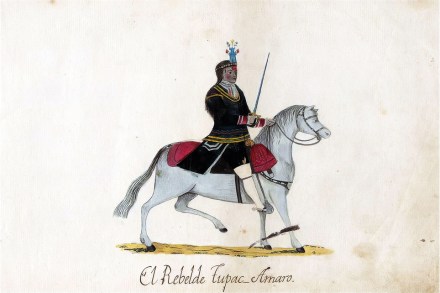
On 18 May 1781, Tupac Amaru II’s rebellion came to an abrupt and grisly end. Seized by Spanish forces, the Peruvian muleteer-turned-popular-revolutionary knew the game was up. Still, he refused to go quietly. After Tupac’s captors’ horses failed to wrench off his limbs, the executioner reached for his axe. ‘You kill only me,’ legend has Tupac shouting as the blade descended. ‘But tomorrow I will return as millions.’ As Laurence Blair’s Patria assiduously demonstrates, death rarely has the last word in the ‘forgotten continent’ of South America. In the case of Tupac, his narrative of a ‘Peru for Peruvians’, free from colonial oppression, would later be resurrected in radical leftist movements from Uruguay to Venezuela.

And still the colonial memoirs keep coming…

From our UK edition

Since the 1990s there has been a spate of post-colonial memoirs written by white Africans. The best was Rian Malan’s My Traitor’s Heart, a poetic, guilt-stricken Afrikaner confessional published on the eve of Nelson Mandela’s release from prison. Two others of note were by Rhodesian/Zimbabwean writers: Douglas Rogers’s The Last Resort and Alexandra Fuller’s Don’t Let’s Go to the Dogs Tonight. Both were beautifully written, funny and full of original insights. Peter Godwin, another Rhodesian/Zimbabwean, is the most prolific of all, and Exit Wounds is now his third memoir. These writers, all beneficiaries of an excellent British-supervised education system, can really tell a tale.

Mother of mysteries: Rosarita, by Anita Desai, reviewed

From our UK edition

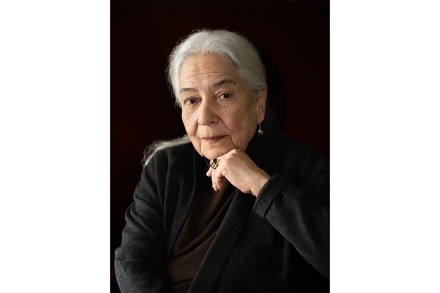
There are other reasons beyond shortage of time (the acclaimed Indian novelist Anita Desai has just turned 87) to write a novella; the genre is as attractive and prestigious as it is fashionable. The deceptively slender format can briskly encompass whole worlds and histories, or alternatively, like the short story, depend on strict excisions and limitations for its effects. Rosarita does both. A young woman, Bonita, addressed as ‘you’ throughout, is taking time out from her Spanish-language studies and relaxing on a park bench in the historic centre of San Miguel de Allende, Mexico. Education has been her means of escape from the domineering family structure back in India that crushed her mother.

Cold War spying had much in common with the colonial era

From our UK edition

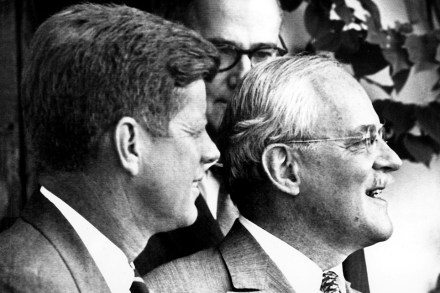
The CIA, this fascinating new history notes, is ‘possibly the most infamous organisation on the planet’. Its hidden hand is often presumed to be everywhere, pulling the strings. That’s pretty impressive, given that it only has, by most estimates, around 20,000 employees. (The exact number is, naturally, classified.) At the same time, it’s routinely portrayed as comically inept – a bunch of ‘clowns’ and ‘a refuge for Ivy League intellectuals’, as Richard Nixon put it. This has led to a dichotomy in CIA histories. On the one hand it is depicted as an all-powerful evil force, responsible for many of the world’s ills since its foundation in 1947.

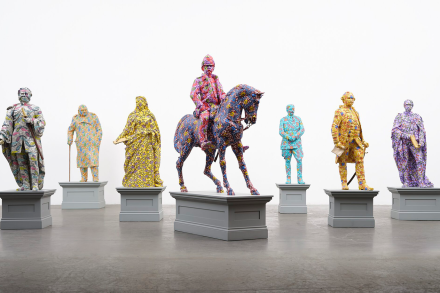
Beguiling: Yinka Shonibare, at the Serpentine Galleries, reviewed

From our UK edition

More than seven centuries ago, the medieval cartographer Richard of Haldingham created Hereford Cathedral’s Mappa Mundi; I say ‘created’ because when he drew his map it was largely a work of the imagination. Its terra incognita is populated with bizarre creatures born of the fever dreams of early travel writers: his Africa is inhabited by Monocules, one-eyed, one-legged men who use their single foot as a parasol, and his Asia is roamed by the Bonnacon, a bull-like creature with inward-curling horns whose only defence is his projectile faeces.

How the Church of England patronises African Christians

From our UK edition

17 min listen

In this episode of Holy Smoke, I'm joined by The Spectator's features editor William Moore, who asks in this week's issue of the magazine whether the Church of England is 'apologising for Christianity'. A report by the Oversight Group, set up by the Church Commissioners to make reparations for African slavery, not only wants to see unimaginable sums transferred to 'community groups' – its chair, the Bishop of Croydon, thinks a billion pounds would be appropriate – it also deplores the efforts of Christian missionaries to eradicate traditional religious practices. But, as Will's article points out, those traditional practices included – at their most extreme – idol-worship, twin infanticide and cannibalism.

Is the C of E about to say sorry for Christianity?

From our UK edition

Is the Church of England going to apologise for Christianity? A report by something called the Oversight Group has declared that the Church should say sorry publicly, not just for profiting from the evils of slavery (through investment in the South Sea Company) but for ‘seeking to destroy diverse African traditional religious belief systems’. And having apologised, it recommends the Church ‘reach beyond theological institutions’ and ‘enable all Africans to discover the varied belief systems and spiritual practices of their forbears and their efficacy’. What would such an apology say about the Ugandan Martyrs executed in the 1880s by King Mwanga II?

I was dreading this show – how wrong could I be: Entangled Pasts, at the Royal Academy, reviewed

From our UK edition

In the wake of the Fitzwilliam Museum’s exhibition Black Atlantic about its founder’s ties to the slave trade comes the Royal Academy’s Entangled Pasts, less of a mea culpa than an examination of conscience by an institution which, although hailed by its first president Sir Joshua Reynolds as an ‘ornament’ of Empire, was innocent of direct links to slavery.

The problem with westerners seeking oriental enlightenment

From our UK edition

Call it a prejudice if you like. Living in Japan in the 1970s, I had a slight aversion to a particular type of westerner. He – for it was mostly a he – usually lived in Kyoto, sometimes wore a kimono and liked to sit in ancient temples chasing after that presumably blissful moment of enlightenment, awakening, satori, or whatever one wishes to call it. These seekers were less interested in Japan as a society of human beings. They wanted to float in higher spheres. As Christopher Harding explains in The Light of Asia, the Zen adepts, the Buddhist chanters, the rock-garden worshippers, the kimonoed fools (in my no doubt blinkered eyes) were part of a long western tradition. He identifies two ancient western perceptions of the ‘East’, by which he really means India, China and Japan.

A treatise on greed: The Vaster Wilds by Lauren Groff reviewed

From our UK edition

Lauren Groff writes to alleviate her angst about aspects of life she finds hard to confront. Climatic disaster, misogyny, spousal death, flawed utopias and pandemics have all fuelled the plots of books as disparate as Fates and Furies, her 2015 contemporary two-hander about marital verisimilitude, and Matrix, which features a 12th-century feminist abbess based on the little-known poet Marie de France. Yet neither is a bleak read; indeed, Barack Obama selected Fates and Furies as his 2015 pick.

Our great art institutions have reduced British history to a scrapheap of shame

From our UK edition

Let’s indulge in some identity politics for a second: I am from Hong Kong, born as a subject of the last major colony of the British Empire, minority-ethnic, descended from Chinese refugees, now living here in exile. This summer, both the National Portrait Gallery and Tate Britain are presenting new displays that are meant to reflect the ‘inclusive’ and ‘diverse’ identities of Britain. Supposedly, I fit nicely among their target audience. In reality, as an immigrant looking to be included in this nation, I am perplexed by my visits.