Climate change

Yes, this is England’s hottest July day ever. But this tells us nothing about global warming

From our UK edition

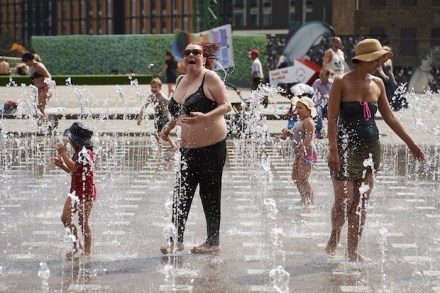
If you were deliberately trying to obtain a record high temperature reading an international airport would be a good place to take your thermometer. With huge concrete aprons and planes spewing out large quantities of hot air, airports have a microclimate of their own. That is one reason not to get excited by today's record July temperature of 98 degrees Fahrenheit (36.7 Celsius) measured at Heathrow. But there is another very good reason why the familiar clattering of broken weather records does little to reinforce the narrative of climate change. There are four countries in the UK, 12 months of the year and 4 main records to beat: hottest, coldest, wettest and driest.

The Spectator’s notes | 25 June 2015

From our UK edition

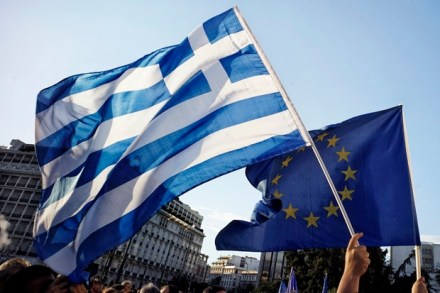
People write about ‘Grexit’ and ‘Brexit’ as if they were the same, but they need not be. Grexit is about leaving the euro. Brexit is about leaving the EU. It seems, however, that the Greeks fear that leaving the euro would mean leaving the EU, and so feel paralysed. It simply is not clear what the true situation is. Although Britain has a specific opt-out (as does Denmark), for the other member states, euro-membership is, after a preparatory period is completed, an obligation. Does this mean that, once in the euro, an EU member state cannot leave it? If so, then William Hague’s famous phrase likening it to ‘being in a burning building with no exits’ is exact.

Earn as you burn: the green energy offer that saved the monks of Pluscarden

From our UK edition

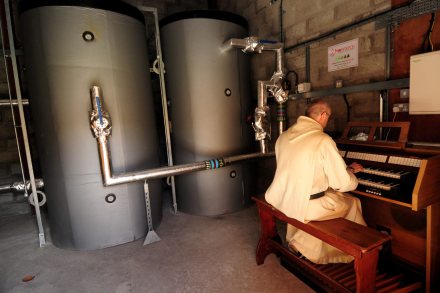
Pluscarden Abbey, just outside Elgin in northeast Scotland, is one of the most beautiful places in Britain. But to those who have visited in winter over the years, it has also felt like one of the coldest. After the war, when Benedictine monks arrived to restore what was a medieval ruin they slept with no roof, let alone heating. Then came the paraffin burners, which gave the monks a choice between freezing and asphyxiation. Central heating arrived in 1980 (it’s needed, if your day starts with prayers at 4.30am) but it was used sparingly. But when I went to visit last month I found a miracle had happened. There is a biomass boiler – pictured, above – which means they can not only afford to heat the place, but actually make a profit in so doing.

Oh God, don’t let the Pope be a climate fanatic

From our UK edition

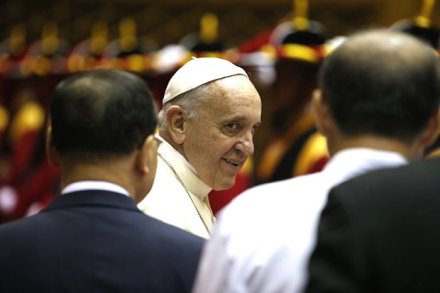
In his latest encyclical Pope Francis will apparently describe global warming as a ‘major threat to life on the planet’. If the leaked reports are accurate, his Holiness is absolutely right. Here are some examples of the havoc ‘global warming’ has wrought in the past decade: Honduras:US-backed security forces implicated in the killing of more than 100 peasant farmers involved in disputes with palm-oil magnates. Kenya: Teenage boy shot in February this year while protesting against a ‘wind park’ in Nyandarua. Mt Elgon National Park, Uganda: According to a newspaper report, more than 50 locals killed by park rangers and 6,000 evicted to make space for a ‘carbon offset’ plantation.

The Pope and climate change: Francis is slapping his conservative critics in the face

From our UK edition

Pope Francis's encyclical on the environment comes down firmly on the side of the global warming consensus/lobby (delete according to taste) and is a slap in the face to climate sceptics of every hue. Thwack! It's very much this Pope's style. Laudato si' says several important things about climate change. Here's the Catholic Herald's summary, based on the infamous leak: According to a translation by the Wall Street Journal, the Pope says there is a 'very consistent scientific consensus' that we are in the presence of 'an alarming warming of the climatic system'. He writes that there is an 'urgent and compelling' need for policies that reduce carbon emissions, such as 'replacing fossil fuels and developing sources of renewable energy'.

This is Leveson’s legacy: a great new way for bullies to muzzle the press

From our UK edition

One of the fundamental principles of English common law is that you are innocent until proven guilty. And rightly so, for imagine how unfair it would be if any old loon with an axe to grind had only to lodge a trumped-up complaint with the relevant authorities in order to have you punished for no reason whatsoever. Actually, though, this cruel and capricious system exists in Britain.

David Cameron must now lead a green Conservative government

From our UK edition

Those on the left tend to think that British Conservatism is a derivative of US Republicanism. But environmental policy shows that it’s a far more pragmatic mix. The latest Conservative manifesto encompasses George W Bush’s marine conservation ambition and Obama’s selective interventions to raise the pace of clean technology innovation.  This partly reflects the fact that the environment is still a largely non-partisan issue in British politics, but also that Cameron has protected discreet space for Conservative modernisers to bring forward new green ideas. As one of them I’m pleased with the progress we’ve been able to make.

Diary – 28 May 2015

From our UK edition

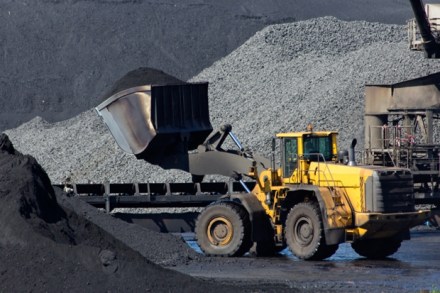
Martin Williams, former head of the government’s air quality science unit, has declared that the reason we have a problem with air pollution now is that ‘policy has been focused on climate change, and reducing CO2 emissions, to the exclusion of much else, for most of the past two decades. Diesel was seen as a good thing because it produces less CO2, so we gave people incentives to buy diesel cars.’ Yet another example of how the global warming obsession has been bad for the environment — like subsidising biofuels, which encourage cutting down rainforests; or windfarms, which kill eagles and spoil landscapes; or denying coal-fired electricity to Africa, where millions die each year from the effects of cooking over smoky wood fires. Greens are too hard on coal.

My part in a masterpiece of political correctness

From our UK edition

Damien Hirst, Grayson Perry, James Delingpole: all winners of major art prizes. I was awarded mine last week by Anglia Ruskin University (formerly Anglia Polytechnic) which I think is a bit like Cambridge (it’s in the same town), though bizarrely its excellence has yet to filter through to the official UK uni rankings, where it’s rated 115th out of a list of 123. Anyway, the point is, I won. Sort of. I ‘won’ this extremely important prize in the way that Michael Mann, the shifty climate scientist, has been known to claim he ‘won’ the Nobel prize when it was awarded to the IPCC. That is, the prize wasn’t handed to me personally but I did play my part. What happened was this.

Diary – 30 April 2015

From our UK edition

I have escaped this rather depressing election campaign by retreating to my home in la France profonde — to be precise, in Armagnac, in the heart of Gascony. My only outing, from which I have just returned, was a brief visit to New York, travelling there and back in the giant Airbus 380. The purpose of the trip was to drum up US support for the thinktank I founded in 2009, the Global Warming Policy Foundation, and its campaigning arm, the Global Warming Policy Forum, in the company of our outstanding director, Benny Peiser. Thanks to the wonders of the internet, the GWPF has a global reach, and its international influence is growing.

Miliband country

From our UK edition

Imagine rural England five years into a Labour government led by Ed Miliband, and propped up by the SNP and perhaps also the Greens. If you can’t imagine, let me paint the picture for you using policies from their election manifestos and only a small amount of artistic licence. The biggest house-building programme in history is well under way, with a million new houses mainly being built in rural areas. Several ‘garden cities’ have sprung up in Surrey, Sussex and Kent, though in truth the gardens are the size of postage stamps. No matter, because having a big garden is a liability since right to roam was extended so that ramblers can walk across your lawn. Oh, and if you’re thinking of walking a dog, think again.

The tension in Labour’s energy policy between prices and decarbonisation

From our UK edition

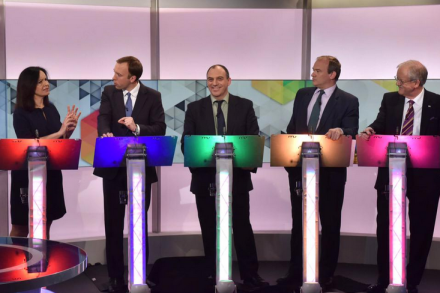
There has always been a tension in Ed Miliband’s energy policy between its aim to get prices down via the price freeze and its desire to decarbonise the electricity market. That tension was on full display in the BBC Daily Politics Environment Debate this afternoon, the first of a series of policy debates chaired by Andrew Neil. Flint had to clarify that the Labour manifesto wasn’t proposing the 100 per cent decarbonisation of the electricity market. She then had to dodge around the question of whether the green levies on energy bills would have to rise to make this happen. Matthew Hancock, the Tory spokesman for the debate, claimed that the Labour position would lead to a £96 increase in energy bills.

The Great European Disaster on BBC4 reviewed: propaganda worthy of Leni Riefenstahl

From our UK edition

My favourite bit of The Great European Disaster (BBC4, Sunday) was the lingering shot that showed golden heads of corn stirring gently in the breeze. It was captioned ‘Europe’. I cannot even begin to describe what a powerful effect this had on my subconscious. It was worthy of Leni Riefenstahl. Indeed, when I experimentally turned off the colour, it was Leni Riefenstahl. ‘Bloody hell!’ I thought to myself. ‘Suddenly it all makes sense.’ But my journey of discovery and enlightenment was only just beginning. I haven’t yet told you what the Ukrainian peasant said.

How long will it be before the climate forces us to change?

From our UK edition

This time last year, homeowners in Oxfordshire and Berkshire were recovering after storms had brought down power lines and blocked roads. Soon, power cuts were the least of their problems. The Thames flooded. In the south-west, the emergency services evacuated the Somerset Levels, and the sea wall at Dawlish in Devon collapsed — cutting the rail line to Cornwall. Political Britain burst its banks. Ed Miliband demanded action. David Cameron convened emergency committees. TV reporters brought us urgent reports as water lapped their boots, while newspaper correspondents named the guilty men. As in twenty20 cricket, you enjoy a quick intense hit with 24/7 news, then move on to the next game. The weather will not be an election issue.

Climate change, Bruegel-style

From our UK edition

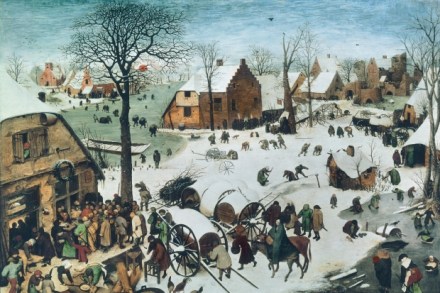
It is cold, but not in a cheery, robin-redbreast kind of way. The sky is slate blue; the sun, a red ball, is slipping below the horizon, figures carrying heavy burdens trudge across the frozen water. Yet this far- from-festive painting, ‘The Census at Bethlehem’ by Pieter Bruegel the Elder, is one of the earliest — perhaps the very first — to set the Christmas story in a northern winter landscape. There is no attempt to pretend that this is the Holy Land. The setting is a village in the southern Netherlands. The houses are brick-built, one with a northern European crow-stepped gable. In the foreground, a pig is being slaughtered, an improbable sight in Palestine. In his poem ‘Musée des Beaux Arts’ W.H.

Why don’t we hear about the beneficial side of climate change?

From our UK edition

Two headlines on successive days speak volumes about the scaremongering which is endemic in the way in which learned bodies disseminate information on climate science. Yesterday, the Royal Society published a report, Resilience to Extreme Weather, predicting that by 2090 four billion people around the world each year will be subjected to heatwave events, with dire consequences for the health of older people. This morning, the Office of National Statistics published its latest figures on ‘excess winter deaths’. They show that last winter there were 18,200 more deaths between December and February than would be expected during the three summer months. Dramatic though this sounds, it is the lowest recorded in 65 years.

Maria Eagle is talking nonsense about floods and climate change

From our UK edition

The Shadow Environment Secretary Maria Eagle headed off to Woking today, where she addressed an audience of environmentalists at WWF’s swanky new headquarters. Her speech, which was widely trailed, was full of silly season fare, and her superficial understanding of the climate debate shines through. Take this for example: ‘The Met Office, the Committee on Climate Change and the overwhelming majority of the scientific community all tell us that last winter’s floods are consistent with the projected consequences of climate change.’  ‘Consistent with’ is one of those gloriously weasel phrases that the more disreputable kind of climate scientist likes to use when speaking to politicians.

Letters: Lord Lawson is not banned from the BBC, and Wales is wonderful

From our UK edition

No ban on Lawson Sir: You write that the BBC ‘has effectively banned’ Lord Lawson from items on climate change unless introduced with ‘a statement discrediting his views’ (Leading article, 12 July). There’s a lot of muddled reporting of this story. Lord Lawson hasn’t been in any sense ‘banned’, and the Editorial Complaints Unit finding didn’t suggest that he shouldn’t take part in future items.

Australia’s Tony Abbott has made history by abolishing the hated carbon tax

From our UK edition

A few years ago, the conventional wisdom down under held that Tony Abbott and his centre-right Liberal Party were crazy to oppose the notion of carbon pricing. The view was so commonplace among Canberra press gallery pundits that it seemed reckless to contradict it. Those were the days, remember, when global warming alarmism was all the rage around the western world. From Sydney to Southampton, Al Gore’s An Inconvenient Truth was a blockbuster. An Australian prime minister, Kevin Rudd, had declared that climate change was the world’s ‘greatest moral challenge.’ Nigel Lawson’s book, An Appeal to Reason, was rejected by every British publisher, to whom it was submitted.

Fear and libertarianism in Las Vegas

From our UK edition

Great God, Vegas is an awful place. I realised this the moment I arrived. My cab driver — who’d been perfectly agreeable en route from the airport — mistook my post-flight sluggishness for reluctance to give him a tip, and drove off angrily cursing me as I fumbled in my pockets. The line just for the check-in desk was about a mile long. Everyone was fat and drunk and dressed for the beach. Outside it was too hot: 105°F at 5 p.m. Inside, it was too cold from the relentless air-conditioning. Everywhere had the style and charm and tastefulness of Redditch. By day three I’d had enough. ‘Don’t stay in Vegas more than three days,’ people had warned me. And people were right. It’s more than enough. Four days would definitely drive you mad.