Cinema

What James Bond and Aristophanes have in common

From our UK edition

So James Bond is back, doing exactly what he always does, inviting the audience into a fantasy world for the pleasure of wondering ‘What if?’ In this respect, Bond films resemble the work of the world’s first recorded comic poet, the Athenian Aristophanes (c. 440-380 bc). His premise was that Athens’s problems could be solved only by little people of no importance, not the greedy, vain and incompetent leaders in the public eye. So the scene was set for the hero(ine) to put them firmly in their place. One favourite subject for his comic fantasies was the long war between Athens and Sparta (431-404 bc). Take three examples. In 421 bc Aristophanes sent a farmer Trygaeus up to heaven on a dung-beetle to find Peace and restore her to earth.

Has Covid killed criticism?

From our UK edition

The pandemic was bad for criticism with its universal dogma of ‘kindness’. Restaurant, theatre, film and book critics felt compelled to be kind, as if criticism itself was coughing at a death bed. But who does this kindness benefit? Last year I reviewed Michael Rosen’s book about his Covid-19-related coma: Many Different Kinds of Love. I liked it, but I suggested that publishing the notes people had written to him as he lay in the coma was a waste of both their time and ours. Rosen didn’t like this and moaned on Twitter: ‘I think they are the power and the beauty of the ordinary. And how extraordinary that this is ordinary.’ But surely the function of criticism is to try to separate the ordinary from the extraordinary?

In defence of Marvel

From our UK edition

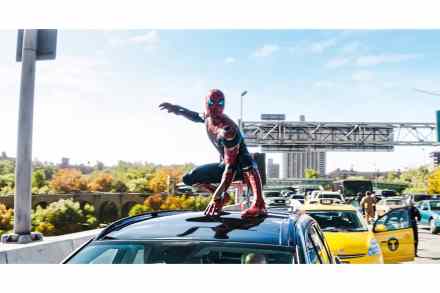
The teaser for Spider-Man: No Way Home, out this Christmas, which had a record number of 355 million views in the first 24 hours of online availability, delivers three minutes of thrills. Tom Holland is back, in the titular role, with his girlfriend from the previous Spidey movie, his best friend Ned, references to Mysterion, jokes from Benedict Cumberbatch as master wizard Dr Strange, plus engagement with that most playful of Marvel concepts, the multiverse. Bring in the multiverse, and anything, everything, is possible. Are you old enough to recall that moment in Dallas when the shooting of JR was revealed to be a dream? Well, the multiverse does all that, and some. Time is not a constant.

The time is up for long films

From our UK edition

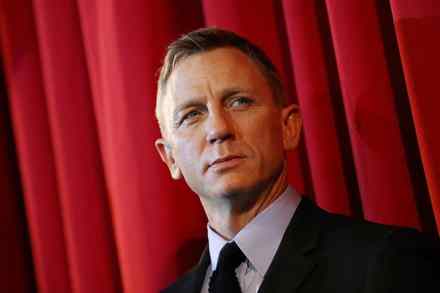
‘Programme starts at 3.45, so the film will start at 4.15, and it’s two hours and 43 minutes long, so we’d be out just before 7 p.m.’ This is the No Time to Die calculation, and I think many of us are doing it and wondering: ‘Can I face it?’ A dark afternoon spent in a state of total surrender to the longueurs imposed on us by a self-indulgent director? Thirsty from too much popcorn, leg muscles seizing up, not allowed to look at your phone, pressure on the bladder, Daniel Craig never smiling and the end nowhere near in sight?

Fear thy neighbor

In an age of rancor, one thing we can all agree on is that it makes a certain amount of sense to fear the police. What other force in civil society is authorized to intrude on private life, and deny its benefits and freedoms, in quite the same way? It may be the law-abiding members of society who fear the police most palpably. While actual criminals carry knowledge of their own guilt, the innocent must live with the knowledge of how easily we could be wrongly accused, misidentified or railroaded. Alfred Hitchcock did more than any other popular artist in the last century to help form a certain image of the police in the public consciousness.

hitchcock

Awards season loses its shine when no one can go to the cinema

From our UK edition

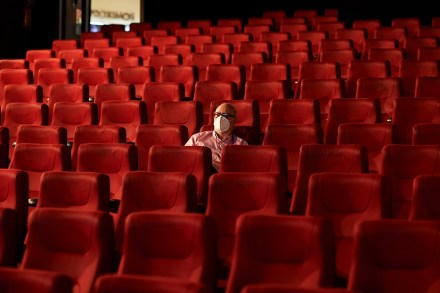
Here it is again, a couple of months later than usual but back nevertheless. It’s the time of the annual jamboree that is film awards season, a three-month extravaganza that predominantly revolves around three key events: the Golden Globes, the Baftas and the Oscars. All three of these celebrations of artistic excellence and mutual backslapping have been delayed due to Covid. The Globes took place — virtually — three weeks ago, Bafta revealed its shortlist last week and the Oscar nominees were announced on Monday. The starting gun has been fired — while all our cinemas remain closed. Have you seen Nomadland, The Father or Promising Young Woman? Of course you haven’t. No one, apart from the critics, has been afforded the opportunity.

How Korean cinema mastered the art of horror

From our UK edition

There is a moment in the Jung brothers’ 2007 ghost film, Epitaph, when a young doctor in wartime Korea realises that the wife he adores does not have a shadow. He is entertaining her with a shadow puppet show in their home when he notices the aberration. ‘Walk to me,’ he says as he waves a naked light bulb in front of her. She had been a visiting medical student in Japan a year earlier and, unbeknownst to him, had died in an accident. It’s a moment that perfectly illustrates the psychological subtlety and brilliant scene-making of Korean film. Epitaph is about a group of young doctors working in a hospital under the Japanese occupation.

The only man who didn’t want to be Cary Grant was Cary Grant himself

From our UK edition

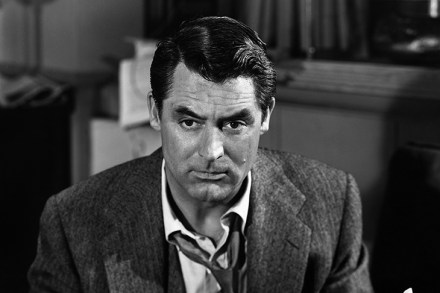
Cary Grant was a hoax so sublime his creator struggled to escape him. He was a metaphor, too, for the transformative magic of cinema, for its lies; and for the artifice and social mobility of the 20th century itself. His real name was Archie Leach, and he could, the critic David Thomson wrote, ‘be attractive and unattractive simultaneously; there is a light and dark side to him, but whichever is dominant, the other creeps into view’.

Why I won’t mourn the death of the cinema

From our UK edition

You could smell the stale popcorn and rancid carpet from the other end of the high street but that unmistakable Odeon odour always set my pulse racing. That was before we lost the vast art deco interior to corporate greed and short sightedness. The carving up of the beautifully ornate auditorium into three miniscule screens ruined the 'going to the pictures' experience. It became a sad portent of things to come.  A couple of years after the needless vandalism, not one but two hangar-sized multiplexes landed on the outskirts of town rendering the old inner-city Odeon obsolete. For several years, my beloved fleapit stood like a towering 1930s headstone to a lost era.

The magic of cinema isn’t just about film

From our UK edition

Cinema is fading. Borat went straight to Amazon Prime, where he is smaller, and Bond 25 — no time to die eh? — is delayed until next year. In response Cineworld has ‘temporarily’ closed its cinemas and the smaller film houses are struggling. Millennials and Generation Z don’t mind, but I am no such creature: I was an usherette at Options in Kingston-upon-Thames in 1990. Do they know that cinema remains, despite its best efforts, the most inspiring kind of mass culture? Dreams mean nothing to the gilded and interesting: they do not need them. But I, an ordinary suburban child, did need cinema, specifically Options, which is now an Odeon, showing Ooops! The Adventure Continues… With product such as this, you could argue cinema deserves to fail.

You won’t be able to look away: Shirley reviewed

From our UK edition

This week, two electrifying performances in two excellent films rather than two mediocre performances in the one mediocre film — see: Rebecca — so things are looking up. Firstly, Mogul Mowgli, starring Riz Ahmed, directed by Bassam Tariq and co-written by the pair. Ahmed plays Zed, a British-Pakistani rapper who has lived in New York for two years and is on the brink of stardom when he returns home to his family in London. It’s intended as a brief visit but then he is struck down by an autoimmune disease that is never named but is something like multiple sclerosis. The point is, I think, even his body doesn’t recognise him any more.

The genius of stop-motion wizard Ray Harryhausen

From our UK edition

Modern Two in Edinburgh reopens this week, and what more fitting subject for a show in a time of global catastrophe than Ray Harryhausen, titan of cinema, creator of beasts, destroyer of cities, king of adventure? If you were near a screen at any point during the Cold War, you almost certainly watched Harryhausen movies. The tentacled Beast from 20,000 Fathoms, so realistic it was awarded an X certificate upon arrival in Britain; the mythical marvels of The 7th Voyage of Sinbad; and the vicious skeletons of Jason and the Argonauts captivated generations of viewers. These indelible creations, all handmade by one man, the animator, special-effects pioneer and producer Ray Harry-hausen, have become a magical fixture in our collective imagination.

Would be much better without Bill or Ted: Bill & Ted Face the Music reviewed

From our UK edition

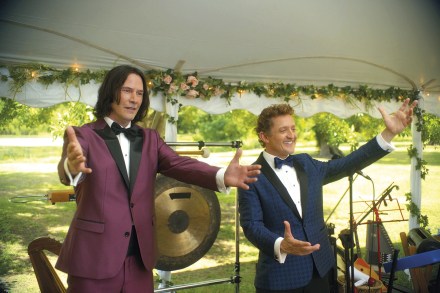
I think I am supposed to say that Bill & Ted Face the Music, the third in a franchise about two Californian morons who time travel to save the world, is a harmless satire on American teenage good-naturedness and stupidity. I’m not sure about that: I think it is more likely evidence of what American cinema has done to the American mind since Jaws turned the B-list film into the A-list film, and vice-versa. Its heinous. The premise is: creatures of the future decided long ago (in 1989) that Bill and Ted would one day write a song that would heal reality.

Worth catching the virus for: Saint Frances reviewed

From our UK edition

Two films about young women this week, one at the cinema, if you dare, and one to stream, if you don’t. Saint Frances requires the daring and I’d dare, if I were you, as it’s splendid and funny and tender and involving and taboo-busting, and if you do contract a deadly virus, it’ll be worth it. Only kidding. Of course it won’t. But, on the other hand, the government is currently encouraging us to venture into town to save Pret A Manger and I think this has more to say than a baguette. Or one of those pricey salads.

Drive-in cinemas are back – but for how long?

From our UK edition

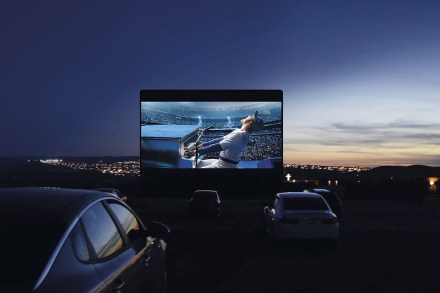
Pandemic creates the oddest phenomena: here, for instance, is a British drive-in cinema. They exist for people who won’t go to a conventional cinema for fear of infection, which sounds like a film in itself. But that is the charm: attending a drive-in cinema feels like living inside a film, because every British drive-in cinema until now has failed.

I want to support cinema but I have my work cut out with Love Sarah

From our UK edition

Some cinemas have reopened, with the rest to follow by the end of the month, thankfully. But the big, hotly anticipated films — Christopher Nolan’s Tenet, for example, or A Quiet Place II — won’t be out for a while yet, as opening schedules are adjusted. However, there is a new film that is cinema-only: it’s British, and it’s called Love Sarah. It stars Celia Imrie and is about three generations of women who seek to overcome grief by founding a bakery in London’s Notting Hill rather than running away to join Isis, say. (Is it always a bakery in Notting Hill or does it just feel like that?) I want to be kind as I want to support cinema. But I have my work cut out here.

Seven problematic films that are yet to be cancelled

From our UK edition

Avatar (2009) https://www.youtube.com/watch?v=6ziBFh3V1aM Can you a cancel a film that’s all but forgotten? I challenge you to name one character besides Sully (the protagonist, whom you’ve probably forgotten as well). Yet when the woke charge comes, it’ll take Avatar in its wake. After all, what is it but a colonial guilt fantasy with a white saviour character to save the day? The indigenous Na’vi people are losing their ancestral lands to an American corporation that wants to mine their planet’s materials, but only Sully, an employee of that very corporation can help save them.

Not merely funny but somehow also joyous: Sky One’s Brassic reviewed

From our UK edition

Danny Brocklehurst, the scriptwriter for Sky One’s Brassic, used to work for Shameless in its glory days — although if you didn’t know that already you could probably guess. For a start, the central characters are another close-knit group of ducking-and-diving working-class northerners not overburdened with a social conscience. But there’s also the fact that, no matter what they get up to, they’re clearly supposed to be lovable — coupled with the rather more mysterious fact that they are. However dark the storylines theoretically become, the programme presents them with such an infectious swagger, and such a thorough blurring of realism and wild imagination, that the result is not merely funny but somehow joyous.

The director that everyone loved to hate: David Thomson interviews Peter Bogdanovich

From our UK edition

Peter Bogdanovich’s new documentary about Buster Keaton, The Great Buster, is a match made in movie heaven. I can’t think of two men more devoted to making motion pictures — huge successes in their day — more acquainted with the merciless climate of Hollywood, or more aware that they were as instrumental in their own downfall as in their glory. ‘Buster said he made the great mistake of his life in 1928,’ says Bogdanovich. ‘He had done these masterpieces in the 1920s — Steamboat Bill Jr, Sherlock Jr, The Navigator, The General — and done them the way he wanted with his own production unit... It couldn’t get any better. But then [he was] told to sign with MGM. And Buster was never the same again.

I’ve found the perfect family film (eventually)

From our UK edition

As a member of Bafta, I get sent about 75 ‘screeners’ during the awards season, which is always a treat at the end of the year. I was particularly excited about it this time because of the makeshift home cinema I’ve set up in our playroom. I had fantasies of sitting in there with Caroline and the four kids, munching popcorn as we worked our way through the Bafta hopefuls. However, getting everyone to agree on a film to watch is always tricky in the Young household. On Christmas Eve, my recommendation was a French animated feature called I Lost My Body, which charts the adventures of a hand that’s become separated from its owner.