Christianity

Meet Saudi Arabia’s top cleric. Like Isis, he also thinks churches should be destroyed

From our UK edition

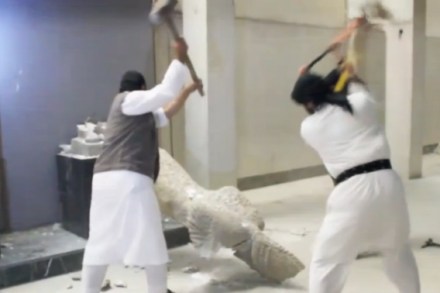
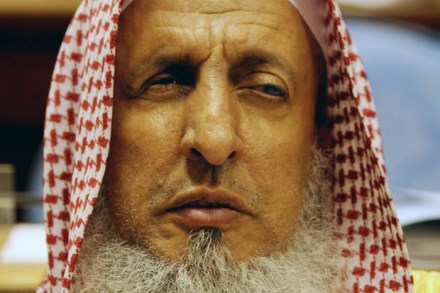
Today a quick game of 'spot the difference.' First, here are some photos, released yesterday, of Isis pulling down the crosses on ancient churches and desecrating Christian holy sites in Mosul, Iraq. They admit to doing this because they wish to destroy all records of pre-Islamic civilisation and because, they say, they are following Islamic law. And then secondly we have Saudi Arabia's Grand Mufti speaking at a conference in Kuwait on Tuesday. There Saudi Arabia's top cleric, Sheikh Abdul Aziz bin Abdullah, called for the destruction of all churches on the Arabian peninsula. He explained that this is necessitated by Islamic law. So perhaps the first part of the game should be 'spot the difference'. The second part might be: 'and which one is our ally?' Answers below.
What are we meant to say about grooming rings?

From our UK edition

It is a tragedy that some of us are born in the wrong times. According to that increasingly gobby conduit of right-on morality, the NSPCC, girls these days feel compelled to act like porn stars in order to ingratiate themselves with boys. I am not sure quite what, in day to day life, this involves. I only know that they made no similar attempts during my adolescence, or if they did I didn’t notice. I vaguely recall one young lady in my school class telling me, when I was 14, that she had engaged in sexual intercourse the previous night with a boy from a neighbouring town. ‘What was it like, Debs?’ I asked, wide-eyed. ‘Didn’t touch the fucking sides,’ Debs spat with all the contempt she could muster.

For modern-day Assyrians their present is under attack from Isis, as is their past

From our UK edition

The historian Tom Holland tweeted this morning: ‘What ‪#ISIS are doing to the people & culture of ‪#Assyria is worthy of the Nazis. None of us can say we didn’t know.’ What #ISIS are doing to the people & culture of #Assyria is worthy of the Nazis. None of us can say we didn't know: http://t.co/Ndi02TeueK — Tom Holland (@holland_tom) February 27, 2015 He linked to a Washington Post article about how the Islamist group had kidnapped at least 200 Assyrian Christians from their homes in north-east Syria, and may well be preparing to murder them.

It takes a village (or six): the battle for rural churches

From our UK edition

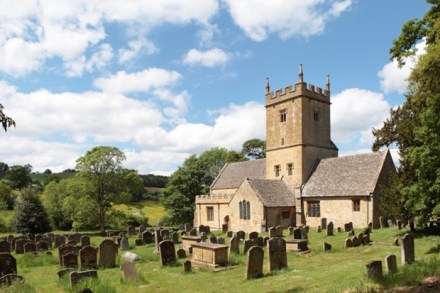
Some of the longest job descriptions belong to rural Church of England clergy. ‘So what do you do?’ ‘I’m the Rector of Aldwincle, Clopton, Pilton, Stoke Doyle, Thorpe Achurch, Titchmarsh and Wadenhoe.’ Every one of these place names evokes an ancient Pevsner-worthy church, smelling of candlewax, damp hymn books and brass polish. Though many villages no longer have a shop or a pub, most do still have a parish church used for regular services — even if only on the first and third Sunday of the month. You push open the creaky door, and last Sunday’s hymns are still up on the hymn board.

What does it say about Owen Jones that he isn’t interested in scientific research?

From our UK edition

Owen Jones writes in the Guardian today on the subject of trans rights, making a revealing statement in the process. He says: ‘In truth, debates over the latest scientific research are of little interest to me: what matters is that the happiness, security and even lives of a minority are at stake, and all too little has been done about it.’ I’ve no desire to get involved in this particular debate, partly because I don’t know enough and I also don’t want to spend ten years getting harassed and threatened like Julie Bindel. One should never underestimate the threat of violence in shifting public debate, not just in religious matters.

Why calling for an ‘Islamic Reformation’ is lazy and historically illiterate

From our UK edition

It’s been said for years now: Islam needs its reformation. Some centuries ago, Christianity ditched its theocratic impulse and affirmed modern political values — let Islam do likewise! Let its Luther, who is presumably sulking in the corner of some madrassa, come forward! Islam hath need of him! This sounds briskly no-nonsense, in its willingness to say that Islam has a problem that needs fixing, and open-minded about religion, in its assumption that religions can change and be compatible with secularism. But it’s actually lazy and historically illiterate. It involves a misreading of how Christianity relates to modernity. It implies that, once upon a time, Christianity was in conflict with healthy political values, but it learned to change its ways.

Why does the battle for gay rights stop at the borders of Islam?

From our UK edition

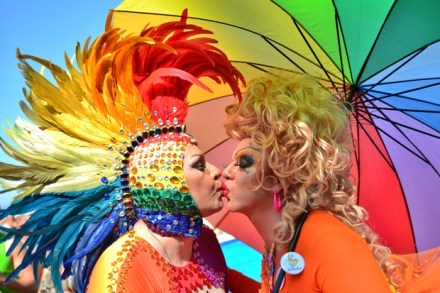
You can tell when a battle has been won.  Read the Pink News or any other gay news site and you will see that there are almost no stories left to report.  A politician in Northern Ireland may be caught expressing an opinion on gay marriage which was the view of all mainstream UK political parties ten years ago.  There might be some gossip about various celebrities (so no different from any other newspapers).  But otherwise gay news sites are reduced to tentatively wondering if Transgender rights are the same as gay rights (the jury is out) and otherwise running mainstream politics stories which strangely favour the Lib Dems while expressing an inherited hostility towards the Tories and Ukip.  This is no tragedy.

Muriel and Nellie: two radical Christians build Jerusalem in London’s East End

From our UK edition

This is the tale of Muriel Lester, once famous pacifist and social reformer, and Nellie Dowell, her invisible friend. Nellie Dowell is invisible in the sense that Claire Tomalin described Nelly Ternan in The Invisible Woman. While Ternan, the mistress of Charles Dickens, simply ‘vanished into thin air’, Nellie Dowell, who may or may not have been the mistress of Muriel, trod so lightly on the ground that she left barely a footprint behind her. Muriel Lester, the daughter of a Baptist shipbuilder with progressive ideas, has been the subject of several books already, including Vera Brittain’s The Rebel Passion: A Short History of Some Pioneer Peacemakers.

Socrates, Aristophanes and Charlie Hebdo

From our UK edition

What would the ancients have made of Charlie Hebdo? The First Amendment tolerates the expression of opinions, however offensive, but not behaviour that can be construed as an outright threat. It is a distinction that Greeks and Romans might have applauded. The comedies of Aristophanes (5th century bc) dealt with the issues of the day. They were characterised by language of Shakespearean inventiveness, covering the whole range of imaginable scatological, sexual and verbal abuse, aimed directly at named or easily recognisable individuals. Used in the street, such language would have met with a pretty instant, and probably violent, response. But, it seems, the conventions of public performance at the comic festival in honour of the god of theatre, Dionysus, made it permissible.

The prophet Tolstoy and his dodgy vicar

From our UK edition

One fine day in June 1896, a lone Russian nihilist visited Leo Tolstoy on his country estate. Come to hear the master, the stranger questioned Tolstoy about his latest beliefs. Satisfied, he left later that day. But then he returned with a written confession. He was an undercover policeman, sent to check on what Tolstoy was up to. Deeply ashamed of his deception, he begged for forgiveness. This vignette, recounted by Alexandra Popoff in her new book about Tolstoy’s later life, perfectly captures the author’s power. Whether through his fiction or radical Christianity, Tolstoy could fascinate and compel in equal measure. Though the government spy was dismissed for his bungling, it is hard to imagine his regret at being seen as himself by the literary master turned prophet.

The right to offend is nowhere near as important as the right to speak the truth

From our UK edition

Last week I lost count of the number of times we've been told, pace the Charlie Hebdo murders, that we have no right not to be offended, that freedom of speech involves the possibility of criticism and ridicule of any religion; indeed, that it’s the flip side of religious liberty. Salman Rushdie, who has more right to make the point than most, said that 'religion deserves our fearless disrespect' and  people like Suzanne Moore in the Guardian seemed to suggest that we have a positive duty to disrespect religion, though I am still waiting for that paper to reproduce some of Charlie Hebdo’s finest on the subject of the prophet of Islam as opposed to its scabrous stuff about gay cardinals.

Nigel Farage: Bigger Than Jesus

From our UK edition

Ukip's commonwealth spokesperson Winston McKenzie - he of Carnival of Colour fame - is never far from controversy. It was only a matter of time before a devout Ukipper compared their hero Nigel Farage to a deity and we should have all guessed it would be Winston: ‘Jesus was one man. We are his army. Nigel Farage is one man and we are his army and that’s what it’s all about’ Happy Faragemas, everybody.

Why are we abandoning the Middle East’s Christians to Isis?

From our UK edition

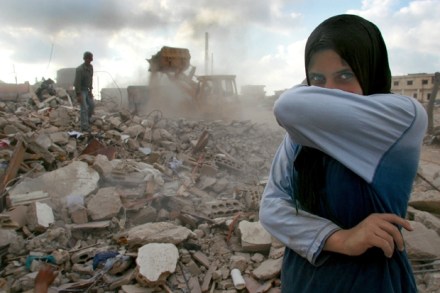
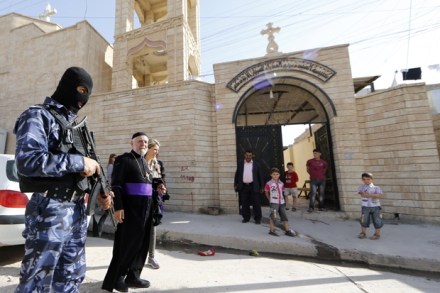
She took the call herself the night the Islamic State came into Mosul. ‘Convert or leave or you’ll be killed,’ she was told. The callers, identifying themselves as Isis members, knew the household was Christian because her husband worked as a priest in the city. They fled that night. Like many of their Christian neighbours they sought refuge in the monastery of St Matthew. But Isis took that over, tore down the Cross, smashed all Cross-decorated windows, used it for their own prayers and flew their black flag on top of the church. Across what was Nineveh, Iraq’s Christians spent this year fleeing from village to village, hoping to find safety somewhere. This woman’s husband and son continued their ministry among the scattered congregations of Iraq.

This ex-priest’s history of the gospels could unsettle the most faithful churchgoer

From our UK edition

When James Carroll was a boy, lying on the floor watching television, he would glance up at his mother and ‘see her lips moving, only to glimpse the beads in her lap. I recall thinking that they slipped through her thumb and forefinger the way cartridges moved into machine guns’. There was nothing unusual about this: in 1970s England, as well as 1950s America, most devout Catholic ladies carried a rosary in their handbag. If you walked into church while the Legion of Mary were at prayer, you’d be deafened by their Hail Marys. It was a competitive sport. Whoever prayed loudest and fastest — usually an Irish biddy with the gleam of the Taleban in her eye — could force the others to keep up with her frantic pace.

Was this Christian pioneer of radio evangelism a fraud?

From our UK edition

She was the sequinned star of the airwaves back in the 1920s, the first preacher to realise the potential of the wireless, long before Billy Graham and co. But who now has heard of Aimee Semple McPherson, the radio evangelist? Born in 1890 and raised on a farm in Canada, she was converted as a teenager by a Pentecostal preacher whom she married and joined on his missionary travels. When he died she took up preaching herself, moving to Hollywood and becoming enormously popular as a great healer of the sick and saviour of souls, dressed up for the part in a long white figure-hugging gown adorned with a huge glittering cross. Naomi Grimley told her story for the World Service’s The Documentary.

Why we should use the language of Christianity in public discourse

From our UK edition

There was an interesting exchange last night at the annual lecture for Theos, the think tank that does God. After a speech by the economist Will Hutton which paid tribute to Catholic social teaching as a way of looking at economics, the floor was given over to the two MPs, Jon Cruddas and David Willetts. Jon Cruddas was fluent in the language of community, solidarity and fraternity, precisely, as he said, because that’s what Christianity is about, and he is of Irish Catholic stock. He observed that the fundamental principle that you should do to others what you would have them do to you was universal – it translates into every kind of moral thinking. Over to Mr Willetts for the dissident approach.

God, aliens and a novel with a mission

From our UK edition

They say never work with children and animals. They could just as well say don’t write about aliens and God. A raft of readers hate sci-fi, and probably more sheer away at the very idea of a novel about a missionary. And yet… And yet The Book of Strange New Things works. It is in many ways extraordinary; its narrative drive, its lack of sentimentality, its occasional (emotional) brutality, its humour (albeit rare) all add up to a novel which is both intelligent, thought-provoking and as readable as a potboiler. Peter, ex-junkie, loving husband, cat-lover, sets off on a journey. The novel opens with his farewell to his wife, and we gather that he will be gone a while and that he might be in danger.

Why Christians should stick up for atheists

From our UK edition

Christians and Muslims in Egypt are joining forces to address the challenge of atheism, according to this news report. (It reminds me of the old headline from Northern Ireland: 'Catholics and Protestants unite to fight ecumenism'.) Christian churches in Egypt say they are joining forces with Egypt's Al-Azhar, a prominent centre of Sunni Muslim learning, to fight the spread of atheism in the country. 'The Church and the Al-Azhar are drafting a constructive mechanism to address atheism,' Poules Halim, a spokesman for Egypt's Coptic Orthodox Church, told Anadolu Agency.

Remembrance Sunday is marvellous; for God-free war commemoration, go to France

From our UK edition

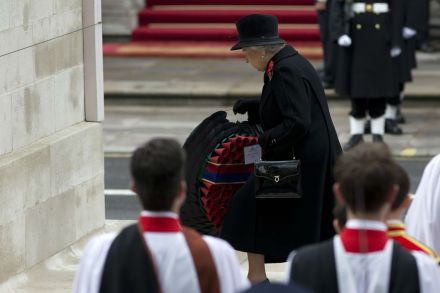
The most remarkable thing about the ceremony at the Cenotaph on Remembrance Sunday is that it just gets more popular. A ceremony that a generation ago might have been confidently predicted to appeal to a smaller and smaller bit of the population has somehow attracted the kind of benign publicity you get for the Children in Need awards. And the enormous crowds at the Tower to see the moatfull of ceramic poppies – one for each British life lost – has taken everyone by surprise. It’s got a good deal to do with the centenary of the First World War, of course, but that itself suggests that in a fractured Britain, people attach real emotional significance to wars from a lost world whose very language – such as sacrifice – is alien to our own.

Should ‘suicide’ mean pig-killing?

From our UK edition

There was a marvellous man in Shakespeare’s day known as John Smyth the Sebaptist. ‘In an act so deeply shocking as to be denied by Baptist historians for two and a half centuries,’ Stephen Wright, the expert on separatist clergy wrote, ‘he rebaptised first himself and then his followers, and set out his new views in The Character of the Beast (1610).’ His former confederate Richard Bernard fired a counterblast in that year showing (to his own satisfaction) that ‘the Church of England is Apostolicall, the Separation Schismaticall’. Reading a word like sebaptist we take the prefix se- to indicate a reflexive act, a self-baptism, as we would if reading French or Spanish. But that is not how ancient Romans used se-.