Christianity

Christianity’s curiosities

From our UK edition

Last week Tom Holland reflected on the ‘utter strangeness’ of Christianity’s claim that Christ’s death on the cross was a sign of strength. St Paul agreed: ‘We preach Christ crucified, unto the Jews a stumbling block, and unto the gentiles [correcting the SJV ‘Greeks’] foolishness.’ So did pagan philosophers, who argued fiercely about the nature of the gods. One such was Celsus (2nd C ad), who wrote an anti-Christian diatribe, ‘The True Doctrine’. It survives only in the quotations used by Origen in refuting it (248 ad). Though Celsus had a sense of humour (Christians respected the cross as the tree of life: had Jesus been thrown off a cliff, would there be a cliff of life?), he was deadly earnest about Christianity.

Given up hope? Join the club

From our UK edition

During the Middle Ages, some of the monastic halls which evolved into Oxbridge colleges allowed their younger inmates to indulge in jocundus honestus after the evening meal. There is nothing monastic about the clubs around St James’s, least of all at their dining tables. But there is still plenty of jocund. Honestus? That is another matter. The other evening, in a gathering well-equipped with bottles and glasses, someone remarked that we were still in the last lap of Lent and then asked an improbable and unexpected question: ‘So what have you given up, Anderson?’ I was pleased with my reply: ‘Hope.

Keeping the faith | 25 April 2019

From our UK edition

After hearing about the massacre in Sri Lanka on Easter Sunday, I went to church, happily sang the word God and stuffed £20 in the collection plate. I’m a believer and am lucky to have a lovely church on the corner of the square where I live. I attend irregularly, but on my frequent walks to my volunteer job I always enjoy disapproving as I read the list of activities going on at the community centre which is in ‘the award-winning conversion’ (the sin of pride, for starters) of the nave of the church — bridge (gambling), astrology circle (false prophets), kung-fu (violence) and pilates (vanity), all in one week! Tutting happily, I go on my merry way.

Islamic terror and the Left’s pretzeled language

After years of Obama-era State Department obfuscations and Orwellian redactions, it was heartening to hear Secretary of State Mike Pompeo lay the blame for the ‘horrific wave’ of bombings at international hotels and Catholic churches across Sri Lanka on Easter Sunday where it belongs: at the feet of ‘Islamic radical terror.’ Pompeo stated at a press conference Monday that ‘radical Islamic terror remains a threat’ and that the US, along with international partners, is working against the ‘evil’ of ISIS, al-Qaeda, and other radical Islamist groups. That’s a far cry from the antics of the State Department under Obama.

mike pompeo sri lanka

Sri Lanka and the global war on Christians

From our UK edition

The Easter Sunday massacre in Sri Lanka, which targeted churches and hotels, has so far claimed 310 lives and left a further 500 people injured. National Thowheed Jamath, a local Islamist group, has been implicated but authorities believe it received support from an international terrorist organisation. Colombo has declared a state of emergency and rounded up 40 suspects but the government’s swift response belies its behaviour before the atrocity.

The wonder of Whitby

From our UK edition

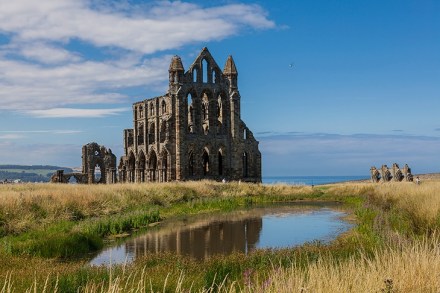
The 199 steps up to the ruins of Whitby Abbey are a pilgrimage; they always have been. And any good pilgrimage takes effort. Count Dracula (also acquainted with the north Yorkshire town) cheated — he climbed the steps in the guise of a black hound. These days, with its new £1.6 million museum and visitor centre, our vampire friend would find a ground-floor café and gift shop. Knowing English Heritage, there is probably a bowl of water for dogs, which would have kept the Count happy. Whitby is a surprise, with a history that puts it at the heart of Britain’s spiritual and literary life. It’s also a vibrant fishing port, somewhere you can pick up a Whitby smoky — smoked herrings — made in a backstreet smokehouse.

The way of the cross

From our UK edition

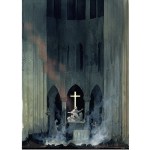
Declarations of hope that Notre Dame can be resurrected have been much in evidence this Holy Week. Such is the lesson of Easter: that life can come from death. Unlike the Eiffel Tower, that other great emblem of Paris, Notre Dame provides the French with evidence that their modern and secular republic has its foundations deeply rooted in the Middle Ages. Notre Dame has always been more than just an assemblage of stone and stained glass. It is a monument as well to a specifically Christian past. Last summer, one of the world’s best-known scientists, a man as celebrated for his polemics against religion as for his writings on evolutionary biology, sat in another cathedral, Winchester, listening to the bells peal.

Hard lines

From our UK edition

As if in defiance of the BBC’s current obsession with programming designed to entice in that elusive young and modish audience, Radio 4 has set us an Easter challenge. Each afternoon over the weekend Jeremy Irons is reading a chunk from The Psalms for half an hour, without illustration (except a bit of music), explication or deviation. It’s a discomfiting listen, at times harsh, unrelenting. The supple but rigorous language of the King James Version of the Bible is both daunting and uplifting. ‘Keep me as the apple of the eye’ is one of my favourite images, and ‘hide me under the shadow of thy wings’ has helped me through many a long night.

The return of plainchant

From our UK edition

‘I’m still warmed up from last night,’ said Sophie Bevan early on a Sunday morning in the practice-room behind the presbytery of St Birinus Catholic Church in the charming village of Dorchester-on-Thames, Oxfordshire – a tiny Pugin-esque gem dwarfed by the enormous Anglican abbey up the road. She and the other four members of the Davey Consort (two of them her cousins from the musical Bevan clan) were running through a Renaissance polyphonic mass, with Sophie’s husband, the composer and conductor Ryan Wigglesworth, directing from the practice harpsichord.

Pastor Pete and the politics of religion

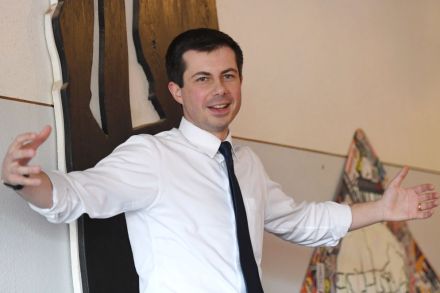
Religious faith may be declining in America but it is still a cultural force to be reckoned with, looming large in any general election cycle. Courting religious voters remains a factor in the calculus of any prospective presidential candidate, especially as neither party seems a natural home for many of them. Americans are actually losing their religion rather faster than their faith. A recent poll showed that ‘nones’ – those without a religious affiliation –  are now the country’s largest group for the first time: Americans are increasingly defining their own faith, and not asking a church to do it for them. In this landscape, what a ‘Christian’ believes as a core value is suddenly malleable and open to influences from all sides.

pete buttigieg

Why Peter Sellars’s staging of the St John Passion – which I sang in – was deeply flawed

From our UK edition

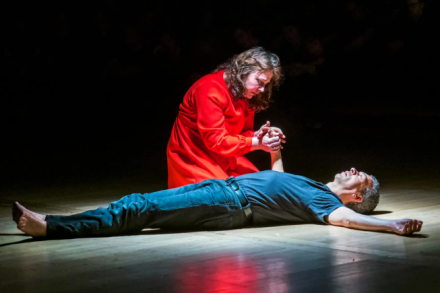
It has been my privilege over the past two weeks to sing in the chorus of the Orchestra of the Age of Enlightenment under conductor Simon Rattle and director Peter Sellars in a staged production of J.S. Bach’s St John Passion. The experience has been life changing for some of my colleagues; it has certainly been unique. Dressed in black casual clothing, we spend much of the performance sauntering around the stage making abstract gestures intended to highlight certain words and distill the myriad emotions found in the music. Some find this effective; others find it silly.

Pyle on: the warped logic of online cancel culture

A while back, a friend in the San Francisco Bay Area confessed to me in a hushed tone that she was thinking of buying a gun. The neighborhood was a safe one. But she and her husband, no-nonsense tech executives with reasonably public profiles – the kind that might draw attention from internet crazies – but far from the means to hire private security, had calculated just how long it would take for police to reach their home in the event of an emergency, and they weren’t satisfied with it. With the Bay Area’s real estate market being what it is, giving up their below-market-value lease seemed more outlandish than exercising their Second Amendment rights.

nathan pyle

Why don’t we talk about Van Gogh’s Christian faith?

From our UK edition

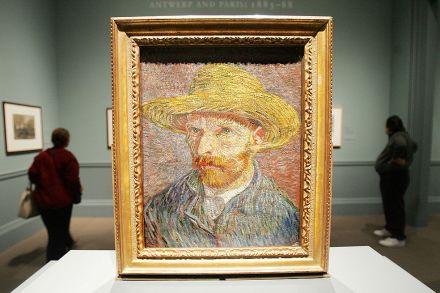
Vincent Van Gogh has been airbrushed by the secular arts media. I have not yet seen the new exhibition at Tate Britain about his London years, so I can only comment on the publicity I have read and heard. This arts chatter downplays, or even ignores, the central feature of his life at this time: his religious zeal. It gives the impression that he was dedicating himself to art, gearing up to be the archetypal creative genius. In reality he did not take art fully seriously in the mid 1870s: though he worked for an art dealer, his real passion was religion.

Bible bashers

From our UK edition

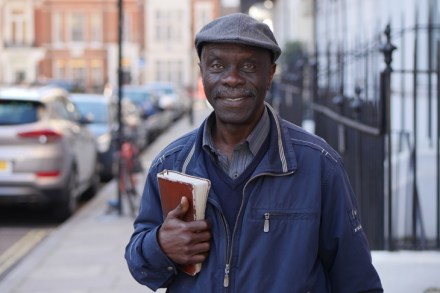
Being a street preacher can be a thankless business. Since moving to Britain from Nigeria nine years ago, 64-year-old Oluwole Ilesanmi has toured the country reading aloud from the Bible, spending hours outside train stations, urging people to see the light. Sometimes he makes a convert; most of the time his preaching falls on deaf ears. Last month, it resulted in him being arrested. Saturday 23 February began like a typical day for Ilesanmi. He went to Southgate tube station in north London and preached for a few hours. His spiel included a disobliging reference to Islam, which seemed to rile a passer-by. To Ilesanmi’s surprise he was then accosted by the man.

Justin Welby has shown why his church is in such trouble

From our UK edition

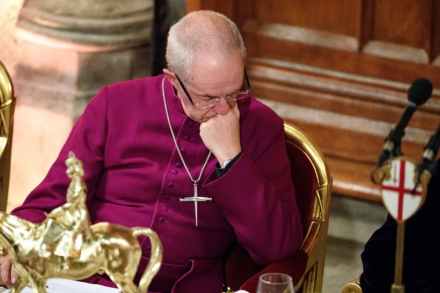
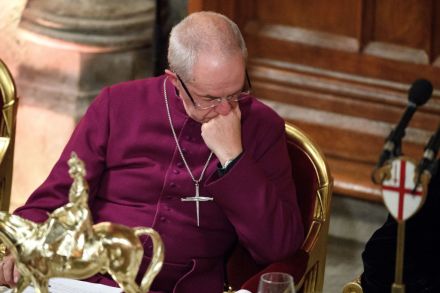
Sorry to sound sectarian, but the Archbishop of Canterbury should really be able to articulate a preference for Anglicanism over other variants of Christianity, including Roman Catholicism. Interviewed here in this week's Spectator, he was more or less invited to do so; instead he said that he was entirely positive about Anglican priests converting to Rome. Hard to imagine the Pope saying the same thing in reverse. Ecumenical enthusiasm is all very nice, but a Church is in trouble if it can’t say why people should stay within it, or choose it over other options. So what is Anglicanism’s selling point? The answer is unfashionable but unavoidable: its socio-political liberalism. Note that I do not say simply ‘liberalism’.

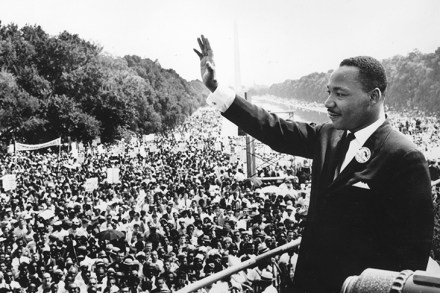
Prophet, priest and King: understanding the real MLK

For over half a century, we’ve been misunderstanding Martin Luther King. Our secular minds are programmed to see him as a civil rights activist, but as another MLK Day comes and goes, it is time to see King as he saw himself: as a priest and a prophet. Today, we tend to understand prophecy as focused on prediction. The nature of biblical prophecy and the word’s classical origins have been forgotten. Pro, the prefix of the Greek word prophetes means ‘fore’, but also ‘forth’. To be a prophet is to ‘fore-tell’ but equally to ‘forth-tell’ – to be a divinely-inspired forecaster or to preach moral, spiritual and political messages. King saw his role as the latter.

mlk faith prophet

Barometer | 13 December 2018

From our UK edition

Crisis at Christmas MPs were warned that they might have to give up part of their holidays to deal with Brexit. Here are some other political crises from Christmases past: 1066 William I was crowned on 25 December. Trouble was expected from the English so the streets of Westminster were lined two deep with soldiers. The service was interrupted by a boisterous crowd and houses near the abbey were set alight. 1974 Embarrassment for Harold Wilson on Christmas Eve — his former postmaster general John Stonehouse turned up in Australia, having faked his own death. 1989 Deposed Romanian president Nicolae Ceausescu and his wife Elena had their festive season curtailed by a brief trial, after which they were shot.

Brought to book | 15 November 2018

From our UK edition

‘The barbarians drive us to the sea, the sea drives us to the barbarians; between these two means of death we are either drowned or killed.’ So wrote the British monk Gildas in his 6th-century proto-polemic On the Ruin of Britain, recording the arrival of the hated ‘Germans’ to the island. Bad news for the Britons, but fantastic for visitors to the British Library, now running perhaps the most significant exhibition of recent times, Anglo-Saxon Kingdoms. Historians dislike the term ‘Dark Ages’, but by any measurement western Europe saw a collapse in living standards, literacy, population, trade and significant cultural output from 500 ad. Yet that only makes the flame that appeared all the more striking, and the exquisite art so inspiring.

Tim Farron just can’t escape gay sex

From our UK edition

What does Tim Farron think about gay sex? Like Ken Livingstone's repeated reluctance to discuss Hitler, the former Lib Dem leader has never really offered his views on the subject. This time a year ago, for instance, he was so busy talking about all the things his party was putting into its general election manifesto that there was just never time for the matter to creep into interviews. He's never avoided questions on gay sex, or changed his views on gay sex, or offered formulations which sound as though he loves gay people (just not in The Way) but actually mean he doesn't think they should be having gay sex. So what a surprise that gay sex has cropped up as a problem for Farron this week. It's not like it's ever been in an issue before.

Martin Luther King’s vision is being betrayed by progressives

Martin Luther King is easily misrepresented in our era of heightened identity politics, and of scepticism towards grand unifying ideals. For him, the campaign for black civil rights was firmly rooted in a very grand moral and political vision. Today’s progressives have largely lost sight of this wider vision; indeed the thought of it embarrasses them. It seems naïve, unrealistic. Its grandeur is more likely to be mocked than honoured. To black activist writers such as Ta-Nehisi Coates (whom I recently discussed here) it seems a mask for complacent racism. The remarkable thing about King is that he expressed the core ideals of America, and the West, with new intensity and fullness.