Christianity

The Christian movie finally finds its niche

When Mel Gibson’s ultra-violent, ultra-religious Passion of the Christ made $612 million worldwide, it was not earning its money from teenagers looking for a night out. Despite its R rating, churchgoers were being bused to theaters by the millions, thanks to the heavy support it received from evangelical Christian groups. Everyone from Billy Graham and Jerry Falwell to Pat Robertson and Chuck Colson came out in support of the film, although the Pope’s supposed endorsement — "it is as it was" — was denied by the Vatican. Yet faith-based films have quietly been big business in Hollywood for decades now.

Christmas is a story of hope

We descended, one weary traveler at a time, down an ancient stone staircase that winds underneath one of the oldest churches in the world. When we arrive in the tiny grotto, we sing Silent Night, our faces dimly lit by the light of a single lantern. This is where many believe a peasant couple, traveling for the Roman census, gave birth to the baby Jesus as described in the second chapter of Luke’s gospel. The Church of the Nativity, commissioned around 330 AD by Constantine, was destroyed by an invading army in 529 AD and then rebuilt by Justinian. Situated in perhaps the most highly contested piece of real estate in the world, it hosts millions of pilgrims every year. This would have been a surprise to the Bethlehem of Jesus’s day.

christmas

‘Hail Satan’: a Virginia town at war over After School Satan Club

Chesapeake, Virginia  If you're looking for a Christmas display to rival Clark Griswold's 25,000 twinkling incandescent lights, the Chesapeake City Hall is a good place to start. The building lights up each year for its "Deck the Hall" event, a drive-through light display featuring candy cane-wrapped trees, glittering snowflakes and City Hall itself glowing red and green. The decorations were so bright I had a difficult time reading the signs that would point me to the Chesapeake Public Schools building. Luckily, it only took a few more turns before I saw two parking lots full of cars and a line of people sprawling down the block. The crowd wasn't there to take in the beautiful Christmas lights.

after school satan club

The Christian nationalism boogeyman

Which of the zillion prophesied crises will engulf America next? At the moment, the most chattered-about is a “second civil war,” though some also worry that the United States could lapse more peacefully into autocracy. The left, of course, is consumed by fears of climate change drowning New York, while some on the nationalist right foresee a Camp of the Saints-style immigrant invasion overwhelming public services. Yet amid all the wandering imaginations and doomsday scenarios, there’s one contingency that has absolutely zero chance of happening: America as a Christian theocracy. With all due respect to Sohrab Ahmari and the Handmaid LARPers, there are greater odds of Beto O’Rourke being appointed god-emperor than of any kind of merger between church and state.

christian

The rise and fall of Tammy Faye

From our UK edition

Tammy Faye Bakker was a chirpy, perky televangelist noted for her lavish mascara and her barrel-stave eyelashes. She once conducted an interview on her PTL (Praise the Lord) chat show for which she remains revered among gays. It was in 1985 and she was talking to Steve Pieters, a soft-spoken church pastor with a soup-strainer moustache. He had Aids, a disease that killed Rock Hudson that year and was scything through Reagan’s America. Tammy wanted to know all about Steve’s faith, his health and his orientation. ‘Have you given women a fair try?’, she asked rather naively. The pastor told his story and the interview deepened into an extraordinary confessional.

The night the Queen refused to read my book

From our UK edition

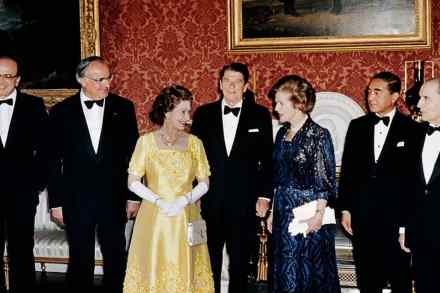
‘So it is come at last, the distinguished thing!’ exclaimed Henry James on his deathbed. Such a thought is reflected in funerals – always more powerful than a memorial service or ‘celebration’ – because the person’s body is present. When it comes at last to Elizabeth II on Monday, it will be the most distinguished of all the ceremonies. The Household Division is in charge. It is always and only the Grenadier Guards who make up the bearer party. By then, all serving Guards officers will have stood watch over the coffin for the lying-in-state. The Guards are so called because they must guard the Sovereign in life. Their last, distinguished duty is to guard her in death.

The Queen’s life was anchored by Christianity

From our UK edition

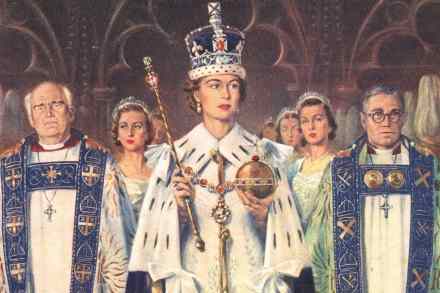
King Charles III began his first speech as monarch by recalling the pledge made by his mother on her 21st birthday in 1947. Speaking from Cape Town on the occasion of her 21st birthday, Princess Elizabeth declared ‘before you all that my whole life, whether it be long or short, shall be devoted to your service and the service of our great imperial family’. She ended by saying: ‘God help me to make good my vow and God bless all of you who are willing to share in it.’ We know now that the Queen was given a long life during which the world, as it was when she was 21, was transformed. Cape Town is now part of an independent post-apartheid South Africa. The Empire dissolved, to be replaced by a Commonwealth.

Setting the record straight on the Latin Mass

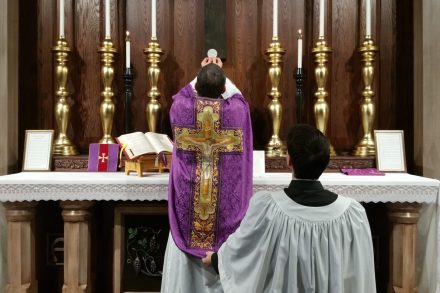
Actor Shia LaBeouf is known for being pretty…let’s call it outlandish. The “controversies” section on his Wikipedia page is hefty. He comes off in interviews as intense, impulsive, and potentially explosive (he once reportedly made a fan cry because she asked for his autograph). He’s being sued by his ex-girlfriend over abuse allegations and just welcomed a child with his on-again-off-again wife. Then there’s his full-torso tattoo. Now, LaBeouf is back in the headlines, but for once it isn’t for anything “scandalous” (despite what Slate might claim).

The Archbishop of Canterbury has risen to the occasion

From our UK edition

Archbishop Justin Welby has done a good job of relating the Queen’s virtues to her Christian faith. This is no easy task. The writers of the New Testament would have been very surprised by the notion that a monarch could be an exemplary Christian. And any sensible Christian leader is mindful that monarchs should be praised with care, lest religion seem cravenly reverent of tradition and worldly grandeur. She was a model of practical virtue In her life, he said in his official statement, ‘we saw what it means to receive the gift of life we have been given by God and – through patient, humble, selfless service – share it as a gift to others.’ This rightly puts the emphasis on her positive outlook – something most of us struggle to have.

What has become of the 19th-century explosion of religiosity?

From our UK edition

Matthew Arnold cannot have been much fun on holiday. Watching waves crash on the pebbles at Dover Beach, he heard only metaphors for the decay of religion. The ‘Sea of Faith’ had once been full, but now its ‘melancholy, long, withdrawing roar’ filled his ears. Dominic Green thinks he was much too gloomy. He prefers Arnold’s chirpy contemporary Ralph Waldo Emerson, who perceived that faith was not so much ebbing as flowing into new channels. From the time of the 1848 revolutions to the century’s close, railways, industrialised wars and questions raised by geologists and biologists shook people’s faith in Christianity. But the crisis of religion fuelled the expansion of religiosity.

Where the Crawdads Sing reduces a rich novel to a love triangle

Delia Owens’s novel was probably destined to be a bestseller. How many books manage to combine a distinctive sense of natural “place” — the marshes surrounding the North Carolina town of Barkley Cove — with themes of survival, romance, and murder? And with a bestseller comes a film adaptation; hence the recently released Where the Crawdads Sing, which is playing in theaters now. When the town’s golden boy Chase Andrews (Harris Dickinson) is found dead at the base of a rickety wooden tower, blame immediately falls on the enigmatic Kya Clark (Daisy Edgar-Jones, likely best known for her recent starring turn in Normal People), who lives alone in a rickety house deep within the marsh.

Michael Gerson’s descent into liberalism

Not all pro-lifers are happy with the Supreme Court’s overturning of Roe v. Wade. In a column at the Washington Post, former George W. Bush speechwriter Michael Gerson acknowledges that Roe was “poorly argued,” but says he is “more comfortable with the gradualism” recommended by Chief Justice John Roberts. Gerson ends even more soberly: “The abortion debate — with all its tragic complexities — has been returned to the realm of democracy. And there is little evidence our democracy is prepared for it.” Why? Because the “GOP has become captive to an ideology of power.” Anyone who has been following Gerson over the years will not be surprised by these comments.

Why the West still needs the Bible

From our UK edition

If you look to our schools and universities, you will not see a serious engagement with the Bible as part of the study of politics, of philosophy, or even of literature and culture more generally, despite the huge influence of Biblical ideas on the development of British, American and European politics – and so also across the Commonwealth and the world. University courses on political philosophy take a fundamentally ahistorical position of focusing on purely secular philosophers, rather than facing the reality of the Bible’s impact on the actual development of modern politics.

Martyrs win the culture wars

The culture war is suddenly going well for conservatives. Ron DeSantis stripped Disney of some of the woke corporation’s privileges in Florida. Elon Musk is taking over Twitter. Roe v. Wade appears doomed. And a backlash against Critical Race Theory in schools and transsexuals in women’s sports looks set to benefit Republicans mightily in November’s midterm elections. These are crucial battles. But they are not the war. The war is between race and sexuality on one side and traditional religion on the other. At any rate, those are the great causes with which the cultural left and right tend to identify. The progress of the war is seen in the retreat of Christianity and the advance of racial and sexual agendas on all fronts.

martyrs

Letters: Workshy Whitehall has its benefits

From our UK edition

In check Sir: Jade McGlynn (‘Conflict of opinion’, 23 April) has a point that there are many reasons for popular support inside Russia for Putin’s ‘special operation’ to take over Ukraine. Whether a country is a democracy or a repressive dictatorship you will always find supporters of a patriotic war. Nonetheless you have to take into account the effects of a repressive state on ordinary people’s motivation to protest, even if they want to do so. Millions in Russia and Belarus are either state employees or dependent on the state in some existential way. If you protest you are locked up or beaten up; in many cases both. Would you – and I am pointing my Kitchener finger at you here – risk your life or livelihood for your views?

‘Father Stu’ and the merits of suffering

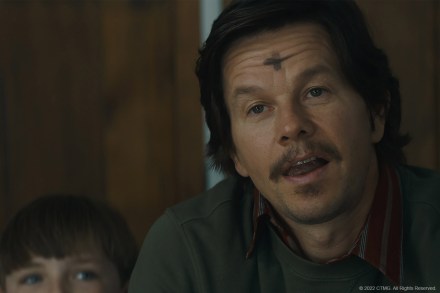
Father Stu opened in theaters this Holy Week. It’s a movie about a real-life man who led a depraved and reckless life, found God, became a priest, suffered greatly and died from an incurable disease. And did so — more importantly — with patience and good nature that inspired multitudes of those around him. The film’s message is essentially that suffering has value, and as we sit in the richest nation in history drowning in the highest levels of depression ever recorded, such a reminder could not come at a better time. It’s a curious thing that so many people are dissatisfied with life when the standard of living has never been higher.

How do we celebrate Easter in the shadow of war?

From our UK edition

This week has been Passiontide, which means lots of wonderful plainsong in the choir of Canterbury Cathedral as my predecessors sleep. Holy Week began on Sunday in the shadow of war, suffering, loss and pain. How do we celebrate the promise of everlasting life in such darkness? Good Friday is ‘good’ because on the cross we see the goodness of God in the middle of the mess of our own creation. Jesus refuses to answer his accusers on their terms, to use his own power to overcome by force, or to see others hurt – even those who hurt him. Jesus lays down his life for the sake of others. He reaches out, on the cross, to the thief next to him, even in the depths of his own suffering.

An inspirational teacher: Elizabeth Finch, by Julian Barnes, reviewed

From our UK edition

‘Whenever you see a character in a novel, let alone a biography or history book, reduced and neatened into three adjectives, always distrust that description.’ So says the protagonist of Julian Barnes’s latest novel, the poised, droll, epigrammatic Elizabeth Finch, who is loosely modelled on his late friend and fellow Booker Prize-winner Anita Brookner. A lecturer delivering an adult education course on Culture and Civilisation, an exercise she considers ‘rigorous fun’, she introduces her students to figures such as Goethe and Epictetus.

Kirill, the Patriarch in league with Putin

From our UK edition

Until very recently, Patriarch Kirill of Moscow, leader of the Russian Orthodox Church, was most famous for being the owner of a phantom wristwatch. It had the magical property of disappearing from sight, visible to onlookers only as a reflection. Don’t believe me? Google ‘Kirill’ and ‘watch’ and you’ll find a photo of the Patriarch of Moscow and All Rus’ meeting the Russian justice minister. It was taken in 2009, the year Kirill succeeded the late Patriarch Alexy II as spiritual leader of 110 million Russian Orthodox Christians. On his head Kirill is wearing a white koukoulion, the so-called ‘helmet of salvation’, with side flaps like the ears of a giant basset hound. But his cassock is plain black and his wrist is bare.

The Greek myths are always with us

From our UK edition

Once upon a time there was a collection of stories that everybody loved. They involved brave heroes such as Perseus and Theseus defeating fearful monsters like Medusa and the Minotaur. Sometimes they used ingenious gadgets to achieve their goals, a bit like James Bond with his exploding pen. Sometimes they were helped by women who took a fancy to them. Some, like Icarus, failed. Others succeeded but still came to a sticky end – like Oedipus, who solved the riddle of the Sphinx but also killed his dad and married his mum. The point is that these stories were so old they came from a time before writing. There was no set text, so they could be adopted and adapted and take many forms.