Christianity

The faith of Tyson Fury

From our UK edition

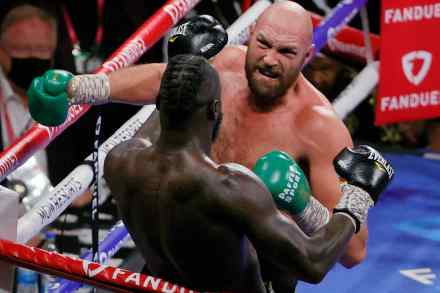
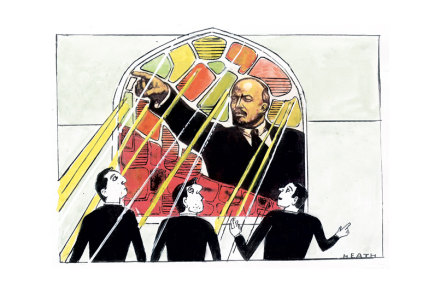
As soon as he had beaten Deontay Wilder last weekend, Tyson Fury gave thanks “to my Lord and savior Jesus Christ”. He said that he was going to pray for his fallen opponent. He has said that when he was recovering from depression and mental illness he “couldn’t do it on [his] own” and got down on his knees to ask God for help: I went down as a four hundred pound fat guy but when I got up off the floor after praying for like twenty minutes...I felt like the weight of the world was lifted off me shoulders. Most media reports glossed over these (admittedly eccentric) expressions of Christian piety, but the clips of Fury praising Jesus for his victory went viral for good reason.

Paradise and paradox: an inner pilgrimage into John Milton

From our UK edition

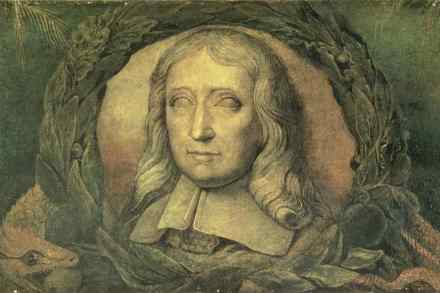
When E. Nesbit published Wet Magic in 1913 (a charming novel in which the children encounter a mermaid), she took it for granted that her young readers would immediately pick up the references to ‘Sabrina Fair’ from Milton’s Comus. Phrases from Milton were part of the language — ‘Tomorrow to fresh woods’; ‘Better to reign in hell than serve in heaven’. Milton was central to the shared experience of life itself for those who spoke English. Throughout the 18th and 19th centuries Milton was inside every literate anglophone head. If Harold Bloom is to be believed, which I think he is in this respect, the English romantic movement grew out of young poets reacting to, against and with Milton.

The magic of manuscripts

From our UK edition

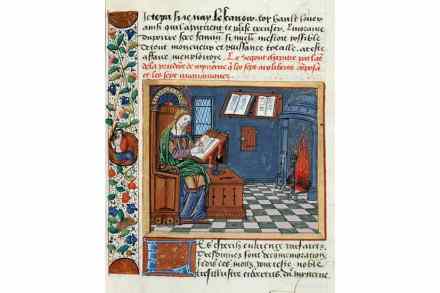
Manuscripts have something of the appeal of drawings. They bring you closer to the creative process. Even a copy adds something special to the text: an editorial twist, a decorated initial, a margin full of beasts or just a beautiful script in which every letter is fashioned by hand like no other. Manuscripts do more than convey information. Their creation calls for imagination, physical effort, a love of meaning and beauty. They are works of art in their own right. I specialise in the most unpoetic kind of manuscript: administrative records of military and political history. But even they speak to us directly.

The Church Closers’ Charter must be torn up

From our UK edition

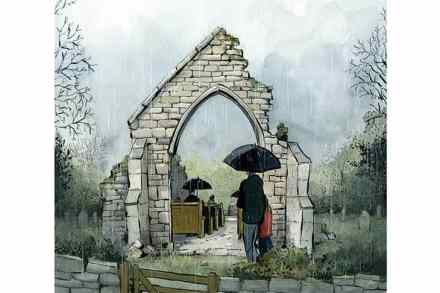
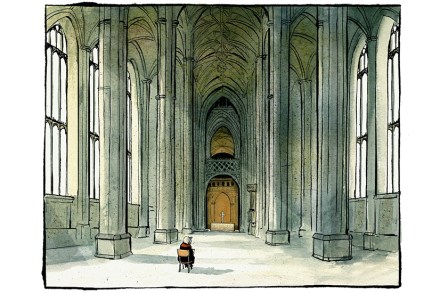
Over the past few months, the Archbishops of York and Canterbury have repeatedly assured us that they love parishes and parish churches. ‘I am passionate that the parish is essential,’ the Archbishop of Canterbury told the Church Times recently. The Archbishop of York went so far as to describe the parish as ‘the beating heart of community life in England’. So why are they supporting a change to church law to make it easier to close parish churches? The paper which proposes the change is at stage one of a three-stage approval process. It has the unsexy name GS 2222, so I call it the ‘Church Closers’ Charter’.

Can we talk about Emma Raducanu’s Christianity?

From our UK edition

I’ve just been looking at photographs of Emma Raducanu again, this time focusing on her upper chest. She usually wears a pendant cross, which suggests that she is a Christian. Yes I know that some people wear crosses for fashion reasons, but I don’t think she’s in that camp. Maybe it’s more a sign of cultural than religious allegiance, maybe a treasured gift from a grandparent? Or maybe a sign of solidarity with China’s persecuted Christians. To what extent is it legitimate to inquire into this? The orthodoxy is, not at all, you meddling creep. It’s her business, and it’s utterly irrelevant to her tennis success. But it is not too out-of-order to ponder the symbols that people in the public eye choose to wear.

The fight for the future of the Church of England

From our UK edition

When the Church of England talks of trying new things, I prick up my ears. Back in 2004 it announced the need for ‘fresh expressions’ — new ventures alongside the normal parish system. Maybe some vibrant arty experimentation would ensue, I felt. But the main result was lots of nimble little evangelical pop-up churches, mostly lay-led. The idea of innovation seems to energise the evangelicals, although their version of innovation doesn’t always energise me. On Easter Day this year I dragged my kids to church, but there was no room at the socially distanced inn. The evangelicals round the corner let us in, so I had a glimpse of a style of Anglicanism that I normally avoid.

What’s the harm in opening the church doors?

From our UK edition

The end of summer 2021, the end of the great British staycation. I sat on the grass outside the post office on Holy Island, Northumberland and watched as the tourists milled about. After a visit to the Priory, and the Pilgrims Fudge Kitchen, a fair few of them would wander up to the Catholic church, St Aidan’s. Even if you’re not the sort to ever go to church, you might pop in for a quick look on Holy Island, aka Lindisfarne. This is where the gospels were translated, and where St Aidan, in 635, founded the monastery from which he converted the pagan north. Aidan came here from Iona, at the request of nice King Oswald, and went about on foot evangelising. Not horseback, says Bede, he didn’t want to set himself above the locals. On Holy Island the tourists are polite.

My literary heroes have led me astray

From our UK edition

Gstaad   Good manners aside, what I miss nowadays is a new, intelligent, finely acted movie. Never have I seen so much garbage as there is on TV: sci-fi trash, superhero rubbish, dystopian crap and junk about ugly, solipsistic youths revolting against overbearing parents. The director Jimmy Toback blames the subject matter for the lousy content, driven as it is by the need for diversity. I think lack of talent is the culprit. The non-stop use of the F-word is a given in Hollywood productions. Combined with constant violence, it makes for a lousy and unwatchable film.

Joe Biden and the grand battle of ideas

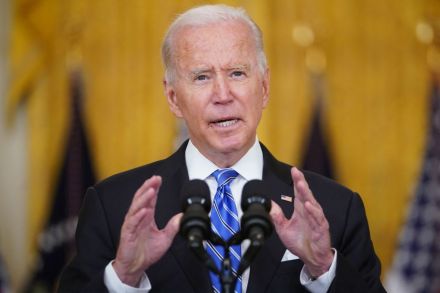
Well, Donald Trump doesn’t seem so bad now, does he? I don’t say that because Joe Biden has turned out to be as competent or less, but because at his press conference in reaction to the fall of Kabul, he sounded Trumpian. By which I mean, honest. Honest that staying in Afghanistan so long was a mistake, that their government was corrupt, that if its army wasn't prepared to defend itself then we shouldn't do it for them, and that this is what a withdrawal looks like: horribly, brutally honest. The endgame was a disaster because America’s intel was wrong, so the US had less time to get out than it thought, and because Biden lacks the acuity to respond to changing conditions. Biden looks like Brezhnev after heart-attack number seven.

biden

For Afghan Christians, the Taliban takeover is a nightmare

From our UK edition

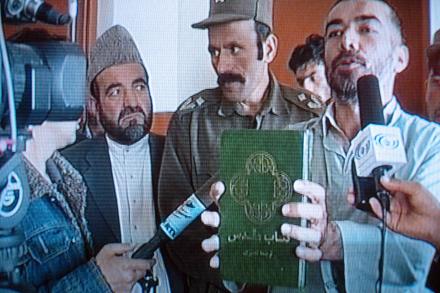
Christians in Afghanistan have been paralyzed with fear at the news that the Taliban has taken control of the country. Nadine Maenza, chair of the US Commission on International Religious Freedom said the Taliban takeover ‘is the worst possible development for religious minorities. While most from these communities left Afghanistan in recent years, those that remain, and women in particular, are now in imminent danger.’ News received by Aid to the Church in Need echoed reports that leaders of underground house churches in Afghanistan had received letters from the Taliban warning them that they 'know where they are and what they are doing'. According to Pew, around 90 per cent of the 37 million population is Sunni and 9.7 per cent Shia, with the remaining 0.

Britney is Catholic — but you shouldn’t be shocked

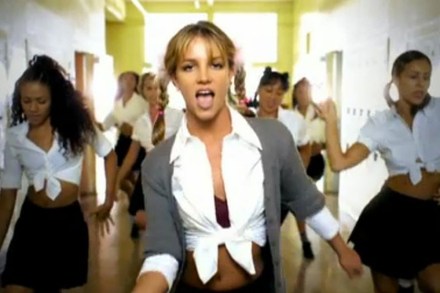
Pop sensation and slave-4-her-father Britney Spears sent papists into a frenzy on Thursday night by mentioning her Catholic faith to her nearly 33 million Instagram followers in a photo caption. 'I just got back from mass...I’m Catholic now...let us pray,' the 39-year-old star wrote. 'huge draft get,' tweeted the Atlantic's Elizabeth Bruenig. Cockburn thinks the signs have been there all along. Not only did Britney grow up in Louisiana, where Catholicism is far more widespread than elsewhere in the South due to its former status as a French colony, she's been dropping subtle hints in her art. Take the music video for her breakout single '...Baby One More Time'. How different the schoolgirl chic she adopted looks in the light of her newly announced faith.

britney spears catholic

Ban Biden from Communion…and save the Church

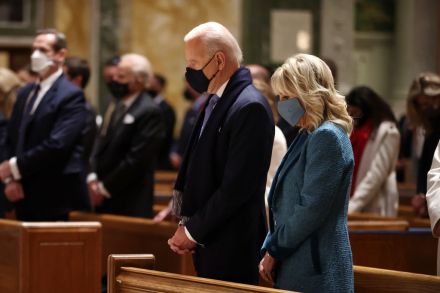
A meeting in June of America’s Catholic Bishops could unravel threads that were sown decades ago in an untidy rapprochement among the Catholic Church, its member politicians and many of the laity who accept abortion as a matter of public law but reject it privately. On June 17, the United States Conference of Catholic Bishops approved the drafting of a document that would teach ‘Eucharistic coherence’. According to Bishop Thomas Olmstead of Phoenix, Arizona, this ‘means that our “Amen” at Holy Communion includes not only the recognition of the Real Presence but also a communion bound together by embracing and living Christ’s entire teaching handed down to us through the Church’.

communion

Is this the last chance to save the Church of England?

From our UK edition

I am a key limiting factor. That’s a new one for a clergyman of the Church of England. We’ve traded under parson, cleric, priest, minister, padre and even pie-and-liquor, but never before have I heard us described as ‘key limiting factors’. That this phrase was used during the announcement of a new C of E-endorsed scheme — to create 10,000 new lay-led churches in the next ten years — adds future injury to present insult. ‘Lay-led churches release the Church from key limiting factors,’ said Canon John McGinley introducing the initiative.

The plot against religious education

From our UK edition

Faith is not the declining force that some secularists believe or indeed desire it to be. Even here in the UK, we have our growing and vibrant black-led churches; increasingly present mosques, temples and gurudwaras; and believers arriving from Eastern and Central Europe.  This is why it's important for religious education to continue to have a special place in the curriculum of our schools. Although RE is not a ‘core subject', it remains a compulsory one. Successive Education Acts have stipulated that it should be taught in such a way that reflects the mainly Judaeo-Christian traditions of this country — while also covering the teachings and practices of other religions present here.

Does Joe Biden deserve to receive Communion?

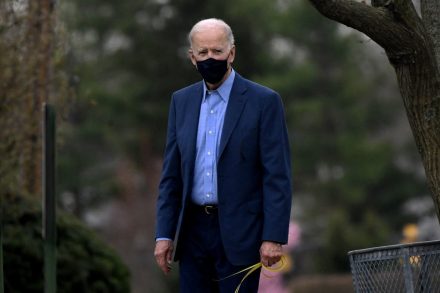
Here, in 50 words, is the reason President Biden may find himself denied Holy Communion following a vote this month at the US Catholic bishops' conference. The Church has always regarded abortion as uniquely evil. Biden plans to make infanticidal late-term abortions widely available. In the eyes of the Church, this means he's committing a grave mortal sin and can't receive Communion until he confesses it. He won't, so he could be barred from the sacrament. That's the essence of it. It's why 73 percent of the 290 US bishops voted to prepare a document that will clarify teaching that, in fact, was already set in stone. It will apply to all US Catholics, not just the President or public figures.

communion

In praise of Kate Forbes’s Christian faith

From our UK edition

Politics tends to attract people who consider themselves and their every mundane word and deed an example of great bravery. Like journalism and entertainment, it is an industry constructed around the pleasing myth that, whatever level you’re working at, you are engaged in the business of saving the world. Yet few politicians say much today that is courageous, or even all that original. When every dissenting view, colourful remark, or provocative thought brings with it the threat of cancellation, you have to console yourself with the fiction that saying the same thing as everyone around you is a courageous feat. So when I say that Kate Forbes has done something courageous, I say it because she has done something no one around her is doing.

Why Thomas Becket still divides opinion

From our UK edition

Visitors to the British Museum’s new exhibition will become acquainted with one of the most gloriously bizarre stories in the history of English Christianity: the tale of Eilward, a 12th-century Bedfordshire peasant. One day Eilward is in the pub when he has the misfortune to run into his neighbour Fulk, to whom he owes a small debt. An angry confrontation follows; eventually Eilward storms off drunkenly — in the direction of his creditor’s house, where he breaks in and starts trashing the place. Fulk catches him red-handed, beats him up and then hands him over to the authorities. One account suggests Eilward was framed; but whatever the truth of the matter, the judge sentences him to blinding and castration.

The C of E’s misguided obsession with statues

From our UK edition

The Church of England has once again misunderstood the mood of the nation. Guidance published this week urges the country’s 12,500 parishes and 42 cathedrals to address, search out, assess and remove offensive artefacts of ‘contested heritage’. The framework follows the call by Justin Welby, Archbishop of Canterbury, for a review of church statues. Of course racism must be taken seriously, but I doubt I was the only cleric who, upon hearing this development, let out a loud groan. The edict is both a concession to advocates of divisive identity politics and a distraction from the more pressing issues on which the church should be focused.

The C of E has fallen for anti-Christian theories of race

From our UK edition

In its new report, From Lament to Action, the Church of England has decided to focus on race. Now, there is no question that racism exists within all cultures, but the Judaeo-Christian tradition has always been opposed to it. Christianity emphasises the common origin of all humans, made in God’s image, and contemporary science corroborates this moral and spiritual insight. The Church is right to set its face against racism. Predictably, however, the C of E report urges an audit of monuments and an examination of the Church’s complicity in the slave trade. Why doesn’t it celebrate the long tradition of those Christians who devoted their lives to abolition?

John Stott: the centenary of a true radical

From our UK edition

Much has been made of the Queen's Christian faith in the aftermath of the death of her husband the Duke of Edinburgh. For decades, John Stott, who served as the Queen's chaplain, shepherded Her Majesty in that faith. Yet although his preaching brought him into contact with Royalty, led to him selling millions of books and even earned him a place among Time magazine's 100 most influential people in the world, Stott – born a century ago this week – remained a humble man. Stott lived in spartan simplicity in a two-room flat above a garage. Author of more than 50 internationally best-selling books, he assigned all his royalties to a trust fund to provide books for impoverished pastors and seminary libraries in the global south.