China

Going underground

From our UK edition

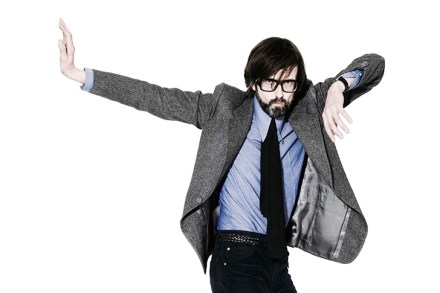
When Wireless Nights hit the Radio 4 airwaves in the spring of 2012, I was not at all sure about Jarvis Cocker’s particular, not to say eccentric, manner of presentation, butting in, making his presence felt, never letting us forget that it’s his programme, he’s in charge. His coy comments were too self-conscious for my taste. He didn’t sound natural; his after-dark meanderings felt too contrived. Now I realise I had completely missed the point. Cocker’s deliberate mannerisms, his upside-down way of looking at things, his curiosity and desire to share with us his thoughts are all very much part of who he is, and once you get used to his style of delivery it all becomes very beguiling.
A matter of life and death | 16 March 2017

From our UK edition

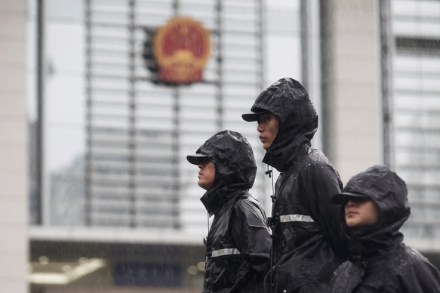
It was the crime story that showed us just how much China has changed since its years of social, political and economic isolation. The discovery on 16 November 2011 of the dead body of the British businessman Neil Heywood in Room 1605 of the Lucky Holiday Hotel in the Chinese city of Chongqing was not in itself so shocking. Sordid maybe, as it was declared by the Chinese authorities that he had died of excessive alcohol consumption. But nothing more than that. The revelations that followed, though, transformed the case into an international cause célèbre, the inner workings of Chinese politics unravelling before the greedy eyes of the foreign media. Heywood, it has been suggested, was if not a spy then at least an ‘informer’ working for the British government.

High life | 23 February 2017

From our UK edition

From my chalet high up above the village, I look up at the immense, glistening mountain range of the Alps, and my spirit soars. Even youthful memories receding into sepia cannot bring me down from the high. Mountains, more than seas, can be exhilarating for the soul. Then I open the newspapers and the downer is as swift as the onset of an Alpine blizzard. Television is even more of a bummer.

Still giving peace a chance

From our UK edition

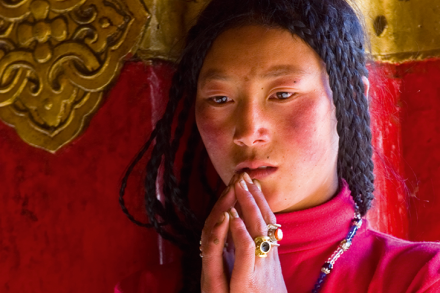
Tibetans were once fabled warriors. Their empire, at the summit of its power in the eighth century, extended to northern India, western China and central Asia. The Arabs, making inroads into central Asia, were in awe of them. And China, according to an inscription commissioned to memorialise Tibet’s conquest of the Tang Chinese capital of Changan in 763, ‘shivered with fear’ at their mention. But the Tibet annexed by Mao Zedong in the 20th century bore no trace of its imperial past. When the People’s Liberation Army struck in 1950, Tibet, having metamorphosed over a millennium into a reclusive hagiarchy, possessed neither the vocabulary to parley with the communists nor the strength to resist them. Its response to this worldly threat was to retreat into ritual.

An investment opportunity: why the Chinese economy continues to defy its many doubters

From our UK edition

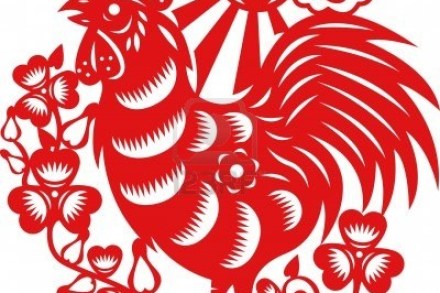
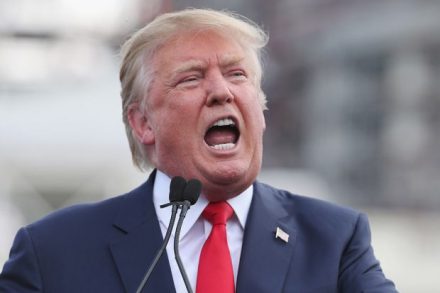
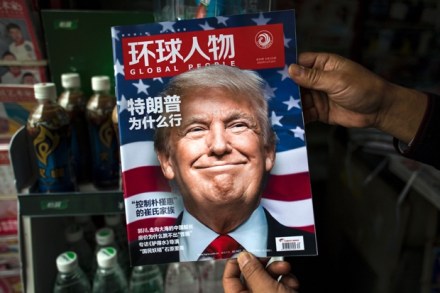
The Chinese New Year is almost upon us, and perhaps its animal for 2017 is timely in our current political climate. According to astrologers, the Rooster is cocky, opinionated and attention seeking - sound familiar? China, one of the powerhouse economies of the world, is entering an uncertain New Year now that Donald Trump rules the roost in Washington. For years it has been tipped to take over America as the biggest global economy. But now its fortunes (and indeed ours) hinge on whether President Trump’s hard-line protectionist agenda will ruffle feathers and ultimately lead to a trade war. The omens might not look terrific (to use one of the Donald’s favourite words).

Fifa’s decision to expand the World Cup is a disaster for football fans

From our UK edition

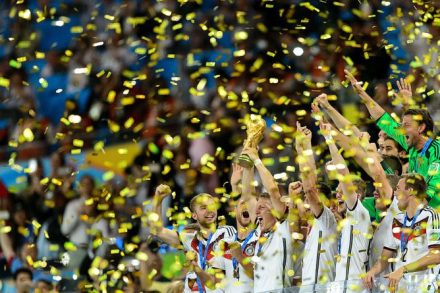
Disastrous decisions by Fifa are nothing new. But yesterday's announcement by football’s governing body that it will expand the World Cup from 32 to 48 teams in 2026 marks another depressing low. The logic is that more teams will now get an opportunity to play on football’s biggest stage. A noble sentiment, perhaps, but this is a half-baked plan that should worry football fans. The huge imbalance in the quality of football on display at the tournament is one of the main troubles with expanding the World Cup. England fans are accustomed to watching their team play our dismal 3-0 victories against the likes of San Marino and Malta at the qualifying stage. But once the tournament starts, you expect to find your side up against high quality opposition.

Donald Trump is right to take action against China

From our UK edition

It’s a mistake to think of Donald Trump as a protectionist, as Boris Johnson will have discovered during his recent visit to New York. Theresa May has said that some protectionist instincts are starting to creep in and that the UK should be a champion of free trade. Her remarks are widely interpreted as a reference to policies planned by Donald Trump, but his plans can just as easily be seen as a defence of a rules-based international trading system. One of the 28 pledges made in his Contract with the American Voter was to 'identify all foreign trading abuses that unfairly impact American workers' and to use 'every tool under American and international law to end those abuses immediately'.

Murdered Christians are 2016’s least fashionable minority

From our UK edition

The murderers and persecutors of Christians have had a good year. With one exception – the killing of Fr Jacques Hamel in July as he celebrated Mass in a church in Normandy – the world has continued to look away as Islamists and other fanatics have slaughtered followers of Jesus Christ. I don't mean that we consciously look away – we simply don't know about most of these atrocities. There are no celebs out there 'raising awareness'; they're too busy weeping over Brexit and Trump. In one attack last June, 460 Christians died. Can you tell me where it happened? I couldn't have, until yesterday, when I did a Google search in preparation for today's Holy Smoke podcast.

Forget diplomacy. Donald Trump wants to talk tough to China

From our UK edition

It might be better for everyone if, in the spirit of Yuletide Fake News, we all pretended that Donald Trump’s Twitter account was a spoof, or at least an alter of the man's many egos. The President-elect, for one, doesn’t take his pronouncements on Twitter too seriously. Or does he? It’s safe to say that there is a growing disconnection between the Donald J. Trump who is putting together a reasonably normal cabinet (‘Mad Dog' Mattis, aside, perhaps) ahead of his first 100 days, and the Twitter Trump who seems to be threatening China, undermining the democratic process that just got him elected, and generally still trolling humanity.

Inside China’s ‘secret’ churches

From our UK edition

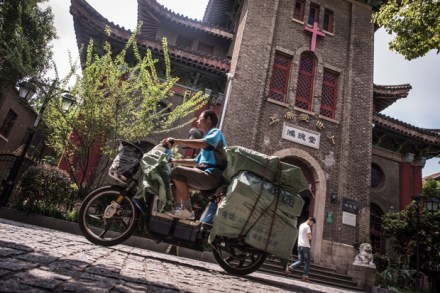
 Beijing A strong coffee always perks me up on a smoggy day, especially when I can drink it somewhere clandestine — like an ‘illegal’ church. Seek, and you shall find — but when it comes to Christianity in China, you’re likely to get a bit lost. Without being told where it was, I could have spent a lifetime walking past the anonymous, seemingly empty office block, never knowing that inside it was abuzz with religious activity. A discreet sign in the lobby is the only indication that a Sunday service is in progress. In other parts of the world, a church announces itself to the faithful with a cross on a steeple.

Why we must not forget about Hong Kong

From our UK edition

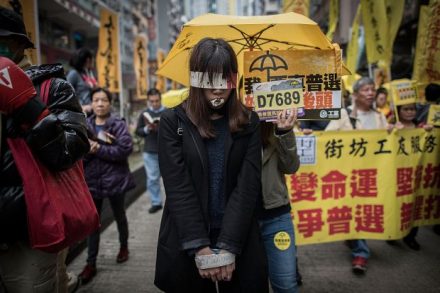
China’s decision to make its own ruling over the legislative council oath-taking controversy in Hong Kong is something that is of great concern to the United Kingdom. Beijing becoming involved in what has – until now – been purely a matter for Hong Kong is questionable and is far more likely to inflame matters than settle them. Now more than ever, the UK must take note of what is happening in the Special Administrative Region (SAR) and ensure that China upholds its side of the 1984 Sino-British Joint Declaration. The UK’s relationship with Hong Kong is one of the most important we have in Asia. The links with London date to the first opium war (1839-1842), and over the subsequent centuries they grew, primarily over shared values.

China’s quiet Christians

From our UK edition

 Beijing A strong coffee always perks me up on a smoggy day, especially when I can drink it somewhere clandestine — like an ‘illegal’ church. Seek, and you shall find — but when it comes to Christianity in China, you’re likely to get a bit lost. Without being told where it was, I could have spent a lifetime walking past the anonymous, seemingly empty office block, never knowing that inside it was abuzz with religious activity. A discreet sign in the lobby is the only indication that a Sunday service is in progress. In other parts of the world, a church announces itself to the faithful with a cross on a steeple.

Magnetic north | 10 November 2016

From our UK edition

Years ago, when I met a famous concert pianist, I was surprised when he greeted me in a northern accent. A soft one, mind you, but completely intact. I’d assumed that, by the time a conductor or soloist reached a certain level of fame, the northern vowels would have been erased by Received Pronunciation or some painful mid-Atlantic hybrid. I was such a little snob in those days, affecting a languid drawl that had my old schoolfriends in Reading rolling their eyes. But my social climbing had at least given me a good ear for other people’s doctored accents. London was crawling with northern choirmasters and music critics whose self-taught ‘posh’ accents were about as convincing as home-tinted hair (which, incidentally, some of them also sported).

Importing the gentleman

From our UK edition

 Beijing Gerard Manley Hopkins said that if the English had done nothing but ‘left the world the notion of a gentleman, they would have done a great service to mankind’. He was right. Yet in Britain today, you’re so very embarrassed by what we regard as your greatest single industry — turning out polished young people. Here in China, we look at the education statistics you view with horror — the ones that show how independent schools teach just 7 per cent of the population and yet their alumni account for 51 per cent of solicitors, 61 per cent of senior doctors, 67 per cent of Oscar winners and 74 per cent of judges — and we think: yes please. That’s why we are so keen to send our children to Britain to learn.

On the money | 8 September 2016

From our UK edition

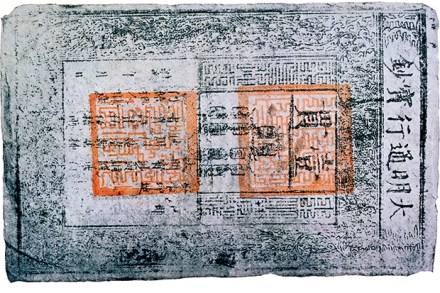
Kublai Khan, said Marco Polo, had ‘a more extensive command of treasure than any other sovereign in the universe’. There were no jangling pockets of coins in Kanbalu. Bark had been stripped from the mulberry trees and beaten into paper notes. The notes carried delicate little pictures of earlier currency — long, frayed ropes weighed down with coins. It was as though they were mocking the old ways. Paper money had been produced in China from as early as the 7th century, but that did not stop Marco Polo from gushing that the Great Khan had discovered ‘the secret of the alchemists’. Back home, there was much curiosity but apparently little urgency. Only in 1661 did the first banknotes circulate in Europe.

High life | 8 September 2016

From our UK edition

I have a question for you, dear readers: is it me, or is there no newspaper or network in America that tells it like it is any more? Take, for example, the Anthony Weiner case. He is the pervert who keeps sending pictures of his penis to women over the internet, more often than not while in the company of his four-year-old son. If a man like that were married to Donald Trump’s closest assistant, The Donald would have been forced out of the race by now — no ifs or buts about it. But over on the other side, Hillary confirmed her trust in Huma Abedin, a Saudi-raised Muslim and her closest adviser, who finally separated from the pervert and asked for her privacy to be respected. The compliant, ass-licking media followed orders. Hillary’s polls remained the same.

Mrs May the ‘Student Killer’ should count the cost of her visa crackdown

From our UK edition

In the post-Brexit landscape whose shape was barely glimpsed in G20 discussions at Hangzhou, one thing is clear: soon we’ll have to stop waffling about trade deals and start pushing British products the world wants to buy. One such is education, at our universities, independent schools and English-language colleges — an export sector calculated in 2011 by the now defunct Department for Business, Innovation and Skills to be worth £17.5 billion. Not only does this sector attract foreign exchange, plug funding gaps for cash-strapped universities and support thousands of jobs, it also lays the ground for future relationships with students who return home to embark on business careers.

Does Justin Trudeau realise how desperate his China love-in looks?

From our UK edition

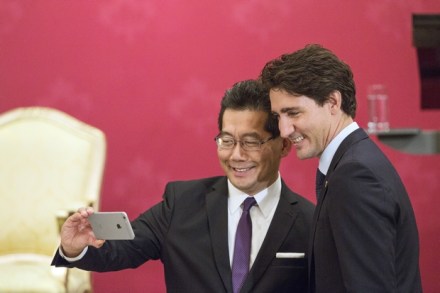
Whatever the reason behind Obama not getting the red carpet treatment in Hangzhou, there’s one leader who was guaranteed it: 'Little Potato'. Or, as you might know him, Justin Trudeau. The pronunciation of Trudeau sounds similar to the Mandarin word for potato, and Chinese media’s primary frame of reference for him is through his father Pierre (Big Potato was friendly with China’s communist leadership years before the rest of the West felt ready to engage). Their other reference point is that he is the handsome 'APEC hottie', so perhaps Hot Little Potato is more accurate. His predecessor Stephen Harper, who stepped down as an MP last week, would never have earned such an affectionate nickname.

How can we trust China with our nuclear power when we can’t trust it not to spy on our government?

From our UK edition

In her decision as to whether to go ahead with the Chinese-backed Hinkley C nuclear power station – postponed from July apparently because of security concerns – Theresa May will find no better guidance than the advice which has been given to her and her aides while attending the G20 summit in Hangzhou this week. They have reportedly been advised to not to take their mobile phones, and to use temporary replacements while in China. They have also been given temporary email accounts which can be deleted upon return, and to avoid using public charging points for laptops and iPads.

‘I have become their voice’

From our UK edition

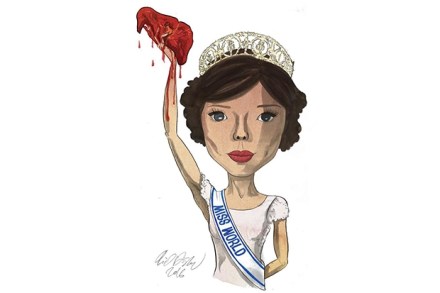
When the model and actress Anastasia Lin was crowned Miss World Canada last year, a fairly easy and lucrative career lay in front of her: magazine shoots, sponsorship opportunities and being paid to turn up to parties. She instead decided to use her position to confront the Chinese Communist party and call out its human rights abuses. Her new film The Bleeding Edge is a feature-length dramatisation about the organ trade in China. It might not be in a cinema near you soon, but it does screen in the House of Commons next week, in front of MPs and peers. And this is the audience that 26-year-old Lin is seeking. Her website has the slogan ‘beauty with a purpose’, and Lin has both in abundance. Speaking from Toronto before her visit here, she tells me her unlikely story.