China

Ai Weiwei’s Aylan Kurdi image is crude, thoughtless and egotistical

From our UK edition

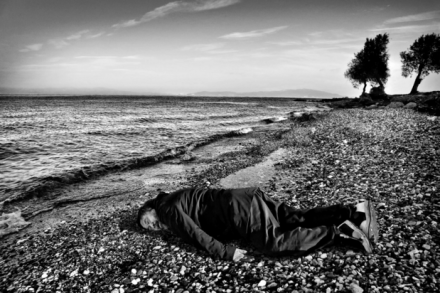
Last September a photograph of three-year-old Aylan Kurdi’s lifeless body washed up on a beach near Bodrum made headlines around the world. The image had a significant effect on shifting public perception to the Syrian refugee crisis as well as sparking a debate around the ethics of the circulation of such images. Academics at the University of Sheffield have estimated that 53,000 tweets were sent per hour at the height of the image’s circulation reaching 20 million people around the world in 12 hours. Last week, over four months after the image appeared, the Chinese artist Ai Weiwei made his own contribution to the debate in a photograph which depicts the artist posing as Kurdi.

Lessons in the surreal

From our UK edition

The new season of the Serial podcast (produced by the same team who make This American Life) was launched last month, releasing one episode a week as the investigative reporter Sarah Koenig looks this time into the strange story of Bowe Bergdahl. He’s the US army soldier who walked out on his platoon in 2009 while stationed on a remote outpost in Afghanistan, close to the Pakistani border. Unsurprisingly, he was captured by the Taliban and held captive for five years before being released, in a prisoner exchange with those held in Guantanamo Bay.

The Spectator’s Notes | 21 January 2016

From our UK edition

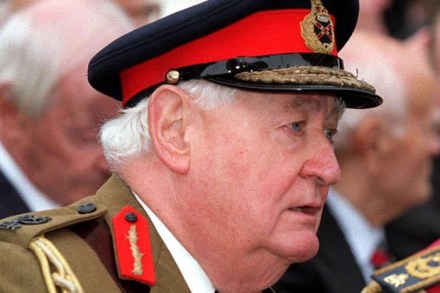
Many have rightly attacked the police for their handling of the demented accusations against Field Marshal Lord Bramall, now at last dropped. They ostentatiously descended on his village in huge numbers, chatted about the case in the pub and pointlessly searched his house for ten hours. But one needs to understand that their pursuit of Lord Bramall — though not their exact methods — is the result of the system. Because the doctrine has now been established that all ‘victims’ must be ‘believed’, the police must take seriously every sex abuse accusation made and record the accusation as a reported crime (hence the huge increase in sex abuse figures).

Portrait of the week | 21 January 2016

From our UK edition

Home David Cameron, the Prime Minister, said that Muslim women must learn English, and that those who had entered on spousal visas would be told halfway through their five-year spousal settlement: ‘You can’t guarantee you can stay if you are not improving your language.’ He said that learning English had ‘a connection with combating extremism’. A heterosexual couple went to the High Court to claim the right to enter into a civil partnership. MI5, the security service, was rated as Britain’s most gay-friendly employer, following a survey by the organisation Stonewall. Mark Carney, the governor of the Bank of England, said: ‘Now is not the time to raise interest rates.

Come back Pesto, all is forgiven: and tell us who’s to blame this time

From our UK edition

‘Who’s to blame for financial crisis’ is a poem I wrote in 2012, rhyming ‘speculators, spivs and traders’ with ‘rich, -uncaring hedge-fund raiders’, while taking passing swipes at Gordon Brown and ‘Mervyn King, who really didn’t do a thing’. But it’s too early in 2016 to update my ditty, because the new crisis — if that’s what it is — hasn’t really hit us yet, except in share prices that clearly have further to fall. And the question of who’s to blame, never mind how to make them rhyme, is going to be a lot more difficult this time round. ‘It’s China’s fault,’ was the gist of bulletins about the loss of 750 jobs at Tata’s Port Talbot steelworks this week.

Forget China or oil prices. This crash was made in America

From our UK edition

If anyone is feeling pleased about the slide on the stock-market today, it is probably Andrew Roberts, the RBS analyst who hit the headlines this week with a note advising everyone to ‘sell everything’. Probably rather sooner than he expected, and before any of his clients even had time to panic properly, prices have started to collapse. Almost every day, there are hefty three digits falls, and pictures editors are running out of their stock photos of despairing traders looking glumly into their Bloomberg terminals. The numbers suggest that a bear market, usually defined as a 20 percent drop off the highs, is now very close. China’s Shenzhen index is already there. The FTSE is down from just shy of 7,000 in July to 5,780 now.

A separation of powers

From our UK edition

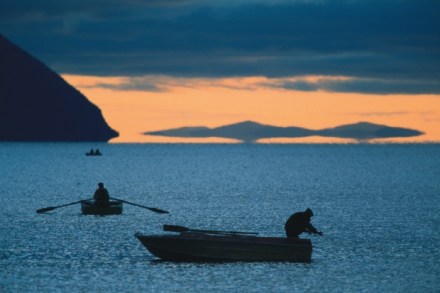
In 2014, Beijing and Moscow signed a US$400 billion deal to deliver Russian gas to Chinese consumers. Construction of the Power of Siberia pipeline began last summer on the banks of the Amur river, known in Chinese as the Black Dragon river. It marks a rapprochement between two powers who have warily eyed each other across the frigid water of the Amur, which forms the border, for more than three centuries. According to Beijing’s man in Moscow, ‘China and Russia are together now like lips and teeth.’ In Black Dragon River, Dominic Ziegler attempts to explain how they got there.

The bicycle may have triumphed but it’s far from perfect

From our UK edition

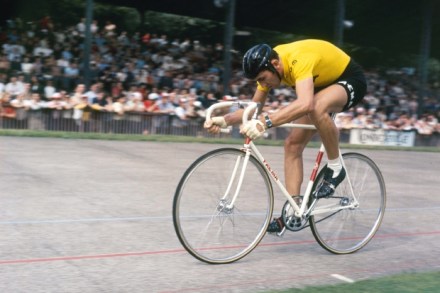
It’s extraordinary that it took civilisation so very long to discover the benefits of putting little wheels on suitcases. We knew how to fly before we realised it was no longer necessary to huff-and-puff baggage by hand. Even odder, steam and electricity were well understood before anyone got around to developing the ingeniously simple pedal-and-crank mechanism, an invention of decisive importance, which turned the ludicrous, wobbly old hobbyhorse into today’s smooth and sensible bicycle. Its eventual triumph over all our sensibilities can be seen today when, at some practical cost to the general mobility of the capital, London is being effortfully retrofitted with cycle lanes while oil-fired traffic is perpetually stalled in a noxious smog of its own making.

The Chinese are willing participants in state censorship

From our UK edition

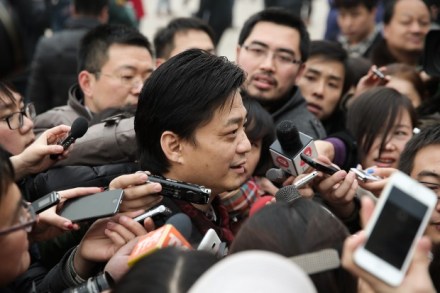
For three decades, Cui Yongyuan has been one of China’s national treasures. As a veteran television presenter for CCTV (China’s BBC), Cui’s career was made by this state-controlled broadcaster. So his recent talk in London - entitled ‘An Idealist’s commitment and compromise’ - caught my attention for its political undertone. Could he have been talking about the compromises he had to make as a Chinese journalist? To my delight, Cui spoke about this - and more. 'When the Chinese emigrate to democracies, to civilised nations, they enjoy the freedom of the system,' Cui told the Chinese audience. 'But they become patriotic to the point of dogma, such that no one can voice a single ill of China.

Letters | 5 November 2015

From our UK edition

The power of creativity Sir: A rounded education should encourage creativity as well as maths, English, science and history if Britain is to compete in the modern world. Toby Young’s claim that the arts world is exaggerating the decline of arts in secondary schools therefore deserves to be challenged (Status anxiety, 24 October). In spite of his confidence, teachers do think that there is a problem. They fear that the focus on ‘core’ subjects means they shouldn’t offer arts subjects. Students worry that studying the arts will damage an academic profile. But encouraging creativity makes people more adaptable, and helps prepare them for the uncertainties of life.

The brutality of China’s one-child policy is still shocking

From our UK edition

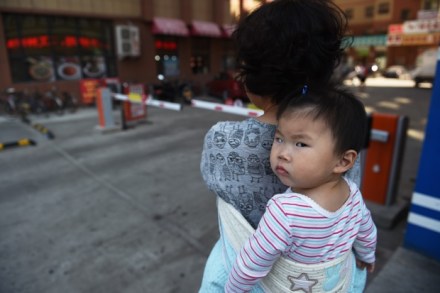
So, China’s Communist Party has radically modified its one-child policy in favour of a one-or-two-child policy. For most politically minded Brits, it was a useful reminder that the policy actually existed. It has, says the Communist party with characteristic opacity, prevented about 400 million births in the decades since its introduction in 1979.  Some 330 million of those births were prevented by abortion. It may be that I somehow missed all the moral outrage over here at this flagrant violation of human rights from feminists and human rights organisations in those three decades. Or possibly there wasn’t much. Maybe there were any number of women’s groups picketing the Chinese embassy about the policy on a 24-hour basis and I just never got to hear about it.

Yet more examples of BBC bias this week

From our UK edition

Two reports on the BBC Ten O'Clock News this week, both unashamedly partisan. Yes, yes, I know they are not the only reports this week guilty of bias. There’s the same ol same ol refugee hugging every night and there was also a report on the fact that our population is about to rise by ten million without even the faintest suggestion that this might not be a bloody good thing. But I mean two specific reports. One, by Reeta Chakrabarti about protests outside abortion clinics. This was the most egregiously biased piece of reporting I have seen for a long while. It took, as a statement of unalterable fact, that these protests were vile. There was not a single voice raised in defence of the protests, or against abortion. It was propaganda, pure and simple.

Revealed: how Jeremy Corbyn caused a scene at the China state banquet

From our UK edition

Last week Jeremy Corbyn appeared to be on his best behaviour when he attended the state banquet at Buckingham Palace in honour of China’s President Xi Jinping. While he opted to attend the event solo, the republican Labour leader did manage to don white tie, and appeared to successfully make small talk with both the Royal family and members of the Chinese delegation. Alas, word reaches Steerpike that Corbyn's efforts during the dinner were not so well received. Mr S understands that he actually broke one of the most basic rules of dining etiquette during the lavish do: no mobile phones at the dinner table. Party guests were surprised to spy the Labour leader texting on his phone during the dinner.

Boris Johnson’s diary: Amid the China hype, remember Japan

From our UK edition

Frankly I don’t know why the British media made such a big fat fuss last week when I accidentally flattened a ten-year-old Japanese rugby player called Toki. He got to his feet. He smiled. Everyone applauded. That’s rugby, isn’t it? You get knocked down, you get up again. And yet I have to admit that I offered a silent prayer of thanks that I didn’t actually hurt the little guy. They aren’t making many kids like Toki these days; in fact they aren’t making enough kids at all. If you want proof of the rule that nobody knows anything, look up a 1988 bestseller called Yen! Japan’s New Financial Empire and its Threat to America.

Charles Moore’s Notes: If we want to save the elephant, we must legalise the ivory trade

From our UK edition

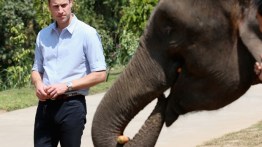
How good a deal for Britain is it that the president of China got a state visit and a nuclear power station and Prince William got the chance to go on Chinese television and complain about the ivory trade? The Prince was listened to politely, of course, but the Chinese will not give up their enthusiasm for the stuff. The elephant in the room, to misapply that expression, is that only a legal trade in ivory will save the species. Just as cows exist in any numbers only because we eat their flesh and drink their milk, so elephants have a future only if it is profitable to breed them. Throughout the commodity boom that has now ended, Africa has done very well out of China’s demand for raw materials.

The Hinkley Point disaster

From our UK edition

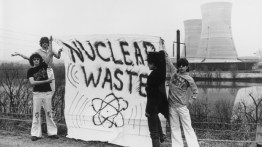
How easy it would be to scorn the environmentalists who are up in arms about George Osborne’s new pet project, the Hinkley Point C nuclear power station. You can understand their anxiety: subsidies for green energy are being slashed, yet the Chancellor will do anything — and pay anything — to get this project up and running. He is happy to force households to pay artificially high prices for a form of energy which brings all kinds of risks — of which the world was reminded this week when Japan found the first cancer case liked to the Fukushima disaster of 2011. ‘Has the Chancellor lost his mind?’ they ask.

Heathrow’s third runway could still be halted – here’s how

From our UK edition

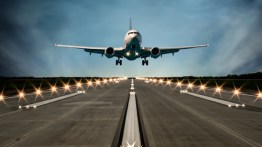
The Great British Runway final between Heathrow and Gatwick is beginning to look like a game of two halves. The visit of China’s President Xi Jinping is a bonus for the west London team, who can claim that Chinese investors with bulging wallets are more likely to be impressed by landing at an urban mega-airport than an expanded flying club in Sussex. But the Volkswagen emissions scandal has been a gift for Gatwick, because as chief executive Stewart Wingate said: ‘Heathrow’s poor air quality already breaches legal limits and it’s difficult to see how expansion could legally go ahead with the millions of extra car journeys an expanded Heathrow would generate.

Listen: BBC’s Laura Kuenssberg confronts President Xi over China’s human rights

From our UK edition

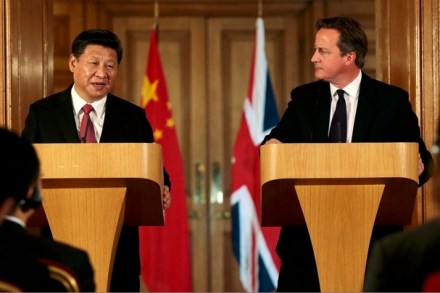
One of the clever things that politicians try to do is to redefine words and concepts that everyone thought they knew the meaning of. Take today’s ‘press conference’ that David Cameron and Chinese President Xi held in Downing Street. That ‘press conference’ consisted of statements followed by two questions, though dozens of journalists had turned up. Fortunately, the question from the British media came from the BBC’s Laura Kuenssberg, who asked the Prime Minister how he thought a British steel worker would feel that the Chinese president was being ‘ferried down Whitehall in a golden carriage’ and whether there is ‘any price that’s worth paying in order to further our business interests with China?

The British public agrees: China is buying our foreign policy

From our UK edition

A few weeks ago, the Dalai Lama gave an interview to The Spectator where he summed up what he regarded as David Cameron’s policy of not seeing him again, so as to not upset his new friends in Beijing. ‘Money, money, money,’ he said. ‘That’s what this is about. Where is morality?’ A powerful point – and one that we put on the cover of the magazine. Now YouGov has put his words to the public in an opinion poll, and asked if they are a fair reflection of Cameron’s policy on Tibet and China. The result: 69 per cent said he was right, and just 8 per cent said he was wrong. With President Xi signing deal after deal today, the Dalai Lama can now consider his verdict amply vindicated. [datawrapper chart="http://static.

Lionel Barber strengthens his ties with China

From our UK edition

Last night's state banquet saw Jeremy Corbyn join David Cameron, President Xi Jinping and Her Majesty to raise a glass to the beginning of a golden era of partnership between China and the United Kingdom. With Corbyn meeting the Chinese president earlier in the day to raise grievances regarding the country's human rights track record, his encounter with the president at the dinner appeared to be a civil one.