China

Is China hiding how bad the coronavirus is?

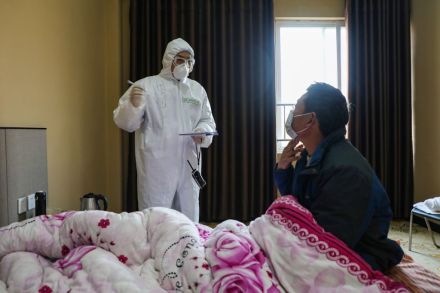
The Chinese government would have the world believe that the coronavirus is under control and the risks of it spreading to the rest of us is minimal. But foreign governments and intelligence agencies believe that China has been lying about the extent of the epidemic and continues to deny the truth about the numbers of dead and infected.Judging by leaked videos on social media that purpotedly show the dead lying untended in the street, bodies wrapped in sheets lying on benches and crematoriums working 24/7 with bodies unceremoniously stuffed into ovens with no burial rites, millions of Chinese people appear to agree with the foreign assessments.
coronavirus

The reason our civil service is soft on China

From our UK edition

The creation of the National Security Council under David Cameron was supposed to join up parts of British government which had not previously had the right forum. We would now be able to survey all functions of security right across government. How odd it is that this coordination was not applied to the issue of Huawei years ago. Whatever may be said against great powers, they do have in their political bloodstream a constant sense of security threat, both external and internal, which helps them develop strategy. The United States and China both devote huge amounts of money and brainpower to the subject.

Why we’ll regret the Huawei gamble

From our UK edition

It is apparently fine for China to ban western technology from its telecommunications network but quite unacceptable for us to prioritise our national security. The decision to allow Huawei into the UK’s 5G network is the first of many tough choices in the new technological era. And we've flunked it. Why is it a new technological era? Because we no longer simply buy goods in return for money. Increasingly we pay not just in coin, but in data as well; not just in a one-off transaction, but in a perpetual transfer of bytes back to the vendor. And when it comes to 5G, since it will underpin so much more of our lives than 4G, you need to trust that vendor. Huawei has been designated a ‘high-risk vendor’. So it is.

The dangers of letting Huawei build our 5G network

From our UK edition

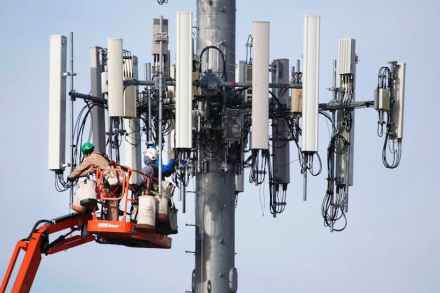
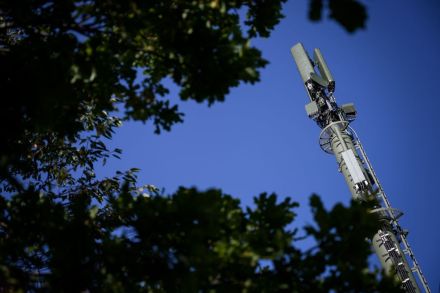
This afternoon Boris Johnson finally approved the use of equipment made by Huawei in building parts of Britain’s 5G network. The decision is a long time coming, having initially been kicked into the long grass by Theresa May last year, but it is also important. The decision will have profound strategic implications for the UK for years to come. Why such a big deal? 5G is the next generation of mobile phone technology. It is faster and more reliable than the 4G most of us are still using. And crucially, the technology isn’t just about improving our phones, as 5G chips will connect pretty much everything, from driverless cars, to electricity grids, to the emergency services.

Xi’s dictatorship is a tragedy, not a farce

A successful dictator has to have ruthlessness, control, influence and competence. So how does China’s leader, Xi Jinping, rate as a dictator? Xi has been in power since 2012 and thus has enough of a track record to judge.On ruthlessness, he ranks highly. The concentration camps he has created for China’s Muslim minority in Xinjiang and the suppression of the movement in Hong Kong — in violation of the 1984 agreement with the UK — are the most tangible examples. The November 2019 leak of the 'Xinjiang Papers', more than 400 pages of internal Chinese documents, to The New York Times provided an unprecedented documentation of the origins and implementation of crackdown against Muslims of Xinjiang.

xi

There’s a long way to go before Trump can declare victory in his trade war

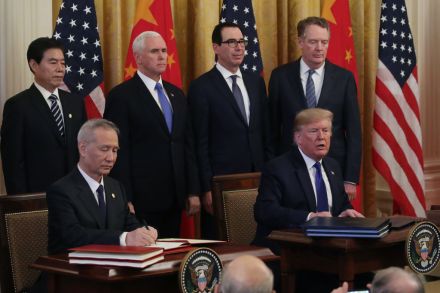
There is no shortage of quotes by Donald Trump that his opponents have tried to use against him — few of which have so far damaged him politically, still less embarrass the man himself. But there is one which really does have the potential to cause him harm in this year’s presidential election: his claim, in March 2018, that ‘trade wars are good, and easy to win’. That isn’t looking quite so clever now, two years later when the trade war that Trump started with China is still far from won. The deal signed today by Trump and Chinese vice premier Liu He brings a respite in hostilities, but there is a long way to go before the US can be claimed to have won, or even to have restored trade to what it was prior to 2018.

trade war
tiktok

Why do we keep ignoring TikTok’s security problems?

I was a young tech journalist in the years when Facebook and Twitter were growing fast. In retrospect, one of the biggest oversights made by the tech press (myself very much included) was that for the most part, we’d cover one product launch after another with little attention to the security or privacy implications. When a data breach or privacy scandal came along, we’d cover that, and all too often then let the story drop. But now a decade-plus later, our lack of media attention to security in social media seems glaring.Part of this was structural.

China and Russia win from America’s wars

I woke up late on Friday, so missed the livestreamed assassination of Franz Ferdinand and the rolling barrage of tweet-commentary about the super-judicial martyrdom of Hassan Thingy and the start of World War Three. It was all over by lunchtime, bar the shooting, because there could only be one winner. Or was that two?The first winner, as always when it comes to American foreign policy, is Xi’s China. Anything that ties the United States into the open-ended shambles of the Middle East distracts the energies of the United States, and the eyes of America’s allies and clients, from China’s surreptitious campaigns to replace the United States as global patron. In war as in online shopping, China emerges as hegemon not despite American efforts, but because of them.

china

Letters: Should conservatives be worried that high-spending Boris has a majority?

From our UK edition

My father’s imprisonment Sir: Harald Maass’s piece on the plight of Uyghurs in China (‘A cultural genocide’, December 14) captures the grim reality of what has been happening. Articles like this draw vital attention to the crisis. I am an ethnic Uyghur and live in Belgium with my wife and children. My father, a 58-year-old secondary school teacher from Xinjiang, was jailed in China in April 2018. No reason was provided by the authorities as to why, and there was no trial or any other legal procedure. He was obviously imprisoned just because he is a Uyghur. After 18 months in prison, he was finally released recently and is at home in Xinjiang. Even so, we have only been in touch once — he and all my family members in China are too afraid to be open with me.

The Chinese trade deal is a Christmas gift to Xi

If Donald Trump wanted to deliver a seasonal gift to his ‘good friend’ Xi Jinping, the ‘Phase One’ trade deal reached this weekend fits the bill pretty well.  From the viewpoint of the Beijing leadership, it vindicates the Chinese refusal to budge during the long months of trade negotiations despite the threat of escalating duties. What has resulted is less the kind of overall trade agreement originally aimed at by the Trump administration and feared by China as interference in its economy —  and more of a purchase agreement accompanied by reduced tariffs.

xi

Trump’s Chinese tariffs are simply a scare tactic

Ever since Donald Trump began his trade war with China there have been two possibilities: firstly, that he intends tariffs to form a permanent feature of the landscape in relations between the US and China: a protectionist device designed to protect American jobs indefinitely; or secondly, that he sees his tariffs as a shock tactic devised to draw China into talks which it would otherwise be loathe to join, and with the ultimate aim of freeing up trade. The latest development, halving a set of tariffs which had been in place since September and canceling another set which had been due to come into place this week, points heavily to the latter.

chinese tariffs

The chilling stories from inside China’s Muslim internment camps

From our UK edition

Vegetable-seller Kairat Samarkhan didn’t know why he had been summoned to the police station. ‘I had to empty my pockets and hand over my belt and laces. Then they started to ask questions,’ he says. After days of interrogation, during which he was hardly allowed to sleep, officers pulled a sack over his head and drove him to a camp near the city of Altai. Samarkhan, a Muslim Kazakh, told me about his experience in the camp: ‘Every day, we had to renounce the Muslim faith and confirm that we respect the laws of China. Before every meal, we chorused: “Long live Xi Jinping!” ’ In the past two years China has — almost unnoticed by others — built the largest network of internment camps in the world.

America should kidnap pandas to end the trade war

It’s near the witching hour as the wolves begin to howl, the Tasmanian devil spins itself into a frenzy, and the red-eyed tree frog blinks into glass. The zoo is oddly quiet as US commandos (trained in zoology) scale the walls and deploy a well-placed and tiny explosive gum inside the lock to pop open the enclosure. The sleepy giant simply rolls over with dreams of bamboo and blasé dancing in its head. A bearded captain pulls out a black sack and pulls it over the animal’s head as they tranquilize the heavy sleeper — the panda rendition is complete. That’s right, I am proposing kidnapping the American domiciled pandas to expedite an end to the US-China trade war.

pandas

What will war with China look like?

Like so many wars, this one began with an accident: a US naval vessel patrolling the South China Seas and shadowing the Chinese navy made a small navigation error in rough weather. The ships collided, five Chinese sailors died and their vessel was severely damaged. Beijing saw this as an act of war, the latest in a series of perceived insults by the US administration, and the response was swift. Cyber attacks against Washington DC and the headquarters of the US Pacific Fleet at Pearl Harbor shut down power. Ironically, most of the 175 deaths in the first three hours came not from hospitals where emergency generators kicked in successfully, but from failed traffic lights and massive car pile-ups in both cities.

war china

Portrait of the week: Bercow steps down, Hoyle steps up and an election begins

From our UK edition

Home Sir Lindsay Hoyle, the Labour MP for Chorley and deputy Speaker since 2010, was elected Speaker by the Commons. His first words were: ‘No clapping.’ Nigel Farage, the leader of the Brexit party, proposed an electoral pact with the Conservatives, but only if Boris Johnson, the Prime Minister, repudiated the agreement on Brexit that he had made with the European Union. When this was not forthcoming, he said: ‘We will contest every single seat in England, Scotland and Wales.’ But he declined to stand for parliament himself (which he had done seven times before, without success). Philip Hammond, the former chancellor of the Exchequer, decided against standing as an independent in the election after all.

Brave front: The pro-democracy guerrilla fighters taking on Hong Kong’s riot police

From our UK edition

 Hong Kong Mo Ming zig-zagged through the tear-gas. He ran across a central Hong Kong flyover in a low crouch he learned from the shoot-’em-up video game Counter-Strike. It was 1 October, China’s National Day, and the confrontations in Hong Kong were in their 17th week. I followed him as he picked a path through the thickening fog, slingshot at the ready for a counterstrike of his own against the police’s water cannon — their most formidable weapon, which sprays protesters with blue, irritant-laced water. It fired just short of our position, and we made it across to the far side, where other pro-democracy fighters had retreated.

From Brexit to Beethoven: John Humphrys returns to radio

From our UK edition

Some listeners will have had quite a shock first thing on Monday. Turning on at six to Classic FM they would have heard a familiar voice but not quite the one they expected. In yet another surprising turn of events, John Humphrys, the fox terrier of news broadcasting, has just completed a stint on Classic FM’s breakfast show, swapping Brexit for Beethoven and smooth radio for the ebullient hectoring of the Today programme. ‘No need to readjust your radio,’ laughed Humphrys just after seven, before introducing the next track, Shostakovich’s Jazz Suite.

The brave new world of 5G

To those who understand it, 5G is the next exciting piece of technology and it is coming to your neighborhood soon. For the rest of us, it is a number and letter that mean almost nothing, but we talk about it as if we really do understand our future and how great it's going to be.The theory goes that 5G is a game-changing new generation of wireless technology, a little like the iPhone of today compared with the old rotary telephone. The scientists behind 5G believe it will, at last, deliver very high data speeds to every connected device and do so with extraordinary reliability.Today, 5G has been deployed in 20 American cities from New York to Atlanta with a further 10 coming online before the end of the year.

5g

Are inside-traders profiting from the US-China trade war?

Of all the 9/11 conspiracy stories, one of the most persistent is the suggestion that al-Qaeda funded its operations by short-selling the shares of airline companies in the days before the attack. Inevitably, airline shares plummeted that day, netting short-sellers vast profits. While there was an increase in short-selling before the attack, no-one has proved one way or the other whether that was history’s most audacious case of insider-dealing or just a reaction to an industry which was already in trouble for purely commercial reasons. But is someone now trying on the same trick with the US-China trade war?

inside-traders

Portrait of the week: Brexit uncertainty, Turkey in Syria and a Chinese threat

From our UK edition

Home Brexit teetered from uncertainty to uncertainty. Parliament had been summoned to sit on Saturday 19 October to debate what Boris Johnson, the Prime Minister, had brought back from a European Union summit. He had held talks before the week began with Leo Varadkar, the Taoiseach of Ireland, at Thornton Manor in the Wirral, from which optimistic noises emerged. Margaret Atwood, 79, from Ottawa, and Bernardine Evaristo, 60, from Eltham, shared the Booker Prize. The Queen wore the George IV diadem at the State Opening of Parliament instead of the heavy Imperial State Crown.