China

Corona confusion is being ruthlessly weaponised

From our UK edition

Few words have as great a hold on the contemporary imagination as ‘disinformation.’ Few words are as ubiquitous in contemporary discourse or as pervasive in political mud-slinging. Donald Trump castigates the 'fake news' media for perceived bias against him; Hillary Clinton blames foreign influence operations for her election loss. Disinformation, propaganda, lies: whatever you wish to call it, it’s the bogeyman of our age, a convenient repository for all our sins. There is a reason for this. The author Shoshana Zuboff has correctly observed that information technology brought with it a revolution that reordered capitalism. Human experience – as found in data, which is how we now harness information – became the 'raw material' for wealth creation.
Beijing’s attempts to elude blame for the Wuhan virus will backfire

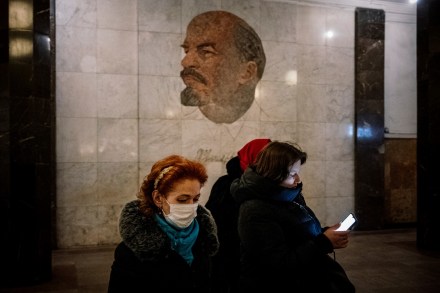
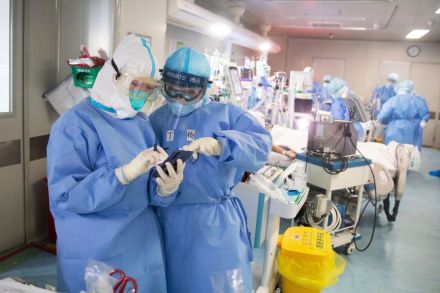
Facing harsh criticism for allowing the novel coronavirus to spread, Beijing has settled on an international communications strategy: smearing the United States by claiming the virus originated with American soldiers visiting China. This strategy, based on obvious lies, will not work out well.Nobody outside China’s state broadcasters and some information-starved viewers could possibly believe it. For good reason: it’s bunk, and vile bunk at that. An infected unicorn is more likely to have started the virus in Wuhan than the US military. Yet that is the story the Chinese Communist party (CCP) is trying to peddle.

wuhan

Time to ban wet markets

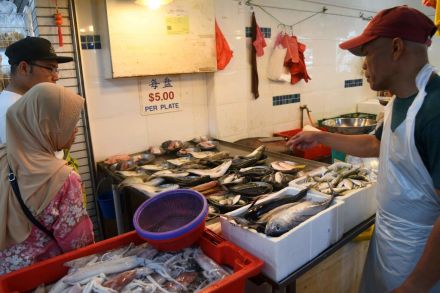
There’s a recurring flashback from my childhood that never fails to induce a blood-curdling shiver down my spine. My mother’s request for company on her monthly shopping trips to the wet market was always a Hobson’s choice, one I deeply resented because the experience was awful. Deep in the bowels of Singapore’s Chinatown complex was a large open-air market that stood in stark contrast to the surrounding glitzy skyscrapers and immaculate streets. The place was a veritable not-so-little shop of horrors and till today, those horrors remain firmly etched in my memory.A distinctly fetid stench greets you long before entering the market; soon it becomes apparent why they’re referred to as ‘wet’.

wet markets singapore

How Mao’s medicine made modern China

From our UK edition

History repeats itself, said Marx, first as tragedy and then as farce. And when it comes to the world’s latest pandemic, China and the coronavirus are no historical exception. ‘Mao’s Flu Strikes’, The Observer declared in November 1968. ‘200,000 people are ill with Mao’s Flu in Rome’, the paper reported, ‘and the epidemic is expected to grow in the next few weeks.’ While sixties’ Brits may have sidestepped today’s loo roll stockpiling, the ‘Mao Flu Panic’ was soon high on people’s minds. By its conclusion in 1969, Mao flu – now known historically as ‘Hong Kong flu’ – had killed around one million people worldwide, including 100,000 in the US and 80,000 in the UK.

The coronavirus is springing the Thucydides trap

The first casualty of informational war is truth. The first American casualty of COVID-19 was the myth that the United States can ‘manage’ the rise of China as a world power through mutual interest. That mutual interest was only ever economic. Naturally, most of our politicians, business leaders and commentators explained it as strategic too: as technocracy calls GDP the index of human happiness, so it identifies strategic interests with economic ones. The coronavirus crisis has, however, exposed an essential strategic antagonism between the United States and China.'‘What made war inevitable was the growth of Athenian power and the fear which this caused in Sparta,’ Thucydides wrote in History of the Peloponnesian War.

thucydides

We’re all Chinese now

I didn’t know this was what they meant by ‘cancel culture’. Sports events, theatre shows, plane flights, weddings, funerals: everyone is in a mad rush to cancel everything. Governments are ordering citizens to remain indoors, with Spanish police even deploying drones to catch miscreants. I don’t know whether it is the best way of tackling coronavirus — the UK government, which has gone to greater lengths than others to explain the scientific modeling behind its decision-making, has come to the conclusion that banning things and forcing the entire population into lockdown will have minimal effect and may even be counter-productive, at least at this stage. But it is going to cause a global recession, if not depression.

chinese

Coronavirus is a metaphor for our vulnerability over Huawei

From our UK edition

Monday night’s Commons rebellion over Huawei was on a surprisingly serious scale for a new government with a big mandate. The problem for the government is not just the actual danger of our security being breached by Huawei, real though that is. It is also strategic. The government is not treating the subject this way, but sees it as merely a matter for the Department for Digital, Culture, Media and Sport. This is a bad mistake. We have achieved Brexit. We are making our own way in the world. Our closest allies in terms of trust, language, cultural links, democratic values and shared interests are our four partner nations in the ‘Five Eyes’ deep intelligence partnership — the United States, Canada, Australia and New Zealand.

America has turned into a bad joke

From our UK edition

Gstaad     Rumours about the virus are flying around this village. First there was talk of a hotel being temporarily quarantined, then a shindig given by a fat social climber where one of the guests was said to be infected. So far these seem to have been false alarms but still the fat old rich who don’t ski are panicking, staying indoors and incommunicado. This is good news. Even better news is that I’ve been skiing with my son and have never had a better time, although he did have to wait for me at times. The snow was unexpectedly good and there was plenty of it. My trouble is that I look down from a south-facing verandah and see green fields.

How do pandemics change the way we think?

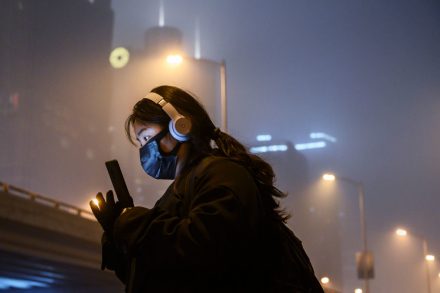
It starts with seemingly insignificant numbers alongside little red blips on the world map. In a matter of days, the numbers soar and the red circles balloon to engulf an entire region. This pattern has repeated itself several times across the globe — notably in South Korea, Iran and Italy — as the number of confirmed cases of COVID-19 has surged since the virus first emerged in Wuhan back in December. Despite the Chinese economy coming to a grinding halt amid an unprecedented city-wide lockdown, the inevitable happened. The virus could not be contained within mainland China’s borders, and neither could its accompanying fear.Coronavirus has spread perniciously, causing 4,716 deaths worldwide and radically transforming life as we know it.

pandemics
huawei

Coronavirus is a metaphor for Britain’s vulnerability over Huawei

Monday night’s House of Commons rebellion over Huawei was on a surprisingly serious scale for a new government with a big mandate. The problem for the UK government is not just the actual danger of our security being breached by Huawei, real though that is. It is also strategic. The government is not treating the subject this way, but sees it as merely a matter for the Department for Digital, Culture, Media and Sport. This is a bad mistake. We have achieved Brexit. We are making our own way in the world. Our closest allies in terms of trust, language, cultural links, democratic values and shared interests are our four partner nations in the ‘Five Eyes’ deep intelligence partnership — the United States, Canada, Australia and New Zealand.

Washington is furious at Boris’s Huawei bid

From our UK edition

Boris Johnson faced his first major rebellion of the new parliament on Tuesday. Parliamentarians are waking up to the fact that this decision has far greater diplomatic ramifications than was originally appreciated. Despite their sizeable majority, the government narrowly avoided defeat and will be vulnerable when future bills relating to Huawei are tabled. The reaction in Washington DC to Boris Johnson’s decision to allow Huawei to tender for the 5G contract validates the concerns of the new 'awkward squad' of former cabinet ministers and Tory select committee chairs. Rarely have Democrats and Republicans been so united.

How coronavirus could change the global order

From our UK edition

As much as it is a threat, Coronavirus is also an opportunity. This clear demonstration of the chaos that the unseen can cause both advanced and developing nations gives global leaders the chance to reset positions and behaviour. In Coronavirus and Sars, China has been at the epicentre of genuinely life-changing diseases. The circumstances in which these illnesses developed are completely at odds with the animal welfare and health and safety regulations common in most developed nations. Western diplomacy might, if used judiciously, change Chinese behaviour while Beijing is on the defensive The trade in snakes, pangolins, bats and other wild animals has been outlawed by the Chinese authorities.

Why is coronavirus receding in China?

From our UK edition

In the panic over coronavirus in Britain, we seem to have forgotten about China. There is a logic to that, of course. The argument goes that British and European cases are far closer to home. But if we were just a little more aware of what has been going on in China over the past few weeks we might be a little less-minded to panic.  In China, the epidemic is not over, but it is in very sharp decline. In the worst week – the second week of February – more than 3,000 people a day were being infected in a seemingly exponential upwards curve. But then the number of infections peaked and started to fall just as quickly as they rose.

A meditation on death

From our UK edition

Gstaad   I shoulda been a weatherman: no sooner had I announced snow to be a Gstaad rarity than it came down non-stop. But then it rained, so everything’s hunky-dory. Older rich people who don’t ski are relieved that it’s stopped; younger types who do indulge are over the moon that it’s snowed at all. Happy, happy Gstaad… but not really; the coronavirus news has some scared out of their wits. In fact, this alpine village is beginning to feel like Der Tod in Venedig, or Death in Venice for non-German speakers. The great South African doubles specialist Frew McMillan, now the best tennis commentator on TV, used to call me Dirk, as in Bogarde, because he thought I looked a bit like the thespian.

Jean Vanier’s sad fall from grace

From our UK edition

The fall from grace of Jean Vanier is truly a sad story. The founder of the L’Arche communities did extraordinary work, practical, intellectual and spiritual, to advance the idea that those suffering mental handicap had much to teach the rest of us. His was a radical idea about what community can be. Now, however, L’Arche has accepted a report that Vanier, who died last year, had sexual contact with six women from the 1970s onwards. There is no suggestion of any exploitation of the handicapped. Unlike so many claims in abuse cases, these ones seem to have been carefully investigated. The women (all adults) were his devoted followers. Vanier appears to have told them that by getting close to him they would also get closer to God.

Coronavirus and the cycle of panic

From our UK edition

If you have just cancelled your trip to Venice and ordered your £19.99 surgical face mask from Amazon, how about this for a terrifying vision: by the time we get to April, 50,000 Britons will have succumbed to a combination of infectious disease and adverse weather. Frightened? If you are, don’t worry: you survived. It was two years ago. In 2017-18 the Office for National Statistics recorded 50,100 ‘excess winter deaths’. The explanation, according to the ONS, was probably ‘the predominant strain of flu, the effectiveness of the influenza vaccine, and below average winter temperatures’. Coronavirus (Covid-19) is a pretty virulent virus all right, but not in the way you might imagine.

How coronavirus can save Hong Kong

From our UK edition

The coronavirus has enforced a hiatus in Hong Kong’s widespread political unrest with worries about transmission stalling protests. Dissatisfaction with the government still festers, fuelled by the mishandling of the health crisis - all the ingredients are there for protests to reignite. But the lull in the unrest gives the Hong Kong government and their counterparts in Beijing a window of opportunity. It is imperative that the British government encourages all sides to grasp the next few months as a moment for reconciliation. President Xi Jinping has been busy using this space to reshuffle the officials overseeing Hong Kong from Beijing’s side by appointing loyalists Xia Baolong and Luo Huining.

coronavirus

In coronavirus quarantine

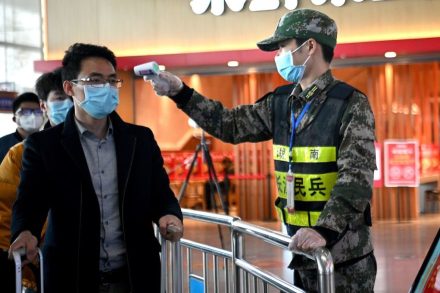
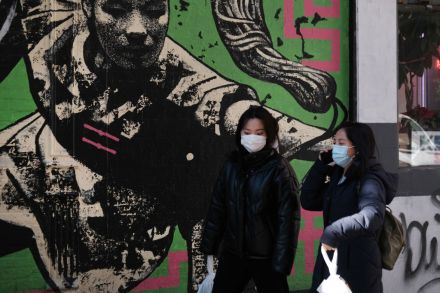
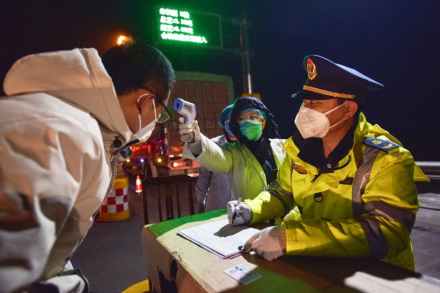
This article is in The Spectator’s March 2020 US edition. Subscribe here. I’ve been quarantined, like millions of others in China. It was bound to happen sooner or later. I traveled all the way from Beijing to the third-tier city of Jining in Shandong province, where anyone arriving from another region must be detained for 14 days. There’s no kind way to deliver the news, so a Chinese colleague broke it to me over WeChat in a gentle but firm tone. It felt like being fired or dumped. It could be worse. I’m free to leave my building, but not the walled housing compound surrounding it.

Why does the Chinese Communist party want my credit history?

I was one of them.One of the 147 million Americans who had their information compromised in the epic 2017 Equifax data breach. It was one of the largest hacks in history, leaking the names, social security numbers, addresses, and credit history of over a third of the country.At first, we were led to believe it was the result of sloppy cybersecurity and greedy hackers who wanted credit card data.But now, according to last week’s indictment from the Justice Department, we know it was the handiwork of four members of China’s military.To think it was a few renegade black hat hackers with expensive tastes was upsetting enough, but now to learn it was the long arm of the Chinese Communist party? This is serious.What do the Chinese communists want with my credit history?

equifax

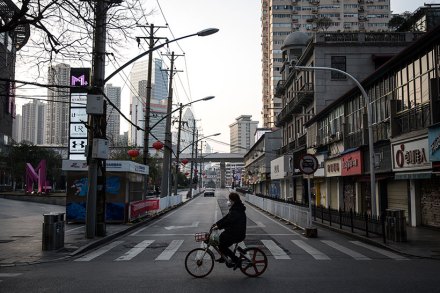
The coronavirus is China’s biggest test since Tiananmen Square

From our UK edition

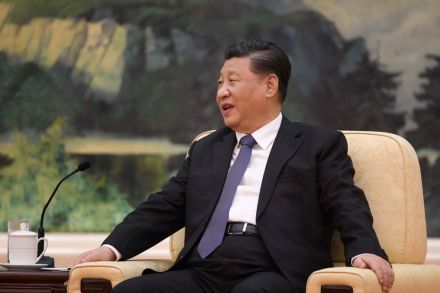
Over 1,500 Chinese have died from the coronavirus, with tens of millions quarantined in their own homes. President Xi is keeping a low profile, mindful of the political dangers should China’s authorities fail to contain this killer bug. In the UK, nine people have been diagnosed with the virus, including two GPs. Several public buildings have been closed – including schools, medical centre and an old-age care home – with Health Secretary Matt Hancock warning of a 'serious and imminent threat'. Amid fears of the human fall out from what the World Health Organisation has classified as Covid-19, concerns are growing, also, about the economic and financial impact of this virus – in China and beyond.