China

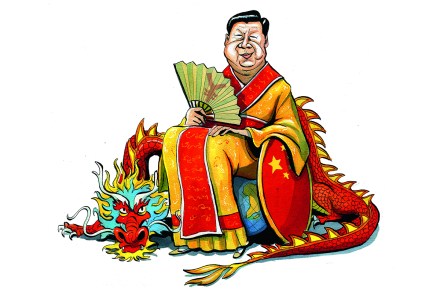
Escaping the dragon: the government’s new approach to China

From our UK edition

How will the world be different after coronavirus? Will everything return to the way it was or will there be lasting change? For this country, there is one thing that will clearly be different: the government’s approach to China. I understand that while Boris Johnson’s grand, integrated foreign policy review has been put on hold because of the pandemic, the work on Anglo-Sino relations has been brought forward as a matter of urgency. One of those heavily involved in the development of this new policy tells me that the aim is to get this country ‘off the trajectory of ever-increasing dependence’ on China. The issue is not that Covid-19 emerged from Wuhan but what the crisis has revealed about the Chinese state and the UK’s dependence on it.
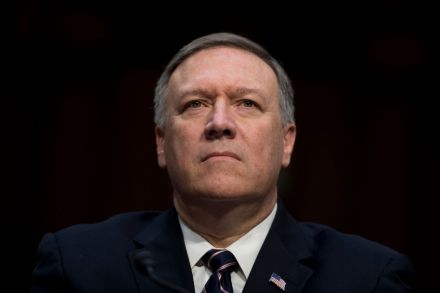
Pompeo: Hong Kong autonomy statement made with ‘great sadness’

Secretary of State Mike Pompeo said during a press call Wednesday afternoon that his decision to declare Hong Kong no longer autonomous from China was made with ‘great sadness’ but that it merely ‘reflects the facts.’ Pompeo released the statement, which is required annually by Congress, on Wednesday morning. The statement indicated that China had violated Hong Kong’s autonomy to such a point that the United States would likely be forced to strip its special trading status. The move could also severely affect China economically, as they often use Hong Kong as a middleman for international trading. ‘Things have deteriorated significantly in these last months,’ Pompeo said on the call.

lab leak pompeo

Putin needs Xi more than China needs Russia

On May 9, Vladimir Putin had been due to review a parade of troops and military hardware on Red Square alongside Xi Jinping and Emmanuel Macron. Russia’s coronavirus lockdown forced Putin to cancel the elaborate celebrations of the 75th anniversary of the end of World War Two in Europe — as well as to postpone a national referendum that would have extended his personal rule until 2036. But though Putin and Xi have been deprived of the opportunity to make a show of solidarity amid the sea of Soviet flags that bedecks Moscow annually for Victory Day, the coronavirus crisis promises to throw Russia and China closer together than they have ever been. China needs friends; Russia needs money.

putin xi

Taiwan’s balancing act is becoming ever more precarious

From our UK edition

After a landslide victory in January’s election, Taiwanese president Tsai Ing-wen was re-inaugurated on Wednesday at a scaled-down ceremony in Taipei. As ever, Taiwan’s relationship with China was the central issue of the election. This year, though, a greater sense of urgency surrounded the vote, primarily because of the instability in Hong Kong.  Now, polling day feels like it belongs to a distant past, taking place amid rumblings of a new virus infecting residents of Wuhan across the Taiwan Strait. Although Taiwan has rightly received much praise for its response to coronavirus, the past few months have not been without significant difficulties.

Cambridge University is kowtowing to China

From our UK edition

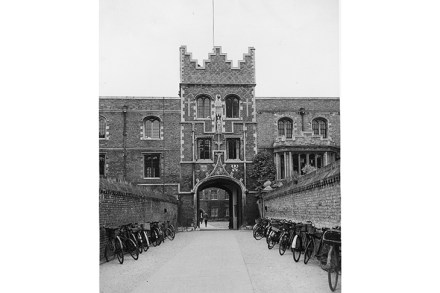
Last month, writing elsewhere, I quoted the website of the China Centre at Jesus College, Cambridge: ‘Under the leadership of the Communist party of China since 1978, [China] has experienced an extraordinary transformation… China’s national rejuvenation is returning the country to the position within the global political economy that it occupied before the 19th century.’ The tone sounded propagandist not academic. This month, all mention of the Chinese Communist party disappeared from the China Centre home page. Now the Centre says it concentrates on ‘mutual understanding between China and the West’, contributing to ‘harmonious global governance’, which should be ‘non-ideological and pragmatic’.

Lockdowns are as contagious as Covid

From our UK edition

Schools might never have closed in the first place had the coronavirus not started in China. Imagine it had started in Sweden. Whoever responded first was going to set the tone for the nations that followed. When we are uncertain about what to do, we look to the behaviour of others to guide us. Imagine walking down a street with a new restaurant on either side (you remember restaurants, right?), and that you do not know anything about either of them. One has some customers inside, the other has none. Assuming you can get a table, you would choose the one with people in it because, in the absence of any prior knowledge about the restaurants, other people provide you with a signal about which to eat in.

Boycotting China is not that easy

China’s various human rights abuses, their treatment of women, their savagery toward religious people and their chokehold on Taiwan and Hong Kong, has long made them a target for economic boycotts by Westerners. But executing a successful one is exceedingly difficult to achieve. In 2003, disappointed that the George W. Bush administration reaffirmed their ‘One China’ policy in regards to Taiwan, I launched my own boycott of Chinese goods. It was difficult but felt worthwhile to spend extra time looking for the ‘made in’ label on goods I was buying. And then I needed a shower curtain. I visited store after store and could not find one made anywhere except in China. I lived without a curtain for months before giving in and buying a Chinese-made one.

boycotting

Where is Britain’s China strategy?

From our UK edition

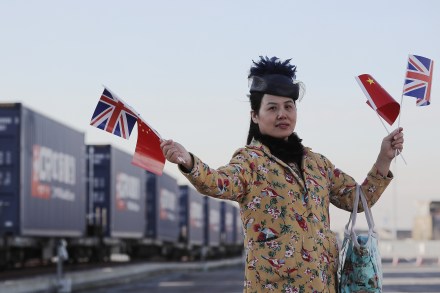
The UK doesn’t have a China strategy. We have not had one since George Osborne declared a 'golden era' of Sino-British relations on a trip to Beijing in 2015. In hindsight, Osborne’s 'era' looks more like an ‘error’. Yet, Covid-19 makes clear that the UK needs to adopt one. The death and destruction caused by the coronavirus are partly a result of the bullying and lies that characterised the Chinese Communist Party’s efforts to cover up the initial outbreak. Not only has China sought to dodge the blame for the pandemic, but it has also sought to take credit for dealing with it. Throughout Western capitals, long overdue assessments are now taking place about how to deal with China. Such a strategy will have to be multi-faceted.

Still, the Global War on Terrorism goes on

I can think of only a single positive thing to say about World War One: it ended. Yet in addition to precluding any further waste of lives, the Armistice of November 1918 and the ensuing Paris Peace Conference did something else. It allowed historians and other writers to begin taking stock of this ghastly episode, which had caused death and destruction on an unprecedented scale. Making sense of the so-called Great War exceeded the limits of human capacity. Yet however imperfectly, at least it might be understood. Why had the war happened? Why had it lasted so long? What had motivated the belligerents? What did this horrendous cataclysm signify, both politically and morally? Finally, how could the recurrence of such a debacle be averted?

global war on terror

Letters: It’s not so easy to boycott Chinese goods

From our UK edition

Jobs for all Sir: Charles Bazlington championed Universal Basic Income in last week’s magazine (Letters, 9 May). It is welcome to see innovative ideas being discussed at a time of unprecedented economic crisis. Might I suggest that if we wish to empower citizens, not just pay them, we instead look to provide employment via a National Job Guarantee? A guaranteed job at the living wage backed by the state and administered by national and local government as well as the charity and private sectors. This crisis has proved that people need not only money but purpose, camaraderie with colleagues, and the pride of a ‘job done well’; they want to provide for their families and contribute to society. We have plenty of work that needs doing.

The MP demanding a new approach to China

From our UK edition

Six years ago, Neil O’Brien was working for George Osborne when the then chancellor was enthusing about a ‘new golden era’ in Sino-British relations. But now O’Brien, who became the Conservative MP for Harborough in 2017, is one of the founders of the new China Research Group, a group of Tory MPs who are pushing for the government to take a tougher line with Beijing. His best-case scenario is one where the UK and its allies ‘manage to restrain some of the worst behaviours of the Chinese government’. O’Brien’s change of heart sums up the shift in Tory thinking on China.

Ma Jian: China’s regime is ‘stronger than ever’

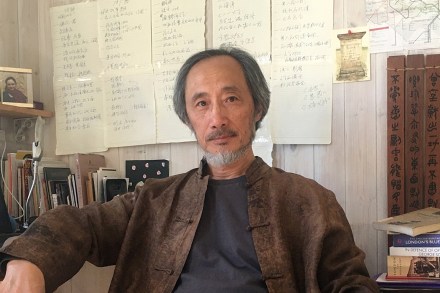
Should we blame China for the spread of coronavirus? And how should the West respond if the communist regime did cause the pandemic by lying about the virus as it emerged? I spoke about these questions to the dissident author Ma Jian, who has been described — by another dissident — as ‘one of the most important and courageous voices in Chinese literature’. His novels have been called — by a critic — ‘a powerful corrective to the self-interested Western view of China’. Ma believes that the economic miracle in China that has given us cheap goods in the West is also bribing the Chinese to forget their past and infantilizing them in their relationship with their rulers.

ma jian

Hugging China hasn’t done us any favours

From our UK edition

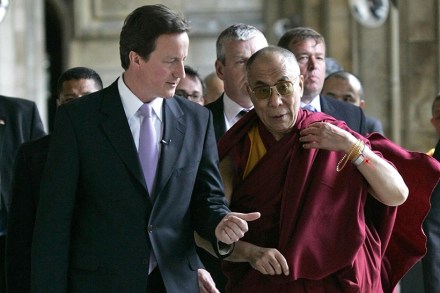
Like nearly everything named a ‘scandal’, ‘affair’ or given the suffix ‘gate’, almost nobody now remembers the Dalai Lama affair. But back in 2012, flush with recently acquired power and optimism, David Cameron and a man called Nick Clegg went to see the Dalai Lama while he was on a trip to London. Whether Cameron and Clegg knew what they were getting into wasn’t clear. The pair had a short meeting with the Lama at St Paul’s Cathedral — or at least in one of those bland conference ante-rooms English cathedrals constructed in the last century to atone for the splendours next door. Looking like a couple of travelling salesmen trying to flog the Dalai Lama a timeshare, Cameron and Clegg had the meeting and moved on. Not so Beijing.

We know everything – and nothing – about Covid

From our UK edition

We know everything about Sars-CoV-2 and nothing about it. We can read every one of the (on average) 29,903 letters in its genome and know exactly how its 15 genes are transcribed into instructions to make which proteins. But we cannot figure out how it is spreading in enough detail to tell which parts of the lockdown of society are necessary and which are futile. Several months into the crisis we are still groping through a fog of ignorance and making mistakes. There is no such thing as ‘the science’. This is not surprising or shameful; ignorance is the natural state of things. Every new disease is different and its epidemiology becomes clear only gradually and in retrospect. Is Covid-19 transmitted mainly by breath or by touching? Do children pass it on without getting sick?

This pandemic has put politics on fast-forward

From our UK edition

‘The normal grease of politics is not there,’ bemoans one sociable cabinet minister. Certainly, the whispered conversations in corridors that make up so much of Westminster life are in abeyance during this period of social distancing. The fact that the backbenches and the cabinet have deep reservations about the government’s approach matters far less than it would in normal times. In the Zoom parliament, there is no such thing as the mood of the House. One Tory grandee pushing for a significant easing of the lockdown complains that the current arrangements ‘make it easier for No. 10 to ignore parliament and cabinet’. But contrary to appearances, politics has actually sped up, rather than stopped, during the pandemic.

Fake news is spreading faster than the virus

From our UK edition

Just over a decade ago, I published one of those books with an annoying subtitle beginning with the word ‘how’. It was called Counterknowledge: How We Surrendered to Conspiracy Theories, Quack Medicine, Bogus Science and Fake History. My targets included Michael Moore, Creationists and homeopaths. I concluded that we couldn’t stop anyone circulating their ‘counter-knowledge’ on the internet, but we could at least hold to account ‘lazy, greedy and politically correct academics’ who had abandoned scientific methodology in favour of postmodernism. Otherwise, I warned pompously, quoting the title of an etching by Goya, ‘the sleep of reason will bring forth monsters’.

The 2020 question: which candidate will stand up to China?

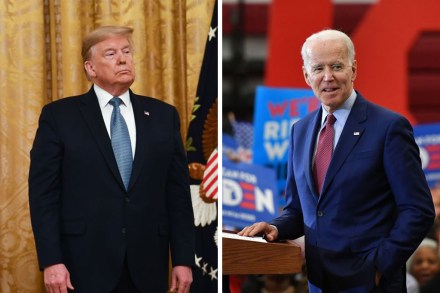
Imagine you are in your late thirties living in Ohio working at a steel or other manufacturing plant in the late 1990s. You are the second or third generation of your family working at the local plant. Perhaps even your dad is still working at the plant as a union steward. You’ve already seen the impact the 1994 North American Free Trade Agreement had on your plant and other parts of Ohio. Under President Bill Clinton, who you voted for and your union heavily backed, China did enough of what the experts and policymakers in Washington wanted it to do to gain entry to the World Trade Organization, which became final in December 2001.

biden trump craziest 2020

Beijing’s biotech bullies

Kill a chicken to scare the monkeys, the Chinese say. In this case, Australia is the chook, the butchers in Beijing are holding a knife at the nation’s throat and around the world, monkeys — or at least the highest form of primates, the naked ape — look on in horror. China’s threat that its consumers, students and tourists will boycott Australian beef, wine, universities and resorts if federal politicians persist in an independent inquiry into the origins of SARS-Cov-2 has at least had one positive outcome — it has made the inquiry unnecessary.

beijing australian

Our toothless response to China is embarrassing

From our UK edition

If you have been troubled by the government’s failure to get tough on the country responsible for our present malaise, never fear. The Foreign Office has issued a joint statement with ten EU members warning this regime of ‘grave consequences’ for its ‘standing in the international arena’. That’ll put Beijing in its place. Well, not quite. The statement wasn’t directed at China and the deadly pandemic it has unleashed upon the world. It was another scolding for the Israelis, this time over plans to apply sovereignty to West Bank settlements in line with the Trump peace plan. With 250,000 fatalities and the world economy on a ventilator, it’s about time someone stood up to the real global menace: organic date-growers in the Jordan Valley.