China

What will war with China look like?

Like so many wars, this one began with an accident: a US naval vessel patrolling the South China Seas and shadowing the Chinese navy made a small navigation error in rough weather. The ships collided, five Chinese sailors died and their vessel was severely damaged. Beijing saw this as an act of war, the latest in a series of perceived insults by the US administration, and the response was swift. Cyber attacks against Washington DC and the headquarters of the US Pacific Fleet at Pearl Harbor shut down power. Ironically, most of the 175 deaths in the first three hours came not from hospitals where emergency generators kicked in successfully, but from failed traffic lights and massive car pile-ups in both cities.

war china

The brave new world of 5G

To those who understand it, 5G is the next exciting piece of technology and it is coming to your neighborhood soon. For the rest of us, it is a number and letter that mean almost nothing, but we talk about it as if we really do understand our future and how great it's going to be.The theory goes that 5G is a game-changing new generation of wireless technology, a little like the iPhone of today compared with the old rotary telephone. The scientists behind 5G believe it will, at last, deliver very high data speeds to every connected device and do so with extraordinary reliability.Today, 5G has been deployed in 20 American cities from New York to Atlanta with a further 10 coming online before the end of the year.

5g

Are inside-traders profiting from the US-China trade war?

Of all the 9/11 conspiracy stories, one of the most persistent is the suggestion that al-Qaeda funded its operations by short-selling the shares of airline companies in the days before the attack. Inevitably, airline shares plummeted that day, netting short-sellers vast profits. While there was an increase in short-selling before the attack, no-one has proved one way or the other whether that was history’s most audacious case of insider-dealing or just a reaction to an industry which was already in trouble for purely commercial reasons. But is someone now trying on the same trick with the US-China trade war?

inside-traders

Will China meddle in the 2020 election?

This article is in The Spectator’s inaugural US edition. Subscribe here to get yours. Vladimir Putin, as we all know, has become chief electoral strategist in the western world. When he wanted Donald Trump president, he merely set his army of trolls to action and the American public was fooled into backing a candidate who would never have got anywhere near the White House otherwise. That is what the media has been telling us since 2016, anyway. But the idea that Russia can swing a sophisticated electorate of 300 million people with the aid of a fake-news tweet factory in St Petersburg was always fantastical. Even the Mueller inquiry could not prove it — not for want of trying.

china 2020

The unease of the Chinese diaspora

‘Are you Chinese?’ It’s a question I’m frequently asked living in New York City and it almost always stumps me. The conflict naturally arises from what my questioner actually means by ‘Chinese’. Ethnically, yes. I’m Han Chinese. But nationality-wise, no. I’m a daughter of Singapore, born and bred on the South East Asian island which boasts a majority Chinese population, though I now consider the United States my home. You’d have to go back to my great-great-grandparents’ generation to find someone whose feet touched the soil in China from birth. Apart from my facial features, I have no ties to the land known as zhōngguó, the middle country, the center of the world.

chinese diaspora

Donald Trump, canard of chaos

Is Donald Trump riding a rubber ducky into alligator-infested waters, as a former aide to House Speaker John Boehner suggests to Politico? It’s hard to avoid the impression that an increasingly unmoored Trump seems to groping for assistance wherever he can find it. This morning, for example, Trump, in between playing weatherman about Hurricane Dorian, retweeted the real estate tycoon Sam Zell, one of whose great accomplishments was to bankrupt the Tribune Company. Zell declared that the notion that America shouldn’t impose tariffs on countries like China is a canard: '....We can’t have a system where we run our entire economy for the benefit of other countries, which have long charged us big tariffs. Don’t keep ducking the reality.

chaos

I saw the violent Hong Kong protests

This weekend saw the most violent clashes yet in Hong Kong between demonstrators and riot police. On Sunday, as mass protests entered their 12th week, Hong Kong police deployed water cannons, tear gas and rubber bullets, and a policeman pointed a gun at a protester and the press. Meanwhile, dissidents threw bricks and grates that they had dug out from the street at riot police. They returned volleys of tear gas canisters with tennis rackets, threw homemade petrol bombs and Molotov cocktails, and used  lasers to thwart facial recognition cameras.

hong kong

The cosmic combination of Hong Kong, Brexit and the trade war

Over the past several months, we have witnessed remarkable courage in the streets of Hong Kong. What began as limited protest against a single act of pro-Beijing legislation now has the markings of existential struggle, if not revolution. As the people of Hong Kong understand, the city government’s proposed extradition bill — enabling removal of its citizens to mainland China for trial — was not an isolated event. It was, instead, a sign of things to come, the gradual encroachment of Beijing upon the rights and freedoms promised Hong Kong for 50 years in the 1997 Basic Law. These constitutional guarantees — negotiated with the United Kingdom before it transferred the city — have come steadily under attack as the clock ticks ineluctably towards midnight.

hong kong

Trump must act on Hong Kong before it’s too late

The central question regarding the Hong Kong protests is not whether a crackdown is imminent — it’s already happening — but its final form. After more than 60 days of unrest in Hong Kong, Chinese leader Xi Jinping seeks to bring the city under control as quickly as possible, and without using the military. Rather than repeat the 1989 Tiananmen Square Massacre, Xi wants the repression to occur through aggressive law enforcement and severe punishment, while not yielding an inch to the protesters’ demands. Chinese state propaganda has ominously escalated its rhetoric. The protests are now labeled a ‘color revolution’, and their violence as ‘terrorism'.

hong kong

America should view China as a hostile, revolutionary power

Much has been made of the return of great power competition. In truth, it never went away, although the great game was so one-sided for a time that almost everyone in the West tuned out, assuming the match was over in perpetuity. It was too boring to contemplate and so attention drifted to other concerns and second- and third-order problems. China’s attention did not deviate, and once again it is a great power. Like cholesterol, great powers can be good, in that they accept the present international order, or bad, in that they do not. China does not, and seeks to overturn the contemporary order the West created.  This is the source of what is already the great conflict of 21st century. China is not a status quo great power.

xi jinping power

Hollywood parrots the Chinese Communist party line

Let it never be said that Hollywood is cowardly. When there is a cause to go to the wall for, when there are monstrous dragons to be slain, when the ethical balance of our times tiptoes along the edge of calamity, is it not Hollywood – that steadfast, sensible battery of dream-makers – that rises to the challenge, earning the sighing respect and tearful admiration of us all? Weren’t we all thrilled, shocked and relieved in January when Robert De Niro – riskily breaking with precedent and the hidebound convention that A-listers should never opine about current events – said: ‘Trump is a real racist.’ Finally someone had the courage to say it!

hollywood china

The problem of Beijing Biden

Imagine a presidential primary campaign candidate who is far ahead in the polls. Now, imagine that candidate leading in a diverse array of early states – Iowa, New Hampshire and South Carolina. This candidate is the most famous in his field. He has over four decades in the limelight. He routinely makes remarks that are offensive. Women suspect he is a sexual predator. The commentariat insist he’s finished. This politician is said to be out of step with his party’s base: his values don’t reflect theirs. Oh, and this candidate would be the oldest nominee in his party’s history, and America’s oldest elected president. This person is Donald Trump in 2016. He’s also Joe Biden in 2020.

beijing biden

One academic’s fight for the rights of Uighurs

'After I testified in front of the Canadian House of Commons, the Chinese government might have put me in a different "category" on their blacklist,' Darren Byler said with a smile on his face. 'I possibly became an enemy of the state.' Byler is a lecturer in the department of anthropology at the University of Washington. He's an avid mountain climber, a Uighur poetry and literature enthusiast, and an advocate for Uighur rights in China. Since 2017, the People's Republic has interned as many as one million Uighurs, Kazahks, Kyrgyz, and other Muslim minorities in Xinjiang, the Uighur 'autonomous region' in northwestern China. Byler’s testimony, and the testimony of others, resulted in a Canadian government report condemning Chinese government’s treatment of Uighurs.

darren byler uighurs

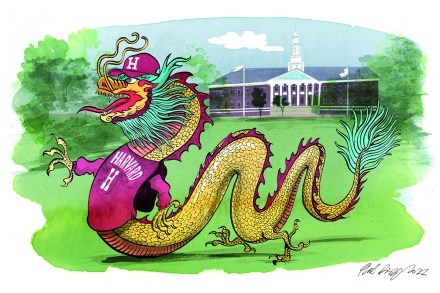
Has China infiltrated America’s universities?

As President Trump ponders restrictions on Chinese tech company Huawei, the FBI is warning American universities about espionage by Chinese researchers and academics. The FBI now advises research universities to track and observe Chinese students and faculty for signs of intellectual property theft. In the last year, the federal government has voided or re-evaluated the visas of 30 Chinese academics for this crime. In April, FBI Director Christopher Wray commented on China’s intelligence operation. China, Wray said, has 'pioneered a societal approach to stealing innovation any way it can, from a wide array of businesses, universities, and organizations'.

universities chinese

Trump’s bad Huawei deal with Xi

Trump’s decision to lift the ban on US companies doing business with Huawei, the Chinese telecommunications company, is a stunning defeat for him. It’s also a major reversal for the US intelligence community, which has been concerned for years about what it considers to be Huawei’s wholesale theft of American technology.Lifting of the ban reinstates Huawei at the leading edge of China’s global spying. It undercuts months of private attempts to encourage America's allies to join in what the US hoped would be something close to a worldwide ban. And, over the long term, it also threatens America’s strategic advantage as a leader in new technologies.

huawei

Mitt Romney called. He wants his foreign policy back

‘Eight years ago, I argued that Russia was our number one geopolitical adversary,’ Mitt Romney said this week in his maiden Senate speech. And who could forget Barack Obama’s burn in the televised presidential debate of 2011? ‘The 1980s are now calling to ask for their foreign policy back,’ Obama said. Four years later, with the US and Russia at loggerheads and Russian ‘collusion’ a theme of the 2016 election, Romney was vindicated. But it was Obama who was the outgoing president.

mitt romney

China will be the AI superpower

As President Trump settles in for a long trade war with China, he ignores a far more serious crisis in China relations. At stake is not just the size of a trade deficit, but the future of America’s position as a superpower. China has made clear its determination to lead the world in Artificial Intelligence by 2030 and to become the world’s sole AI superpower by 2050. To achieve these goals, China is aggressively investing tens of billions of dollars in future technology including robotics, surveillance, and data analysis. This state-controlled effort unites both the public and private sectors for a single purpose: world domination.

AI

Donald Trump’s one-front trade war

At 12:01 a.m. on Monday, President Donald Trump went a long way toward defusing a potential war – not with Iran, but Canada and Mexico, where Trump revoked tariffs he had imposed in the name of national security. Why the sudden bout of tariff reduction? The president is focusing on a one-front trade war with China. The restrictions began as two fronts of the same war. Trump imposed 25 percent tariffs on steel and 10 percent tariffs on aluminum imported from China last March. Then he extended those tariffs to the EU, Canada, and Mexico on June 1. But the president seems to have concluded that the US can no more fight a two-front war in trade than on the battlefield.

Donald Trump one-front trade war

Russia and China are watching Iran, and waiting

As US-Iran tensions rise, America’s sway over its allies is falling. Last week, Major General Christopher Ghika, the British officer second in command of anti ISIS forces in Iraq and Syria, publicly contradicted the rationale behind American troop build-ups in the region. US Central Command was quick to rebuff Ghika, but Britain’s Ministry of Defence supported him. Other NATO allies, too, are balking at confrontation with Iran. Spain has withdrawn a frigate from the American-led, Gulf-bound carrier group. Federica Mogherini, the EU’s High Representative for Foreign Affairs, has called for ‘maximum restraint’. If there is to be a third Gulf War, the US might find itself with fewer friends than in the last.

iran

The future of world trade is in the balance

Ongoing trade talks between American and Chinese officials took an unexpected turn on Sunday: President Trump took to Twitter and announced a plan to impose tariffs on all Chinese imports by Friday. The tariff threat adds urgency to negotiations that will continue on Wednesday, when a Chinese delegation is due to arrive in Washington, DC. The move is a departure from last week when US Treasury Secretary Steven Mnuchin and Trade Representative Robert Lighthizer arrived in Beijing to initiate a fresh round of trade talks with China. Despite chronic trade tensions, both sides had sounded optimistic ahead of the meeting. State Councilor Wang Yi, China’s top diplomat, expressed hopes the two sides could ‘reach a mutually beneficial, win-win agreement’.

world trade