China

Why was Blinken’s China visit so underwhelming?

It had been billed as an electrifying encounter – the US Secretary of State preparing to confront Beijing with a catalogue of global misdemeanours, ranging from stepped up support for Russian aggression against Ukraine to the intimidation of ships in the South China Sea belonging to US treaty ally, the Philippines, and the systematic breaking of world trade rules by flooding the market with heavily subsidised electric vehicles (EVs) and other renewable tech. ‘Russia would struggle to sustain its assault on Ukraine without China’s support,’ Antony Blinken said on Friday, at the end of a three-day trip that included meetings with his Chinese counterpart Wang Yi and with President Xi Jinping. ‘I made clear that if China does not address this problem, we will.

The Xi files: how China spies

38 min listen

This week: The Xi files: China’s global spy network. A Tory parliamentary aide and an academic were arrested this week for allegedly passing ‘prejudicial information’ to China. In his cover piece Nigel Inkster, MI6’s former director of operations and intelligence, explains the nature of this global spy network: hacking, bribery, manhunts for targets and more. To discuss, Ian Williams, author of Fire of the Dragon - China's New Cold War, and historian and Guardian columnist Simon Jenkins joined the podcast.. (02:05) Next: Lara and Gus take us through some of their favourite pieces in the magazine, including Douglas Murray’s column and Gus’s interview with the philosopher Daniel Dennett.

The Xi files: how China spies

Most states spy. In principle there’s nothing to stop them. But China’s demand for intelligence on the rest of the world goes far beyond anything western intelligence agencies would typically gather. It encompasses masses of commercial data and intellectual property and has been described by Keith Alexander, a former head of America’s National Security Agency, as ‘the greatest transfer of wealth in history’. As well as collecting data from government websites, parliamentarians, universities, thinktanks and human rights organisations, China also targets diaspora groups and individuals. Chinese cyber intrusions have targeted British MPs and stolen population-level data from the UK Electoral Commission database.

Lessons from the foreign aid votes

From our US edition

The past week has presented a fascinating object lesson in the continued tension over the direction of foreign policy and national security in the MAGA era, on what matters and what doesn’t, and who matters and who doesn’t, when it comes to finding a true forward-looking Trump-Reagan fusion. I wrote about this in the context of reviewing the new book by Matt Kroenig and Dan Negrea, who wrote a Ukraine-focused piece for Foreign Policy last week. But that’s just writing, not voting — and this week brought votes that include more useful indicators of what’s going on.

foreign aid

After TikTok, there’s another app we should ban

The American House of Representatives has passed a bill ordering Bytedance, a Chinese company, to divest from TikTok or stop operating in the USA. Their involvement in the app risks national security, the critics say. But what about other apps owned by Chinese companies? Should they be banned too? The most insidious part about Gauth? Look at the reviews. Apparently it gets the homework wrong. Gauth, or Gauthmath as it is known in the UK and elsewhere in the world, is a tutoring app designed to help children complete their homework in maths and science. It’s currently the #2 educational app in the Apple app store, and is targeted at primary school children. Only the very youngest need parental approval to use the app.

Ex-TikTok employees sound the alarm over ties to China

From our US edition

Cocaine Mitch may be onto something. Last week, the senator called on his colleagues to pass a bill banning TikTok unless it is sold by its Chinese parent company, ByteDance. Now ex-TikTok employees are coming forward with stories detailing the company's entanglement with China.  According to eleven former employees interviewed by Fortune, TikTok has deep ties to Beijing through ByteDance which the company has tried to conceal. Some of the employees were with the company as late as last year, after the launch of Project Texas, a $1.5 billion initiative to store data of American citizens in the US. Evan Turner, a former senior data scientist at TikTok, worked for a Beijing executive during his time at the company.

tiktok
space technology

Is the West ready to face the challenges of advancing technology?

From our US edition

The theme of this month’s edition is technology. The advancement of space exploration, defense technologies, artificial intelligence and the like should excite us. Yet the geopolitical issues they present are great and Western governments seem ill-prepared to grapple with them. Watch any congressional hearing where a crusty congressman tries to keep pace with Silicon Valley’s top autists if you need further evidence — and read Spencer A. Klavan’s analysis of the high-skill but low-status rejects uniting into a formidable social class on p.12. The Silent Generation and boomers simply cannot keep up. The Space Race is back on, as tycoons seek to cash in on the final frontier.

TikTok

The fight to curtail TikTok’s US influence

From our US edition

One hundred and twenty minutes. That’s how much time more than 40 percent of American children spent on TikTok every day last year. The app, owned by the Chinese company ByteDance, worms its way into the minds of young people to an extraordinary degree, dwarfing their use of Instagram, Facebook, Twitter/X and Snapchat. And when word went out that the House of Representatives was seriously considering forcing a sale to peel the app away from the power of the Chinese Communist Party, TikTok fired back by weaponizing the same children against Congress — driving a deluge of confused phone calls to Capitol Hill, including some where teens threatened to commit suicide if the vote went forward.

Was Marco Polo a ‘sexpat’?

25 min listen

When I recently came across a book review asking the question ‘was Marco Polo a "sexpat"?’, I knew I had to get its author on to, well, discuss this important question some more. The 13th century Venetian merchant Marco Polo’s account of China was one of the earliest and most popular travelogues written on the country. Polo spent years at the court of Kublai Khan, the grandson of Genghis, and whose family founded the Yuan dynasty in China. My guest today, and the author of that book review, is the historian Jeremiah Jenne. Jeremiah has lived in China for over two decades, and he is also the co-host of the fascinating podcast Barbarians at the Gate, all about Chinese history.

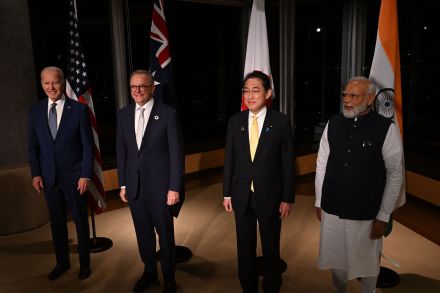
Is the Quad finished?

Since the late 1990s, Australian governments have been considering how to make their neighbourhood, the Indo-Pacific, a stable and peaceful region. Australia has articulated the need for a balance of power, between a rising China on the one hand and the liberal democracies of the region on the other.  Australia has been particularly concerned about the risk of the Indo-Pacific being dominated by China – it could impose a kind of Asian Monroe doctrine on the region. In this environment, China would not only be able to subjugate Hong Kong, assert its sovereignty over the whole of the South China Sea, and incorporate Taiwan into the People’s Republic of China.

Biden uses the gilded cage of the White House to his advantage

From our US edition

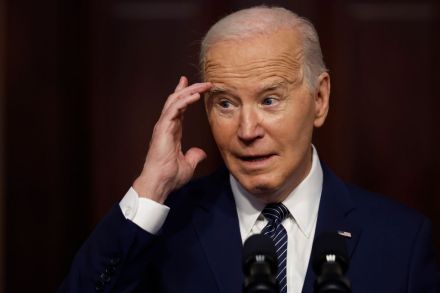
As much as things have changed since 2020, the campaign styles and strategies of Trump and Biden have mostly stayed the same. On Tuesday, President Biden held a phone call with Xi Jinping, the president of China. The two were set to speak about a host of important issues for the first time since 2022. Keep in mind that the day before, Biden struggled to get through a softball interview with weatherman Al Roker at the White House Easter Egg Roll. But sure, let’s all pretend that Joe’s conversation with Xi about artificial intelligence went smoothly. Often times Joe’s daily presidential duties — phone calls with world leaders, receiving the presidential daily briefing, attending various ceremonies — are the only things on his calendar.

biden gilded cage

What Chinese hackers want

27 min listen

Over the last week the UK has been rocked by allegations that China was responsible for two cyber attacks in recent years – one on the Electoral Commission, where hackers successfully accessed the open register, which has the details of 40 million voters; and a set of attempts to access the emails of a number of China critics within parliament. So what do we know about China’s cyber capabilities? What are its goals? And now that the UK knows about these attacks, what should we be doing? Joining me on the podcast today is Nigel Inkster, senior advisor for cyber security and China at the think tank IISS, formerly director of operations and intelligence at MI6, and author of China’s Cyber Power, a 2016 book on precisely this question.

Portrait of the Week: Kate’s chemotherapy, Waspi pensions and Moscow’s terror attack

Home Oliver Dowden, the Deputy Prime Minister, told parliament that China was behind a cyber attack on the Electoral Commission in August 2021, getting access to 40 million voters’ details. Three MPs, Sir Iain Duncan Smith, Stewart McDonald and Tim Loughton, said they had been hacked and harassed by China. The government sanctioned two individuals and a company. A Chinese battery manufacturer, EVE Energy, had been in talks about building a gigafactory near Coventry airport. Scott Benton MP, from whom the Conservative whip had been withdrawn, successfully applied to be Crown Steward and Bailiff of the Manor of Northstead in place of Chris Pincher, thereby provoking a by-election in Blackpool South.

Life on the margins pt II: Li Ziqi and the phenomenon of the rural influencer

23 min listen

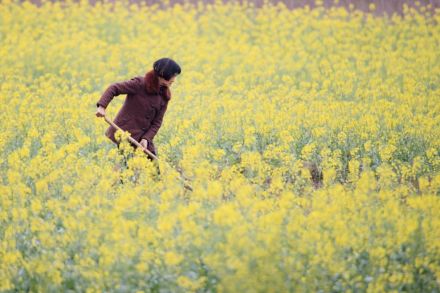
In the last episode, I discussed Chinese rural lives with Professor Scott Rozelle. One point he made which particularly stuck with me was the dying out of farming as an occuption – he'd said that most rural people under the age of 35 have never farmed a day in their lives. So that got me thinking, what do they do instead? In this episode I’ll be looking at one, very high profile, alternative – vlogging. I’ve noticed through my hours of scrolling through Chinese social media that there is a huge genre of rural, pastoral content.  This is an interesting phenomenon both for what it says about the rural population today, as well as what it reveals about the – often – urban viewers on the other end.

Lessons from costly wars past

From our US edition

Money is often a substitute for strategy in US foreign policy. We spent $2 trillion in Afghanistan, only to lose the country the minute our troops began to pull out. How much will it realistically cost, then, to beat Russia in Ukraine? Will the next $100 or $200 billion do the trick? This is not a question that supporters of war-spending ask themselves. As in Afghanistan, spending is a way to defer thinking about actually winning — or facing the serious possibility of losing. Our aid buys delay, not results. Ironically, while the specter of World War Two is invoked every time there’s a conflict, our experience then teaches the same lesson as recent attempts to purchase victory.

wars
BRICS

Nixing BRICS: how to counter the China-led alliance

From our US edition

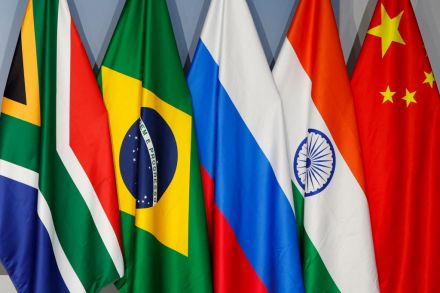
Americans are used to exercising influence through international entities such as NATO, the World Trade Organization or the World Bank. Each of these groups was set up with American leadership or at its instigation; all have been used to advance Washington’s vision of global liberal-democratic capitalism. No comparable international organization or collection of nations has been influential since the Soviet Union’s collapse. That may be changing. The so-called BRICS alliance (its founding countries were Brazil, Russia, India, China and South Africa) recently added new members Iran, Ethiopia, Egypt and the United Arab Emirates.

Life on the margins: how China’s rural deprivation curbs its success

41 min listen

Too often our stories about China are dictated by the urban experience, probably because journalists inside and outside of China are often based in the big cities; Beijing specifically. Those who live in the cities also tend to be more educated, more privileged, and so able to dominate the global attention more.  That’s why I’m particularly keen to hear about the lives of those who still live in the countryside, or at least are still considered ‘rural residents’ by the Chinese government. They make up a sizeable proportion of the population, and you’ll hear that in my first question to my guest today, we discuss just how big this group is. How do the poorest in China live today, considering the government has announced that there is no more extreme poverty?

What the Messi row reveals about Chinese football

40 min listen

The Argentinian football star Lionel Messi has been trending on Weibo – and unfortunately, not for a good reason. It all started when Messi sat out a match in Hong Kong earlier this month. His reason – that he was injured – wasn’t good enough for some fans, and keyboard nationalists quickly took offence when Messi played in Japan, a few days later. The furore has dominated Chinese social media over the last few weeks, and even led to the cancellation of some upcoming Chinese matches with the Argentinian national team, as authorities demanded an apology from Messi. What a mess. But beyond its seeming triviality, this episode tells us something about the nature of Chinese online nationalism, I think, and it might also shed light on how football works within China.

Who’s really behind the Biden administration’s foreign policy?

From our US edition

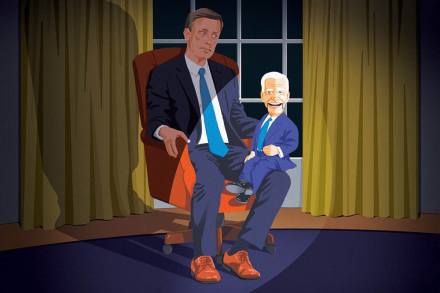
If you’re one of the many people worried that US foreign policy is in the hands of a visibly declining eighty-one year-old president, Alexander Ward’s account of the Biden administration’s first two years in office may — or may not — make you feel better, for he leaves readers with little doubt as to who is actually the executive branch’s most influential decision-maker: forty-seven year-old national security advisor Jake Sullivan. Ward might deny any such authorial intent, but time and again he shows his hand, as when he invokes “Sullivan’s first two years at the helm alongside Biden.

biden ward

China is set for a serious economic fall

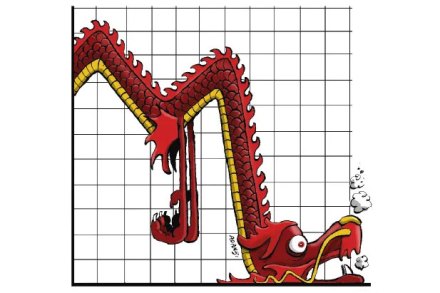
 The future trajectory of the Chinese economy is a subject for doctoral theses rather than casual column items. But the advent of the Year of the Dragon, at last weekend’s Lunar New Year, was greeted with such pessimistic commentaries that the natural contrarian should ask whether the consensualists are getting it wrong: maybe the dragon is merely marking a pause before martialling its mighty resources for the next transglobal burst of fire? The negative narrative goes like this. In spite of deflation in consumer prices, Chinese shoppers are frightened of spending. Despite central bank interventions aimed at boosting asset prices, the property market is crashing after the collapse of the developer Evergrande and the Shanghai stock market has been falling since last April.