China

Portrait of the Week: Kate’s chemotherapy, Waspi pensions and Moscow’s terror attack

From our UK edition

Home Oliver Dowden, the Deputy Prime Minister, told parliament that China was behind a cyber attack on the Electoral Commission in August 2021, getting access to 40 million voters’ details. Three MPs, Sir Iain Duncan Smith, Stewart McDonald and Tim Loughton, said they had been hacked and harassed by China. The government sanctioned two individuals and a company. A Chinese battery manufacturer, EVE Energy, had been in talks about building a gigafactory near Coventry airport. Scott Benton MP, from whom the Conservative whip had been withdrawn, successfully applied to be Crown Steward and Bailiff of the Manor of Northstead in place of Chris Pincher, thereby provoking a by-election in Blackpool South.

Life on the margins pt II: Li Ziqi and the phenomenon of the rural influencer

From our UK edition

23 min listen

In the last episode, I discussed Chinese rural lives with Professor Scott Rozelle. One point he made which particularly stuck with me was the dying out of farming as an occuption – he'd said that most rural people under the age of 35 have never farmed a day in their lives. So that got me thinking, what do they do instead? In this episode I’ll be looking at one, very high profile, alternative – vlogging. I’ve noticed through my hours of scrolling through Chinese social media that there is a huge genre of rural, pastoral content.  This is an interesting phenomenon both for what it says about the rural population today, as well as what it reveals about the – often – urban viewers on the other end.

Lessons from costly wars past

Money is often a substitute for strategy in US foreign policy. We spent $2 trillion in Afghanistan, only to lose the country the minute our troops began to pull out. How much will it realistically cost, then, to beat Russia in Ukraine? Will the next $100 or $200 billion do the trick? This is not a question that supporters of war-spending ask themselves. As in Afghanistan, spending is a way to defer thinking about actually winning — or facing the serious possibility of losing. Our aid buys delay, not results. Ironically, while the specter of World War Two is invoked every time there’s a conflict, our experience then teaches the same lesson as recent attempts to purchase victory.

wars
BRICS

Nixing BRICS: how to counter the China-led alliance

Americans are used to exercising influence through international entities such as NATO, the World Trade Organization or the World Bank. Each of these groups was set up with American leadership or at its instigation; all have been used to advance Washington’s vision of global liberal-democratic capitalism. No comparable international organization or collection of nations has been influential since the Soviet Union’s collapse. That may be changing. The so-called BRICS alliance (its founding countries were Brazil, Russia, India, China and South Africa) recently added new members Iran, Ethiopia, Egypt and the United Arab Emirates.

Life on the margins: how China’s rural deprivation curbs its success

From our UK edition

41 min listen

Too often our stories about China are dictated by the urban experience, probably because journalists inside and outside of China are often based in the big cities; Beijing specifically. Those who live in the cities also tend to be more educated, more privileged, and so able to dominate the global attention more.  That’s why I’m particularly keen to hear about the lives of those who still live in the countryside, or at least are still considered ‘rural residents’ by the Chinese government. They make up a sizeable proportion of the population, and you’ll hear that in my first question to my guest today, we discuss just how big this group is. How do the poorest in China live today, considering the government has announced that there is no more extreme poverty?

What the Messi row reveals about Chinese football

From our UK edition

40 min listen

The Argentinian football star Lionel Messi has been trending on Weibo – and unfortunately, not for a good reason. It all started when Messi sat out a match in Hong Kong earlier this month. His reason – that he was injured – wasn’t good enough for some fans, and keyboard nationalists quickly took offence when Messi played in Japan, a few days later. The furore has dominated Chinese social media over the last few weeks, and even led to the cancellation of some upcoming Chinese matches with the Argentinian national team, as authorities demanded an apology from Messi. What a mess. But beyond its seeming triviality, this episode tells us something about the nature of Chinese online nationalism, I think, and it might also shed light on how football works within China.

Who’s really behind the Biden administration’s foreign policy?

If you’re one of the many people worried that US foreign policy is in the hands of a visibly declining eighty-one year-old president, Alexander Ward’s account of the Biden administration’s first two years in office may — or may not — make you feel better, for he leaves readers with little doubt as to who is actually the executive branch’s most influential decision-maker: forty-seven year-old national security advisor Jake Sullivan. Ward might deny any such authorial intent, but time and again he shows his hand, as when he invokes “Sullivan’s first two years at the helm alongside Biden.

biden ward

China is set for a serious economic fall

From our UK edition

 The future trajectory of the Chinese economy is a subject for doctoral theses rather than casual column items. But the advent of the Year of the Dragon, at last weekend’s Lunar New Year, was greeted with such pessimistic commentaries that the natural contrarian should ask whether the consensualists are getting it wrong: maybe the dragon is merely marking a pause before martialling its mighty resources for the next transglobal burst of fire? The negative narrative goes like this. In spite of deflation in consumer prices, Chinese shoppers are frightened of spending. Despite central bank interventions aimed at boosting asset prices, the property market is crashing after the collapse of the developer Evergrande and the Shanghai stock market has been falling since last April.

Congress is a very silly place

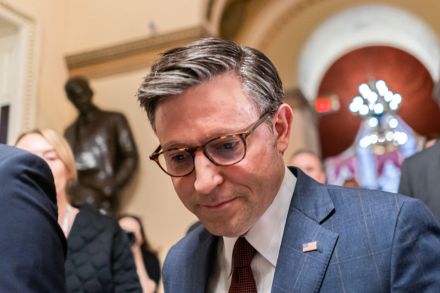
The news that China Select Committee Chairman Mike Gallagher won’t run for reelection in his safe Wisconsin district may have surprised Washington, but it’s a decision that has been apparent for some time. The thirty-nine-year-old Marine veteran, touted by China hawks and Republican leadership as a rising star, is naturally frustrated by an utterly broken institution in the House. But it also serves as a warning shot to Republicans about what could come next. If you’re in the position of being a chairman — Gallagher is the youngest of them — even an utterly dysfunctional chamber can still allow you to do some meaningful work in the committee. But if Democrats retake the House in 2024, being in the minority is a completely different animal.

mike gallagher congress

How actually to compete with China

Fifteen years ago, the federal government poured $535 million into a California-based solar module innovator, Solyndra. That’s a lot of money. In today’s money, it would be enough to cover the payrolls of the Red Sox and Dodgers combined. In 2009? It was enough for Solyndra to go bust in fewer than two years — making the company one of America’s biggest public funding debacles. Solyndra’s failure remains both a political talking point and area of introspection — especially as the US increasingly wakes up to the stakes of today’s industrial competition with China.

solyndra

The greed and hypocrisy of the opium trade continue to shock

From our UK edition

‘A fact that confounds me now when I think back on it,’ writes the acclaimed Indian author Amitav Ghosh at the start of this expansive and thoughtful book, ‘is that for most of my life China was for me a vast, uniform blankness.’ There were many reasons for this, he says. The war between India and China in 1962 might have played a part, along with the complex relationship between the two countries since then; but also the way that ‘an inner barrier’ has been ‘implanted in the minds’ of many around the world – one that blocks out China but allows in the ‘language, clothing, sport, material objects and art of the West’. Smoke and Ashes is a lovely blend of historical writing, travelogue and personal reflection stemming from what the author calls his ‘epiphany’.

Why do people join the CCP?

From our UK edition

36 min listen

At last count, the Chinese Communist Party has 98 million members, more people than the population of Germany. Its membership also continues to grow, making it one of the most successful and resilient political parties of the last a hundred years, perhaps with the exception of India’s BJP, which boasts 180 million members. And yet the CCP's track record is strewn with bloody crackdowns and systematic persecution. So what would drive someone to join the CCP, and what accounts for its success? Do party members today all support the atrocities committed by their government? I think these are important questions to ask, because without understanding the answers to them, one couldn’t understand China’s modern history or its society today.

How will the 2024 election impact US-China relations?

There was a time when the relationship between the United States and China had a bright future. While bilateral relations have never been particularly rosy since the two countries formally established diplomatic ties on January 1, 1979, US and Chinese leaders have long worked on the assumption that they had much to gain by deepening their cooperation and, if possible, expanding it to new heights. This was a widespread sentiment in Washington, reflected in speeches given by presidents from both parties. “I know there are those in China and the United States who question whether closer relations between our countries is a good thing,” President Bill Clinton told students at Beijing University in June 1998.

Gallagher china ccp confucius institutes china

Was China’s economic boom ‘made in America’?

From our UK edition

53 min listen

Today, the US and China are at loggerheads. There’s renewed talk of a Cold War as Washington finds various ways to cut China out of key supply chains and to block China’s economic development in areas like semiconductors and renewables. There’s trade, of course, but the imbalance in that (some $370 billion in 2022) tilts in China’s favour and only serves as another source of ammunition for America’s Sinosceptics. China, on the other hand, is also decoupling in its own way, moving fast to cut its reliance on imported technology and energy. At this moment, it seems like US-China tensions are inevitable – but look into the not so ancient history, and you’ll find a totally different picture.

mexico

Is China using Mexico as a back door to trade with the US?

The governor of the Mexican northern state of Durango Esteban Villegas announced last Monday the first “grand investment of the year.” The investment is of close to $400 million — and the investor is China. This project is one of many. So it appears shortsighted to celebrate Mexico surpassing China to become the US’s top trading partner as an absolute “decoupling” success. While Mexico and the US are economically integrating, so are Mexico and China. Politicians in Washington, most notably members of the Select Committee on the Chinese Communist Party, are now warning that Beijing is attempting to use Mexico as a “back door” to the American market as direct trade between the great competitors sharply declines.

Taiwan can’t escape China’s shadow

From our UK edition

The Taiwanese rock band Mayday – ‘the Beatles of the Chinese-speaking world’ – are being investigated by the Chinese Communist party for the crime of lip syncing. Local authorities are combing through recordings of Mayday’s Shanghai concerts from November looking for evidence of ‘deceptive fake-singing’, as the CCP calls it, which has been illegal in China since 2009 (although the law is rarely enforced). Last month, an anonymous Taiwan-ese government source told Reuters that the investigation had been cooked up because the pop stars refused a request from Beijing to say something nice about China in the run-up to Taiwan’s election this Saturday. The band found itself at the centre of a row between the presidential hopefuls about Chinese interference.

The rise and fall of US Steel

US Steel, which came in with a bang in 1901, is going out with a whimper. It has agreed to sell itself to Japan’s Nippon Steel for $14.1 billion, $55 per share in an all-cash deal. While steel is still an indispensable commodity (world production has doubled in the last twenty years, to 1.951 billion tons, about half produced in China), it has long ceased to be the iconic measure of industrial power that it was in the late nineteenth century. Steel — iron with a carefully calibrated amount of carbon added — has been known since ancient times. But it could be made only in small batches, and thus was so expensive to produce that it was almost a semi-precious metal, its use reserved for razors, sword blades and surgical instruments.

Venezuela is essential for China’s ambitions

Venezuela has become a headache for Washington. Just after the Biden administration engineered a rapprochement strategy, Nicolás Maduro did more than just double down on not following through his promises of democratization: he is now pushing to annex neighboring Guyana. These developments, though, should have been anticipated, as Venezuela becomes a crucial part of China’s geopolitical strategy. "Ready for what will be a historic visit to strengthen ties of cooperation and the construction of a new global geopolitics. Good news will rain for the Venezuelan people," said Maduro after landing in the Chinese city of Shenzhen back in September.

Maduro china venezuela

Who will be Taiwan’s next President?

From our UK edition

43 min listen

Taiwan goes to the polls in just over a month. This is an election that could have wide repercussions, given the island’s status as a potential flashpoint in the coming years. The incumbent President, Tsai Ing-wen, is coming to the end of two elected terms, meaning that she cannot run again. Her party’s chosen successor is William Lai – Lai Ching-te – who is the current vice president. For most of this year, he has been facing off opposition from the Kuomintang, the biggest opposition party in Taiwan, and the Taiwan People’s Party, a third party led by the charismatic Ko Wen-je. Lai remains in the lead with a month to go, but polls show that the KMT is only a few points behind, meaning that an upset is still possible.

Henry Kissinger saw his world fall apart

From our UK edition

The leading advocate of world order died at a time when it all appeared to be coming undone. Henry Kissinger spent the last months of his century-long life travelling to China to temper escalating tensions with the United States, pushing for negotiations to end a war begun by Russia in Ukraine (he made his first intervention on this war in The Spectator last year), and watching as Israel and Hamas entered a new death struggle. Even more discouraging, isolationist tendencies were ascendant again in the US, and American democracy seemed crippled by divisions that shut down Congress repeatedly.