China

The right’s dangerous embrace of soft isolationism

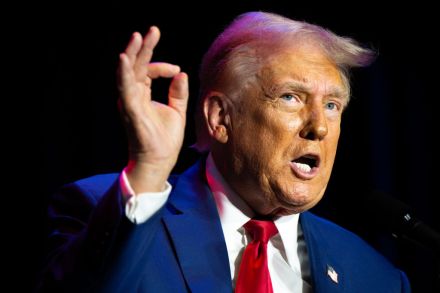
Traditionally, the GOP has been the favorite of those concerned with safety and national security. The party of Ronald Reagan emphasized the need for strong engagement abroad, a willingness to project power when necessary, and a commitment to the free world. Yet the contours of the conservative movement have begun to change in recent years, calling into question the GOP’s credibility on the issue of security. The growing support for a sort of soft isolationism is a problem. It is also fundamentally not conservative. Prominent voices from the American right have been carrying the banner of soft isolationism for years, from Tucker Carlson and J.D. Vance to Senator Josh Hawley and former president Donald Trump.

It’s time for the US to revoke China’s ‘normal trade’ status

In April 2022, six weeks after Moscow’s invasion of Ukraine, President Biden signed legislation to suspend Russia’s Permanent Normal Trade Relations (PNTR) status. “Revoking PNTR from Russia,” he said, “is going to make it harder for Russia to do business with the United States… The free world is coming together to defeat Putin.” PNTR status, also known as Most Favored Nation (MFN) status, is a designation granted among World Trade Organization members. Receiving nations are awarded all trade advantages that any other nation receives. Revoking PNTR status from Russia was a strategic move. It opened the door to deliver comprehensive economic strikes against Moscow and sent a clear signal to markets.

The Russia-Iran axis that’s menacing Ukraine

Russia’s brutal war in Ukraine is coming up on its eighth month, and the costs to the Kremlin’s military have been immense. Increasingly isolated on the world stage, Vladimir Putin has joined the world’s club of pariah states, the only group willing to give him support. Chief among his allies is the Islamic Republic of Iran, a state with similarly imperialistic designs and global isolation. This axis has been brewing for some time — the two nations worked together extensively in Syria, for example — but the relationship has reached new heights as the Russian armed forces buckle under the strain of war. Perhaps the most potent symbols of this relationship are the hundreds of Iranian drones flooding into Ukraine to fill a gap in Russia’s weapons inventory.

America’s chip war with China

There is a joke in Taipei that if China invades Taiwan the best place to shelter is in microchip factories, the only places the People’s Liberation Army can’t afford to destroy. The country that controls advanced chips controls the future of technology — and Taiwan’s chip fabrication foundries (“fabs”) are the finest in the world. Successful reunification between the mainland and its renegade province would give China a virtual monopoly over the most advanced fabs. Given that Xi Jinping has made clear his intention to take control of Taiwan by 2032, it is no wonder that the American government is worried about the concentration of cutting-edge semiconductor technology on the island.

semiconductors

Manufacturing in the US shouldn’t be so hard

There’s an automotive parts manufacturer in my hometown. The company has grown over the course of its 19-year life, from around 20 employees two decades ago to 45 full-time employees today. Despite the dirty nature of much of the work, the facility is kept clean, open, airy, and bright. There are no shavings on the floor or fumes in the air. The men who weld, bend, blast, and powder coat the metal parts and send them to the warehouse for packaging and shipment do so energetically. “Honestly, [the work] is very satisfying,” the shop’s lead welder, Joe, told me during a recent tour of the facility. “I’ve always wanted to do things with my hands, and I’ve always enjoyed welding.

Is Amazon’s newest competitor a Trojan horse for China?

Chinese e-commerce is synonymous with one company: Alibaba. With a market cap of $400 billion, the multinational tech giant is responsible for 80 percent of online sales in China. Yet while Alibaba is ridiculously popular in China, it’s not popular in the US. It’s notorious, yes, but it’s not popular. That’s why there’s another e-commerce giant trying to penetrate the American market. As TechCrunch’s Rita Liao recently noted, Pinduoduo, a sort of Alibaba 2.0, “has quickly gained momentum for its first international endeavor in the U.S.” Headquartered in Shanghai, the financial capital of China, Pinduoduo recently launched Temu, an American online shopping site. The site, we’re told, seeks to challenge Amazon, the king of online shopping.

Why was Biden stuck in the nosebleeds at the Queen’s funeral?

Cockburn was glued to the television during the memorial and funeral services for Queen Elizabeth II — naturally. There were many highlights, but Donald Trump made sure to spotlight on one of the more unfortunate lowlights of the week’s events, surrounding our very own President Joe Biden. During the funeral service at Westminster Abbey, you see, Biden and First Lady Jill were seated “in the 14th row… only seven rows from the very back,” reports Business Insider. This led Trump to roast the Bidens on Truth Social, declaring that the less-than-stellar seating situation would have been different if he were still commander-in-chief: Indeed, Cockburn had trouble picking out the Bidens, who blended into a blur of the more than 500 other dignitaries in attendance.

Putin and Xi herald a rising authoritarian axis

Russian President Vladimir Putin and Chinese President Xi Jinping met in Uzbekistan during this week’s Shanghai Cooperation Organization (SCO) summit — and a lot had happened since their last meeting. With the Russian Army on the back-foot in Ukraine and its economy forecasted to contract by over 4 percent in 2022, Putin is in a far worse position. Whether this impacted the meeting is hard to tell, though Putin indicated that Xi had “questions and concerns about [Ukraine].” Nevertheless, both countries expressed support for one another, touching on their respective concerns. Xi stated that China wanted to work with Russia “to set an example of a responsible world power,” a jab at the Western powers that both countries are positioning themselves against.

China, not America, has the real emissions problem

Hailed as America’s first comprehensive climate law, the Inflation Reduction Act was signed by President Biden earlier this summer. It had been thirty years and sixty-five days since President George H.W. Bush signed the United Nations Framework Convention on Climate Change in Rio de Janeiro. The UNFCCC’s objective was to stabilize concentrations of greenhouse gases in the atmosphere “at a level that would prevent dangerous anthropogenic interference with the climate system,” a threshold that the convention left undefined. In 1992, the average concentration of carbon dioxide in the atmosphere was 356.54 parts per million by volume (ppmv).

The missing Biden foreign policy

What is Joe Biden's foreign policy? It's a trick question, because he has no actual policy, no plan, no careful set of chess moves a step ahead of his adversary. America suffers for it. Biden's foreign policy initially began and ended in Afghanistan with the disastrous withdrawal that left refugees strewn across the globe. There were years, then months, then weeks, then days to plan the NEO — the noncombatant evacuation order — and plenty of planning books for one sitting on desks in places like Seoul.

Nancy Pelosi, stock trader extraordinaire

Cockburn doesn’t believe in coincidences. That’s why when he saw that Nancy Pelosi and her multimillionaire husband Paul saved hundreds of thousands of dollars by selling shares one month before their stock price plummeted, he thought that it was probably more than just an educated guess. According to a report from the Washington Free Beacon, model citizen Mr. Pelosi sold 25,000 shares of technology company Nvidia, at around $165.05 in July which resulted in a loss for him of $341,365, a set of disclosures showed. Luckily he dumped the stock in time, as one month later, Nvidia revealed that the government had imposed export restrictions on the company’s A100 and forthcoming H100 circuits.

pelosi

Chinese tyranny? American surveillance is scary too

The New York Times recently ran an article on the dangers of surveillance tech in China. One wishes they would do the same for the US. According to the Times, Chinese authorities implement facial recognition tech everywhere they can, the police seek to connect electronic activity (making a call) to a physical location, biometric information such as fingerprints and DNA is collected on a mass scale, and the government wants to tie together all of this data to build comprehensive profiles on troublesome citizens. The latter is the Holy Grail of surveillance, a single source to know all there is known about a person.

America is forgetting how to make stuff

Articles about the future and “progress” have been popping up a lot lately, with conversations revolving around the inevitable advancements in technology and automation. Where we should head next is the collective theme. To the metaverse? To outer space itself? But instead of setting our sights on colonizing Mars or creating a perfect alternate reality, we should slow our roll, focus on the here and now and consider whether the frenzied “progress” we’re in such a rush to make has demonstrated any benefit to real-life people. Manufacturing is a good place to start. Let this startling reality sink in, reported in 2017 by the Organization for Economic Co-operation and Development: Between 2000 and 2010, US manufacturing experienced a nightmare.

What has Pelosi’s Taiwan trip wrought?

In becoming the highest-ranking American politician to visit Taiwan in a quarter-century, House Speaker Nancy Pelosi has become the dominant foreign affairs news story of the month, eclipsing, if briefly, Russia’s war in Ukraine. Yet beyond all the sound and fury, Pelosi’s trip changed nothing in the cross-Strait balance of power. What it did was to legitimize the “mission creep” bringing Taiwan and America closer together. Both supporters and critics of the trip were quick to invest Pelosi’s visit with major symbolic significance.

Pelosi is right to put China on notice

House speaker Nancy Pelosi has always had a flair for the dramatic. During the Trump presidency, for example, she ostentatiously tore up his State of the Union speech. But for sheer spectacle, it will be hard for Pelosi to top her “will she, won’t she” visit to Taiwan this week. In spite of the suspense, there was never really any doubt about it. For weeks China has issued dire warnings about the perils of her visit. So, as it happens, have several commentators, including The Spectator’s Freddy Gray, whom I debated on the Americano podcast, and who seems to have a bad case of the collywobbles about the Pelosi trip.

China delayed its 2008 financial crisis until 2022

The year 2008 was consequential by many measures. The collapse of the US investment bank Lehman Brothers sparked a worldwide financial crisis. Yet China appeared to emerge out of it relatively unscratched after Beijing introduced a massive stimulus package in the world, about three times the size of the United States government's rescue program. Thanks to this expansionary fiscal policy and the easy credit that came with it, the Chinese economy quickly returned to its robust growth by growing 8.7 percent in 2009 and 10.4 percent in 2010. After 2008, the Chinese Communist Party leaders concluded that China "escaped" the financial crisis because of its outstanding leadership and the superiority of the Chinese political system over deeply flawed western democracies.

Pelosi’s visit to Taiwan is about politics not diplomacy

The Biden administration is increasingly concerned about a trip to Taiwan next month by House Speaker Nancy Pelosi. And they should be. The visit is pointlessly provocative for little gain. Pelosi would do well to remember the Chinese proverb: "Always know if the juice is worth the squeeze." The domestic political juice is charm points for Pelosi from her large, pro-Taiwan constituency back home as she runs for reelection. A third of Pelosi’s congressional district is Asian-American and taking on Big China has long been a major part of her political identity. She, for example, made a public show out of meeting with pro-democracy protesters from Hong Kong and urging a boycott of the 2022 Winter Olympics in Beijing.

Tim Ryan wants to be China on abortion

While on Bret Baier's Fox News show Special Report, Ohio Democratic Senate candidate Tim Ryan said there should be no abortion restrictions at all, establishing himself as radical even by pro-choice standards. After the overturning of Roe v. Wade by the Supreme Court, Ohio passed a heartbeat bill that restricted abortion after six weeks. Yet Congressman Ryan believes this is too strict. In fact, he believes any kind of restriction is too strict. Ryan said, "Look, you got to leave it up to the woman, because you and I sitting here can’t account for all of the different scenarios that a woman, dealing with the complexities of a pregnancy, are going through. How can you and I figure that out?

Russia is sidestepping American oil sanctions

When the European Union finally made the decision to ban 90 percent of Russia’s crude oil imports by the end of the year, the bureaucrats in Brussels were jubilant. The EU’s adoption of oil sanctions was thought be a big blow to Russian President Vladimir Putin, who depends on the revenue generated by his country's oil exports to fund his war in Ukraine. It doesn’t take a genius to figure out why European officials were so thrilled. The EU imported 2.2 million barrels per day of Russian crude last year, amounting to tens of billions of dollars in profits for the Kremlin every month.

EXCLUSIVE: Rubio questions Harvard on Fauci-China cover-up

Senator Marco Rubio today sent a strongly worded letter to Harvard president Lawrence Bacow expressing concerns prompted by a Spectator magazine investigation by this reporter that Harvard may be “actively supporting [America’s] principal adversary,” the Chinese Communist Party. “Throughout the pandemic, we were told to trust the experts," Rubio told The Spectator exclusively. "But what we increasingly see is so-called trusted experts and institutions engaged in highly questionable behavior. This looks really bad, and if it turns out to be true, any last shred of faith that the American people had in these ‘experts’ will be deservedly stamped out.