Chamber music

Meet the world’s finest string quartet

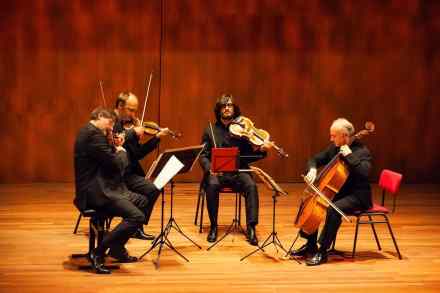
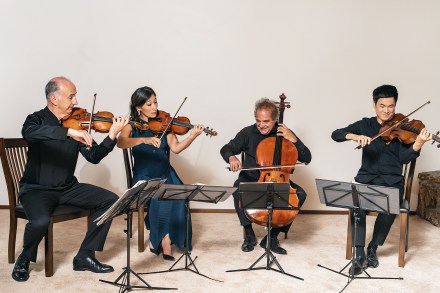
Once upon a time in communist Hungary – 1975, in fact – four students at the Liszt Academy decided to form a string quartet. That’s always an interesting choice. For a gifted and ambitious young musician, it takes a special kind of self-knowledge to pool your artistic future with three colleagues. But it’s what followed that makes the Takacs Quartet so fascinating. A relocation from the eastern bloc to the free West, the retirement of all but one of the founding members – and yet 51 years later the Takacs Quartet is still, recognisably, the same group. Some would say that it’s currently the finest string quartet in the world.  But throughout the story, there has been one constant: the group’s cellist, Andras Fejer.
The magnificence of Beare’s Chamber Music Festival

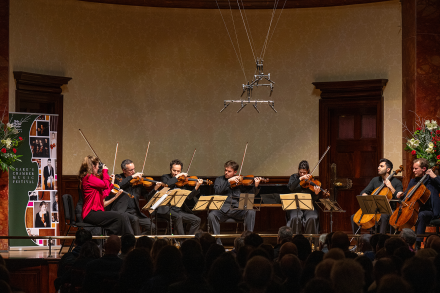
The quartet is the basic unit of string chamber music. Two violins, a viola and a cello: subtract any one of those, and you’re walking a tightrope. Add further players and the issue is redundancy: you’d better know precisely what you want to do with those additional voices, because otherwise they’ll congeal like cold gravy. When it comes to the string octet – two string quartets fused together – only the 16-year-old Mendelssohn really cracked it, going all out for transparency, daring and youthful verve. The Romanian George Enescu took the opposite approach. His Octet of 1900 is chamber music as epic construction project, wrought from steel, not spindrift.

Splendid revival of an unsurpassed production: Royal Opera’s Turandot reviewed

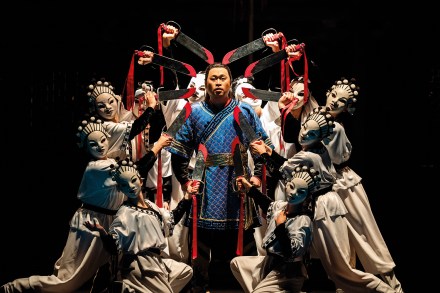
Puccini’s Turandot is back at the Royal Opera in the 40-year old production by Andrei Serban and… well, guilty pleasure is an unfashionable notion these days, but I still feel a batsqueak of shame at enjoying it so much. It’s not the chinoiserie – anyone who believes that an opera based on an 18th-century Italian pantomime should be taken literally is probably beyond help. No, it’s a Spectator headline from years back that still nags. ‘Turandot is a disgusting opera that is beyond redemption’ was the gist of a review of this same staging by the late Michael Tanner, and if it was anyone else you’d put it down to snobbery and move on. But you can’t do that with Tanner, a thinker of piercing intelligence who spent decades interrogating how opera works and why it matters.

Classical music has much to learn from Liverpool

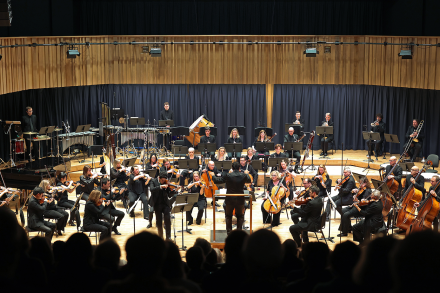
They do things their own way in Liverpool; they always have. In 1997 the Royal Liverpool Philharmonic Orchestra launched a contemporary music group called Ensemble 10:10 (the name came from the post-concert time-slot of their early performances). For a decade now, they’ve also administered the Rushworth Prize, an annual competition for young composers based in the north-west. And while classical fads and crises have come and gone, the RLPO has held its friends close and tended its garden. The result? The kind of artistic self-assurance that lets you put your chief conductor in charge of a première by a novice composer, and then call in a Barenboim to guarantee a full house.

The stupidity of the classical piano trio

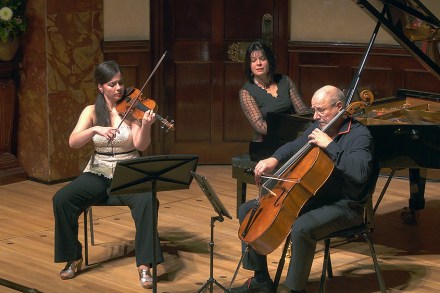
It’s a right mess, the classical piano trio; the unintended consequence of one of musical history’s more frustrating twists. When the trio first evolved, in the age of Haydn, the piano (or at any rate, its frail domestic forebear) was the junior partner, and the two string instruments, violin and cello, were added to make the silly thing audible. Then the piano started to evolve, while its partners – give or take the odd tweak – really didn’t, much. The end result, by the second half of the 19th century, completely reversed the original balance of power, leaving the two string instruments thrashing for dear life against the onslaught of that glossy, black, all-devouring monster, the modern concert grand.

Why is Fauré not more celebrated?

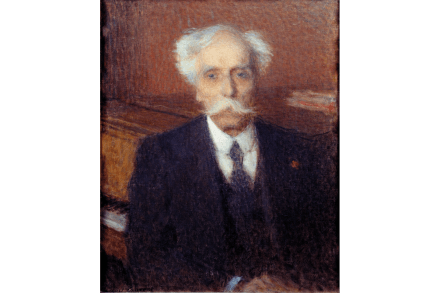
It is 100 years since the death of Gabriel Fauré, a composer whose spellbinding romantic tunes emerge from harmonies and rhythms that nudge us towards the future. No other composer deploys such subversive mastery of the conventions of French music: again and again, if we look underneath the arches of his melodies, we find ambiguous chromatic shifts or disorientating spiralling arpeggios. For some critics, the musical argument of Fauré’s late chamber work is so understated it evaporates And – see above – no other French composer is so hard to describe without falling into a purple puddle.

A lively and imaginative interpretation of an indestructible Britten opera

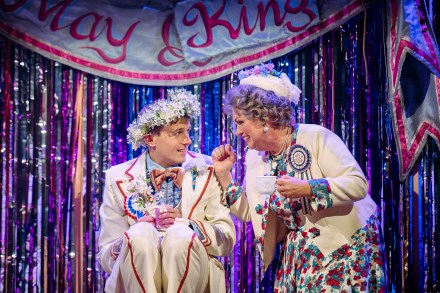
Scottish Opera’s new production of Albert Herring updates the action to 1990, and hey – remember 1990? No, not particularly, and I suspect that’ll be a common reaction if you were actually around back then. The director Daisy Evans was a toddler at the time and she imagines a gaudy, tawdry small-town world of bum-bags, WeightWatchers and decrepit gas heaters. Loxford Village Hall looks like it hasn’t been redecorated since the year the opera was composed, 1947, and that certainly rings true. Blancmange for the May Day feast, though? I’m pretty sure that even under John Major, blancmange was a throwback. But Evans has a show to put on after all, and a pink wobbling gelatine-based dessert is more theatrical than a bowl of Monster Munch.

Very much NSFW: Jean-Efflam Bavouzet/Quatuor Danel at Wigmore Hall reviewed

‘Drammatico’, wrote César Franck over the opening of his Piano Quintet, and you’d better believe he meant it. The score bulges with clues: piu dolce; espressivo sempre; eventually (and steamiest of all if you’re even slightly attuned to the absinthe-dazed atmosphere of French Wagnerism) tenero ma con passione — ‘tenderly, but with passion’. It was too much for Camille Saint-Saëns, who played the piano in the world première in 1880. The gossip was that Saint-Saëns knew of Franck’s infatuation with the composer Augusta Holmès, and was repulsed by music that — to jealous ears — sounded like the one-handed diary of a 58-year-old lecher.

Exuberance and class: Ariadne auf Naxos at Edinburgh Festival reviewed

For some reason, I’d got it into my head that the main work in the Gringolts Quartet’s midday recital at the Edinburgh Festival was going to be Beethoven’s Quartet in C sharp minor, Op.131. No problem with that, of course; it’s exactly the sort of big serious work you’d expect a big serious international violin soloist like Ilya Gringolts to play when he forms a string quartet, and then to bring on tour to a big serious international festival like Edinburgh. Still, it’s not a piece that you can really listen to before lunch without a certain amount of mental preparation; and it was while revisiting the Festival website that I saw that I’d got it all wrong. They were actually due to play the Quartet Op.106 in G major by Antonin Dvorak.

Alan Rusbridger on the joys of four-hand piano

One of the few social activities not yet prohibited under lockdown laws is four-handed piano playing. I don’t mean sitting side-by-side at one keyboard. That would risk infection and, if snitched on, the possibility of sharing a prison cell with Piers Corbyn. No, the four hands must be divided equally across two pianos, and the instruments must be end-to-end. Safely isolated in this manner — perhaps three or four metres apart — the ivories can be tickled for as long as you want. I’ve been a devoted four-hand piano player all my life — due entirely to the limitations of the two I was born with.

The joy of going to a real concert: OHP’s Heart of Delight reviewed

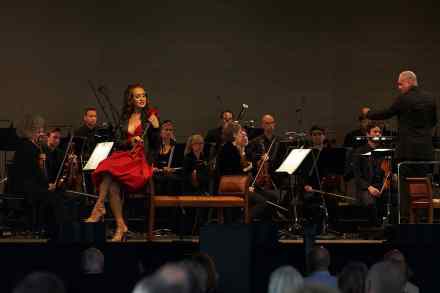
I went to a concert! Not a livestream or download: a real concert, with real musicians, a real conductor, a real audience, and the real sound of Waitrose cava bottles popping open in the late afternoon. In some ways, this open-air gala from Opera Holland Park made it feel as if the summer season were back on. There were floral-print dresses and canary-coloured chinos; I swear I even saw a tartan picnic rug. And here in a corner were the critics, released back into society for the first time since March. When the correspondent of the Mail on Sunday ostentatiously upgraded himself to a better seat mid-show, it was like we’d never been away. In truth, it only resembled normality if you ignored the total absence of Opera Holland Park’s huge tented theatre.

The joy of Haydn’s string quartets – here are the best recordings

As Joseph Haydn was getting out of bed on the morning of 10 May 1809, a cannonball landed in his back garden. Napoleon’s armies were closing on Vienna, and Haydn’s suburban home was in the line of fire. His valet recorded that the bedroom door blew open and every window in the house rattled. Shaking violently, the 77-year-old composer’s first thought was for his household, which at that point comprised six servants and a talking parrot who addressed him as ‘Papa’. ‘Children, don’t be afraid, for where Haydn is, nothing can happen to you,’ he shouted. This was nothing particularly new. Over a long life Haydn survived smallpox, saw his house burn down (twice) and narrowly escaped castration at the hands of an overenthusiastic choirmaster.