Catholicism

The Catholic influencers spreading the word of God

From our UK edition

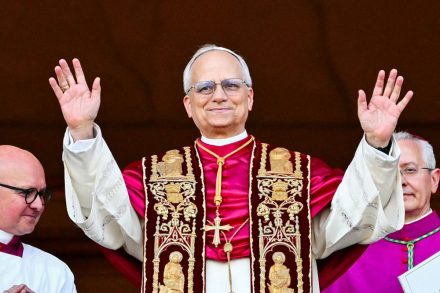
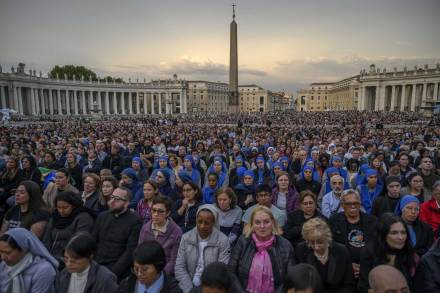
Vatican City In an auditorium just outside St Peter’s Basilica, the Vatican’s Secretary of State, Cardinal Pietro Parolin, sat solemnly in the front row as a young crowd sang, danced and hopped around to a pop hymn. The cardinal, who is 70, was widely expected to become the pope earlier this year. Instead, he inaugurated the Catholic Church’s first social media influencer conference. Around 1,000 influencers attended last week’s Jubilee of Digital Missionaries and Catholic Influencers. In his opening remarks, Parolin described social media as not just an instrument of communication, but ‘a way of living in the world’.

Trump unleashes the evangelists

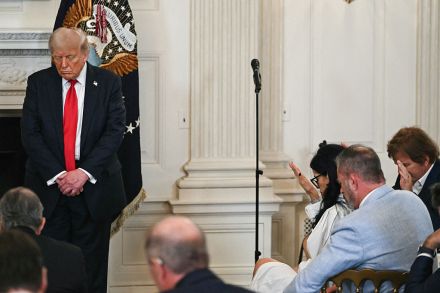
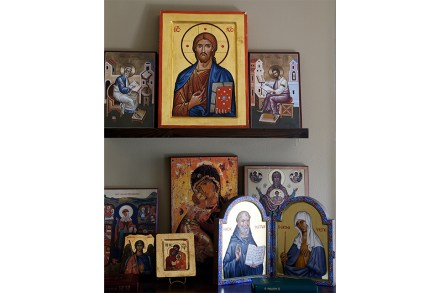
The Trump administration issued a memo Monday saying that federal workers are openly allowed to express religious beliefs in the workplace “to the greatest extent possible unless such expression would impose an undue hardship on business operations.” This means that they can display Bibles, religious artwork and items “such as crosses, crucifixes and mezuzah,” among other religious symbols. But that’s not all. Workers are also allowed to talk about how their own faith is “correct” and how others should “re-think” their beliefs. “During a break, an employee may engage another in polite discussion of why his faith is correct and why the nonadherent should re-think his religious beliefs.

It’s time for Pope Leo XIV to make some tough decisions

From our UK edition

13 min listen

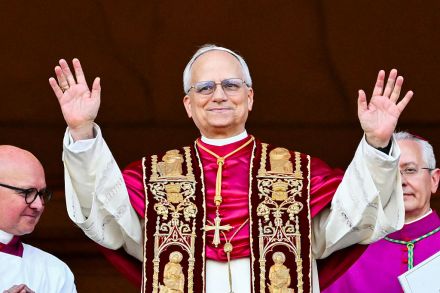
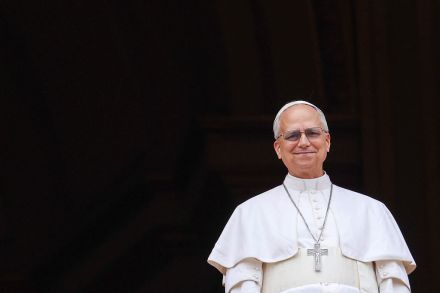
Nearly everyone loves Robert Prevost, the unassuming baseball fan from Chicago who unexpectedly became Pope Leo XIV this year. But as he prepares to spend his summer in Castel Gandolfo he has some difficult decisions to make. Is he prepared to clear up all the doctrinal confusion created by his predecessor Pope Francis? And will he allow liberal bishop to continue to persecute Catholics who prefer the ancient Latin form of Mass?  Damian Thompson gives us his thoughts in advance of Recovering the Sacred, a Spectator event at St Bartholomew-the-Great in the City of London on July 8 featuring debate and sacred music illustrating the recovery of tradition by a new generation of Christians. For tickets and more information, go to spectator.co.uk/church.

Letters: How lads’ mags spawned OnlyFans

From our UK edition

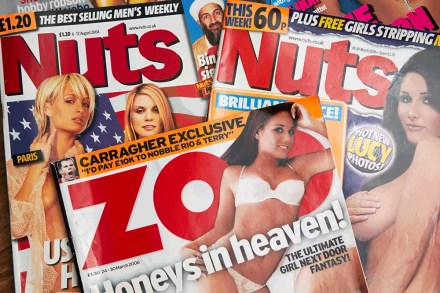
Bad lads Sir: The articles on Britain’s relationship with porn were fascinating and frustrating in equal measure. Fascinating in that Louise Perry and Michael Simmons’s contributions (‘Devices and desires’ and ‘Dirty money’, 14 June) provided a thought-provoking analysis of the extraordinary growth of the industry. Frustrating in the juxtaposition of these pieces with Sean Thomas’s delusional thoughts about ‘lads’ mags’ (‘Age of innocence’). Mr Thomas seems to recall these publications with the same dewy-eyed fondness that folk of my generation reserve for Spangles and Bagpuss. He is unable to see the direct line that joins them to the worst excesses of OnlyFans.

The Renaissance master who rescued polyphonic music

From our UK edition

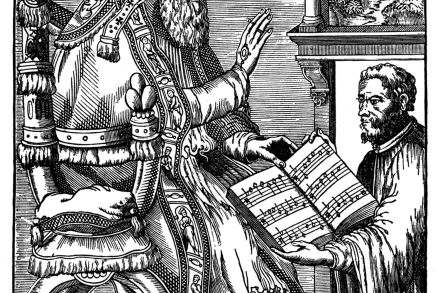
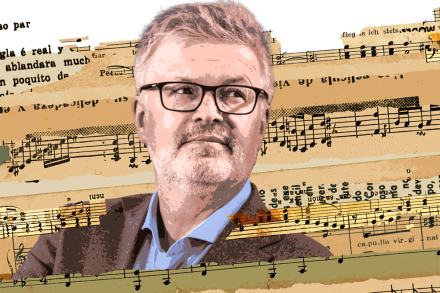
Last month I watched conductor Harry Christophers blow through what sounded like an arthritic harmonica but in fact was a pure-toned pitch pipe, which handed the singers of his vocal group the Sixteen their starting notes. Then the Kyrie from Giovanni Pierluigi da Palestrina’s Missa Regina coeli unfolded inside the resonant splendour of St James’s Church in Mayfair and, 500 years after his birth, I grasped why Palestrina, maestro di cappella of St Peter’s Basilica in Rome from 1551-5, still has the capacity to surprise. Christophers and the Sixteen are celebrating this greatest of the late Renaissance composers in his anniversary year with three concerts promoted by the Wigmore Hall but held at St James’s: this music lives or dies by the acoustic in which it is heard.

Can Pope Leo end the liturgy wars?

From our UK edition

Last weekend, under windswept banners depicting the Sacred Heart of Jesus and the Virgin Mary, nearly 20,000 young pilgrims marched through fields and forests between the cathedrals of Paris and Chartres. All of them carried rosaries and chanted in Latin, sometimes breathlessly: it’s a punishing 60-mile trek through mud and rocks. Each ‘chapter’ of the column was accompanied by priests. Like the lay pilgrims – drawn from 30 countries but dominated by French teenagers in scouting uniform – they wore backpacks and trainers, but also full-length cassocks or habits. They were traditionalists and so were the young people: despite their informality, they were utterly committed to intricate Latin worship.

Vampires, werewolves and Sami sorcerers

From our UK edition

I have to be honest: I’ve never been much concerned with what happened in the Grand Duchy of Lithuania in 1387. I suspect that may even be true for many Lithuanians. In Silence of the Gods, Francis Young pinpoints this year – of the conversion of the duchy to Christianity – as the official triumph of Christianity in Europe over paganism and idolatry. But he then goes on to examine the debris – and the survivors of paganism and their traditions in the northern regions of Europe. The first difficulty is defining and identifying paganism. The book is published by Cambridge University Press, so there is an unmistakably academic, seminar-ready, conference-hardened edge to the text.

Finding spiritual treasure in César Franck

From our UK edition

36 min listen

The Belgian composer César Franck – unfairly associated with kitsch and sentimentality by certain cultural sophisticates – wrote some of the most spiritually inspiring music of the late 19th century.  In this episode of Holy Smoke, Damian Thompson talks to the British-Israeli pianist Ariel Lanyi, who has just recorded Franck’s late masterpiece Prélude, Aria et Final on the Linn label. Ariel discusses the influence of Catholicism and the anti-Catholic Richard Wagner on the devout Franck, who was organist of a church in Paris for 30 years – but reserved his most profound thoughts for ostensibly secular works.  Produced by Patrick Gibbons and Damian Thompson.

The problem with Pascal’s wager

From our UK edition

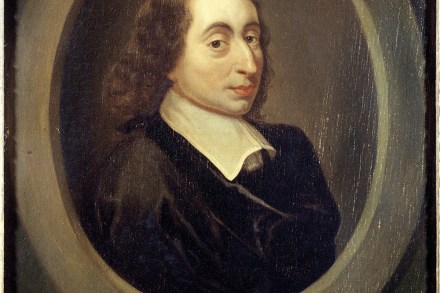
Blaise Pascal resists definition. During a short life (he died in 1662, aged 39) he invented the calculator, laid the foundations for probability theory and created the first public transport system. He was also an austere Catholic, whose call for a return to strict Augustinian doctrines put him outside the religious mainstream. As a philosopher, he is remembered today for his ‘wager’ argument – a challenge to atheists, framed as a cosmic gamble. As Graham Tomlin shows in this lively, conversational biography, Pascal worked in threes, often steering a course between extremes.

Betting on a papal conclave felt mildly degenerate

Josh is a five-foot-tall aspiring priest with a prosthetic leg who wears half a dozen assorted crucifixes and medals, causing him to jangle as he lopes around on crutches. He also carries so many holy cards in his pocket that you’d think he was worried about being spontaneously challenged to the Catholic equivalent of a Yu-Gi-Oh duel.But most importantly for my purposes, Josh will talk to you about Church politics until you’re ready to jam an aspergillum through your eardrum.When I first approached him, purely out of curiosity, he sent me an article from the National Catholic Reporter suggesting that the odds-on favorite, Vatican Secretary of State Pietro Parolin, was a paper tiger.

Pope

How silence makes music

From our UK edition

‘What!? But they won’t let you in!’ and ‘What!? But they’ll detain you at the border!’ and ‘What!? But they’re all nuts over there!’ were just some of the responses from friends and colleagues at my announcement that I was heading to the US for three and a half weeks’ work. But my visa was valid and accepted at passport control, I wasn’t thrown in jail, and the people whom I met and worked with were perfectly sane, perfect hosts and a perfect delight. First up was the Minnesota Orchestra, where I conducted two concerts of my own music and more well-known works by Rachmaninov and Rimsky-Korsakov. Also on the programme was an excerpt from Wagner’s Parsifal.

Anselm Kiefer’s monstrous regiment of women

From our UK edition

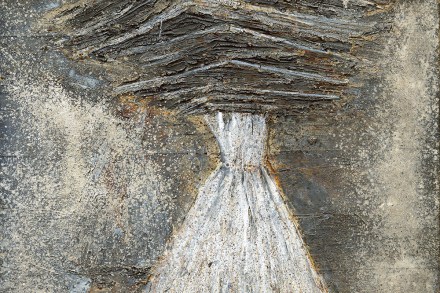
The visionary artist Anselm Kiefer has restlessly challenged and redefined recent German history and cultural shibboleths in an extraordinary body of work that spans more than six decades. Two months ago he turned 80, an anniversary marked by the staging of exhibitions from Amsterdam to the Ashmolean and the publication of this impressive study devoted to the notable women that thread their way through his work, endlessly shape-shifting. Women are to be found everywhere in Kieferland: haunting, teasing, beckoning, seducing; imperious, impassive, poetic and unknowable. There are martyrs, queens and heroines of the revolution, Brunhilde and the Valkyries, Madame de Stael and Marie-Antoinette.

How Rome copes with the Conclave

From our UK edition

Ordinary Romans, famous for their cheerful working-class familiarity, loved Pope Francis for his common touch. For the first time in living memory, they will have the opportunity of turning out on the streets to say their final farewells to a Pope, as Francis willed that he be buried in the papal basilica of Santa Maria Maggiore on the Esquiline hill rather than in the vaults of St Peter’s. His will be the first papal burial procession to the Basilica since Clement IX’s in 1669. Unlike his predecessors, though, Francis insisted on plainness, economy and simplicity. His first arrival in the Vatican as Pope was by public bus. His departure, in a plain wooden coffin, is likely to be equally low-key and dignified. The mortal Pope dies, but the Eternal City lives. And, indeed, is reborn.

The extraordinary scale of the crisis facing the next pope

From our UK edition

At 9.47 a.m. on Easter Monday we heard the words ‘con profondo dolore’ from a cardinal standing in the chapel of the Casa Santa Marta. Two hours earlier, Pope Francis ‘è tornato alla casa del Padre’ – ‘had returned to the house of the Father’. Most people won’t have noticed a curious detail: the cardinal was speaking Italian with a pronounced Irish brogue. The incoming pope will face challenges that dwarf those that confronted any in living memory Cardinal Kevin Farrell, the papal ‘Camerlengo’, was born in a Dublin suburb. Or, as a tabloid put it: ‘Interim Pope is a bloke called Kevin from Dublin.’ That’s an exaggeration, but the Camerlengo does occupy centre stage when the See of Peter falls vacant. He confirms that the Pope is dead.

Pope Francis had his priorities right

From our UK edition

After Pope Francis emerged from the Gemelli hospital in Rome last month, a reflection attributed to him a few years ago returned to circulation. It was on ‘hospital’. Some of it was the usual, about how it’s where like meets unlike (‘In intensive care you see a Jew taking care of a racist’ etc). Some seems like standard homely Francis: ‘This life will pass quickly, so do not waste it fighting with people… Do not worry too much about keeping the house spotless.’ And it ended: ‘Love more, forgive more, embrace more… And leave the rest in the hands of the Creator.’ That was the disconcerting thing about Francis. Everything eventually boiled down to the love of God. It’s why even sound criticism of him somehow misses the mark.

Pope Francis’s immigration letter was seriously imprudent

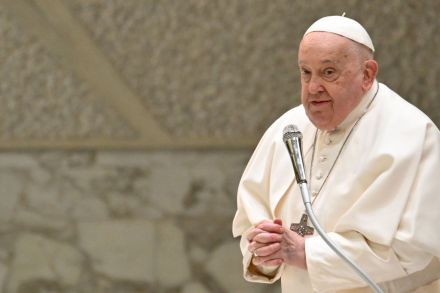
Everyone in the world, it seems, believes they’re entitled to an opinion on US immigration policy. That includes Pope Francis. The Supreme Pontiff made clear his displeasure with the administration’s resetting of America’s approach to immigration in a letter addressed to the US Catholic bishops, but clearly directed against the new Trump administration’s efforts to enforce existing US immigration laws — with a particular emphasis on deporting immigrants who are criminals or who have committed crimes as well as others judged not to have valid claims to refugee status.

pope

The tragedy of Christopher Wray

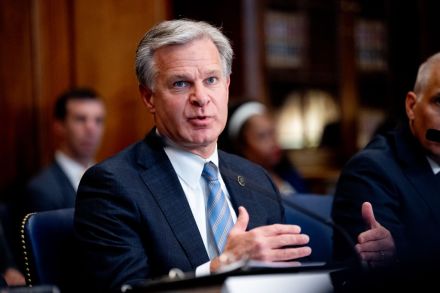
The tenure of Christoper Wray as FBI director represents a missed opportunity.  After the problematic directorship of James Comey, Wray’s appointment by President Donald Trump on May 9, 2017, was welcomed by most current and former agents as well as the American people, who wanted the Bureau restored to its position of trust. With a ten-year term and the principal malefactors of the Russian collusion farce already fired, Wray was in a position of strength.   Under the Mueller/Comey cabal, the bureau culture had changed from that of a law enforcement agency to an intelligence mindset. That’s what led us into the ugly morass of the Russian collusion narrative and ensuing fiascos.

christopher wray

We need to learn to pray again

From our UK edition

In The Spectator’s basement kitchen a few weeks ago, I cornered a young colleague, Angus Colwell, and asked him what he made of Rod Dreher’s new book Living in Wonder. The thrust of it is that we are not in an age of enlightenment so much as ‘endarkenment’ (Dreher’s term) and that, having turned our backs on God, we have become easy pickings for demonic forces. ‘Oh Lord’, said Angus, turning wearily away, ‘I’m so sick of demons.’ This delighted me then and still delights me, both because it’s so surreal and also because it rings so true. If you’d told me ten years ago that young political types in 2024 would be talking knowingly about the ancient devil-gods of the Mesopotamian region – Moloch, Ishtar and Baal – I’d have said your vape was spiked.

Pennsylvania nuns fight back against false voter fraud claims

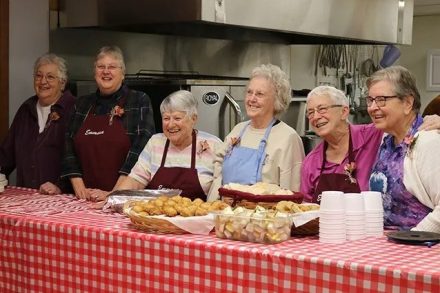
A Pennsylvania order of nuns is threatening legal action over false voter fraud claims from a political operative with a scandalous history in Republican politics. The founder of a “ballot chasing” operation was seemingly unable to identify a very-online monastery of Benedictine sisters. With two weeks to go until the presidential election, a Republican door-knocking initiative claimed to have uncovered startling fraud in the up-for-grabs swing state: “BREAKING: A member of PA Chase discovered an address in Erie, PA today where 53 voters are registered,” Pennsylvania Chase founder Cliff Maroney wrote on X Tuesday evening. “Turns out it’s the Benedictine Sisters of Erie and NO ONE lives there. We knocked on the door because a Republican mail-in ballot is unreturned.

nuns

Trump ribs Kamala for skipping Al Smith dinner

Vice President Kamala Harris was the first presidential candidate since Walter Mondale to skip the traditional Al Smith dinner, which raises money for Catholic Charities, and former president Donald Trump would not let her forget it. He called her absence “deeply disrespectful” to Catholics, earning applause from some in the audience. Trump joked, “Instead of attending tonight, she’s in Michigan receiving Communion from Gretchen Whitmer,” referring to a viral video of the Michigan governor feeding a Dorito chip to a liberal activist kneeling before her.

donald trump