Cars

Why the characterful Ford Bronco is staging a comeback

From our UK edition

The best part of a decade elapsed between Land Rover's unveiling of the 'DC100' concept at the 2011 Frankfurt Motor Show and the first 'New Defenders' hitting the road two years ago just as Covid struck – prompting suggestions that the beefy SUV had arrived 'just in time for Armageddon'. During the interim, thousands of column inches and hours of video were dedicated to predicting what the production version might look like, how it would perform and debating whether or not it could ever truly match the rough-and-ready utilitarian charm of the time-served original.

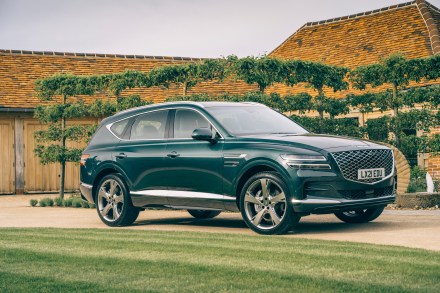
The affordable SUV that gets mistaken for a Bentley

From our UK edition

Readers of a certain age might remember when some car marques were the butt of relentless derogatory jokes. Czech brand Skoda – which has since been brought up-market under VW ownership – was an especially popular victim (Q: 'What do you call a Skoda with a sunroof?' A. 'A skip..') as were Lada (Q. 'How do you avoid a speeding ticket?' A. 'Buy a Lada') and Malaysia's Proton (Q: 'How do you double the value of a Proton?' A. 'Just add petrol.'). But even makers of famously good, solid, reliable cars can be coy about their original brand names when they decide to up their game by trying to penetrate the luxury market – which is why Toyota created Lexus, Nissan invented Infiniti, Honda coined 'Acura' and, more than 100 years ago, Ford adopted the Lincoln nameplate.

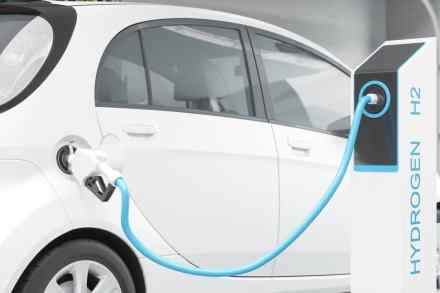
Hydrogen vs electric – which car is the better investment?

From our UK edition

Does the future of motoring really lie in electric cars? Battery powered motors are now commonplace, but a few intrepid British drivers have gone for hydrogen fuel cell models instead. They currently have two choices. The £69,495 Hyundai Nexo (28 sales) and the £55k plus Toyota Mirai (about 200 owners including James May), so they’re hardly cheap. Eventually there will be more, including a BMW X5 4x4 due to be launched later in 2022. Jaguar Land Rover is also said to be looking at the technology for its heftier offerings. These cars take minutes to re-fuel, go further between top ups and, unlike battery cars, aren’t adversely affected mileage-wise by cold weather. The only thing they emit is water vapour.

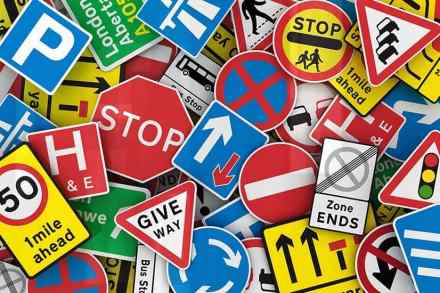
The Highway Code to hell

From our UK edition

I did a speed awareness course on Monday. For the uninitiated, you have the option of doing one of these if you’re caught speeding and want to avoid getting three points on your licence. It only lasts two and a half hours and there’s no test at the end, so it’s a no-brainer, although you have to do it again if you’re spotted playing on your phone at the back. I’ve never heard of anyone choosing the three points instead. Like most people forced to undergo this humiliation, I was convinced I had nothing to learn. We all know about the laws of motion: the faster you’re going, the longer it takes to stop. And, inevitably, I found myself silently correcting the poor English of the two trainers.

In defence of road rage

From our UK edition

A friend told me recently that the only time she and her husband get passionate these days is when they are yelling abuse at each other across the cup-holders of their Renault Hybrid. He complains that she drives like an anxious old lady while she's convinced he's an entitled prat behind the wheel. During every mangled gear change, every junction missed, every failed three-point turn each reminds the other of his or her imbecility. It's all displacement of course – these disproportionate attacks are never really about whether one of you forgot to indicate. Outside the confines of their hybrid, the couple in question live a life of quiet, seething resentment just like the rest of us.

The truth about electric cars

From our UK edition

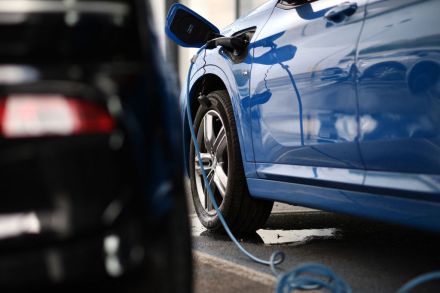
EVs have been easy to poke fun at over the years. Comedian Chris McCausland has a popular stand-up sketch about how Jaguar spent four years developing a space age noise for its electric i-Pace, only to silence it because people were looking skywards when they heard one coming towards them. And yet, despite their futuristic novelty, society has actually adjusted remarkably quickly to the advent of electric cars; they are fast becoming commonplace on British roads. Last year the Government’s EHVS home charging point grant scheme, which ends on 21 March, helped fund almost 61,480 charging units, and last November just under 19 per cent of Britain’s new car market was taken by electric models. These vehicles are no longer niche.

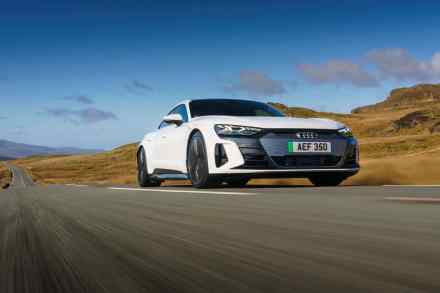
The Audi e-tron GT: stylish enough to tempt Prince William

From our UK edition

2030 is the deadline: the end of petrol cars in Britain. Because nothing lasts forever. 'This may be the last petrol car that I design,' said a British marque designer, sketching lines on a napkin wistfully. I threw the napkin in a trunk in the attic for memorial. I have become addicted to petrol cars in these last years because they are so conventionally masculine: driving them feels like theft, and it is mind-altering. If you don’t agree, drive an Aston Martin DB11 round a small bend. It will change you. I could write about the unspoken, unconscious joy of polluting – if you trash a planet it won’t forget you – but, like me, you are probably here for the car. So, electric. So far, I have only driven a Tesla model X.

The Mazda MX–5: proof that sports cars can be affordable

From our UK edition

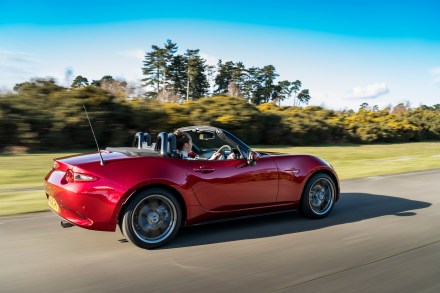
The British have a long-standing reputation for coming up with great ideas, executing them quite well – and then leaving others to really run with them. Such is the history behind what is officially the best-selling two-seat convertible sports car of all time, the evergreen MX-5 made by Japanese marque Mazda. The story goes that the MX-5 was born out of a conversation held 45 years ago between Mazda's former head of research and development Gai Arai and US automotive journalist Bob Hall. The latter had been bemoaning the impending demise of the simple, open-top sports car after it had been threatened with extinction during the late '60s due to US safety legislation on sales of conventional convertibles.

The car industry’s China crisis

From our UK edition

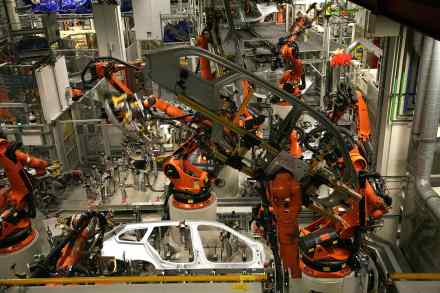
New cars could soon start disappearing from Britain’s forecourts, with the latest supply chain crunch threatening to cripple the global motor industry. It’s a crisis that once again delivers a stark warning about the dangers of over-dependence on China and the costs of succumbing to Beijing’s predatory trade practices. The automotive industry is currently facing a critical shortage of magnesium, which is an essential raw material for the production of aluminium alloys, including gearboxes, steering columns, fuel tank covers and seat frames. Stockpiles are running low, there is no substitute for magnesium in the production of aluminium sheets, and China has a near monopoly on the market.

The case for road pricing

From our UK edition

Thornton Wilder remarked that there are individuals who fall in love with an idea long before its appointed rendezvous with history. We hurl ourselves against the indifference of the age. It is now four decades since one of my first columns was published in London’s Evening Standard. In it I proposed an idea of which (if you read on) you’ll hear more. I got no response. It’s nearly 20 years since I wrote essentially the same piece as a whimsical side column for the Times. Labour’s Alistair Darling had called for debate on the idea. It never happened and my column attracted little notice. Fifteen years later, excited by a competition the Wolfson Foundation ran for the best proposal for implementing the idea, I wrote a serious 1,000-word column for the Times.

Modern cars reek of liberalism

My twin brother, who is much cooler than I am and lives in Washington, D.C., rolled into the Pennsylvania Wilds, our native land, for a visit recently. There, he offered me the chance to drive his brand-new BMW X1 — a luxury, subcompact, crossover “Sport Activity Vehicle.” The little thing was quick and responsive, so much so that forceful habits formed from driving less state-of-the-art vehicles (read: old) made my driving jerky at first. The front cabin felt wide open with barely-there window pillars. The seats were roomy and comfortable. And once I got used to the light-touch steering and ultra grippy brakes, driving the X1 was pleasant. But man, was this car annoying. For starters, I felt like a caveman trying to get the thing going.

cars

The true cost of the convenience economy

From our UK edition

‘Where’s the car?’ said my wife Alice, interrupting my Zoom meeting on Saturday morning. ‘It’s where you left it,’ I said perhaps more pointedly than was kind. ‘When you drove it home last night. On the drive.’ ‘No it isn’t,’ she said. I left my Zoom meeting, shambled to the front of the house and looked out of the window. She was right. Half-full skip, yes. Wheelie bins, yes. The usual pizza boxes, empty vodka miniatures and crisp packets scattered outside our house by generous pedestrians? Present and correct. But no car. ‘It’s been stolen,’ I said gloomily and, of course, I was right.

Why has the EU let German car manufacturers off the hook?

From our UK edition

Two billion? Five billion? Perhaps ten billion to make it a nice round number? For colluding on diesel emissions you might think the European Union would hand out a pretty stiff fine to the big German auto-manufacturers. After all, it has hit American tech giants with huge penalties for far lesser transgressions.  Yet in the end, its response was predictable: the EU has largely let them off the hook. The reason? It turns out that protecting German auto manufacturers is what the Commission really cares about – and nothing else matters.

Will a John Lewis home be up Boris and Carrie’s street?

From our UK edition

The Financial Times carried a curious story at the weekend about ‘the secretive process to elect the Lord Mayor of London’ being ‘thrown into disarray’ by ‘objections from some City leaders’ to the candidacy, for 2022, of Nick Lyons — who has just been elected as one of the City’s two sheriffs but who happens to be an Irish citizen. Lyons’s unnamed opposers say City rules have always required the Lord Mayor to be a British citizen. The City Corporation, the Square Mile’s local authority, says it has legal advice to the effect that Lyons is not disqualified, EU citizens being permitted to stand in UK local elections.

Why I won’t buy a Tesla

From our UK edition

I loved the Ford Mustang Mach-E which I had on loan for four days. It was gorgeous to drive, and slightly saner than the Tesla Model 3 — in that some of the controls involve physical switches and buttons, rather than an on-screen interface. The only annoyance was a persistent whining noise. This came from my teenage daughter who endlessly delivered her strongly held opinion that a fat, 55-year-old advertising man shouldn’t be driving a Mustang. As I patiently explained, when you are a 55-year-old man, you don’t really buy a car for yourself, you buy it for your Jungian shadow-self. So whereas your real-life wife and children might not much like riding in a Mustang, your imaginary 26-year-old Colombian girlfriend thinks it’s fabulous.

Suddenly used cars are hot property

From our UK edition

Companies should willingly pay tax wherever they generate profits — this column has long argued — because it’s fair they should contribute to the cost of the public services on which all business ultimately relies, and because the reputation of capitalism as a whole is tainted when corporate tax bills are reduced to absurdly low levels by the use of offshore domiciles and spurious royalty payments that most governments lack the willpower to challenge. So I welcome at least one half of the G7 finance ministers’ agreement last weekend on a new global corporate tax regime. The half I’m ready to praise is the proposal that all countries should have the right to tax some of the locally generated profits of the world’s largest multinationals.

Letters: What happens if interest rates rise?

From our UK edition

Spinning plates Sir: Kate Andrews is right to highlight the looming risk of inflation (‘Rishi’s nightmare’, 6 March), but to say that the UK has known barely any inflation for almost a generation misses a very painful point. It may be true for consumer prices. Low interest rates and quantitative easing, along with other ill-advised stimuli, have caused huge inflation over the past two decades in the single greatest expense throughout most working people’s lives: the cost of housing.

The war on cars is backfiring

From our UK edition

For most London-based politicians, there’s a threat that’s worse than Covid. You’ll begin to notice it as we ease out of lockdown. It’s not the Brazilian variant that keeps them awake at night, or collapsing hospitals. Nope. What really worries them is the thought of cars. Watch them pale as they mutter the words ‘car-led recovery’ and marvel at the variety of tortuous schemes cooked up to thwart motorists. You’d have thought, given the teetering economy, that any recovery, car-led or otherwise, would be welcome — especially as pollution plummeted between 2017 and early 2020, and diesel’s the problem, not your average commuter ride. Volvo said on Tuesday that all its cars will be fully electric by 2030.

John DeLorean: man of mystery – and full-blown psychopath

From our UK edition

DeLorean: Back from the Future was one of those documentaries — for me at least — that takes a story you thought you sort of knew and makes you realise a) that you didn’t really, and b) what a great story it is. The programme began, as it was pretty much duty-bound to, with a clip of Michael J. Fox and the time-travelling DeLorean car from the movie that inspired Wednesday’s means-less-the-more-you-think-about-it subtitle. A series of captions then introduced us to John DeLorean himself: a man who ‘had everything’ (cue shots of a much younger ex-model wife and some Rolexes) until he ‘risked it all’ in the mid-1970s, when he left a high-ranking post at General Motors to found his own sports-car company. Now all he needed was the money.

‘Smart’ motorways are an accident waiting to happen

From our UK edition

If I could wave a wand and reverse just one government policy it would be the expansion of so-called 'smart motorways' in the face of what seems the iron determination of the Department for Transport to press ahead with them. These are motorways where the hard shoulder is incorporated into the motorway to create an extra lane – a loss supposedly compensated for with periodic refuges for breakdowns. If you wondered why stretches of the M4 are shut most weekends for works, this is what they are doing. The consequences of such supposed 'improvements' can be lethal.