Caravaggio

The genius of Zurbaran – and why he vanished

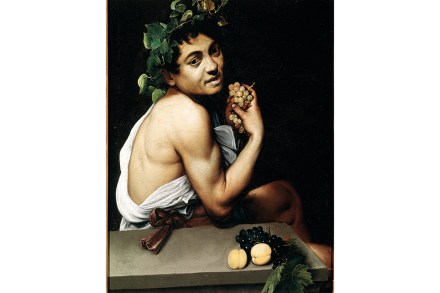
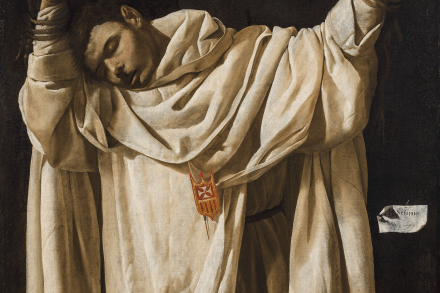
A pious Caravaggio JASPREET SINGH BOPARAI The Spanish painter Francisco de Zurbaran is sometimes thought of as a pious equivalent to Caravaggio – a Caravaggio without the bad temper, brutal vices or criminal record. But it seems difficult to argue that Caravaggio had any direct influence on his work. After all, he died when Zurbaran was 11 and a half years old. Since Zurbaran never left Spain, he could not have seen any of Caravaggio’s paintings with his own eyes. Indeed, he might never have even heard the artist’s name. Still, there are unavoidable similarities between the two men’s work. Zurbaran shared Caravaggio’s sense of drama and his love of shadows broken up by patches of strong light.
From Balfour to Zola: the many faces of ‘naturalism’

My husband said ‘A.J. Balfour played the concertina’, which is perfectly true, though he did other things, even as prime minister. The concertina was inessential to what I thought was a neat way of sorting out the meanings of naturalism. The word is used quite a bit these days, with four main meanings. My mnemonic for the meanings are Balfour, Bolingbroke, Zola and Caravaggio. When ‘The Hay Wain’ went on show in 1824, the Telegraph explained, ‘its naturalism and heroic scale were hailed as a revelation’. That naturalism may be labelled Caravaggio after an observation in 1950 by E.H. Gombrich in The Story of Art about ‘Caravaggio’s “naturalism”, that is, his intention to copy nature faithfully’.

Should we judge a work by the character of its creator?

‘Most of my heroes are monsters, unfortunately,’ Joni Mitchell once said, ‘and they are men.’ The singer-songwriter was able to detach the maker from the made. Should we do the same? Is it ethical? Even possible? These are the questions Claire Dederer deftly considers in Monsters, which puzzles through the problem of what we ought to do about great art by bad men. Ideally, nothing. Early on in her quest, Dederer longs for someone to invent an online calculator: The user would enter the name of an artist, whereupon the calculator would assess the heinousness of the crime versus the greatness of the art and spit out a verdict: you could or could not consume the work of this artist. Alas, said calculator has yet to be programmed, so it’s down to her to do the maths.

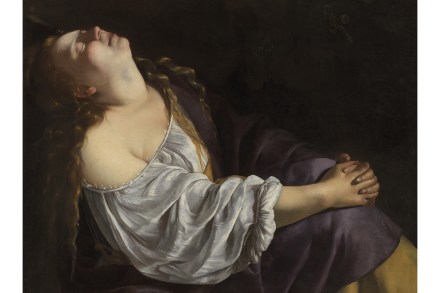
The life of Artemisia Gentileschi is made for Netflix, but it’s the art that really excites

‘It’s true, it’s true, it’s true.’ Over and over she said it. ‘E vero, e vero, e vero.’ It’s true he raped me. It’s true I was a virgin. It’s true all I say. Even under judicial torture, even with cords wrapped around her fingers and pulled tight, she did not waver. ‘E vero.’ These words, spoken by the 17-year-old Artemisia Gentileschi, have come down to us in a trial transcript of 1612. This haunting document, never seen outside the state archives in Rome, will be shown for the first time in the National Gallery’s forthcoming Artemisia exhibition. Artemisia ought to have opened this month. Curator Letizia Treves has been through hell and high water. Italy in lockdown. American flights suspended.