Cairo

The contingent talent of Emily Sargent

From our US edition

When your brother is one of the most successful artists of his time, you might feel reluctant to pick up a paintbrush. Yet, the works of Emily Sargent, in the Metropolitan Museum of Art’s Portrait of a Family, prove that she was an artist in her own right. Sargent (1857-1936) was not in her brother’s shadow, although she was undoubtedly in his debt. John, Emily and their sister Violet were the children of FitzWilliam Sargent, a successful Philadelphia physician, and the artist Mary Newbold Sargent. By the 1850s, the Sargent family were living a nomadic existence in Europe – John and Emily were both born in Florence. Encouraged by their spirited mother, the Sargent children were instructed that no matter how many sketches were begun in a day, at least one must be finished.

The agony and frustration of reporting from the Middle East

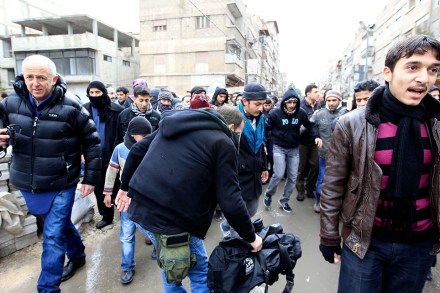
For 25 years, Abed Takkoush assisted foreign reporters like Jeremy Bowen when they arrived to cover the chaos and conflicts in Lebanon. He drove them around in his battered Mercedes, pointing out with grim relish the places where dark deeds had taken place: the assassinations, atrocities, kidnappings and slaughter of civilians that scar this mesmerising nation. During one Israeli onslaught in 1996, Abed sped past a gunship firing at cars on the highway between Sidon and Tyre, laughing with relief when shells exploded on the road rather than the car. ‘We laughed with him,’ writes the veteran BBC reporter. ‘It was a calculated risk. The alternative was turning back to Beirut without a story.’ Four years later their luck ran out on the last day of Israeli occupation.

The cosmopolitan spirit of the Middle East vanished with the Ottomans

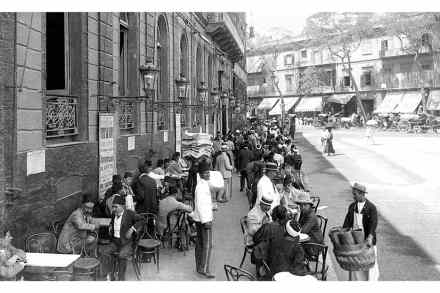
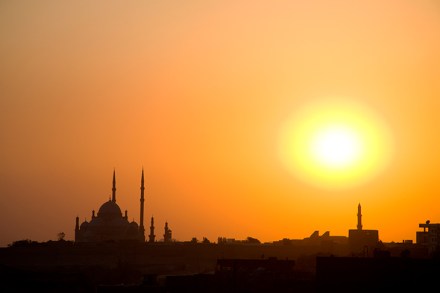
One of the most depressing vignettes in Michael Vatikiotis’s agreeably meandering account of his cosmopolitan family’s experiences in the Near East is when he, a former journalist with a sharp eye for detail, visits El Wedy, close to the Nile south of Cairo, where just over a century ago his great-uncle Samuele Sornaga built a hugely successful ceramics works employing 200 people. The factory no longer exists. It was nationalised, privatised, closed, and is now a vast construction site. After being harassed and prevented from taking photographs, Vatikiotis discovers it’s being developed as a resort — not for general tourists, mind, but for the army, whose presence looms menacingly everywhere.

How two children vanished for a week en route from Africa to London

As we all know by now, the pandemic distorts time like a concertina. Life before March is a world that seems too distant, an image viewed down a telescope held the wrong way — yet there are moments when the months retract into almost hours. We are still castaways in London, still waiting for the airspace to open so that we can fly home to Kenya. I feel glum about it, then remember how my father was marooned for 12 years in southern Arabia and Africa on either side of the war. He missed his mother, as I do, sitting in his mud tower on the edge of the Empty Quarter listening to Churchill on the wireless broadcasting about faraway battles. Letters arrived every few weeks or months and he just got on with his adventures.