Brexit

The Spectator’s Notes | 12 July 2018

From our UK edition

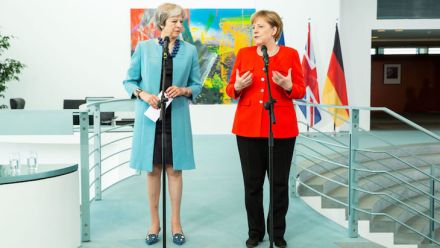
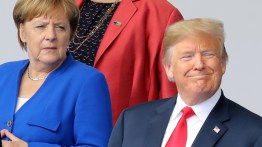
Why do the British turn to the Germans in their moments of European trouble? It never works. When Jacques Delors conceived his single currency plans, Mrs Thatcher over-relied on Karl Otto Pöhl at the Bundesbank to squash them. Dr Pöhl preferred to side with Helmut Kohl. When Britain was struggling to stay in the ERM in the late summer of 1992, the Major government put faith in what they thought were German promises to help them out. These failed to materialise. When David Cameron sought a new EU deal which would win him the 2016 referendum, he placed his greatest hopes in Angela Merkel, who offered him concessions so feeble that even he quickly gave up trying to sell them. Last week, Mrs May flew to Berlin.

Diary – 12 July 2018

From our UK edition

Well, we did it. No, not Brexit, the World Cup or my (somewhat less) ambitious scheme at Legal & General to interest the nation in investing. Not yet at least. But we did reach the end of term — and the end of the school year. With three out of our nine children leaving their respective schools, my husband, Richard, and I have been staggering towards the finish line, with the usual sports days and summer concerts interspersed with leavers’ picnics, drinks, dinners and cricket days, all of course held in uncharacteristically glorious sunshine. On occasion we had to draft in the cavalry: one daughter took my place at the mothers-and-sons tennis tournament (a welcome substitute for the son in question, since she can actually play).

The Brexit White Paper is a bad deal for Britain

From our UK edition

This (Brexit White Paper) is the greatest vassalage since King John paid homage to Philip II at Le Goulet in 1200. This White Paper has not needed age to turn yellow. There are very few signs of the Prime Minister's famous red lines. It is a pale imitation of the paper prepared by David Davis, a bad deal for Britain. It is not something I would vote for, nor is it what the British people voted for. In particular, this paper sets out that the UK will be subject to EU laws while having no say in their creation. The Common Rule Book will not be Common, it will be EU law, interpreted by the EU Court with the UK subjected to EU fines for non-compliance. The UK has accepted it cannot diverge from 'ongoing harmonisation' without activating repercussions for Northern Ireland.

Raab talks tough on Brexit White Paper – as Brussels responds

From our UK edition

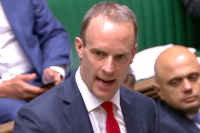
Dominic Raab's Commons debut as Brexit Secretary didn't go exactly as he would have hoped. He was greeted with louder heckles than normal from the Opposition owing to the fact that the Brexit white paper had not been given to MPs prior to the statement. Despite this, Raab put in a solid performance as he tried to show it was business as usual despite a turbulent week for the government which saw David Davis and Boris Johnson quit the frontbench – and a Eurosceptic rebellion brewing. The publication of the White Paper is unlikely to calm nerves. The issues that are set to stoke the most interest include the fact the government is now seeking 'association agreement' – something they appeared to previously dismiss.

What happened to the Brexit exodus of foreign students?

From our UK edition

Brexit will, of course, lead to a crash in the number of foreign students coming to racist, xenophobic Britain. We know this because the Guardian keeps telling us so. To quote one headline in the paper from April: “Vice-chancellors urge action to stop predicted 60 per cent fall in EU students”. The story went to quote Prof Julia Black, pro vice-chancellor for research at the LSE, who said: “It is hard to model how many students would pay fees 50 per cent higher when they could be taught in English in other countries for less or for free. We know from research studies that these European students just want to study in another country, so it doesn’t have to be Britain.

The Spectator Podcast: Revolution!

From our UK edition

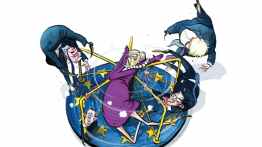
Is Brexit going in circles? With the resignations of David Davis and Boris Johnson – and widespread unhappiness at the Prime Minister's Chequers plan – it is hard to pretend that things are going well. But is the drama only just getting started? In this week's cover piece, James Forsyth says that a no-deal Brexit, or calling the whole thing off altogether, are now distinct possibilities. On the podcast, James says that this week's events show that it is not only the Brexit ultras who could cause the PM trouble; 'this rebellion goes far deeper into the Conservative party,' he argues. Paul Goodman, editor of ConservativeHome and John Springford, deputy director at the Centre for European Reform, join James for the discussion.

Donald Trump does Brexit

From our UK edition

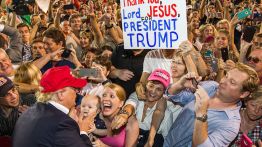
PART I President Donald Trump is less than impressed with Theresa May's Brexit plan, it seems. ‘I’m not sure that’s what they voted for,' he says. But how would he do Brexit? Boris Johnson said recently ‘Imagine Trump doing Brexit — what would he do. There’d be all sorts of breakdowns, all sorts of chaos. Everyone would think that he’d gone mad. But you might actually get somewhere.’ Well, let’s imagine ... June 24, 2016 5 a.m. The votes are in and Britain has elected to leave the European Union. Prime Minister Trump leaves Downing Street and calls a special press conference at his golf course, Turnberry, in Scotland. 7.15 a.m. The Prime Minister arrives by helicopter and puts on a Make Turnberry Great Again baseball cap.

We don’t know where Brexiteers are going now. And neither do they

From our UK edition

In happier days when Britain was not on the brink of disintegration, David Davis told me a story about the 19th century French politician Alexandre Auguste Ledru-Rollin. Little did I suspect that soon he would be living it. The Francophiles among you will recall the apocryphal tale of Ledru-Rollin enjoying his lunch at a Parisian café when a revolutionary crowd stormed past. Ledru-Rollin leapt from his seat and cried “There go the people. I must follow them, for I am their leader." Where were they going? He did not know. What was his plan? He did not have one. True believers in Brexit are revolting, and not without cause.

The Remainers are in charge now

From our UK edition

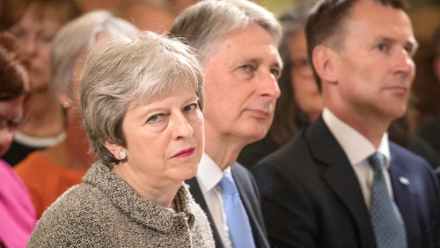
There has been a Remainer coup. Remainers now inhabit virtually all of the highest offices in the land. Overnight, adherents to this minority political viewpoint seized the final levers of political power. This is the one downside — and what a downside it is — to the belated outbreak of principle among the cabinet’s Brexiteers: their walking away has allowed Theresa May to further surround herself with fellow Remainers, and pretty much expel the Brexit outlook from her cabinet. The new foreign secretary, Jeremy Hunt, voted Remain. As did his replacement at the Department of Health, Matt Hancock. Hancock is a former acolyte of George Osborne, arch-Remainer and now chief media ridiculer of Brexit via his newspaper the Evening Standard.

Theresa May’s weakness is a virtue

From our UK edition

Something rather remarkable happened yesterday: Theresa May had a good day. This counts as news and is itself testament to the miserable time she has endured since she became Prime Minister. Some of this – much of it, in fact – was her own fault. Or at least her own responsibility. If she had called an election in September 2016 it seems likely she would have been rewarded with a handsome majority and, just as usefully, a thumping mandate for her own interpretation of Brexit. Delaying until June 2017, however, meant she missed her chance. By that stage the moment had passed. The election became another unwanted imposition.

This is Brexit in name only to keep the plebs happy

From our UK edition

My wife has decided she likes Dominic Raab, the latest poor sap to be despatched from a hamstrung, spasticated government to negotiate our exit from the European Union before a plethora of sniggering pygmies from the Low Countries. I think it’s the sound of his surname, those consecutive vowels, because I’ve noticed she also likes aardvarks and once expressed a wish to visit Aachen. I can’t think of many other reasons to like the chap. He surely knows what we all know, Leavers and Remainers alike — that the route our Prime Minister dreamed up one night while out of her box on skag, presumably, is not Brexit at all and would leave us in a far worse position than if we remained within the confines of that increasingly totalitarian bureaucracy.

Not so fast

From our UK edition

I’m losing my patience. Not so long ago I’d happily wait ten minutes for a bus, or even whole days for the next instalment of my favourite television programme. It didn’t seem to bother me in the slightest that my holiday photos would not be seen until I’d picked them up from the chemist. I even went to the library to get information from an encyclopaedia. Life, in short, used to be a waiting game, and patience was not just a virtue but a habit. Now I wonder how I survived in a world without Google Maps, Uber or smartphones with in-built cameras. The whole direction and purpose of modern life, at least on the surface and for those well-off enough to benefit, is to make everything frictionless, personalised, easy. Click a button, a taxi turns up to your house.

Theresa May’s Brexit plan won’t work

From our UK edition

The referendum result was initially recognised by the British Government as a decision to take back control of money, laws, borders and taxes, which had to be given effect to. It accepted this meant leaving the EU’s single market and customs union. The three page statement issued at Chequers last Friday on behalf of the Cabinet, euphemistically described as a ‘substantial evolution’, signals the retreat from this policy. The Government now favours a one-sided agreement, similar to that between the EU and Ukraine, which is contrary to the national interest. Instead of taking back control of laws, the Government now proposes ‘to commit by treaty to ongoing harmonisation with EU rules on goods’, which represent the majority of British exports.

Can Theresa May count?

From our UK edition

It's day four of the Brexiteer rebellion and Theresa May appears to have shored up her position... for now. The eurosceptics who take the greatest issue with her Chequers blue print – thought to be around 70 Tory MPs – don't think they have the numbers as of yet to win a no confidence and, they say, this isn't even their preferred option. What they want is for the Prime Minister to change course – but No 10 insist that they won't budge. Unless she does, Guerrilla tactics have been threatened – so get ready for more resignations. However, as I say in today's i paper, the biggest problem from May's current predicament is that even if things go to plan, the end goal looks verging on impossible.

Boris is gone. What now for Nazanin Zaghari-Ratcliffe?

From our UK edition

What’s one woman’s life worth as the great battles about Brexit rage? Nothing at all, apparently, as Boris Johnson’s indifference towards the fate of Nazanin Zaghari-Ratcliffe shows. The British mother is, you will recall, being held in an Iranian prison on trumped up spying charges. She says she was just visiting Iran, and there is no reason to disbelieve her. Johnson took it upon himself to risk provoking the country's religious dictatorship into extending her sentence when he told a parliamentary committee that she had been in Iran to train journalists. He later apologised in the Commons, retracting ‘any suggestion she was there in a professional capacity’.

Watch: Evan Davis taken to task over Brexit bias

From our UK edition

Brexit supporters are used to getting a hard time when they appear on TV, but enough was enough for Iain Dale when he popped up on Newsnight last night. After being introduced as a Brexit supporter – in contrast to Matthew Parris and Rachel Shabi, who were called a ‘Times columnist’ and a ‘Labour-supporting columnist’ – Dale took Evan Davis for task: Iain Dale: ‘Why do I get called Brexit supporter and these two – you don’t describe these two as Remain.

Tories – and Brits – are warming to immigration

From our UK edition

In the dark, foggy night that is the Brexit debate, immigration is the dog that has not yet barked. The Chequers agreement contains a promise to formally end free movement, but also to replace it with a “mobility agreement” that could well mean EU migration continues at more or less its current level. Would that provoke a furious public backlash? There are growing signs that some voters are more relaxed about immigration than at the time of the referendum, and more aware of its economic usefulness. Could Theresa May ask the British people to accept a fairly liberal European immigration regime?

The Remainers are in charge now | 10 July 2018

From our UK edition

There has been a Remainer coup. Remainers now inhabit virtually all of the highest offices in the land. Overnight, adherents to this minority political viewpoint seized the final levers of political power. This is the one downside — and what a downside it is — to the belated outbreak of principle among the cabinet’s Brexiteers: their walking away has allowed Theresa May to further surround herself with fellow Remainers, and pretty much expel the Brexit outlook from her cabinet. The new foreign secretary, Jeremy Hunt, voted Remain. As did his replacement at the Department of Health, Matt Hancock. Hancock is a former acolyte of George Osborne, arch-Remainer and now chief media ridiculer of Brexit via his newspaper the Evening Standard.