Brexit

Only a second referendum can save us from Jeremy Corbyn

From our UK edition

It would be easy to dismiss the Independent Commission on Referendums as a branch of the lobby trying to overturn the Brexit result – even if it does contain a token Leave campaigner, Gisela Stuart. Its pretentious title could easily lead people to mistake it for an official, government-sanctioned inquiry rather than a unsolicited piece of work by academics at the Constitution Unit, UCL. It is utterly certain that the commission would not have been set up had the Remain side won the day two years ago. Yet even so, the commission is right when it concludes that referendums “work best when they are held at the end of a decision-making process to choose between developed alternatives.

What Jeremy Hunt got right – and wrong – as Health Secretary

From our UK edition

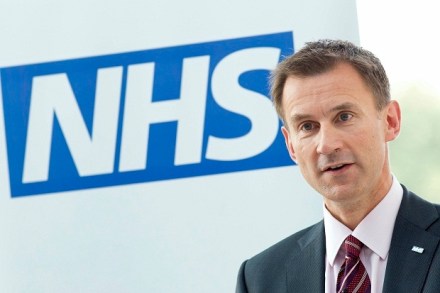
You couldn’t get a stronger contrast between the new Foreign Secretary and his predecessor. Jeremy Hunt is a minister who has earned the absolute trust of two Prime Ministers in an extremely politically charged job. He was brought in by David Cameron to clear up the mess after Andrew Lansley’s Health and Social Care Act disaster, and Theresa May kept him in place, quickly learning that he was one of the few ministers she really could leave to their own devices. This was a huge accolade from May, given her propensity to micromanage. Hunt earned that trust because he is a very loyal Cabinet minister. He does not style himself as an operator, unlike many of those he has served alongside.

What happened when Theresa May met with her MPs

From our UK edition

Having lost two of her most senior Cabinet Ministers, Theresa May went to address her MPs in a stuffy, hot room. But the occasion went off fairly-well for her. The vast majority of the questions were supportive and even the veteran Eurosceptic Edward Leigh made clear that the 1990s showed that a leadership contest wouldn’t achieve anything. Perhaps, the most hostile moment came towards the end of the session when Philip Davies asked if she regretted how Friday was handled given it appeared like a Remain coup. Other than Davies, most of the questions were fairly friendly. Former Cabinet Ministers Damian Green, and Patrick McLoughlin were supportive. Maria Caufield, a party vice-chair, was slightly more critical.

We don’t know where Brexiteers are going now. And neither do they | 9 July 2018

From our UK edition

In happier days when Britain was not on the brink of disintegration, David Davis told me a story about the 19th century French politician Alexandre Auguste Ledru-Rollin. Little did I suspect that soon he would be living it. The Francophiles among you will recall the apocryphal tale of Ledru-Rollin enjoying his lunch at a Parisian café when a revolutionary crowd stormed past. Ledru-Rollin leapt from his seat and cried “There go the people. I must follow them, for I am their leader." Where were they going? He did not know. What was his plan? He did not have one. True believers in Brexit are revolting, and not without cause.

The EU is now in control of Britain’s Brexit destiny

From our UK edition

The list of things about the European Commission that many people at Westminster don’t understand is long. My favourite is that in quite a lot of the EU, the Commission, regularly accused in Britain of spewing out red tape, has often been accused of wanting to deregulate domestic markets and expose cosy economic arrangements to the bracing winds of “Anglo-Saxon capitalism”. Today though, what’s more important is this: the Commission understands British politics. Understands it very well, in fact, and sometimes better than people in the Westminster village. Brexit is a case in point.

The British government is in crisis, again. Enter Trump, stage right, again

Trump says he likes things ‘nice and complicated’ – well, in that case, he couldn’t be coming to Britain at a better time. Theresa May’s newly hatched soft Brexit plan, announced on Friday, has triggered two major resignations from her cabinet and another political crisis in Britain. David Davis, the Brexit Secretary, went late last night. Then Boris Johnson, the Foreign Secretary followed early this afternoon. Westminster is now alive with whispers of an imminent leadership coup; the Tory party looks hopelessly divided, the political system unable to cope. We may even have another general election, the third in four years.   Enter Trump, stage right. He must be licking his lips.

The Tory Brexiters’ ultimatum to Theresa May

From our UK edition

With the resignations in the past 24 hours of two of Theresa May's four most senior ministers – Boris Johnson as Foreign Secretary, and David Davis as Brexit Secretary – something very important died. But it is not clear whether what has been snuffed out is Theresa May's Brexit plan or Theresa May's leadership of the Conservative Party. That at least is what Tory Brexiter MPs tell me. Like Davis and Johnson, they see her Brexit proposal – to permanently be governed by EU rules for the making of goods and food, and also to collect EU tariffs at our borders – as a betrayal of the 17.4m people who voted to leave the EU.

Theresa May’s troublemakers resign. What now for the PM?

From our UK edition

In the past 24 hours, Theresa May has lost two of the Cabinet ministers who have caused her the most trouble. Boris Johnson and David Davis were widely considered to be immovable, despite a number of crises entirely of their own making. The only way for them to go was by resignation, which lends them an appearance of strength. This strength has little to do with the achievements of either minister, though. David Davis had been increasingly sidelined from the negotiation process, which does appear to have been a key factor in his decision to go, given no-one likes to be treated as though they don’t matter. But it isn’t impossible to understand why Number 10 didn’t fully trust the Brexit Secretary.

Boris Johnson resigns as Foreign Secretary

From our UK edition

Boris Johnson has resigned. The Foreign Secretary becomes the second senior Cabinet Minister to quit over the deal agreed at Chequers, which he reportedly called a ‘turd’. At the weekend, those close to Boris were clear that he wouldn’t resign. They said that the only people who would benefit from his resignation would be Michel Barnier and co and that he intended to stay and fight against further concessions to the EU. So, what has changed? Well, a cynic would say David Davis’s resignation. But I understand another factor for him has been how he would defend this plan in public. The more he thought about it, the more he felt he couldn’t do it. I understand he is now of the view that no deal is better than this deal.

Dominic Raab’s appointment is a smart move by Theresa May

From our UK edition

The appointment of Dominic Raab as Brexit Secretary to replace David Davis is very smart politics by the prime minister. He is regarded by the True Brexiters as one of them. In fact, David Davis sees Raab as his protege. For what its worth, his promotion shows the influence in Downing Street of the director of communications, Robbie Gibb – late of the BBC – in that Gibb has been a fan of Raab's for some time. If there is a mystery, it is why Raab took the job. The point is that it is pretty unlikely that he fundamentally disagrees with Davis that May's plan to take EU rules for how we produce goods and food represents a breach of what the British people thought they were voting for in the referendum.

Watch: Steve Baker savages Theresa May’s Brexit plan

From our UK edition

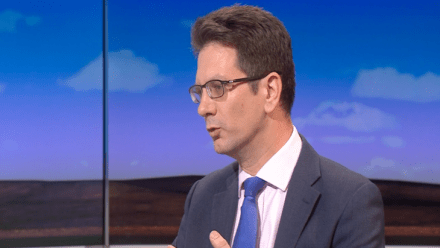
Theresa May's nightmare Monday morning is going from bad to worse. Steve Baker, who followed David Davis out of the exit door at the Brexit department, has savaged the Prime Minister's Chequers plan on the Daily Politics. When asked whether the Brexit blueprint was delivering Brexit in name only, he had this to say: 'The problem with this particular Brexit is that it will not allow us to have proper control over what goes on in the United Kingdom. We need to get out from treaty obligations that automatically oblige parliament to accept any particular rules and instead be in a position where what we do it is a matter for us.' So why didn't Baker speak out sooner?

Why No 10 made Dominic Raab Brexit Secretary

From our UK edition

Dominic Raab has this morning been appointed as David Davis's successor as Brexit Secretary. Raab moves from his role as minister of state for Housing to his first Cabinet post as Secretary of State for Exiting the EU. Well-liked among colleagues, Raab is someone who is seen to have been consistently overlooked for promotion. He was recently asked in a television interview, why he hadn't been promoted given that he was so consistently loyal in defending the government's position. He is also a savvy hire by No 10 thanks to the fact Raab is a Davis ally and a dedicated Leaver. It will help to send the signal that this is still a Brexit Brexiteers can get behind. Also getting a Brexiteer to take on this job shows that the revolt against the Chequers deal is, still, relatively limited.

There’s nothing principled about David Davis’s resignation

From our UK edition

David Davis has walked away. It’s what he does best. DDexit was inevitable from the moment he was appointed Brexit secretary. Davis is a quitter, not a fixer; asked to compromise, his preference is always for blowing the whole show up. Reports suggest he was especially irked by the No. 10 briefing about ministers being stuck at Chequers without a working local taxi number. The bloke was in the SAS Reserves and couldn’t figure out how to download the Uber app. It’s no mystery why the Brexit negotiations have been going nowhere.  There isn’t much affection for Davis, even among his fellow Brexit ultras, but some will try to paint this as a principled decision. It is nothing of the sort.

The next Brexit Secretary: runners and riders

From our UK edition

David Davis had left DexEU – and taken most of his colleagues with him. Steve Baker – junior minister– at the Brexit department has resigned and there are rumours Suella Braverman could also quit. So, with a growing Brexit rebellion brewing, Theresa May's next move is pivotal. Who will replace Davis? No-one: The department for Exiting the European Union has been repeatedly sidelined by No 10. There's a chance that Theresa May will respond by merging that department into another – the Cabinet Office or the Foreign Office. However, the optics of closing the Department for Brexit at a time when critics say the Brexit dream has died would not be so great for the beleaguered PM.

David Davis breaks his silence on his resignation

From our UK edition

David Davis has broken his silence on his resignation. Unsurprisingly his comments on the Today programme are devastating for Theresa May’s Brexit strategy. The now-departed Brexit secretary said his position was no longer tenable because he simply didn’t believe in the PM’s approach. In his resignation letter last night, he had said that ‘that the national interest requires a Secretary of State in my Department that is an enthusiastic believer in the approach, and not merely a reluctant conscript’. He went further on the Today programme, calling the PM’s approach a ‘dangerous strategy’.

Theresa May’s reply to David Davis: 12 reasons why Brexit is safe.

From our UK edition

Dear David, Thank you for your letter explaining your decision to resign as Secretary of State for Exiting the European Union. I am sorry that you have chosen to leave the Government when we have already made so much progress towards delivering a smooth and successful Brexit, and when we are only eight months from the date set in law when the United Kingdom will leave the European Union. At Chequers on Friday, we as the Cabinet agreed a comprehensive and detailed proposal which provides a precise, responsible, and credible basis for progressing our negotiations towards a new relationship between the UK and the EU after we leave in March. We set out how we will deliver on the result of the referendum and the commitments we made in our manifesto for the 2017 general election: 1.

David Davis’ resignation letter

From our UK edition

There have been a significant number of occasions in the last year or so on which I have disagreed with the Number 10 policy line - ranging from accepting the Commission’s sequencing of negotiations through to the language on Northern Ireland in the December Joint Report. At each stage, I have accepted collective responsibility because it is part of my task to find workable compromises, and because I considered it was still possible to deliver on the mandate of the referendum, and on our manifesto commitment to leave the Customs Union and the Single Market. I am afraid that I think the current trend of policy and tactics is making that look less and less likely.

Don’t blame Cameron for the government’s Brexit mess

From our UK edition

I listened to the Coffee House podcast about Danny Dyer’s David Cameron rant. Fraser Nelson appears to live in a parallel universe. It is true that Cameron probably expected to be in a coalition with the Lib Dems again in 2015 and to never have to fulfil the promise of an EU referendum. However it is absurd to lay the blame for the government’s disastrous handling of Brexit negotiations at Cameron’s door. After all, was it David Cameron or Theresa May who triggered Article 50 with no clear negotiating plan? Was it David Cameron or Theresa May who called a snap election in a fit of hubris only to lose their majority?