Brexit

Real life | 6 September 2018

From our UK edition

Leaving Norton, the antivirus software package, is a bit like trying to leave the EU. You may think, once you have decided to click the ‘X’ button in the box that says you don’t want to subscribe to this expensive protection outfit any more, that you have left. You may think that it was your decision to make, and now you’ve made it, you’re free. You’re right if you hold your nerve. But then there is the whole issue of Norton’s feelings on the matter, which are only marginally less difficult to deal with than Jean-Claude Juncker’s feelings about Brexit. Like Juncker, Norton 360 antivirus software wants you in a way that you didn’t really grasp the potency of until you decided to say goodbye.

The spectre of no deal is receding – probably

From our UK edition

Over the summer, a no-deal Brexit became less likely. Eurosceptic ultras have been forced to be less blasé. The return of Steve Baker to the European Research Group, the lead Brexiteer bloc of MPs, has injected more realism into their discussions on the subject. Baker was involved with no-deal planning in government and has made clear to colleagues that it would present significant challenges. Those intimately involved in the negotiations on the British side say that the EU is also more concerned about the talks failing. As deadlines approach, the focus is on the sheer logistical complexities that would come with Britain crashing out of the European Union. Senior figures on the EU side are alarmed at the challenge of helping Ireland through a hostile no deal.

We’re heading for a ‘worst of both worlds’ Brexit

From our UK edition

If as a country we cannot take a big decision about whether or not we should be in the European Union, which is based on sovereignty, which is based on controlling our borders; there are arguments on both sides. We ought to be able to have a reasonable and civilised debate on that, and then have a vote. What we are now getting is not a reasonable or civilised discussion. It is a discussion where both sides seem to be throwing insults at each other. And I find that deeply depressing; and frankly, if a government cannot take action to prevent some of these catastrophic outcomes – whatever position you take on the EU – it illustrates a whole lack of preparation that doesn’t tell us anything about whether the policy of staying in the EU is good or bad.

Is Dominic Raab the Brexit Grinch?

From our UK edition

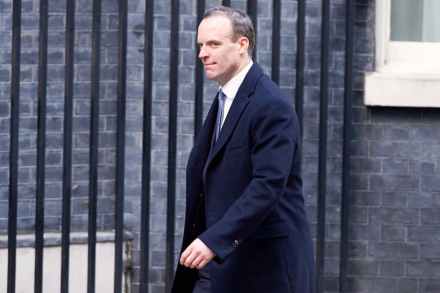
First lunch, now Christmas cards. When will Dominic Raab liven up a bit? The Brexit Secretary appeared alongside Oliver Robbins before the European Scrutiny Committee today. A lot has been made of the pair’s relationship, particularly after the Prime Minister announced in July that Raab would be ‘deputising’ for her. Robbins, meanwhile, reports directly to May as her Europe Advisor. Labour MP Kate Hoey was keen to get to the bottom of it, asking a crucial question: ‘Do you think you’ll be sending each other Christmas cards, you and Mr Robbins?’ The MP for Esher and Walton replied: ‘We have got a good professional and personal relationship.

Can Jeremy Hunt really keep playing it safe on Brexit?

From our UK edition

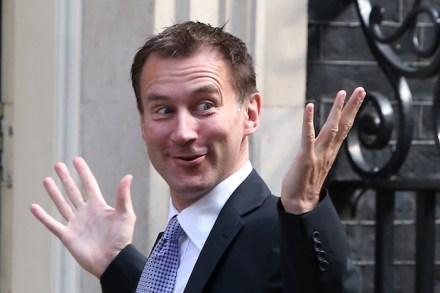
Funnily enough, MPs across the Commons were today very keen to welcome Jeremy Hunt to his position as Foreign Secretary and suggest that he might garner more praise from them than his predecessor. At his first departmental questions in the new role, Hunt also had to address one of the messes left by Boris Johnson - and explain what his priorities were for the aspect of the portfolio that Johnson resigned over: the EU. The priorities of a Secretary of State can often be divined from which questions he or she chooses to answer at these sessions, and which ones are farmed out to his junior ministers. Hunt answered questions on the mass killing of Rohingya Muslims in Burma, the detention of Nazanin Zaghari-Ratcliffe in Iran and Brexit.

How Boris Johnson will rain on Theresa May’s parade

From our UK edition

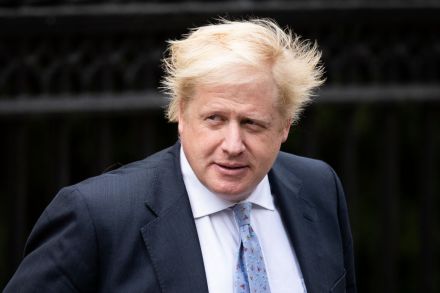
Ever since Boris Johnson resigned, Tories have wondered what he’ll do at conference. We now have an answer: he’ll address a thousand-person rally on the Tuesday, inside the secure zone. The event will be hosted by Conservative Home, the influential Tory website. This is a headache for Tory conference planners. Boris Johnson’s appearance on Tuesday, where he will reiterate his call to ‘chuck Chequers’, will overshadow everything else that is on that day. Given that Johnson’s Telegraph column comes out on Monday, there’s a good chance that he’ll be the big story of the conference for two days out of the four. This is, to put it mildly, not ideal for Theresa May as she tries to reassure Tory members about what her Chequers proposals mean.

Has David Davis triumphed in the battle for Brexit?

From our UK edition

David Davis may have won. What do I mean? Well I am hearing from multiple sources that the only trade deal the EU’s lead negotiator Michel Barnier will countenance is Davis’s cherished Free Trade Agreement, what he called Canada Plus, rather than any version of May’s Chequers plan. Here for example is the debrief of an MP on the Brexit select committee chaired by Hilary Benn, who met Barnier yesterday in Brussels: “Remarkable how dismissive Barnier was of the two central pillars of Chequers - customs and common rule book for goods. It’s not a matter of how it will fare in Parliament. It won’t be agreed by the EU. We are back to Canada-style FTA”. The Brexiters on the select committee are ecstatic; the Remainers are in abject despair.

Emmanuel Macron holds Britain’s Brexit fate in his hands | 3 September 2018

From our UK edition

C.S. Forester, creator of Hornblower, a great student of Anglo-French relations, wrote a now often overlooked exhortative novel titled Death to the French. Contemporary readers might consider it triggering if not racist, yet it captures well a traditional British reaction when angry Frenchmen start throwing missiles at us. Here in the south of France we are some distance from the troubled waters of the Guerre de Coquilles Saint Jacques. On the shores of the Mediterranean, oysters are favoured and war fever muted, although nobody at Chez Trini’s café doubts that the perfidious English are up to their usual conneries. I tend to agree, but then I’m applying for an Irish passport (thanks to my Belfast-born grandmother).

The anti-Brexit movement has one big advantage: their opponents are in disarray

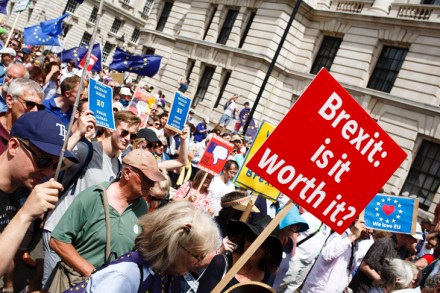
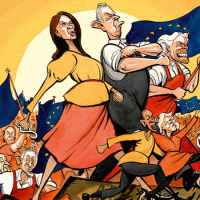
It may seem odd that a cabal of politicians, celebrities and millionaires can successfully present themselves as a great democratic force and seek to overturn Brexit, Britain's vote to leave the European Union. But the people behind the People’s Vote have one big advantage: their opponents are in disarray. Vote Leave ceased campaigning after the referendum. Its organisers felt they had accomplished their mission, and the Conservative government could be trusted to execute Britain’s withdrawal from the European Union. Boris Johnson now describes that decision as an ‘absolutely fatal’ mistake. As foreign secretary, Johnson admitted to dinner guests earlier this summer that ‘some of us were seduced by high office in government’.

people's vote anti-brexit peoples vote

Portrait of the Week – 30 August 2018

From our UK edition

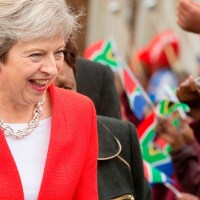
Home Theresa May, the Prime Minister, flew off to South Africa, Kenya and Nigeria accompanied by a trade delegation. In a speech in Cape Town she promised an extra £4 billion in British investment in Africa. ‘True partnerships are not about one party doing unto another,’ she said, but the achievement of ‘common goals’. The government announced plans for Britain’s own satellite navigation system if Brexit meant it was expelled from the European Union’s Galileo project. A gang flew men from Chile to burgle houses around London, said police who arrested 36 men in the past eight months, 16 of them being convicted and eight deported, with 12 leaving the country while still under investigation.

Into Africa

From our UK edition

On her tour of South Africa, Nigeria and Kenya, Theresa May finally made a positive case for Brexit. For too long her government has tried simply to salvage what they can of Britain’s trading relationship with the EU, overlooking the possibilities that Brexit offers to build trading relations with the wider world.  The tone of this week’s tour, however, was different: a pitch for how Britain can make new alliances. This country will soon have the freedom to do so — no longer bound by its role as the most reluctant member of a 28-nation bloc. The opportunity is to treat African nations as partners and equals, not as risks or charity cases.

Spectator Podcast: The people vs Brexit

From our UK edition

The clamours for a second referendum are growing. But are those calling for a ‘people’s vote’ really interested in what voters think? Or is this just a plot to stop Brexit? Rod Liddle isn't convinced about the case for giving voters a second say. The vote to leave the EU was unequivocal, he says in this week’s cover piece. So why won’t the luvvies just accept it and move on? Rod is joined on this week's Spectator podcast by James McGrory, executive director of ‘People’s Vote’ and Tom Slater, deputy editor of Spiked Online.

Remainers rally

It may seem odd that a cabal of politicians, celebrities and millionaires can successfully present themselves as a great democratic force and seek to overturn Brexit. But the people behind the People’s Vote have one big advantage: their opponents are in disarray. Vote Leave ceased campaigning after the referendum. Its organisers felt they had accomplished their mission, and the Conservative government could be trusted to execute Britain’s withdrawal from the European Union. Boris Johnson now describes that decision as an ‘absolutely fatal’ mistake. As foreign secretary, Johnson admitted to dinner guests earlier this summer that ‘some of us were seduced by high office in government’.

The people vs Brexit

From our UK edition

The very best impressionists do not simply mimic the mannerisms, speech patterns and facial expressions of their targets — they also cleverly satirise the beliefs, character and political dispositions of those targets. Most of us would not remember Mike Yarwood with great fondness because he was quite unable to do any of that. It was enough for Mike simply to raise his shoulders and laugh when evoking Ted Heath; there was no depth to the performance, nothing which gnawed away at Heath’s petulance and obstinacy and insecurity. So we should be grateful for Rory Bremner, who has pulled off a superb impression of a smug, simpering, Remainer London luvvie. With great acuity, he ticked all the boxes.

Britain as an exporting superpower

From our UK edition

The International Trade Secretary says he is going to turn Britain into an ‘exporting superpower’. To which countries did we export the most goods in June? Exports / Year change US £3.99bn / +12% Germany £2.95bn / -8.1% Switzerland £2.41bn / +184% China £2.16bn / +71% Netherlands £2.14bn / +13% France £2.10bn / -0.6% Ireland £1.68bn / -1.

Revealed: the People’s Vote’s three-point plan to trigger a second referendum

From our UK edition

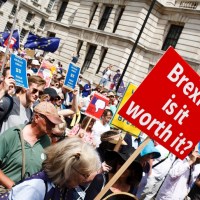
After a weekend of politicians feuding over the merits of a second referendum, Barry Gardiner, Andy Burnham and Conor Burns have become the latest politicians to criticise the People's Vote campaign to do just this. Meanwhile the BBC reports of a leaked memo which shows that the group has its eye on changing Labour policy – encouraging MPs and activists to submit a motion at Labour conference next month. As I reveal in this week's Spectator, the People's Vote campaign – which argues the public should have a say on the final deal – has a three-point Parliamentary strategy when it comes to bringing about a second referendum.

The case for a second Brexit referendum

From our UK edition

Between shows at the Edinburgh fringe I find myself addressing a rally supporting a People’s Vote on the final Brexit deal. I have some sympathy for Theresa May — she keeps going to Switzerland, Dignitas keeps sending her back — but her white paper published this summer is in effect the second draft of a Brexit manifesto (the first being her Lancaster House speech in January 2017, snubbed at the subsequent election). It is therefore the first time in my experience that the manifesto has turned up more than two years after the vote. Time for another, then. People may object this is a betrayal of democracy. I believe it would be an affirmation of informed democracy. There can be no doubt that we are better informed and more aware of the issues than we were in 2016.

Britain’s economy is not suffering as much as the doom-mongers insist

From our UK edition

This piece first appeared as the leading article in The Spectator.  Economies run on confidence — as Franklin D. Roosevelt observed when he told Americans, in his first inaugural address during the depths of the Great Depression in 1933, that they had ‘nothing to fear except fear itself’. If that confidence is lost, if people collectively start drawing in their horns, squirrelling money away because they fear turbulent economic times ahead, then recession can all too easily become a self-fulfilling prophecy. No serious economist would dispute this theory. The puzzle is why the UK economy, riddled with Brexit anxieties, is in such good health. The Dutch prime minister said we were ‘collapsed’.

Simpson, Skinner and socialists

From our UK edition

For recovering teetotallers, like me, Thinking Drinkers is the perfect Edinburgh show. On stage, two sprucely dressed actors perform sketches about booze while a team of well-trained ushers race around plying the audience with strong liquor from plastic beakers. In under an hour, I swallowed a can of ale chased by vodka, gin, rum and Irish whiskey. It’s a decent show but, for obvious reasons, forgettable. Nina’s Got News is the first fringe play written by Frank Skinner. Nina has split up with her besotted boyfriend, Chris. When he answers a summons to her flat he’s hoping for a valedictory romp. But Nina has asked her best pal Vanessa over and the three chums engage in amusing wordplay as they try to place their friendship on a new footing. Then a shock announcement.