Brexit

The benefits of a blind Brexit

From our UK edition

Brexit won’t be over by 29 March 2019. Britain will legally leave the European Union on that date. But that won’t tell us what Britain’s future relationship with the bloc will be, or how closely aligned the UK will be to the EU. Those are questions for which we will have to wait for the answers. What MPs will vote on before next March is not a ‘Brexit deal’ but a withdrawal agreement. Theresa May won’t come to the Commons and table her Chequers plan for approval, which is just as well given that she doesn’t currently have the votes to pass it.

Jaguar’s boss isn’t scaremongering: the UK car industry is in big trouble

From our UK edition

‘I’m afraid I think he’s making it up,’ was the retort of Tory MP Sir Bernard Jenkin on Monday’s Today programme to the claim by Ralf Speth, boss of Jaguar Land Rover, that a bad Brexit deal could put tens of thousands of jobs at risk in JLR and its suppliers, and cost his company £1.2 billion a year. In the same speech last week, Speth pointed out that the lack of any sort of Brexit clarity means he has no idea whether his UK factories will be able to operate on 30 March next year — or whether even the ‘tiny’ border delays Jenkin concedes are likely will cripple the just-in-time systems on which the likes of JLR and the BMW Mini factory at Cowley depend.

Donald Tusk’s Brexit warning spells trouble for Theresa May

From our UK edition

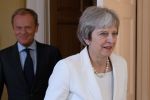
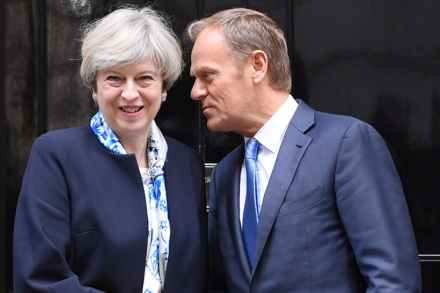
What to make of Donald Tusk, the President of the European Council’s latest tweet? Ahead of tonight’s dinner in Salzburg, he says: ‘Today there is perhaps more hope but there is surely less and less time. On the Irish question and the framework for economic cooperation the UK’s proposal needs to be reworked’ The first sentence is classic Tusk; he has a fondness for statements that are meant to sound profound. His comments on the Irish border are also to be expected. The UK and the EU are still 48 kilometres apart on this question and playing a dangerous game of chicken. Theresa May will use tonight’s dinner to try and persuade the 27 EU heads of government to back away from trying to impose a customs border in the Irish sea.

Will EU leaders chuck Chequers in Salzburg?

From our UK edition

This week's EU summit in Salzburg should settle three important Brexit questions of profound important to this country's future and that of the PM too. Most importantly, the leaders of the EU 27 are being asked by their Brexit negotiator Michel Barnier and the EU president Donald Tusk how specific and prescriptive they want the Political Declaration on Britain's prospective relationship with the EU to be. In a way it is astonishing, with just six months to go before we're out, that Barnier and Tusk do not know something so fundamental about their wishes.

The unwelcome distraction waiting for the PM in Salzburg

From our UK edition

Theresa May heads to Salzburg tomorrow to try and persuade the leaders of the EU27 of the merits of her Brexit plan. But there’ll be an unwelcome distraction for her in the morning. I understand that the European Commission will issue a reasoned opinion in the Olaf case, where the Commission accuses the UK of failing to prevent customs fraud on shoes and textiles imported from China and is demanding over two billion euros in lost revenue. The UK continues to contest this case, and I understand it has asked the Commission for more information on various points. But the timing of this reasoned opinion has raised eyebrows in government circles. It seems more than a coincidence that it is appearing on the day that May sits down with the leaders of the EU 27.

The problem with the Brexit migration report

From our UK edition

Farming out the development of post-Brexit UK migration policy to a professor from the LSE was a political masterstroke by the former Home Secretary Amber Rudd. How much harder it will be for Remainers to condemn the government’s position on migration as some kind of racist, xenophobic exercise knowing that it has been formed in one of the liberal establishment’s favourite seats of learning. Yet there is nothing in Sir Alan Manning’s report which could not have come from the pen of a ‘populist’ politician trying to satisfy public grievance on migration.

Why should we listen to the IMF’s Brexit warning?

From our UK edition

Why are we so addicted to economic forecasts? We'll know they are going to turn out to be wrong because they always do. And yet still we can’t seem to stop ourselves hanging on their every word. This morning it is the IMF’s turn, once more, to have its forecasts for the UK economy treated with undue seriousness. The Guardian reports that the IMF ‘backs Theresa May’s warnings over no-deal Brexit’ – by saying a ‘no deal’ scenario would lead to ‘substantial costs’ for the UK. But even May’s Chequers deal will condemn Britain to economic mediocrity, according to the IMF. The FT reports that, in the case of a smooth Brexit, the IMF sees Britain struggling to exceed growth of 1.5 per cent in the years ahead.

Philip Hammond raises the prospect of delaying Brexit day

From our UK edition

Philip Hammond’s political tin ear has struck again. As I write in The Sun this morning, he has twice been slapped down in Cabinet this week. On Tuesday, he talked about ‘squealing’ about universal credit and was chastised by the Chief Whip for his language. Those sympathetic to Hammond point out that he was referring to Labour when talking about ‘squealing’. But it was still a poor choice of words when discussing changes to the benefits system. Then at the ‘no deal’ Cabinet on Thursday, Hammond raised the prospect of delaying Brexit day. After the legislative timetable for getting ready for ‘no deal’—which is tight—had been outlined, Hammond pointed out that the government has the power to put the Brexit date back.

The Spectator Podcast: plots, politics, and the pains of leadership

From our UK edition

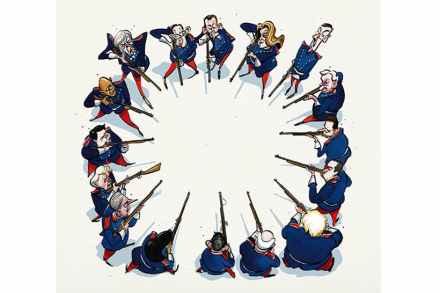
This week, Tory in-fighting comes to the fore, but could the party be even more divided than we thought? Meanwhile, across the Pond, Donald Trump continues to cause backlash. Is he to blame for an ideological shift to the left in the country? Thankfully, our own Head of State isn’t on Twitter, though that doesn’t stop people speculating about her Majesty’s personal opinions. Is the Queen a Eurosceptic? First, the Conservative Party is taking up arms against each other. This week, back room plotting came to the fore with the Brexiteer group the ERG openly discussing Mrs May’s demise and Boris Johnson dominating headlines. But James Forsyth reveals in this week’s cover piece that there are more fractures in the party than merely a Chequers/Brexiteer divide.

Portrait of the week | 13 September 2018

From our UK edition

Home Michel Barnier, the EU’s chief Brexit negotiator, was said to want to throw a lifeline to Theresa May, the British Prime Minister, but he insisted: ‘It is not possible to get freedom for goods without freedom for services, in particular for the movement of people.’ Up to 80 Tory MPs would vote against the government’s plan hatched at Chequers in July, Steve Baker, a former Brexit minister, said. A few dozen members of the European Research Group met to see how they might make best use of rules on Conservative leadership election. The Trades Union Congress said it could throw its ‘full weight’ behind a referendum on the final Brexit deal.

Why can’t the Tories see that a Canada-style Brexit deal is the answer?

From our UK edition

Loyalty, it used to be said, was the Tories’ secret weapon. No longer. Self-discipline has been discarded — along with commitments to lowering taxes, being strong on defence and keeping the streets safe. The Conservatives appear to have abandoned all of their beliefs and transformed into the party of Brexit. But, it seems, they can’t even get that right. Brexit is one of the most important projects any government has undertaken in our postwar history — a task that has been entrusted to Conservative MPs, most of whom voted against Brexit. The Prime Minister and her Chancellor, her Foreign Secretary and her Home Secretary all argued during the referendum campaign that leaving the EU would be a disaster.

Must ‘the will of the people’ always be respected?

From our UK edition

I’ve always respected Alistair Darling and cannot imagine him saying anything ill-considered. But listening to him interviewed last Monday on the Today programme I heard him offer, as though it were obvious, an assumption so much less obvious than he appeared to recognise, that it set me thinking: not about the admirable former chancellor but about a real divide among civilised people that our age is perhaps insufficiently aware of. The presenter, Nick Robinson, had asked Mr Darling if he supported a second (or ‘people’s’) referendum on Brexit. No, said Darling: ‘You ask people what they think and clearly you’ve got to live with it.’ Seconds later, still speaking about Brexit, he said: ‘We’ve made a profound mistake.

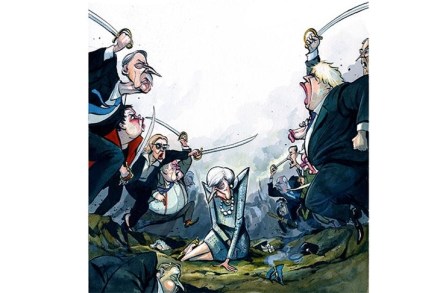
The Brexiteer mutiny against Theresa May has begun

From our UK edition

I am just going to let this speak for itself. It’s a slightly edited but verbatim account of tonight’s weekly meeting of the Brexiter European Research Group faction of the Conservative Party. It requires no additional comment from me - other than that I have multiple sources vouching for its veracity. “We've just had an ERG mass meeting, 50 odd MPs present, where virtually the only topic of conversation for 40/50 mins was: how best do we get rid of her? What's the best way to use our letters? Comments included: ‘Everyone I know says she has to go’, ‘she's a disaster’, ‘this can't go on’. You might think that this is usual far for us, but it's not! Not in the mass weekly meeting, never in what's basically a public forum.

The banks abandon Project Fear

From our UK edition

Three senior bankers from Barclays, J.P. Morgan and Citi descended on the House of Commons today to give evidence to the Treasury Select Committee on the impact of a No Deal Brexit. Their interview must have seemed like perfect timing for Chancellor Philip Hammond, who is currently doing his own tour of the Commons and is expected to drum up support for Chequers by stoking fears of the calamitous impact of No Deal Unfortunately for Hammond, the three bankers were not nearly as morose as the Treasury could have hoped for. Instead they said the risks of No Deal were comparable to the instability they regularly faced across the world.

Why an insurgent Remain could win a second vote | 11 September 2018

From our UK edition

Cold calculation suggests there won’t be a second referendum. It could destroy both the Tory and Labour parties, and in any case, we appear to be heading for a classic EU fudge that will postpone hard choices. But as all predictions in 2018 are likely to be false, and the Tory right appears determined to provoke a crisis, it’s worth understanding why the People’s Vote campaign thinks that next time it will be different. They will be the insurgents and the Brexiters will be defending the status quo. Running against a failed establishment has always been a good tactic, but never more so than in the 2010s. Remain campaigners find in focus groups that the double standards of the Brexit elite have 'cut through,' as the marketing departments say.

The greatest obstacle to a Brexit deal

From our UK edition

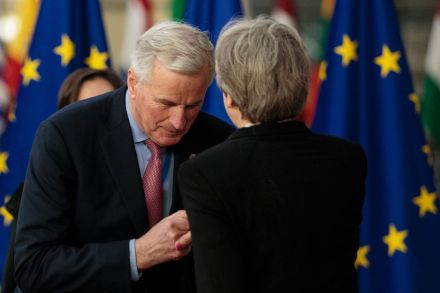
The UK and the EU are playing a dangerous game of chicken over the Irish border, I say in The Sun this morning. There has been almost no progress on this issue over the summer and without a deal on it, there can’t be a withdrawal agreement. One of those involved in the negotiations on the British side tells me, the EU ‘believe we will blink first’. But that won’t happen. One Brexit red line that Theresa May is adamant she’ll never cross is her insistence that no British PM could sign the EU’s proposed text on the Irish border, which would see Northern Ireland become part of the customs territory of the EU. Michel Barnier, the EU’s chief negotiator, is prepared to produce a de-dramatised version of the backstop.

How Brexit has changed London

From our UK edition

London! Since Brexit, this town feels a little different, not as intimidating as before, no longer the capital of the universe. At breakfast at my nice hotel, a Russian is screaming to his business partner back home: ‘Well, they got this fucking democracy here. It’s hard to do business.’ I tweet that dialogue out and am told to watch my tea and sushi consumption. Tonight’s reading is at the London Review Bookshop with the writer Adam Thirlwell, who happens to be my OBF, or oldest British friend. At the book signing, a watch geek brings me a watch strap to sign. Also, a young man tells me I’ve won a prize.

Welcoming in Tommy Robinson would be the end of Ukip

From our UK edition

Is Tommy Robinson a political martyr? Some Ukip supporters think so, and want the former English Defence League leader to be allowed to join their party. A motion set to be debated at Ukip's conference this month could now decide the issue, with the party's ruling body debating this weekend whether it should be up to its members to have the final say on whether Robinson should be welcome in Ukip's ranks. If the ban on Robinson's membership is lifted, then the smallest fig leaf separating the party from the EDL will have finally been removed. Under Ukip's latest leader, Gerard Batten, this seems to be the direction in which the party is travelling.

Boris’s gloating critics should be ashamed of themselves

From our UK edition

Am I the last person in the metropolitan elite bubble who likes Boris Johnson? You’d certainly think so, going on the reaction to the sad news of his divorce from his wife, Marina Wheeler, after 25 years of marriage. Every divorce is a whirlpool of misery for all those involved: parents, children, family and close friends. And yet the coverage of Boris’s sad news bubbles on a seething undercurrent of gloating and delight. ’Twas ever thus with Boris. For all his huge fan club, there have always been MPs who are jealous of his popularity; who were angry with him, when he edited The Spectator, that he didn’t accept their stultifyingly dull pieces on ‘Whither the euro?’ Boris is completely aware of all this.

Low life | 6 September 2018

From our UK edition

I’d missed the train, and the next was due in 45 minutes, so I popped into the nearby salon for a haircut, two months since the last one. Half Price Monday for Students, it said on a board outside. Inside, three women attended to three female heads in a spacious salon with the doors and windows flung open to the warm air and the view of the long-stay car park. I was directed to a chair, and presently a woman came bounding through a door, exuberantly, like a chat-show host bounding down the studio steps to wild applause. She was slim and tanned with strong-looking legs, aged about 50. ‘And how are you today?’ she yelled, as if I were deaf as well as old. Gawd help me, I thought. Here, clearly, was the loudest, chattiest and most socially confident woman on the firm.