Brexit

The Arron Banks delusion

From our UK edition

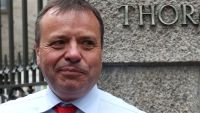
What do people mean when they say Arron Banks ‘bought Brexit’? That phrase is everywhere. It’s a New Statesman headline: ‘The man who bought Brexit.’ He ‘bought Brexit’, the Observer informs us, with his ‘funding of the populist, social media driven Leave.EU campaign’. OpenDemocracy, like many others, wants to know where Banks’ money comes from, so that we can finally answer the question: how could he ‘afford Brexit’? This vision of Banks ‘buying’ one of the largest democratic votes in British history, as if it were a second-hand car or something, is weird. And very revealing. What it reveals is the alarmingly low esteem in which voters are held by the Remain-leaning section of the chattering classes.

The faulty logic of a ‘Norway for Now’ Brexit

From our UK edition

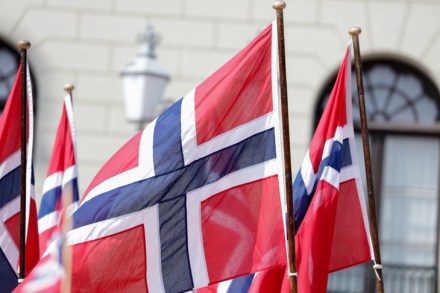
The campaign ‘Norway for Now’, an idea promoted by Nick Boles, is that Britain should join the European Economic Area and EFTA, until such time as we can move further out of the EU, for example with a Canada-style free-trade deal. This is what Norway and Iceland and Liechtenstein do. The idea sounds nice as a friendly and temporary compromise. But in fact the psychology is wrong. Such arrangements were devised more as an entry chamber to full membership (which is what Norwegian elites still want) than as part of an exit strategy. The Norwegian Prime Minister is now making this point. The point of Leave is to escape the gravitational pull of Brussels. Why make self-contradictory efforts to stay in the orbit and leave it at the same time?

Brexiteers in government nervous about what’s going on in the negotiations

From our UK edition

It is quiet out there, too quiet in the views of many Brexiteers in government. As I say in The Sun this morning, they fear that right now a deal is being done that they’ll be bounced into supporting. They worry that since last week’s Cabinet meeting, there hasn’t been any new Brexit offer put either to Cabinet or the inner Cabinet yet technical talks have resumed in Brussels. They fear that a deal will be agreed and then they’ll be faced with a choice of rejecting it and having to take the blame for no deal and the chaos that would involve or accepting the agreement with all its flaws. This fear of being bounced has been heightened by Theresa May’s mood.

Theresa May is rubbing salt into the wounds of the Tory Brexit bunch

From our UK edition

The flurry of overnight speculation that a deal had been done to guarantee post-Brexit access for the City to the EU was all a bit odd. It's true that a few weeks ago, the Treasury over the course of a couple of days successfully negotiated some "high level principles" for what the future access relationship might be for UK-based banks and other financial institutions to the EU's single market. But this is a million miles from a deal – which would not and could not be negotiated in its practical detail for months and even possibly years.

The Spectator Podcast: will the EU project crumble after Merkel leaves?

From our UK edition

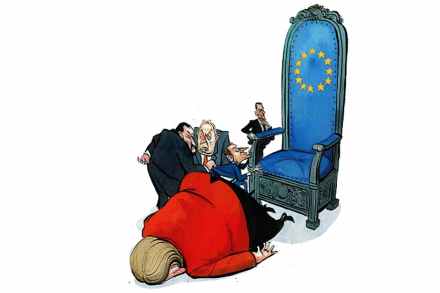
Angela Merkel is stepping down but what is her legacy and can the EU project survive without her? On this week's Spectator podcast, we also take a look at whether WhatsApp has made it harder for MPs to plot; and ask: should Brits be allowed to forage for wild mushrooms? Merkel has been Germany’s Chancellor and Europe’s de facto leader for 13 years. In this week's cover piece, Douglas Murray argues that her departure is the end of the federalist EU project. On the podcast, Douglas is joined by Sophie Pedder, the Economist’s Paris bureau chief and Emmanuel Macron’s biographer.

The Spectator’s Notes | 1 November 2018

From our UK edition

At the Brexit-related cabinet last week — as revealed by James Forsyth in these pages — David Lidington made an intervention in support of the Prime Minister’s approach to the negotiations. He was, he said, the only person present who had been an MP at the time of ‘Black Wednesday’, when the pound fell out of the ERM on 16 September 1992. It had been so disastrous and divisive, he went on, that the government must at all costs avoid a repeat over Brexit. Many heads nodded sagely. Mr Lidington, a moderate and public-spirited man, was quite right about the pain caused to his party 26 years ago; but the interests of the Tories and of the nation are not necessarily the same thing.

Arron Banks facing police probe over Brexit campaign spending

From our UK edition

Arron Banks has been referred to the National Crime Agency in relation to alleged wrongdoing during the referendum. The Electoral Commission said it had ‘reasonable grounds’ to suspect that Banks was not the ‘true source’ of an £8m loan made to Better for the Country, which ran Leave.EU’s campaign. It also said that the money being investigated might have come from ‘impermissible sources’. Banks’ Leave. EU campaign, as well as Liz Bilney, another senior figure in the organisation, are also now being investigated by the NCA.

Losing the plot | 1 November 2018

From our UK edition

How to explain Theresa May’s resilience? As Prime Minister, she has survived mishaps and calamities that would have finished off her predecessors. She has no shortage of rebels keen to succeed or denounce her, but all seem oddly unable to act. Why? The answer might lie in a group messaging service which seems to have disabled the ancient art of the Tory coup: WhatsApp. Tory backbenchers are so addicted to this app that these days they cannot tear themselves away from their screens. It gives them the impression of being plugged into each other’s lives, when the opposite is true. Where MPs would once have met to scheme and gossip, they now send bad-tempered encrypted messages.

A chronicle of modern times

From our UK edition

Jonathan Coe writes compelling, humane and funny novels, but you sometimes suspect he wants to write more audacious ones. He has a long-standing interest in formally experimental writers — Flann O’Brien and B. S. Johnson are heroes — but it’s an interest that has never really become full-blown influence.

Why should we listen to Mike Leigh rant about Brexit?

From our UK edition

Another well-heeled luvvee who knows better than the working class people he patronises in his dreadful films. Mike Leigh, then, in an interview from the Nonexistant, I mean Independent: Cut to Brexit,” he continues. “Some boneheads might say; ‘Hang on a minute, we’ve got the vote now and 52 per cent [voted to leave the EU]…’. But what role did the truth play in people’s decision to vote Brexit? And to what extent has real truthfulness motivated what’s gone on since, politically? I go to Cornwall quite a lot, and there were huge signs saying ‘vote leave’, and I talked to intelligent, working people [who were] saying: ‘No, we’ve got to get out of Europe.

Opening the e-passport gates to Australians is a smart move

From our UK edition

The announcement in this week’s Budget that Australians (as well as those from the US, Canada, Japan and New Zealand) will have access to e-passport gates when entering the UK is a welcome sign that Britain is serious about going global. The million or so Australians who visit each year are sure to be delighted by this gesture.   There’s a backstory here: when I was the Australian high commissioner in London, I told everyone in government with ears to hear (including the then-home secretary Theresa May) that Australians were upset about being subjected to long queues at Heathrow while EU citizens went through a special fast-track process. Frankly, given our history of fighting alongside Britain and our shared head of state, it was downright insensitive.

Watch: Peter Bone on Philip Hammond, ‘the king of Brexit’

From our UK edition

Peter Bone has previously said Philip Hammond needs 'slapping down' over his plan for Brexit, but the Chancellor's Budget this week seems to have made Bone change his mind about his party colleague. The Tory backbencher said he had always thought that Hammond was a 'bit iffy about Brexit'. 'How wrong I was', he said. He told the Commons: 'Prime Minister, I always thought that you could be the queen of Brexit, but did you ever think the Chancellor could be the king of Brexit?' Mr S is delighted to finally see an end to the hostilities within the Tory party...

What’s the real reason for the hold-up in the police’s Brexit probe?

From our UK edition

Brexiteers are occasionally depicted as being a little paranoid. If you listen to some elite critics of Brexit, you would think that a sizeable chunk of those who voted to Leave are sharing dodgy anti-George Soros memes long into the night. You might think, too, that a few Brexit voters see elite stitch-ups everywhere and never let the truth get in the way of their anti-Brussels prejudices. But if there is a paranoid style in British politics at the moment, it is not being practised by the 17.4million. It’s coming from that small set of elite Remainers in politics and the media who are resorting to desperate measures in their campaign to overturn the referendum result and stop Brexit.

Watch: Yvette Cooper clashes with Caroline Nokes

From our UK edition

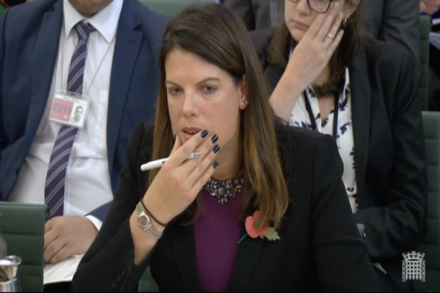
Yvette Cooper got more than she bargained for when she had a go at immigration minister Caroline Nokes at today's home affairs committee. The Labour MP rebuked Nokes after she complained about the meeting overrunning, telling her: You have been incredibly generous with your time and we really appreciate it. I would also say, however, we have only five months until these no deal arrangements have to be in place. Nokes's response? And with only five months to go some of my time this afternoon might have been scheduled for planning Mr S thinks Nokes has a point...

How Cameron’s misreading of Merkel led to Brexit | 29 October 2018

From our UK edition

It is impossible to overstate Angela Merkel’s significance, to Germany, to the EU, and to Britain. Others are better qualified than me to talk about the first two of those, but as she announces her (slow, deliberate) departure from office, I offer a thought about Merkel and Britain, which is that the modern history of Britain’s European policy has been a story of misunderstanding Angela Merkel, and therefore Germany. This story starts in 2005, when David Cameron stood for the Tory leadership. As a moderate, he was keen to woo the Right, especially on Europe. So he promised to pull the Tory MEPs out of the European People’s Party grouping in the European Parliament.

It makes sense to keep Northern Ireland inside the customs union

From our UK edition

Sir: What James Forsyth calls ‘the EU plan’ to keep Northern Ireland in the customs union after Brexit (‘The Irish problem’, 20 October) would no more ‘ease Northern Ireland away from the UK and push it more towards Dublin’s orbit’ than it has already done itself through numerous legislative differences. With regard to social issues such as abortion and same-sex marriage, Northern Ireland is far closer to the Republic (as it once was) than to the rest of the UK. It would therefore be no great stretch to avoid awkwardness of land border checks (and respect the spirit of the Good Friday Agreement) by having such checks at the sea ports.

Portrait of the Week – 25 October 2018

From our UK edition

Home Theresa May, the Prime Minister, found herself in another crisis over Brexit. Backbenchers whispered that 48 letters were being collected to present to the chairman of the 1922 Committee to trigger a vote of confidence. What annoyed some of her own MPs was a scheme (intended to make less likely the imposition of a backstop agreement over the Irish border) to extend by up to a year the Brexit implementation period that was supposed to end on 31 December 2020. During an emergency cabinet conference-call, Esther McVey, the Work and Pensions Secretary, was said to have told Mrs May that she was ‘devastated’ by the provision. An unnamed Conservative former minister told the Sunday Times: ‘The moment is coming when the knife gets heated, stuck in her front and twisted.

The Spectator’s Notes | 25 October 2018

From our UK edition

Mrs May says she is taking her stand on the issue of Northern Ireland and the integrity of the United Kingdom. If so, good; but it cannot be the whole truth. After all, she surrendered on the Irish border issue in negotiations last December until, at the very last minute, the DUP forced her to row back. I think the irreducible core of her position is something which she does not fully disclose: that she is determined to keep Britain in the customs union, though perhaps only approximately and certainly by another name. This cannot work, surely, because to the EU it is ‘cherry-picking’ and to the Brexiteers it is BRINO, but there must be a reason why she revives it each time it is stamped on.