Brexit

May’s deal proves one thing: the establishment always wins

From our UK edition

Peasants’ Revolts tend not to work out too well in this country, for the peasants. I suppose that is why we have so comparatively few of them. There is a flurry for a while and then normal service is resumed. It is often said that Wesleyan Methodism helped to quell any uppity tendencies among the working classes during the Industrial Revolution, but I suspect it was more a case of the proles understanding that whatever they did, they would not win. Too much ranged against them, marshalled by people who naturally knew much better about what was good for them.

MPs should not fall for the EU’s promises on the future relationship

From our UK edition

A note leaked to the Times written by the EU's deputy chief negotiator shows that the EU has no intention of releasing the UK from the customs union if May's deal is signed. This attitude should come as little surprise to those close to the deal. Throughout the process, the EU have wished to hamper the UK's future trading relationships to ensure that Brexit does not set a precedent for other countries who might seek to leave. But, in spite of this leaked memo, the EU will not be admitting their intentions in public any time soon. Quite the opposite. The political agreement that will be published alongside the withdrawal agreement will be full of overblown promises about a tailor-made trade deal.

May’s Brexit cabinet: the rows, the threats, the deal

From our UK edition

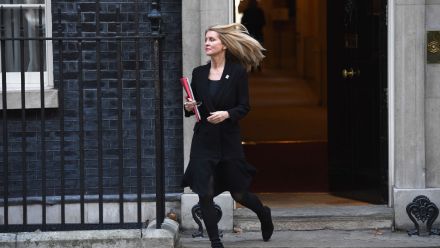
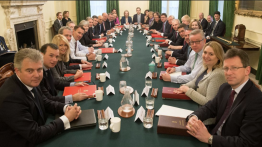
Five hours of cabinet discussion produced several memorable moments. Esther McVey’s push for a formal vote, I understand, went on for several minutes and ended with Mark Sedwill, the new Cabinet Secretary, looking up the rules on procedure. Perhaps more worryingly for No. 10, both Jeremy Hunt, the Foreign Secretary, and Dominic Raab, the Brexit Secretary, urged Theresa May to go to Brussels and get more before putting the deal to Parliament. Geoffrey Cox, the Attorney General, was his usual colourful self. His argument was that this life raft, constructed of oil drums and a plastic sail, needed to make it out on to the open ocean. But when those in favour are calling it an ‘ugly sister’ deal you know there are going to be problems down the line.

Michel Barnier hails the draft Brexit Withdrawal Agreement

From our UK edition

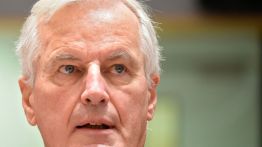
‘White is the new green’, said Michel Barnier as he held the draft Brexit withdrawal agreement aloft at a press conference in Brussels tonight. The EU’s chief negotiator was referring to the chunks of text that had previously been coloured in where there had been disagreement. Not too long ago, the white sections were few and far between. Now, the colours are all gone and the mammoth 585 page proposed Brexit agreement is the result. A no deal Brexit has, for now at least, been avoided. We’re all familiar with the dire warnings of the cost to Britain of an acrimonious Brexit. These predictions are contentious but one thing is sure: on a personal level, no deal would have been a disaster for Barnier.

Full text: Theresa May’s Brexit Cabinet statement

From our UK edition

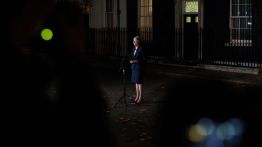
The Cabinet has just had a long, detailed and impassioned debate on the draft Withdrawal Agreement and the Outline Political Declaration on our future relationship with the European Union. These documents were the result of thousands of hours of hard negotiation by UK officials, and many, many meetings, which I and other ministers held with our EU counterparts. I firmly believe that the draft Withdrawal Agreement was the best that could be negotiated, and it was for the Cabinet to decide whether to move on in the talks. The choices before us were difficult, particularly in relation to the Northern Ireland backstop.

A bad Brexit deal was inevitable

From our UK edition

Well, what did you expect? I appreciate this is a question the Brexiteers are manifestly incapable of answering but that says more about their preconceived notions of what Brexit could reasonably deliver. It is a reflection, too, of the manner in which there have always been two different kinds of Brexit.  There has been the Brexit of dreams and the Brexit of reality. The Brexit of psychology and the Brexit of technical policy detail. There has always been an obvious tension, to put it mildly, between these two positions and it is not anyone else’s fault that in pursuit of their dreams the diehard Brexiteers decided the detail could all be arranged to Britain’s supreme satisfaction and everyone else would fall into line.

Theresa May’s Brexit is a mess. But will Tory MPs dare move against her?

From our UK edition

It’s time for Bond — Basildon Bond,’ is the joke among pro-Leave MPs as Theresa May serves up her mess of pottage as Brexit. Market research, however, shows the joke does not work on MPs under 40 because they do not know what Basildon Bond is. So perhaps I should explain to the hip Spectator crowd that Basildon Bond remains the commonest brand of quality paper on which to write letters. There need to be 48 such letters sent to Graham Brady, the chairman of the 1922 Committee, to provoke a vote of confidence in Mrs May among Conservative MPs. There are certainly far more than 48 who do not, in fact, have confidence in her. It does not automatically follow, needless to say, that they will say so when asked.

Why the Cabinet must reject Theresa May’s Brexit deal

From our UK edition

Let’s be clear. If the Cabinet supports the Prime Minister’s proposed deal today, and they somehow manage to whip Parliament into allowing it to proceed, then a whole raft of irreversible consequences will flow from it.  This will begin the breakup of the United Kingdom, not just isolating Northern Ireland, but also undermining the Unionist cause in Scotland. The so called backstop will not actually be a backstop at all but a foundation for EU ambition to constrain our opportunities and limit our competitiveness. In Brussels they admit this privately. This deal will contrive to make the Customs Union inescapable forever and effectively trap the UK to perpetual domination from Brussels.

Brussels ‘leverage’ leak makes life even more difficult for Theresa May

From our UK edition

It's crunch day – yes, really this time – for Theresa May. After spending the evening in one-on-one meetings with a select few cabinet ministers, this afternoon the Prime Minister will chair a special cabinet meeting – where she will seek approval for her proposed deal. The devil will be in the detail – but for some the detail is neither here nor there with the European Research Group quick to see red ahead of reading the document. Last night, Jacob Rees-Mogg suggested on Newsnight that he could be forced to withdraw his support for the Prime Minister. Not helping matters is a Brussels leak that makes its ways into the Times and FT. Brussels negotiator Sabine Weyand has told EU ambassadors that the 'temporary' backstop may not be so temporary.

The only case Mrs May can make for her Brexit deal

From our UK edition

Jo Johnson’s resignation, the DUP kicking off and the European Commission's Article 50 task-force talking about a lack of progress mean that it hasn’t been a good end to the week for Theresa May. As I write in The Sun this morning, one government source says ‘if there’s no November Council, then no deal goes into overdrive’. But given Theresa May’s desire to avoid no deal there probably will be some sort of agreement in the not too distant future. But it will be flawed—and Theresa May should say so. Why would a Prime Minister admit that a deal they’ve negotiated isn’t great?

Why everyone wants a taste of Brexit

From our UK edition

When Boris Johnson declared this week that Theresa May’s new deal would be a ‘Christmas present of the finest old Brussels fudge,’ he embraced one of Brexit’s most enduring motifs: food. This week's Spectator cover story 'Brexit is Served' is full of culinary metaphors. The language of food seems to cross the Brexit divide: Remainers and Leavers are united in their love of food and for good reason: when it comes to food we all have wildly different tastes and it is the same with Brexit. Like Marmite, you either love Brexit or you hate it. It began with Andrew RT Davies’ promise to the Tory party conference in 2016. ‘Mark my words’, he told delegates, ‘we will make breakfast – Brexit – a success’.

The Spectator Podcast: why May’s Brexit deal is hard to stomach, but the alternative is worse

From our UK edition

As Theresa May prepares to unveil her Brexit deal, we ask: just how bad is it, and what happened to ‘no deal is better than a bad deal’? In the American midterms, the Blue Wave didn't happen, but Democrats did take control of the House of Representatives – what next for Trump’s presidency? And last, as we approach Remembrance Sunday, who are the lives we are remembering, and is it time to move on? First, Theresa May is serving up two unpalatable options on Brexit – her deal or no deal. If we take her deal, Britain risks being tied to the EU forever through the customs union; but if there is no deal, the country will face a period of instability and disruption that we are simply not prepared for.

Mike Leigh

From our UK edition

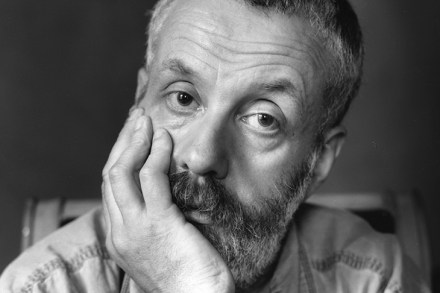
So there I was in Soho Square on a cold and rainy morning, nibbling my complimentary almond croissant and eagerly looking forward to the advance preview of Mike Leigh’s new historical epic Peterloo. This People’s Uprising of 1819, and its brutal suppression by a wealthy, uncaring and out-of-touch metropolitan elite, took place precisely 200 years before we finally leave the EU next year. And thrilling if traumatic times they were too. ‘An old, mad, blind, despised and dying King… A people starved and stabbed in th’ untilled field…’ wrote Shelley in some of his most ferocious lines.

The leaked Brexit memo exposes May’s botched strategy

From our UK edition

The leaked plan of how the Government might try to sell the Brexit deal contains a telling passage. The memo instructs the Cabinet Office to talk up the agreement by ‘comparing it to no deal but not to our current deal’. For all the claims by a government spokesman that the 'misspelling and childish language in this document should be enough to make clear it doesn't represent the government's thinking', this key phrase is the closest we have come to a disturbing admission: that Theresa May’s deal could leave us worse off than remaining in the EU.

Momentum’s membership splits with Corbyn over Brexit

From our UK edition

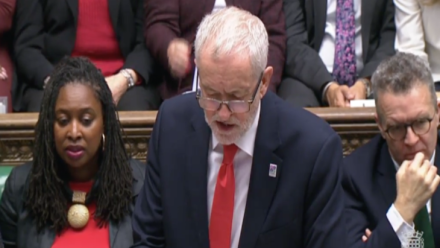
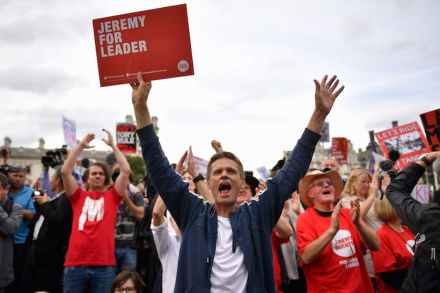
At Labour conference this summer, the party’s leadership were clearly spooked when its previously loyal members demanded the party support a second Brexit referendum. With this in mind, and ever keen to ensure that the rank-and-file are in step with Jeremy Corbyn, the left-wing campaign group Momentum recently decided to survey its supporters to see what they really thought about Brexit and Labour’s position. The group asked over 6500 of its members from across the UK what they thought of Labour’s spurious six tests, the possibility of no deal, and most importantly: if Momentum members wanted a second Brexit vote. Well today the results came in, but they were clearly not what the Momentum higher-ups were hoping for.

Second Cabinet this week to decide on Brexit backstop

From our UK edition

It looks like today’s Cabinet will only be the first of two meetings this week. I understand that another one, which may well make an actual decision, is now likely to be held later in the week. Today’s was significant for an intervention from Geoffrey Cox, the attorney general. Cox’s contribution was about balancing risks. He, I am told, did say that Northern Ireland would be under various, different regulations under the current proposals. But he said that a unilateral withdrawal mechanism—which a large number of Cabinet ministers again backed—wouldn’t be a panacea to all the UK’s problems in the Brexit talks.

Britain is ripe for agriculture innovation after Brexit

From our UK edition

Agriculture is being transformed by innovation at a rapid pace. Genetically modified crops are being grown on 190 million hectares worldwide, with on average 20 per cent higher yields and 40 per cent fewer chemicals than their non-GM counterparts. Genome editing (which involves no cross-species DNA transfer) has produced fungus-resistant wheat and disease-resistant pigs. Farmers in Ukraine and Brazil are using satellite and drone data to target fertiliser and pesticide where and when it is needed, reducing the costs and environmental impact of farming. Robots are starting to drive tractors, identify weeds and pick strawberries. New nitrogen-fixing bacteria derived from sugar cane by Nottingham University promises higher yields in maize and rice.

Theresa May will pay any price for a Brexit ‘Deal’

From our UK edition

Halloween may be over but fear still stalks the land. As we enter the Brexit endgame, it is apparent that Theresa May plans to terrorise her turbulent troops into supporting the Chequers-style deal she has cooked up with the EU. A deal at any price? That is the Prime Minister’s position. From the very beginning of the negotiations, she has been intent on securing a deal. The lamentable events of the past two years can be traced back to this simple imperative. According to her, success in the talks equalled a deal; failure equalled no deal. And that is where I and my fellow economists in Economists for Free Trade (EFT) beg to differ. A deal is not success in itself. In fact, a bad deal is far worse than no deal (sound familiar?). I will come to why in a moment.

Should taxpayers pay for Chuka’s Brexit jaunt to Paris?

From our UK edition

Chuka Umunna loves to talk Brexit, telling anyone who will listen what a disaster Britain’s departure from the EU will be. The MP for Streatham has even made several hops across the Channel to discuss the subject with European politicians. But who paid for Chuka’s recent jolly to Paris to talk Brexit? Mr S can reveal that it was the taxpayer that footed the £397 bill for Chuka’s Eurostar ticket to the French capital: So is travelling to France really the best way of representing his constituents in south London? A spokesman for Chuka said that ‘by being active in the Brexit debate, including talking to European counterparts, he is fulfilling an election commitment he made to his constituents at the General Election’.