Brexit

Who does Nicola Sturgeon think she is?

From our UK edition

It’s been a busy old week in Scottish politics. The SNP government is suffering a public backlash over plans to allow councils to levy a tax on workplace car parks. There has been a fatal infection outbreak at another hospital. MSPs are angry that the nationalists have installed one of their own as chair of the parliamentary inquiry into the government’s handling of the Alex Salmond affair. Best of all, the Scottish Government’s headquarters opened its first gender-neutral toilets.  Nicola Sturgeon, though, has missed it all. The First Minister is on a trade mission ‘promoting Scotland in North America’, according to the Scottish government. Scots have been settling Canada and the United States since the mid-17th century.

Britain is heading for a Brexit tragedy

From our UK edition

With 50 days left before the official date for leaving the EU, we may just have hit peak Brexit mayhem. Can it get any worse than this? Seriously. The cabinet has a three-way split between those who see a no-deal Brexit as economic and political armageddon – the Rudds, Hammonds, Gaukes and so on – those who would prefer a negotiated deal but secretly like the idea of a purer rupture – the Leadsoms, Foxes and Mordaunts – and those sitting in the middle with their fingers in their ears, thinking happy thoughts and hoping none of this is really happening. "It is frustrating how many in the cabinet are just sitting this out" said one minister.

Corbyn’s offer weakens May in Brussels, but helps her at Westminster

From our UK edition

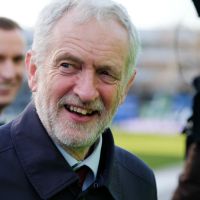
One of the main messages that Theresa May is taking to Brussels today is that significant, legally binding changes to the backstop are needed to get the withdrawal agreement through the House of Commons. Jeremy Corbyn’s letter to her undermines that position. In it, the Labour leader sounds less hostile to the backstop than he did after meeting May last week. Instead, he suggests that the way to deal with the backstop issue is through a political declaration that makes it much less likely that it has to be used. This is the EU’s preferred solution too, and so Corbyn’s offer undercuts the message that May is trying to take to Brussels.

Britain needs to back down on the backstop – but the EU must help

From our UK edition

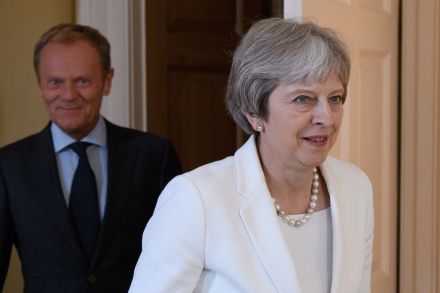
Theresa May's attempt to alter her Brexit deal is going down badly in Brussels. The anger is partly understandable: after all, this is the agreement May's own government negotiated. Donald Tusk's barbed comment today – that there is a "special place in hell" for those who promoted Brexit without a plan – can be explained by this frustration. But the EU also needs to face up to the political reality: May's deal suffered a crushing Parliamentary defeat by 230 votes. It’s all very well having an agreement that works in Brussels theory, but it still has to get through the Commons. If Brussels really wants a deal, it too needs to move; MPs may need to climb down, but the EU can help to provide them with ladders.

Watch: Leo Varadkar caught out making Brexit gag

From our UK edition

Oh dear. Donald Tusk has been causing trouble this morning with his comments about some Brexiteers deserving a special place in hell. But it seems that the Irish Taoiseach is determined to go one better. At the end of a press conference in Brussels, Leo Varadkar was caught out on microphone making a gag with Tusk about the 'terrible trouble' he'll now get from the British press: https://twitter.com/yourmeps/status/1093119102279974918?ref_src=twsrc%5Etfw It's safe to say Tusk enjoyed the joke, as the pair were filmed laughing along together. But Mr S isn't convinced this is the best way of calming Brexit tensions...

What would George Orwell make of the Brexit right?

From our UK edition

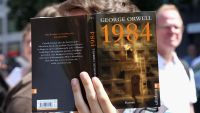
I don’t believe in turning George Orwell’s writing into Holy Scripture – he would have hated the reverence as much as anything else. But if the Brexit right is going to crow and quote his dislike of the communist-influenced left intelligentsia of the 1930s and 1940s it should read the rest of his work first.  Orwell believed in a united socialist Europe. ‘Democratic Socialism must be made to work throughout some large area,' he wrote just after the Second World War. 'But the only area in which it could conceivably be made to work, in any near future, is Western Europe’. If you can forget his belief in a post-war socialism that has gone, Orwell’s arguments for European unity stand up well.

Tusk, Selmayr and the EU’s Twitter diplomacy

From our UK edition

This morning, Donald Tusk had an unusually provocative line in his speech. "I have been wondering what the special place in hell looks like for those who promoted Brexit without even a sketch of a plan how to carry it safely," he said. Any politician knows that the image of Brexiteers going to hell cannot be dropped into a speech without huge controversy. Leo Varadkar, the Irish Taoiseach who had been standing next to him, spotted it instantly and was caught on mic joking to Tusk about the outrage it was intended to cause in the UK. Tusk nodded and laughed. Then for good measure, he tweeted out the incendiary point. https://twitter.com/eucopresident/status/1093112742293266435?ref_src=twsrc%5Etfw All this is an unusual way to conduct diplomacy, but this trolling fits a trend.

Watch: Jon Snow calls out Chris Williamson on Venezuela

From our UK edition

Venezuela is in ruins and its people are suffering greatly as a result of Nicolas Maduro's failed socialist experiment. So who is to blame? Many would say the buck stops with Maduro himself. As a result, Britain and other countries have joined forces in recognising Juan Guaidó as the country's interim leader in an attempt to bring the crisis to an end. But for Corbynista MP Chris Williamson it is this decision to back Guaidó – rather than the Maduro government's brutal suppression of its own people – that is a 'democratic outrage'. It fell to a somewhat unlikely figure – Channel 4's Jon Snow – to put Williamson right: 'You and Mr Corbyn are in a very nasty corner now.

How long will the Tory truce hold?

From our UK edition

Nearly one week on from Tory MPs uniting around a Brexit position and the cracks are starting to show. After Brexiteers and Remainers alike came together to vote for the Brady amendment on Tuesday calling for the backstop to be replaced with alternative arrangements, Theresa May was triumphant that she could now tell Brussels there was a majority in the Commons for a Brexit deal so long as the EU was willing to play ball. However, this weekend things hit a bump in the road after May penned an article for The Telegraph. In it, the Prime Minister said that the vote for the Brady amendment had shown there was majority support for her deal so long as the backstop was renegotiated – hinting that this could be done by a side agreement or codicil.

May’s ‘delusional’ promise to deliver Brexit by 29 March

From our UK edition

Here is what members of the cabinet said to me when I pointed them towards a statement made in the Sunday Telegraph by the Prime Minister that she is 'determined to deliver Brexit and determined to deliver on time – on March 29 2019'. 'Farcical' said one. 'Total delusion' said another. 'Verifiably untrue' said a third. It's not that they doubt Theresa May is working to take the UK out of the EU. It's just they cannot see how it is remotely possible that departure can be achieved in the less than eight weeks remaining before the official leaving day.

Watch: Andrew Marr calls out EU leaders over TV no-shows

From our UK edition

When was the last time an EU leader gave an interview to British TV to talk about Brexit? If you're scratching your head to remember, you're not the only one. Andrew Marr raised just this point on his programme this morning, calling out the likes of Donald Tusk, Michel Barnier and Jean-Claude Juncker for their persistent failure to appear on his programme. Here's what Marr had to say: I just want to say one thing about our line-up of interviews. We are at a moment where negotiations with Brussels are absolutely critical and it has been a long moment. And week after week I get the chance to cross question British ministers and opposition politicians. And week after week, we ask the likes of Donald Tusk, Michel Barnier and Jean-Claude Juncker to answer questions as well.

Sunday shows round-up: UK ‘will still be a very safe country’ after no deal, Javid says

From our UK edition

Sajid Javid: No-deal UK ‘will still be a very safe country’ This morning Andrew Marr was joined by the Home Secretary Sajid Javid. With the possibility of a no-deal Brexit on the horizon, the interview turned to the implications that could have for the UK’s national security. When Marr asked if security could be diminished, Javid avoided a direct answer, repeatedly telling Marr that ‘we will still be a very safe country’: https://twitter.com/BBCPolitics/status/1092016349818236929 SJ: There will be a change in capability, and there are capabilities that I’d want to keep... but they require cooperation with the EU, and I have to proceed on the basis that in a ‘no-deal scenario’ the EU will no longer allow us access to those capabilities...

MPs know if parliament is ever to command respect again, Brexit must happen

From our UK edition

The House of Commons does work better than it seems to, I promise you. When a big subject comes up, it spends weeks, months, even years, posturing and sparring, but it has a way of working out when a choice is truly important. Brexit has taken years, and is truly important. We saw the first signs of this realisation dawning on Parliament when it rejected Mrs May’s original deal so decisively. We saw the second signs on Tuesday night. As that series of covert Remain amendments — most notably Cooper-Boles — fell, a pattern became apparent. Enough MPs now understand that if the institution of parliament is ever to command respect again, Brexit must happen, and the minimally acceptable way in which it must happen is that the permanent Irish backstop goes.

Don’t expect much on Brexit before Valentine’s Day

From our UK edition

Don’t expect much movement on Brexit this side of Valentine’s Day, I say in The Sun this morning. There are two reasons for this. First, EU leaders are irritated with Theresa May. She signed off on a deal with them, assured them it could get through the Commons and then lost by a record margin. They are now sceptical when the British indicate that this or that change could get the deal through parliament. Despite the Brady amendment passing, the EU are still doubtful about what would get a deal over the line. But there is another reason beyond their irritation why the EU are holding off from engaging with Mrs May. They want to see what happens when the Commons next votes on Brexit on the 14th of February.

Is it time for a Brexit recipe book?

From our UK edition

What to do about the coming shortage of green groceries of which several supermarkets warned yet again this week if there is a no-deal Brexit on 29 March? I am just old enough to remember when fresh fruit and veg were in short supply at this time of year. People used to know how to store things to mitigate the problem: apples would be carefully laid out on straw-strewn shelves. We ate lots of root vegetables and not much greenery. If ever you saw a strawberry out of season it came, for some reason, from Israel. Perhaps it is time for a Brexit recipe book, like those comforting wartime rationing ones full of bright ideas for dull things. In our part of the south coast we have racier ideas.

Diary – 31 January 2019

From our UK edition

For legal reasons I shouldn’t say much about the Alex Salmond case, but it does bolster the argument that the world right now operates beyond most fiction writers’ (and readers’?) imaginations. Fiction needs to be credible; I should persuade the reader that the events in my stories could happen, if they haven’t already. Reality, however, seems otherwise inclined. Salmond’s journey — from taking Scotland closer to independence than many thought possible to RT chatshow host — would test the mettle of most contemporary novelists, before even adding the cocktail of charges against him. Salmond, a shrewd operator and orator with a side-order of braggadocio, might seem a gift of a character to a fiction writer.

The Spectator’s Notes | 31 January 2019

From our UK edition

The House of Commons does work better than it seems to, I promise you. When a big subject comes up, it spends weeks, months, even years, posturing and sparring, but it has a way of working out when a choice is truly important. Brexit has taken years, and is truly important. We saw the first signs of this realisation dawning on Parliament when it rejected Mrs May’s original deal so decisively. We saw the second signs on Tuesday night. As that series of covert Remain amendments — most notably Cooper-Boles — fell, a pattern became apparent. Enough MPs now understand that if the institution of parliament is ever to command respect again, Brexit must happen, and the minimally acceptable way in which it must happen is that the permanent Irish backstop goes.

High life | 31 January 2019

From our UK edition

‘The British political class has offered to the world an astounding spectacle of mendacious, intellectually limited hustlers.’ This is a direct quote from a recent New York Times, a newspaper that is known for being anti-heterosexual white male, anti-Christian, and now anti-British ruling class. Mind you, normally when someone attacks the British I smile. And more often than not I mumble that no one hits the Brits harder than themselves. This time, however, let’s take a second look as to why the venom. Under the headline ‘The Malign Incompetence of the British Ruling Class’, some clown I’ve never heard of takes up half a broadsheet page denouncing Britain’s past in general and that of the ruling class in particular.

Portrait of the week | 31 January 2019

From our UK edition

Home Theresa May, the Prime Minister, set off to seek a change to the Irish backstop of the EU withdrawal agreement after the Commons voted by 317 to 301 for a government-backed amendment by Sir Graham Brady, the chairman of the backbench 1922 committee, proposing unnamed ‘alternative arrangements’. Mrs May said there was ‘limited appetite for such a change in the EU’ and hardly had the words passed her lips before Donald Tusk, the President of the European Council, said: ‘The withdrawal agreement is not open for renegotiation.’ An amendment by Dame Caroline Spelman to rule out no deal passed 318 to 310, but lacked legal force.