Brexit

The message Tory leadership candidates need to hear

From our UK edition

I’ve been the victim of a robbery. In broad daylight. As an average Brit, more than 40 per cent of everything I produce is taken by the government for whatever they want to spend it on. In theory they ask my opinion on what that should be. But they ask me only every five years, and even then, the chance of my vote making a difference is literally millions to one. That’s why many – or most of us – don’t bother to vote at all and most of the rest simply give the major parties a big two fingers. Even mediaeval serfs only had to work a third of their time for their masters. We work two-fifths for ours. That’s the equivalent of labouring non-stop, from 1st January to today, 30th May, solely for the government.

Serial genius

From our UK edition

‘It’s no use at all,’ says Posy Simmonds in mock despair, holding up her hands. ‘I can’t tell my left from my right.’ She is ambidextrous. ‘This hand [her right] writes and draws; and this hand [her left] cuts out, sharpens pencils, throws balls, plays tennis… I can’t drive. I’ve never taken a test. I’m always on the wrong side of the road.’ Looking at these wonderful hands, elegant and almost limp, one would never suppose they had created, over the past 50 years, such a large volume of intensely enjoyable and astute drawings.

The Boris Brexit court case isn’t as bad for his leadership bid as some hope

From our UK edition

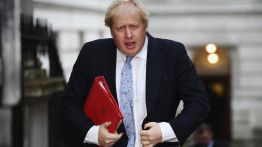
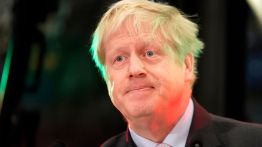
Will Boris Johnson being told to answer to allegations of misconduct in a public office derail his leadership campaign? The former foreign secretary has been told he must appear in court to answer the claims, brought in a private prosecution by campaigner Marcus Ball, who objects to his claim during the referendum that the UK sends £350 million a week to the EU. Today a district judge ruled that there was sufficient evidence to proceed with a trial. This prosecution will naturally be seen by someone of Johnson's enemies as a chance to undermine him while he's the frontrunner in the Conservative leadership contest. But this isn't likely to have the effect they hope.

Talking about Brexit won’t be enough for the next Tory leader

From our UK edition

The Tory leadership contest has been dominated by Brexit so far. To a large extent, this is inevitable: Brexit is the biggest issue facing the country and the Tory party. But dealing with Brexit is a necessary but not sufficient condition for a Tory recovery. If the Tories are to win a fourth term in office, they are going to have a compelling domestic agenda as well. So far, the ideas put forward in this contest haven’t been particularly imaginative—doubling defence spending and a penny off the basic rate are standard Tory fare. The biggest question, to my mind, for the Tories is how to revive the ownership society. The Tories cannot expect people who don’t have any hope of obtaining capital, to be capitalists.

Matt Hancock has missed the point about Boris’s business jibe

From our UK edition

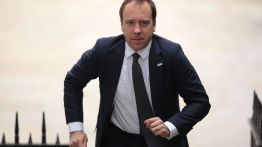
If it was in a playground in one of the rougher parts of town, which increasingly it resembles, this could easily escalate. One candidate remarks that he thinks the party should ‘f**k business’ so another one wades in to argue ‘f**k 'f**k business'’. And perhaps by lunchtime some other candidate you have never really heard off will be tweeting that instead the party should ‘f**k, 'f**k, f**k business'’. Before long, the Tory party leadership contest will start to look like the bits that were edited out of a Malcolm Tucker rant in The Thick of It for being too sweary. And yet the row spectacularly misses the point. Of course the Conservative party should be pro-business. But that is not quite the same thing as being pro-Big Business and its lobbyists.

Boris Johnson’s court appearance is nothing to celebrate

From our UK edition

I have often wondered what would happen if politicians were bound by the same rules as advertisers, or if manifestos were brought within the scope of the trading standards laws. What if we could take legal action against a government for failing to provide the extra NHS beds or school places they had promised? Given the propensity for governments to excuse themselves from their own legislation when it suits them – Blair’s government simply passed a clause excluding political parties when Labour’s women-only shortlists fell foul of sex discrimination legislation – it is hard to imagine such a law being passed by Parliament. But on 14th May, Westminster Magistrates heard an attempt to create one through political precedent.

What I’ve learned from talking to Americans about Brexit

From our UK edition

I’m an Oxbridge graduate in my twenties and a native speaker of a Romance language. I’m a citizen of nowhere rather than somewhere, and two years ago I moved to the United States. I could be the illustrated dictionary’s definition of a Remoaner. And I am. So why is it that, whenever I have a proper conversation with a liberal, knowledgeable American who criticises the idiocy of leaving the EU, I find myself leaping to the defence of Camp Brexit? For a few minutes, mid-conversation, I’m manning the barricades of Thanet with Nigel Farage, throwing real ale at the Provençal set. Except that, being British, I don’t dare voice my objections. I nod and smile while the repute of my country is crushed like a bulldog sat on by a bison.

Britain’s Brexit split is finally out in the open

From our UK edition

I love everything about the European Parliament election results. As a Brexiteer, of course I love that the Brexit Party came out of nowhere to obliterate the Tories and Labour and induce yet another outbreak of Brexit Derangement Syndrome among the chattering classes. But I also love the fact that Remain parties did well, too. I’m happy that the Lib Dems, with their sneering, juvenile, anti-democratic slogan of ‘Bollocks to Brexit’, came in second place. And I’m pleased that the Greens, for whom Brexit is a calamity on a par with the climate catastrophe they breathlessly drone on about, also had a good showing. Why? Because the victory of a proper Brexit party on one side and of the Bollocks to Brexit lobby on the other is a wonderfully clarifying moment.

Alastair Campbell expelled from Labour party

From our UK edition

Alastair Campbell has been something of a Labour party fixture for the last twenty years – but not any longer. Blair's former spin doctor has just been given the boot from the party for revealing that he voted Lib Dem at the European elections. Campbell said he was 'sad' and 'disappointed' to get an email from Labour expelling him from the party: 'I am and always will be Labour. I voted Lib Dem, without advance publicity, to try to persuade Labour to do right thing for country/party. In light of appeal, I won't be doing media on this. But hard not to point out difference in the way anti-Semitism cases have been handled.

Watch: Rory Stewart called out over made-up Brexit ‘fact’

From our UK edition

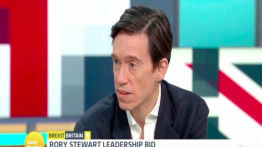
Rory Stewart is emerging as something of a dark horse in the Tory leadership contest. But while the international development secretary is an impressive candidate he is not immune to making a mishap. Richard Madeley reminded him this morning of a particular low point for Stewart: his made-up 'fact' about Brexit –that 80 per cent of people backed Theresa May's deal – during a radio interview last year: RM: Why did you say that? RS: It was a weird thing to say. It was straight after it was announced, and I wanted to say that I felt the vast majority of the country were in the centre ground and I couldn't have been more wrong. Actually as soon as I said it, I apologised 15 seconds later.

Why Eurosceptics still won’t be able to crash the EU Parliament

From our UK edition

The results from the European parliamentary elections shows how EU politics is increasingly polarised. It also demonstrates how old party allegiances are fading in favour of loyalties for parties with more specific ideological and policy platforms. Against the backdrop of Brexit and divisions convulsing global politics, these elections – which have been marked by issues such as immigration and climate change becoming inextricably linked to the role of the EU – saw the highest participation in 20 years. Fragmentation that is shaking up politics domestically has been transferred to the European level. So what do these elections mean for the health of the EU project?

Corbynistas turn on one another over EU election meltdown

From our UK edition

There's a lot of soul-searching in the Labour party after Sunday's abysmal results in the European elections. On Monday, Corbynista commentator Paul Mason was one of the first out of the blocks, with a lengthy autopsy of Labour's electoral failure. He placed the blame squarely on Corbyn's Brexit-leaning advisors, and urged those responsible to be fired. 'Three point plan for Labour. 1. A members ballot on Remain/Reform as the new line. 2. Sack the officials responsible for this fiasco. 3. Defend Corbyn against the inevitable coup. More from me tomorrow - sign our petition here https://www.left2030.org/petition/ ' https://twitter.com/MarkDiStef/status/1132940829335654400 Unsurprisingly, the column didn't go down well in all quarters of the hard left.

No wonder Ukip failed at the European elections

From our UK edition

How does a party go from topping the European elections in 2014 to scraping just over three per cent of the vote, and losing every single MEP, within five years? Just ask Ukip, whose staggering decline is one of the most interesting subplots from this year’s elections. Some may quibble with the ‘Ukip wipeout’ analysis. They will say that the real Ukip - both its heart and structure - was rolled over to the Brexit party along with its former leader, Nigel Farage. And they’re partly right: in the last few years, all but three of Ukip’s 2014 MEPs quit the party. But the fact remains that Ukip still mounted a full slate of candidates and took these elections seriously. And it failed miserably.

Jesse Norman keeps his fans waiting

From our UK edition

Is Jesse Norman standing for the Tory leadership? The Conservative MP has just taken to Twitter to provide an answer. But unfortunately 33 tweets later we are no closer to finding out. Norman wrote: ‘In recent days I’ve been asked a lot if I would stand for Leader of the Conservative Party. It’s already a crowded field, and my reply has been that the views of my constituents, party members and colleagues should shape that decision, and I will carefully consult among them’ So is it a ‘yes’ or ‘no’? Norman followed that tweet up with thoughts on the nature of ‘true conservatism’, Burke, Disraeli and Baldwin.

The Tories will now regret not giving Nigel Farage a peerage

From our UK edition

Nigel Farage has been on the radio this morning, almost plaintively offering to be part of a Government team renegotiating the Brexit Withdrawal Agreement. Maybe it’s a genuine offer in good faith. Maybe it’s a political wheeze, meant to make him and his Brexit Party sound like a proper, grownup organisation. And maybe it’s revealing something about Farage and what he really wants. I don’t claim to know Farage well, or even at all. I’ve interviewed him several times and spoken to him many times less formally. I’ve also spoken to many people who have worked with him over the years. And one abiding impression I’ve taken from all that is that Nigel Farage, the ultimate outsider, wants to be accepted and embraced by the insiders.

Will Jeremy Corbyn bow to pressure on a second Brexit referendum?

From our UK edition

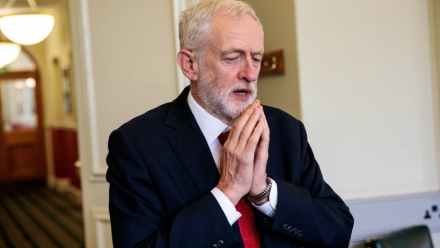
Has Labour finally got the message on Brexit? Since the referendum, the party has attempted to be all things to all people: keeping Brexiteers happy while doing its best not to alienate remainers. But in the wake of the party’s disastrous performance in the European elections overnight, it seems that the fence-sitting might now finally be over. Labour came third, with its share of the vote falling by 11 per cent to just 14 per cent – a message from voters that has this morning led John McDonnell, the shadow chancellor, to apparently come out in favour of a second referendum: https://twitter.com/johnmcdonnellMP/status/1132911401750679552?ref_src=twsrc%5Etfw This looks like the clearest indication yet that Labour will back another vote on Brexit.

Listen: Lib Dem MEP on Brexit Party: ‘They are not a real party’

From our UK edition

The Brexit Party has convincingly won the European elections, picking up nearly a third of the vote. But it seems that their success still isn't enough for some. One Lib Dem MEP – Barbara Gibson – dismissed Nigel Farage's outfit, saying it is 'not a real party'. Gibson, who was elected in the East of England alongside three Brexit Party MEPs, said she didn't recognise the legitimacy of the Brexit Party – despite the group getting nearly twice as many votes as the Lib Dems in the region in which she won her seat. Here's what she had to say: 'They are not a real party. They have not even published a manifesto. They could not do this in a general election.' Interviewer: 'Do you not recognise the validity and legitimacy of those three MEPs?' 'I don't, no.

The Labour meltdown means Corbyn must choose sides on Brexit

From our UK edition

These results are dire for both main parties: the Tories finished fifth and Labour third. Theresa May’s resignation has taken some of the sting out of the Tory humiliation, but Jeremy Corbyn finds his leadership under more pressure than it has been since the 2017 general election result. Most worryingly for him, the membership is not behind him on Brexit. The results for Labour are awful. Look at Scotland and Wales, former Labour strongholds. In Scotland, the Brexit Party came second and Labour finished fifth with just 9 per cent of the votes, down from 26 per cent last time. In Wales, the Brexit Party won in 19 of the 22 council areas. For the first time ever, Labour has finished behind Plaid Cymru.

The big Tory leadership question: what happens on All Saints Day?

From our UK edition

If the EU is unable to make a Brexit offer that is acceptable to Parliament by the Brexit deadline on 31 October, what then? This is the big question in the Tory leadership contest and – slowly – we’re getting answers. 1. No deal back on the table, an extension not ruled out Dominic Raab this morning told Andrew Marr that if the EU does not compromise then he’d leave anyway, without a deal. In other words, the Tory 2017 manifesto position would be restored: no deal is back on the table, only this time they'd have to mean it. Boris Johnson, Michael Gove, Jeremy Hunt and Sajid Javid all agree. All would seek a compromise with the EU: modified version of Theresa May's deal. Nigel Farage says this is pointless because the outgoing Commission is intransigent.