Brexit

What’s really behind the Tories’ present woes?

From our UK edition

The problem is, we really need a Tory party. Whether we have one at the moment is another question. Political debate requires a significant and trustworthy proponent of personal freedom, of the limits of government, of personal responsibility, of strict limitations of government expenditure, of independent enterprise which may succeed through a lack of intrusive state control or may fail without hope of public rescue. Not everyone will share those values. But I think everyone should accept that it’s proved catastrophic that those values have apparently disappeared from public policy. History rhymes, but does not repeat itself. The lessons of previous periods when major economic policies of an interventionist sort were agreed with no serious dissent ought to have been learnt.

A walled garden in Suffolk yields up its secrets

From our UK edition

In the hot summer of 2020, during the Covid pandemic, Olivia Laing and her husband Ian moved from Cambridge to a beautiful Georgian house in a Suffolk village and began work on restoring the neglected, extensive walled garden behind it. She was vaguely aware that the garden had been owned and loved by the well-known garden designer and plantsman Mark Rumary, who had died in 2010. He had been the landscape director for the East Anglian nursery of Notcutts, and I remember him as a genial man overseeing extensive, award-winning tree and shrub exhibits at the Chelsea Flower Show in the 1980s. I once owned a copy of the Notcutts Book of Plants, written by him, which was an indispensable reference book for garden designers before the advent of the internet.

Must Paris reinvent itself?

From our UK edition

In this odd book, the Financial Times columnist Simon Kuper narrates his experience as an expatriate ‘uptight northern European’ living in Paris with his family. His American wife, Pamela Duckerman, also a journalist, is the author of Bringing Up Bébé, a culture-shock memoir about having children in Paris and discovering French child-rearing ways, which are often radically at odds with American ideas and habits. Impossible City touches on some of the same territory (Kuper’s French acculturation through his children’s schooling and socialising), but it aims at a more comprehensive portrayal of rapidly evolving 21st-century Paris, warts and all; or, as he puts it, in a phrase that some may find a little crude, running the gamut ‘from croissants to terrorists’.

London to Amsterdam via Brussels: taking the long way

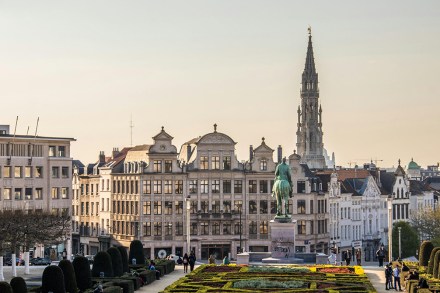
Brexit, the gift that keeps on giving: from June 14, 2024 to January 2025, a reduced Eurostar service will run between London and Amsterdam. Why? Part-closure of Amsterdam Centraal leaves no space for the extra bureaucracy now necessary. Passengers returning to London will change at Brussels to go through security and passport checks, adding up to almost two hours of extra journey time. Global travel booking platforms such as OMIO have reported a surge in train travel in recent years. Cheaper prices (compared to flying) and environmental concerns are cited as the main drivers. But Eurostar’s capped passenger numbers and indirect routes will surely increase air travel in 2024, literally flying in the face of Dutch sustainability policies.

brussels

The rise of English wine

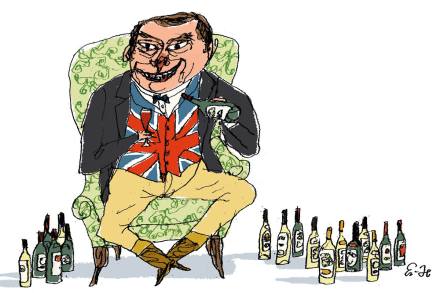
Sometimes, I pretend that I worked the wine beat thirty or forty years ago. I picture myself in formal wear, kicking back in gilded settings, sipping perfectly aged first growth, trading bons mots with winemakers. We’d spend hours solemnly considering the slow, steady, seemingly eternal rise of wine culture, and how inevitably it would soften the cruder edges of society. It would be so merry, yet cerebral — but also something we could feel good, even morally superior, about participating in. Instead, I’m in 2024 wearing yoga pants and guzzling mineral water (must hydrate!) by myself holding Zooms with winemakers, sweating over the fact that scientists say climate change imperils up to 73 percent of the world’s current wine-growing regions.

wine

Must we live in perpetual fear of being named and shamed?

From our UK edition

You should feel thoroughly ashamed of reading this infamous rag. Or else you might decide to revel, shamelessly, in its critics’ prim disapproval. From political squalls to global wars, David Keen argues that a ‘spiral of shame’ and shamelessness now traps individuals and societies in arid cycles of pain, rage and revenge. Manipulative actors – ‘advertisers, warmongers, terrorists, tyrants and charlatans’ – sell us ‘magical solutions’ to the anguish of the shame they themselves stoke. But they merely pass the burden to other groups, leaving us with more suffering. Keen writes: ‘Such actors do with shame what the Mafia does with fear.’ The author teaches conflict studies at the LSE.

Can I stay in Britain?

From our UK edition

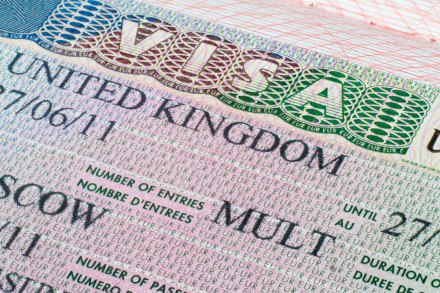
Brexit Britain, for all its flaws, has been welcoming to me. When the UK was a member of the European Union, the only way to control immigration was to crack down on non-EU visas. Ten years ago, Americans like me who studied in Britain and wanted to stay needed to earn £35,000 a year (which would be £47,000 now). That was unrealistic for a recent graduate. After Brexit, Boris Johnson brought back the old post-study visa, giving us two years to find work and requiring a more achievable minimum salary of £26,000. Finally, international students who won places at British universities could meet their EU equals as, well, equals. We had a realistic chance of staying here to work, live and contribute.

Will Starmer soften Brexit?

From our UK edition

13 min listen

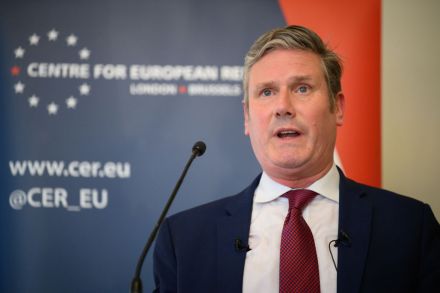
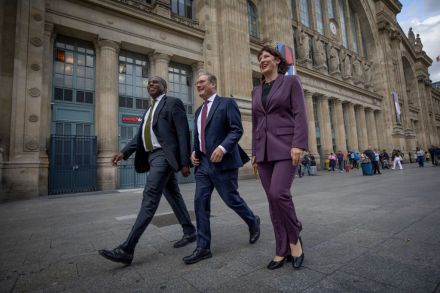
Keir Starmer is in Paris today. It's a bid to 'look statesman-like', Katy Balls says, but also underlines where a Labour government would take British relations with the EU. Oscar Edmondson talks to Katy and Charles Grant, director of the Centre for European Reform. Produced by Oscar Edmondson and Cindy Yu.

‘We need to start the road to rejoin’: Gina Miller on Brexit, farmers and her ambitious plans for Epsom

From our UK edition

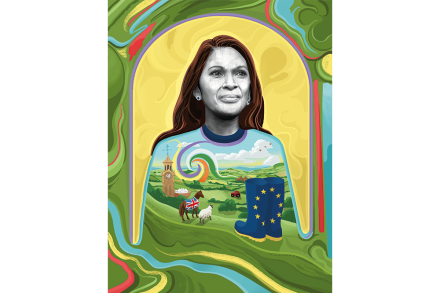
Gina Miller is trying to convince me that she understands why I voted Brexit. The woman who went to the High Court in 2016 to effectively try to cancel my vote by insisting the EU referendum result be referred back to a Remain-dominated parliament, plunging Brexit into years of legal and parliamentary wrangling, says she feels my pain and always has. How can this be? Well, maybe it’s just the magic of politics. ‘My case was not to do with Brexit. It was to do with parliament’ Ms Miller is attempting to turn her single-issue, referendum-wrecking fame into a broader platform, by standing in leafy Epsom and Ewell as one of nine general election candidates for her True and Fair party.

Rory Stewart is a fish out of water

From our UK edition

Rory Stewart is one of that almost extinct species in the modern Conservative party, a one-nation Tory. He is also – or was (until Boris Johnson kicked him out) – a politician with hinterland. He had been places and done things before getting himself elected in his late thirties, entering parliament in 2010. Disillusion rapidly set in: Too much of our time was absorbed in gossip about the promotion of one colleague or the scandal engulfing another. Even four weeks in, I sensed more impotence, suspicion, envy, resentment, claustrophobia and schadenfreude than I had seen in any other profession. It is made clear to him from the outset that rebellion was fatal to ambition.

Brussel or Bruxelles? Even the locals can’t agree

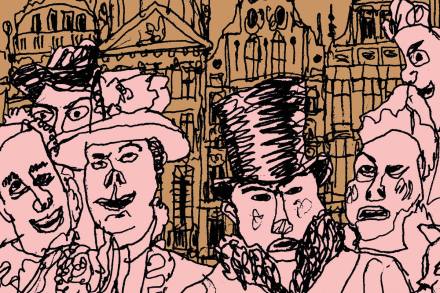
Brussels is the source of all evil to many of those who supported Brexit, and even for Americans. “What’s a good Christian boy like you doing in Satan’s den?” was the question of an Austin friend when I told him work had brought me to the capital city of the European Union. To its critics, Brussels is the bastion of the worst sort of Big Government, with the European Commission and Parliament issuing diktats to more than 500 million people across twenty-seven nations. But while the city is “full of nets” with which to trap you, as described by another friend who worked here on human rights legislation, it’s also a city of “hope.” Brussels has a rich comic book culture. There are the intrepid reporter Tintin and his sidekick Snowy.

brussels

How the British intelligentsia fell out of love with Germany

From our UK edition

An economic slowdown, the far right on the rise, even apocalyptic hailstorms – what on earth is happening in Germany? Is Europe’s industrial powerhouse on the slide? Well, yes and no. Germany is in recession, and Germany’santi-immigration party, Alternative für Deutschland (AfD), is growing stronger, but the bad news coming out of Germany indicates a more lasting sea change: liberal Britain has finally fallen out of love with the Bundesrepublik. It’s not just British Teutonophiles who are troubled by the rise of AfD. This week Germany’s domestic spy chief, Thomas Haldenwang, warned about growing right-wing extremism within the party and German President Frank-Walter Steinmeier has echoed these concerns. ‘Ban the enemies of the constitution!

The drop in language students has nothing to do with Brexit

From our UK edition

The number of students studying modern languages is plummeting, The Sunday Times says today. ‘The number of pupils studying German has fallen below 2,200 with French also on a downward trend — amid fears students are becoming little Englanders.’ It shows a graph suggesting, rather absurdly, that Brexit is linked to the drop. Really? Little Englanders because they don’t want to learn German? My hunch is that today’s young are more globally-minded than any generation that came before, and this is reflective of a Britain that voted in 2016 not to move away from Europe but to strengthen ties with the wider world.

Why on earth did The Spectator support Brexit?

From our UK edition

The temperature has hit 40°C in Crete, where I am writing this, and although there have been no fires, nothing is quite how it ought to be. I can’t work out whether this is a great opportunity to get a tan or, effectively, the end of the world. My 60-year-old taxi driver tells me that unfeasibly hot summers were a regular occurrence when he was young and that there’s nothing to worry about. But, he adds, he’ll be dead soon anyway so why should he care? Right or wrong, this is the paradox at the heart of the climate change debate. Older people, who could be held responsible for the destruction of the planet, don’t need to worry. And young people, who have so much more to lose, don’t really have a say. We invented plastic. They live with it.

John Major has learned nothing over Brexit 

From our UK edition

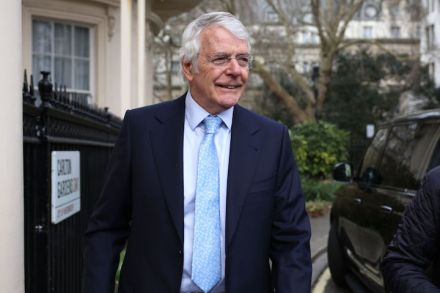
Rishi Sunak’s government is sometimes compared to that of John Major, the man who succeeded Margaret Thatcher in 1990, went on to win an unexpected election in 1992 – and then went down after a landslide defeat at the hands of Tony Blair’s New Labour in 1997. On an episode of The Rest Is Politics, a podcast hosted by former Tory MP Rory Stewart and Alastair Campbell, Blair’s media chief and an architect of New Labour, Sir John, now 80, looked back at his seven years in power. Major reflected on the lessons that time may hold for Sunak’s similarly embattled administration.

Do Brits regret Brexit?

From our UK edition

11 min listen

Today is the seven years' anniversary of the Brexit referendum, and new polls find that a majority of Brits would prefer a closer relationship with the EU, or rejoining the European Union altogether. Can Labour capitalise on this? Cindy Yu talks to James Heale and Fraser Nelson. Produced by Cindy Yu.

Why Europe’s shift to the right may cost the Tories

From our UK edition

On her recent visit to Washington, shadow chancellor Rachel Reeves presented herself as the perfect candidate to be the next chancellor in the modern mould: an environmentalist, interventionist and protectionist similar to Joe Biden and Olaf Scholz. Reeves champions what she calls ‘securonomics’, a sister of Bidenomonics with an environmental twist. But the trouble with Reeves’s approach is that just as she makes plain her direction, much of Europe is heading the other way. Take Finland. Until recently the country was led by Sanna Marin who, with New Zealand’s Jacinda Ardern, became the face of the international centre-left.

How many black or Asian Britons feel a strong sense of European identity?

From our UK edition

Though wokeness is a vile thing, it has contributed to our culture in one fortunate way – by inspiring brilliant books which refute it. The woeful lack of anything passing for analysis (probably a colonial tool of oppression, like brunch) on the SJW side has thrown into gloriously sharp relief the difference in the intellectual firepower between those who believe in free speech and those who resemble Veruca Salt after joining the Stasi.

Brexit could fix inflation

From our UK edition

Has food price inflation finally peaked? Figures released by the British Retail Consortium (BRC) this morning reveal that food prices were up 15.4 per cent in the past 12 months, down from 15.7 per cent in the year to April. Last week’s figures from the Office of National Statistics also showed a small fall, from 19.2 per cent in March to 19.1 per cent to April. The BRC’s methodology is different from the ONS’s, not only in that it tends to produce slightly lower figures but that it also runs slightly ahead. The inflation story has subtly changed, from being one led by energy prices to being dominated by food prices Over the past few months, the inflation story has subtly changed, from being one led by energy prices to being dominated by food prices.

Remainers should be honest about the costs of Brexit

From our UK edition

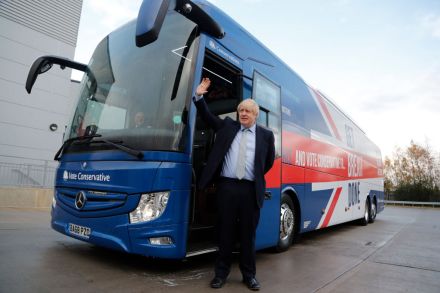
Those opposed to leaving the European Union repeatedly accuse Brexit of being based on ignorance fed by lies. The ‘lie’ they invariably refer to is the £350 million on the side of the Boris bus. In reality, it was the Remain campaign, and its interminable Rejoiner sequel, that was and is based on systematic distortions and gross misunderstandings. One might shrug one’s shoulders if the distortions came only from business lobbies, EU-funded think tanks, the subsidised European media and the like. But some of the most damaging originate within the British state and its associated bodies. No one denies that the Civil Service has been and remains overwhelmingly opposed to Brexit. The ardent Remainer Lord Adonis said that the 2016 vote caused ‘a nervous breakdown’ in Whitehall.