Brexit

Take it from a divorcee: Brexit will cost you dear

From our UK edition

I suppose there are such things as amicable divorces. Mine wasn’t. Like the First World War, it was fought for more than four years, and ended with the Treaty of Versailles (by which I mean that it imposed territorial losses and the payment of annual reparations for a very long time). Which brings me to Brexit, the ultimate divorce. Leave aside the arguments based on economics. Leave aside history, too. Instead, permit me to get personal. You want to get a divorce from Europe? Very well, let me explain what divorce is like. Now, I get how you feel. You’ve reached the point when you just can’t stand the EU any more. You can’t stand the nagging (regulation). You can’t stand the way the EU keeps inviting her friends round (immigration).

David Beckham backs ‘Remain’. But his reasons why don’t make any sense

From our UK edition

To be fair to David Beckham, he is at least slightly higher profile than some of the other ‘stars’ from the football world who have had their say on Brexit. And Michael Gove didn’t sound convincing when he traded off the news that ‘Becks’ had backed ‘Remain’ by saying John Barnes and Sol Campbell had done the opposite. In a post this morning, Beckham spelt out his reasons for wanting Britain to stay in the EU by suggesting he wants to ‘live in a vibrant and connected world where together as a people we are strong’. That kind of rhetoric, whilst apparently noble, tells us little. People from both sides of the debate are after the same, whether they want Britain to leave the EU or not.

What if we vote Remain… then still have a recession?

From our UK edition

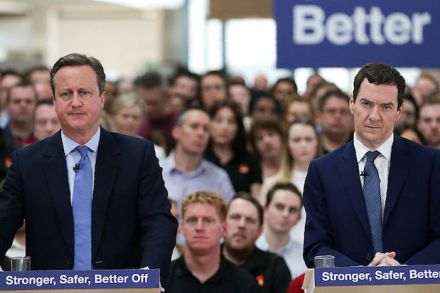
A vote to leave the EU would cause economic Armageddon. We know because David Cameron and George Osborne have told us so, claiming that there is a wide consensus among economists on the matter. But what if – as now seems increasingly likely – we vote to remain but then have a recession anyway? The Prime Minister and the Chancellor are very quick to quote economists when making the case for us to stay in the EU, saying we should listen to the experts. They would do well to listen to what the experts are saying about the chances of a recession.  A Wall Street Journal survey in May put the chances of a recession in the next 12 months at 20 per cent.

Steve Hilton claims PM was told net migration target is ‘impossible’ whilst we’re in the EU

From our UK edition

So long as the economy was at the top of the agenda, 'Remain' will have felt safe in the knowledge that 'Leave' could do little to win over the public's trust. But today, the Prime Minister has his former aide and friend Steve Hilton to thank for bringing the issue of migration soaring back into the headlines. What's particularly dangerous for the Government about what Steve Hilton had to say is his claim that the PM was directly told in 2012 that meeting the promise to bring net migration down to the 'tens of thousands' was impossible.

Frexit and Italexit? Support for the EU dwindles in France and Italy

From our UK edition

Various freak political events—the unexpected Tory election victory, the rise of Ukip—have conspired to allow Britain to hold its referendum on the EU this week. But if the rest of Europe were asked, what would they say? The Berlin-based Bertelsmann Foundation commissioned a study of 11,000 people in Germany, France, Italy, Spain and Poland to find out their attitudes towards Brexit and to the EU. Just 41 per cent of French and 54 per cent of Germans want us to stay. The Spanish are most keen for Britain to Remain, with 64 per cent opposing Brexit, followed by Poland with 61 per cent.

Coffee House shots: Have ‘Remain’ done enough to win?

From our UK edition

We're in the final days of campaigning before the country goes to the polls on Thursday. But what is the mood like in both the 'Leave' and 'Remain' camps? James Forsyth says on today's Coffee House Shots podcast that he thinks the 'Remain' camp are feeling fairly confident. Speaking to Isabel Hardman, he says: 'Remain are certainly more relaxed than they were this time last week. They feel that they have the economy front and centre. They are very encouraged by these polls which show people are concerned about the effect of Brexit on their personal finances. On the 'Leave' side, I think they feel that because this is so much of a turnout game, they are still in it.

How Sayeeda Warsi duped The Times

From our UK edition

Today The Times have splashed on the revelation that Baroness Warsi is defecting from Out to In as a result of the 'hate and xenophobia' peddled by Leave. Given that the paper have run the news on its front page, one could be forgiven for thinking that the Leave camp really are 'in turmoil' over the defection of a 'leading Tory'. Only there is a small snag. Vote Leave say they were never aware she was a supporter, while Dan Hannan says Warsi declined his invitation for her to join the Leave campaign: https://twitter.com/DanHannanMEP/status/744648993381191680 Now even The Times don't seem so sure about the report.

Baroness Warsi defects to ‘Remain’: ‘Leave aren’t the kind of people I’d get on a night bus with’

From our UK edition

Baroness Warsi hasn't always been one to help out the Prime Minister when he's in a spot of bother. But her high-profile defection from the Brexit camp to Remain will certainly have put a smile on David Cameron's face this morning. It's not so much that Warsi was an essential part of Vote Leave's plans; the campaign have been keen to downplay Warsi's importance today, saying in a tweet that 'they weren't aware she was ever part of the Vote Leave campaign'. Michael Fabricant, a leading Brexiteer has also questioned whether Warsi was ever involved in the first place, asking 'Was she ever in Out?' Whilst it's true her involvement has been minimal, the words she used to justify her decision are still likely to hurt the 'Leave' campaign.

A response to David Smith’s economic case for Remain

From our UK edition

When it comes to making economics understandable, no one does it better that David Smith of the Sunday Times*. Today, he has written a emphatic endorsement of the case for the UK remaining in the EU. As a longstanding admirer of his work, a few points jumped out at me when reading it. Here they are. Britain’s economy is convalescing from the biggest financial shock in a century. A few years ago we were on the edge of the abyss. We live in the shadow of the crisis. One shock was careless: to impose another, self-inflicted one before we’re over it would be stupid. Yes, you can argue that now is not the best time.

Latest polls show a swing back to Remain

From our UK edition

We are now in the final week of the referendum campaign and the swing back towards the status quo appears to be in full force. We at YouGov have published two polls this morning, one conducted for ITV's Good Morning Britain between Wednesday and Thursday, and one conducted for the Sunday Times on Thursday and Friday. After the clear leads for Leave that polls were showing a week ago, both of our polls published today show the race coming back to neck-and-neck again: a two point Leave lead in the Good Morning Britain poll, a one point Remain lead in the Sunday Times poll. While there will be speculation about whether this movement is connected to the tragic death of Jo Cox, we do not think that it is.

Plato on the EU referendum

From our UK edition

Our politicians, realising that the referendum campaign will be settled not by themselves under the usual parliamentary constraints but by the Twitter-maddened populace under no constraints at all, have decided to abandon any principles they may have and play the straight populist game. Plato well understood the behaviour and its consequences. In his Republic, he envisages a man in charge of a large and powerful animal who studies its moods and needs. He learns when to approach and handle it, when and why it is savage and gentle, the meaning of the various noises it makes and how to speak to it to annoy or calm it. He might then deduce that he has a scientific understanding of animals.

Who’s sabotaging my Leave campaign?

From our UK edition

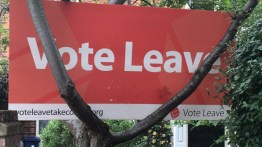
I’ve never been a great believer in karma. After all, in the absence of some kind of cosmic enforcer of karmic justice what guarantee is there that good deeds will be rewarded or bad deeds punished? Let’s not forget that Joseph Stalin was responsible for between 34 and 49 million deaths, depending on whose estimate you accept, yet died of natural causes in his own bed at the age of 73. Karma? What karma? But events of the past fortnight have caused me to revise my opinion. It’s all to do with the massive Vote Leave billboard outside my house in Acton, and an incident that occurred 42 years ago during the October 1974 general election. It’s rather shaming to admit, but back then I was a Labour party supporter.

The Spectator’s Notes | 16 June 2016

From our UK edition

The Remain campaign takes as its model the ‘No’ one in the 2014 Scottish referendum. First and last — hence the Osborne/Darling fantasy horror Budget on Wednesday — inspire fear. Second, late in the day, leave it all to Labour and get Gordon Brown to make a passionate speech (Mr Brown took this too literally and made almost exactly the same passionate speech). Finally, shortly before polling, get leaders of all stripes to make a solemn ‘vow’ to win over the doubters. I am trying to work out what that vow could be. All 27 other member states promising some guarantee of Britain’s independence within the EU?

Diary – 16 June 2016

From our UK edition

Flabby, vaguely disorientated and, more than three years on, still struggling with stroke recovery, I am on a radical diet. No booze, no caffeine of any kind, no lots of other things — sausages, bacon, roast meat, you name it. Not a lot of fun, but the revelation has been coffee: for well over 40 years I have believed that I can only function in the morning after pints of coal-black, extremely strong caffeine. And now, aged 57, I find that it was total horlicks all along — I feel perkier, less tired and less stressed (after a hard few days) without the stuff. This makes me a real oddity in a country in which coffee has become a massive popular cult. I wander around Baristastan, passing ’Bucks, Costas and Neros, feeling a bit like a Wahhabi in Soho at chucking-out time.

The Brexit debate has exposed the Establishment

From our UK edition

Yesterday, on the Thames, in a bizarre battle of political flotillas, we got a glimpse of the elite rage that motors much of the Remain camp. On one of the pro-EU boats, Bob Geldof, a knight, superbly well-connected, who has earned millions, made wanker gestures and gave a two-fingered eff-you to the people on the anti-EU boats — who were mainly fishermen whose livelihoods have been wrecked by Brussels. One of these fishermen, his face ashen with desperation, shouted — almost cried, in fact — about earning £50 a week and not knowing where his next mortgage payment is going to come from, largely thanks to EU regulations on the fishing trade. Wealthy, influential Geldof was laughing and jeering at people like that.

Mark Carney uses interest rate decision to put the boot in over Brexit again

From our UK edition

The Bank of England's decision to keep interest rates pegged at 0.5 per cent won't surprise anyone. What is more interesting, after today's row involving Mark Carney, is how much the Bank had to say about the EU referendum. Brexiteers hoping Mark Carney and the BoE's Monetary Policy Committee would keep quiet about next week's vote will be disappointed. In its meeting minutes, the MPC gives it both barrels when warning about the dangers of Brexit. The MPC says a vote to leave would send sterling's exchange rate tumbling. It goes on to add that: 'As the Committee set out last month, the most significant risks to the MPC’s forecast concern the referendum.

Don’t panic! Turkey won’t be joining the EU anytime soon

From our UK edition

The Leave campaign sees the EU-Turkey accession talks as a reason to drum up fears about migration. In fact, it is a red herring. True, David Cameron may have previously been one of the most vocal champions for Turkish EU membership, even if during the referendum campaign he said that Turkey will not join 'until the year 3000'. But despite his apparent contradiction, he is right about one thing: Turkish membership is a long way off. So what do the accession talks look like as they stand? They are made up of 35 chapters in all but so far only one chapter – on science and research co-operation – has been successfully negotiated. Fourteen chapters are effectively off limits due to vetoes by Cyprus and others.