Brexit

Hope vs gloom

From our UK edition

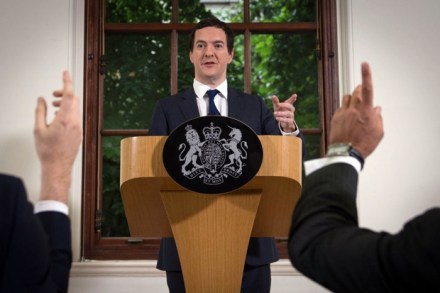
For all Gordon Brown’s economic mistakes, he at least tried to build confidence in the British economy. In the build-up to the European Union referendum, David Cameron and George Osborne did the opposite. Osborne, as Chancellor, ignored the good news, accentuated the bad and tried to portray Britain as an economic weakling propped up by EU membership. He was joined by a great many investment banks who produced analyses saying that Britain’s life outside the EU would be catastrophic. Since the referendum, these anticipations of doom have continued. It is rather strange to watch. Encouraging economic news — the increase in high-street spending, the buoyant demand for jobs through recruitment agencies — is brushed aside.

Paddy Ashdown’s magical thinking

From our UK edition

The dog days of July probably aren’t the best time to launch a new political movement, but then the people who campaigned for Remain in the EU referendum aren’t known for their media savvy. Consequently, Paddy Ashdown made a surprise appearance on Marr last Sunday to announce the creation of More United, a ‘tech-driven political start-up’ that takes its name from a phrase the late Jo Cox MP used in her maiden speech: ‘We are far more united and have far more in common with each other than things that divide us.’ More United’s website doesn’t explicitly say that the organisation’s raison d’être is to overturn the result of the referendum. Rather, this is hidden away in a section called ‘Example policies’.

Letters | 28 July 2016

From our UK edition

Better Europeans Sir: There are many reasons why a majority of people in the UK voted to leave the European Union. Among them was certainly not a wish to be inhospitable and uncooperative with our fellow Europeans (Leading article, 23 July). Now it is even more important that EU nationals in Britain should have their status respected and not be used as a bargaining point in future relations with Brussels. Nor should we forget the considerable contribution that so many of them make to our national wellbeing. Furthermore, what about the two million or so UK nationals living and settled in many parts of Europe? Are they to be ignored and their security put at risk for no valid purpose?

Does Theresa May really welcome global talent? If so, why destabilise EU nationals?

From our UK edition

After the Brexit vote, we at Index Ventures had been operating under the assumption that the new government would be sensible and not seek to dismantle one of the best things to have happened to London over the last 20 years — namely its transformation into a premier base for entrepreneurs starting and building innovative, technology-driven businesses. So it’s deeply troubling that the status of EU nationals already living here has been put into question. The advocates of Brexit said this was not about Britain turning in on itself; that this was about global ambition. Today, however, the world is not quite sure — every one of these small signs matters.

Money digest: Lloyds axes 3,000 jobs

From our UK edition

Lloyds bank is to axe 3,000 jobs in the UK and close 200 branches in an attempt to save £400m by the end of 2017. Chief executive António Horta-Osório said that ‘a deceleration of growth seems likely’ following the UK’s decision to leave the European Union. Nevertheless, in the six months to June the group reported pre-tax profits to £2.45bn – more than double their 2015 earnings. The board of French energy company EDF will meet in Paris later today to discuss whether to approve the Hinkley Point nuclear power plant plans – and they are likely to give the green light, reports The Guardian. The power plant, in Somerset, will create 25,000 news jobs and provide 7 per cent of the UK’s electricity.

Why won’t Theresa May respect the status of our 3m EU immigrants?

From our UK edition

There are many reasons why a majority of people in the UK voted to leave the European Union. Among them was certainly not a wish to be inhospitable and uncooperative with our fellow Europeans (Leading article, 23 July). Now it is even more important that EU nationals in Britain should have their status respected and not be used as a bargaining point in future relations with Brussels. Nor should we forget the considerable contribution that so many of them make to our national wellbeing. Furthermore, what about the two million or so UK nationals living and settled in many parts of Europe? Are they to be ignored and their security put at risk for no valid purpose?

Three key tests for any Brexit deal

From our UK edition

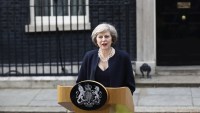
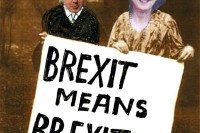
‘Brexit means Brexit’ is one of the most brilliant political soundbites of recent times. It worked wonders for Theresa May during the Tory leadership contest. It showed that she didn’t intend to ignore the referendum result — that would have been politically suicidal — but the phrase is essentially meaningless. Brexit could mean many things. The question of what it actually is will define British politics for the next five years at least; it will be no surprise if we are still arguing about it in a decade’s time. At its most basic, Brexit means leaving the European Union. But the real debate is going to be about how the United Kingdom does that and what its relationship with the EU will be afterwards. May has, understandably, kept her options open.

Pre-Brexit jitters? No, Britain boomed during the Referendum campaign

From our UK edition

It is still a little too early to say for sure that George Osborne’s gloom-laden economic forecasts for post-Brexit Britain were bunk. But never mind the future, it now emerges that he wasn’t much good at telling us what was happening in the present. Throughout the referendum campaign he could barely disguise his contempt for the whole exercise, telling us that the UK economy was suffering from the mere fact we were having a vote. A week before referendum day, for example, he told us that  'The economic uncertainty that the ‘Leave’ campaign carelessly insist won’t be caused is already being seen.' Whatever he was seeing, it didn’t reflect reality. The growth figures for the second quarter released today reveal that in fact the economy grew by 0.

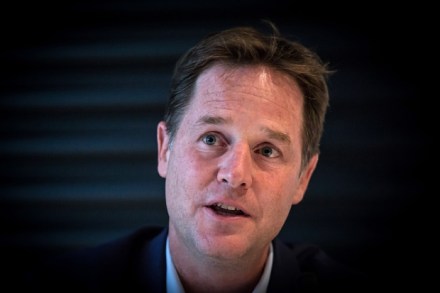
Nick Clegg issues a Brexit warning

From our UK edition

Real earnings have fallen by 10.4 pc since the credit crunch began in 2007 says the Guardian – making Britain equal bottom on the wages growth table, alongside Greece. The Trade Union Centre found that over the 2007-2015 period wages have grown by 23 pc in Poland, 14 pc in Germany and 11 pc in France. The UK, meanwhile, has seen a fall, alongside Greece and Portugal. ‘Wages fell off the cliff after the financial crisis, and have barely begun to recover,’ said Frances O’Grady, the TUC general secretary. The Treasury hit back, saying that earnings are only one indication of living standards – levels of employment, taxes and benefits also come into play.

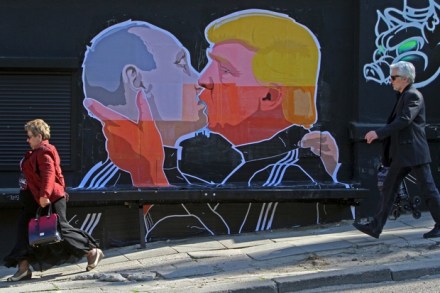
If Trump wins, Europeans will have to grow up

From our UK edition

As many people have pointed out, if someone had awoken from a coma after 30 years and learned that one US political party was in thrall to Wall St and the other to Russia, they would be confused by 2016. But then right is the new left and liberalism, being the prestige faith, is bound to attract prestige people, while Russia is back to its pre-Bolshevik role as the great force for reaction. Some Democrats even believe that Donald Trump is in the pay of the Kremlin, although, then again, more than half of Democrats believe 9/11 was an inside job. This may all be a smear, but Trump has given off alarming signals, including promises to withdraw American forced abroad; Putin would surely welcome his victory. This is saddening.

Jean-Claude Juncker comes out fighting over Brexit

From our UK edition

Although Theresa May has repeatedly assured us that 'Brexit means Brexit', we're still no closer to finding out what that actually means. The Prime Minister has done her best to play hardball in talks with other European leaders, having told Angela Merkel that control over free movement was an issue she would deliver on. But the fighting talk doesn't actually mean much in practice. At least not yet anyway. And like it or not, one man who will play a key role in Brexit negotiations, Jean-Claude Juncker, is making it clear he's not going to lie down and accept compromise on free movement.

Nicola Sturgeon’s Brexit test is designed to fail

From our UK edition

Nicola Sturgeon still believes in Scottish independence. I know, who knew? That's the point of the SNP, a party Ms Sturgeon joined as a teenager back when she felt, or so she has said, that Neil Kinnock was busy leading Labour into the wilderness. That, remember, is when she says it all started going wrong for Labour. This is something worth recalling the next time you see or hear some SNP elected representative concern-trolling the Labour party. The weaker, the more unelectable, Labour is the better that suits the SNP. Anyway, the First Minister gave a speech yesterday in which she spoke about Scotland's five ‘key’ EU interests that ‘must be protected’ if she's to remain a cheerful soul.

Brexit is the most punk thing to have happened in years

From our UK edition

It turns out rock didn’t die when Elvis joined the Army in 1958, or when the Beatles accepted their OBEs in the 1960s, or when Vivienne Westwood went from making filthy t-shirts for punks to being dressmaker-in-chief to the filthy-rich bourgeoisie. No, it died last Thursday, outside Liverpool St, when an NME distributor shoved the latest issue of the once rebellious mag into my hands and I glanced at its cover and realised it is a special issue on how to cope with life outside the EU. For real. In the words of NME editor Mike Williams, this latest issue is chock-a-block with ‘sage advice’ on how to cope with the post-Brexit ‘madness that’s engulfed the UK’. It’s one of the saddest things I’ve ever seen.

Brexit provides the perfect opportunity to crack the immigration question

From our UK edition

The British public are clearly dissatisfied with the way our immigration system currently works. One of the main reasons that motivated people to vote for Brexit in the recent referendum is the hope that Britain could better control immigration by ending the free movement of people from the EU. For years now, immigration has been one of the issues that the public are most concerned about. But there is hope: now, more than ever, the cynicism can be cracked. There is an exciting opportunity, thanks to Brexit and the appointment of a new Cabinet, for the Government to introduce significant reforms to our immigration system to increase public confidence in it. What do the majority of the public want? Sensible stuff, unsurprisingly.

The Waitrose effect and Mr Nobody, the new pensions minister

From our UK edition

A month on from Brexit and the effects on the economy are beginning to show, says the Guardian in a study of the present state of the nation’s finances. It’s mostly bad news: the pound is at its lowest since 1985, down 12 pc against the dollar and 9 pc against the euro – meaning holidays are more expensive than ever. The weak sterling also means that imported goods will be more expensive; last week Unilver was the first company to admit that the cost will be passed onto consumers. The FTSE 100 is up higher than pre-referendum levels, possibly because of a number of sales of UK-listed companies. The sale of chip designer ARM to a Japanese company last week is a case in point. On the plus side, unemployment is at its lowest level for more than a decade.

‘Stupid English people’ to blame for Brexit, says Alan Cumming

From our UK edition

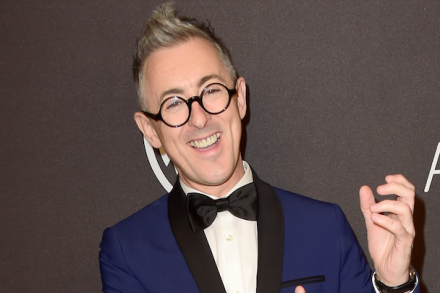
In last month's EU referendum, pundits and politicians were left surprised when Brexit triumphed with 52 per cent of the vote. Since then not everyone has taken the outcome lying down. While the SNP's Nicola Sturgeon is adamant that Scotland should not have to leave the EU, a number of Remain-ers in England -- including David Lammy -- have suggested the result should be overturned or ignored for the good of the people. Now one Scot has offered their two cents worth from across the pond. In an interview with the Scottish Herald, Alan Cumming -- the Good Wife actor who resides in New York -- has blamed the referendum result on... 'stupid English people': 'I was appalled when I heard the result. And I have three words to sum it up. Stupid. English. People.

Europol chief rows back on Brexit ‘Project Fear’ warnings

From our UK edition

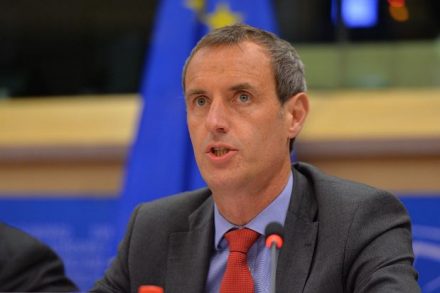
Those who acted as the biggest cheerleaders for Project Fear in the run-up to the referendum now have the awkward task of changing tack. One of those shouting loudly was Rob Wainwright, the British head of Europol. A key campaign strategy of David Cameron was that Britain would be safer in the European Union - and, ergo, less safe outside of it. Joining him in those warnings was Wainwright, who said that if the UK was no longer a member of the EU, Britain would become a 'second-tier member' of the crime-fighting club. He said, in the event of Brexit, that: 'It would make it harder for Britain to fight terrorism and crime.' This morning, he's been striking a somewhat different note.

Sophocles vs the luvvie Remainers

From our UK edition

Is the Labour leadership hopeful Owen Smith, who longs to reverse the obviously undemocratic outcome of the recent referendum, aware of the company he is keeping — artists, writers, pop singers and other riffraff? Plutarch would not have rated these know-alls as especially useful allies. Plutarch (c. AD 100) mused on whether classical Athens gained its reputation more from its military or cultural achievements. He agreed that Athens was the ‘mother and well-disposed nurse’ of many arts, inventing some and burnishing others. But it was all a matter of priorities. Take historians and painters: since they lifted their subject matter from military leaders’ famous victories, they had little to add. And tragedians?

The Brexit effect

From our UK edition

Perhaps the most surprising thing about Theresa May’s arrival at No. 10 is that it has given us back a prime minister who has owned a racehorse. Well, part of one anyway. Theresa the Merciless was once in a syndicate at William Muir’s friendly Lambourn yard which owned a grey called Dome Patrol, the winner of a couple of races back in the 1990s. At least it did better than Brexit, a two-year-old filly that finished sixth at Newbury on referendum day after being fifth the time before. Not exactly going in the right direction...