Brexit

The Spectator’s Notes | 14 July 2016

From our UK edition

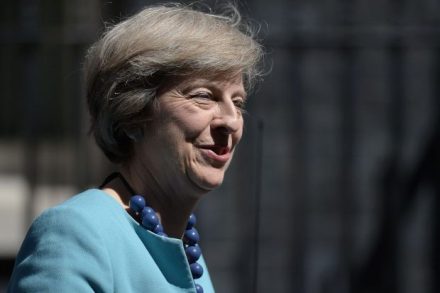
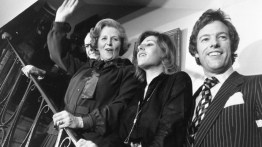
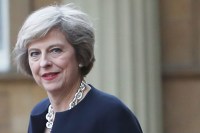
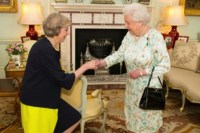
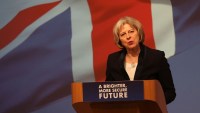
On Tuesday night in London, I spoke to Women2Win, a Conservative organisation dedicated to recruiting more women candidates. My title, suggested long ago, was ‘The Woman Who Won’. It referred to Margaret Thatcher. The day before my speech was delivered, another woman (and former chairman of Women2Win) won, so now there are two. Everyone seized the moment to compare and contrast them. There is a clear difference between Theresa May’s situation today and Mrs Thatcher’s in 1975. Mrs May, like Ted Heath in 1975, represents the side that just lost, Mrs Thatcher the side with a new idea about how to win. Mrs May is the establishment candidate: Mrs Thatcher was the insurgent.

The truth about ‘post-truth politics’

From our UK edition

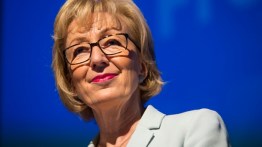
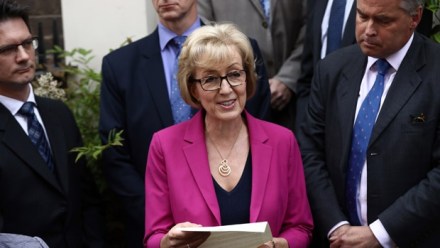
The departure of Andrea Leadsom from the Conservative leadership race was a blow to pundits who claim we’re living in an age of ‘post-truth politics’. According to Michael Deacon, the Telegraph’s political sketchwriter, she was an ideal candidate because she embodied the ‘anti-factual’ mood of the country. ‘Facts are negative,’ he wrote, parodying the attitude of Leadsom’s knuckle--dragging supporters. ‘Facts are pessimistic. Facts are unpatriotic.

Dear Mary | 14 July 2016

From our UK edition

Q. My wife and I are enthusiastic dancers so when we heard that people we know through mutual friends were giving a party on a sprung floor at Cecil Sharp House in Regent’s Park with ceilidh dancing and a caller, we were desperate to go. The trouble was, we hadn’t been invited. We knew there was no sit-down dinner to complicate things and logic told us that the hosts would probably welcome additional numbers of willing dancers. I was too shy to telephone them and put them on the spot by asking if we could gatecrash. We are now kicking ourselves for not having been pushy, as our friends say it was a great party and the hosts told them we would have been welcome. How should we have tackled this, Mary? —Name and address withheld A.

Cameron’s Legacy

From our UK edition

Midway through his final cabinet meeting, David Cameron realised — with some horror — that it had turned into a political wake. Theresa May had just lavished praise upon him, and his eyes had moistened. Then it was George Osborne’s turn: the Chancellor was a bit more humorous, but no less affectionate: ‘Being English, David, you’ll hate all this praise,’ he said. ‘You’re quite right,’ Cameron replied. ‘I am English, and I don’t much like it.’ Fearing that every member of his government was about to deliver an elegy, he brought the meeting to an abrupt end. Defining Cameron’s legacy is an important task for the Conservatives if they are to build on it.

Theresa May’s first day and Boris at the Foreign Office: How the foreign press reacted

From our UK edition

A new British Prime Minister is always big news on the continent and around the world. This time around, with Mrs May tasked with redefining Britain’s relationship with the EU, the foreign press has taken a special interest in recent events in Downing Street. One of the big stories aside from Britain's new Prime Minister taking up her role is Theresa May's decision to make Boris Johnson Foreign Secretary. Here's how the press around the world reacted to the news: France: With France bracing itself for a protracted period of arduous negotiations with the UK, Britain's new Prime Minister is big news across the Channel. Le Figaro goes as far as to brand Theresa May Britain’s new 'Iron Lady'.

Liam Fox celebrates his new job

From our UK edition

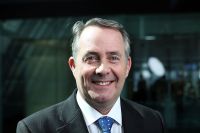
While today's political climate might not be great for the country, the watering holes of Westminster are certainly doing okay out of the tumult. Mr S hears that Liam Fox was in a celebratory mood on Wednesday night after being appointed Secretary of State for International Trade. Steerpike is informed that the MP stayed close to a table loaded with the House of Commons' finest fizz. What's more Mr S hears a whisper his good old pal Adam Werritty was on hand to help Fox celebrate. At a time when too many politicians are gloom-mongering after Brexit, Mr S is pleased to hear the good doctor has lost no time in his new job: raising morale in his party, toasting the health of the new Prime Minister and telling the world that Britain has plenty to celebrate.

Watch: Home Secretary Amber Rudd on Boris – ‘he isn’t the man you want driving you home’

From our UK edition

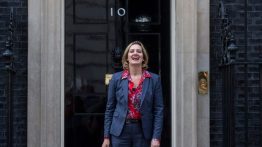
Amber Rudd didn't pull her punches during the referendum campaign when she aimed her fire at Boris Johnson. During a heated ITV debate, she said this about Boris: 'Boris? Well, he's the life and soul of the party but he's not the man you want driving you home at the end of the evening. This is a very serious choice you have to make.' Of course, when Rudd said those words it would be difficult to imagine the events that would play out over the next few weeks. And now, just a month later, Britain is heading out of the EU, Theresa May is our new PM and Rudd and Boris are Home Secretary and Foreign Secretary. These vicious comments during the ITV debate made many at the time wonder whether the Tory party would ever be able to put itself back together again.

From Hegel to Riesling

From our UK edition

John Stuart Mill did not describe the Conservatives as the stupid party. He merely said that although not all Tories were stupid, most stupid people voted for them (cf. Brexit). But at any level above automatic loyalty at the polling box — not to be deprecated — Conservatism is no creed for the intellectually limited. It requires hard thinking. The socialists have an easier life. First, they have a secular teleology: socialism. Second, assuming that history is on their side, many lefties feel entitled to lapse into a complacent assumption of moral superiority. That helps to explain why there has been no serious left-wing thinking in the UK since Tony Crosland in the 1950s. Though Tories may envy the complacency, they are condemned to stress.

May’s man of influence

From our UK edition

Civil servants in the Home Office, even the senior ones, always felt a little nervous when walking towards Theresa May’s office. It wasn’t so much the meeting with the Home Secretary that they dreaded as the characters who lurked in the room directly outside hers. One senior official describes a typical scene: Fiona Hill, one of May’s special advisers, ‘sitting back, getting ready to go out with her stockinged feet on the desk, giving a civil servant an absolute rollicking’. May’s two other special advisers, Nick Timothy and Stephen Parkinson, were also forces to be reckoned with. Now, it seems, this team is being reassembled — to help her run Britain. All three have taken a break from government in the past couple of years.

Sounds of the suburbs

From our UK edition

In After the Vote, her talk for this week’s special edition of A Point of View (Radio 4) on the subject of Brexit, the philosopher (and former Reith lecturer) Onora O’Neill suggested that the media have played a large part in creating our current crisis. All branches of it failed ‘to communicate with the public an accurate and honest account’, she argued. The BBC, she said, ‘provided coverage but failed to challenge unfair or dubious claims’ by either side, adding that ‘democracy does not work if such claims are not properly challenged’. This for her is the true nature of ‘the democratic deficit’ — lack of information, of informed debate, of proper checks.

Brexit won the battle. But now we’ve lost the war

From our UK edition

When Jonathan Swift wanted to mock the immeasurable superficiality of British politics, he imagined it as a contest between the Big--Endians and the Little-Endians. That is, between those who believed fervently that the only way to open a boiled egg is at the pointier end; and those certain that the only proper way to attack it was from the larger, more rounded end. But that was in the 1720s and Swift was joking.

The new PM is right to want boardroom reform, but how can she make it happen?

From our UK edition

I spent Sunday at the Sage Gateshead watching an epic performance of Götterdämmerung (I declare an interest, as a trustee of Opera North), so my head was full of it as I braced for more political backstabbing and immolation on Monday. That was very much the way it went as Andrea Leadsom fell, Theresa May rode her horse into the ring of flame that is the forthcoming Brexit negotiation, and Jeremy Corbyn, still clutching Labour’s tarnished ring, was dragged underwater by Angela Eagle, unlikeliest of Rhinemaidens. Enough of the Wagner mash-up: what really caught my ear during the brief moment between Mrs May’s campaign launch and coronation was her attack on the business elite.

Theresa May has just shown she really is serious about Brexit

From our UK edition

‘Brexit means Brexit’ has been Theresa May’s message since she started running for the Tory leadership. But Brexit could mean a whole variety of things. For example, a Norwegian-style deal with the EU would, technically, be ‘Brexit’. But now, Theresa May has shown real intent. She has demonstrated that she really is serious about this. She has appointed three leavers to the key Brexit-related jobs in government. David Davis will be Secretary of State for exiting the EU, Liam Fox gets the International Trade job and Boris Johnson the Foreign Office. The David Davis appointment is particularly striking. He resigned, unexpectedly, from David Cameron’s shadow Cabinet.

Will Mark Carney Brexit by Christmas?

From our UK edition

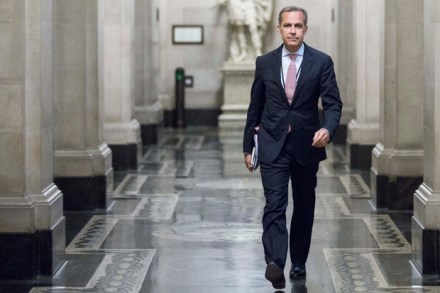
Critics say the Bank of England put itself under suspicion by entering the referendum fray. Now Mark Carney says its warnings are being borne out by the post-referendum economic reaction. He misses the point. By having made those warnings himself, even if he sincerely believed them, he became like a politician trying to win, rather than a public servant trying honestly to manage either outcome. The more loudly he tries to vindicate himself and attack the motives of his accusers, the more clearly this is proved. It would damage confidence if Mr Carney were to leave his job suddenly, particularly if the government pushed him; but surely he should quietly be booking a flight home to Canada by Christmas. This is an extract from Charles Moore's Notes.

Is Theresa May Britain’s Angela Merkel? The German press thinks she might be

From our UK edition

As Britain's second female Prime Minister, Theresa May has inevitably been compared to Margaret Thatcher. But she's also been linked to a contemporaneous politician: Angela Merkel. Whilst some have dismissed the comparisons, it's not only British journalists drawing on the similarities between Theresa May and the ‘Iron Frau’ - German newspapers are now doing the same. The initial parallels are clear; two middle-aged women who have fought their ways to the top of the male-dominated world of politics. However, both Bild and Die Welt - two of Germany's biggest newspapers - believes there is much more which unites May and Merkel and has uncovered a surprising number of similarities to back up their argument.

The Conservative party has a remarkable instinct for survival

From our UK edition

So farewell, then, David Cameron. I suspect we'll miss him when's gone, but then he probably entered Downing Street 20 years too early, a product of a culture that fawns over youth and undervalues wisdom. At least Theresa May is a good decade older than him, although Kenneth Clarke, at 76, should have been considered for the role, entering as he is the prime of his political life. After coming up with the great slogan of 2016, 'Brits don't quit', Cameron then quit a few days later; his Tory arch-rival Boris Johnson then quit; Nigel Farage has quit, this time for good, followed by his deputy Paul Nuttall; Andrea Leadsom has quit; even Roy Hodgson and Chris Evans have quit.

Second EU referendum petition gets debate go-ahead. But what’s the point?

From our UK edition

Signing a petition calling for a referendum re-run might seem rather futile after the Brexit vote was done and dusted. But it seems that the four million people who did just that and put pen to paper haven't completely wasted their time after all. The petition, which said that the Government should hold a re-run if 'the remain or leave vote is less than 60 per cent based on a turnout less than 75 per cent', has jumped its first hurdle. Putting aside who decided that this precise percentage was the exact bar which needed to be reached, Parliament will now discuss the petition in Westminster Hall on September 5th. In a statement, the Petitions Committee had this to say: 'The Petitions Committee has decided to schedule a House of Commons debate on this petition.

Mark Carney clashes with Jacob Rees-Mogg over BoE’s Brexit warnings

From our UK edition

Jacob Rees-Mogg and Mark Carney’s clash at this morning’s Treasury Committee was a masterclass in passive aggressiveness veiled in pleases and thankyous. From the words being said, it wasn’t clear there was any enmity in the room. But Carney’s expressions couldn’t have made things clearer: there is certainly no love lost between these two. Before the referendum, Rees-Mogg said Carney had come under 'undue influence' during the referendum campaign from the Treasury. Today, the Tory MP went on the attack in the politest way possible as he tried his trump card question once again about whether Carney would have conducted himself in the same way during a general election. Last time, Carney batted away the question deftly.