Brexit

Enjoy the honeymoon, Theresa. It won’t last

From our UK edition

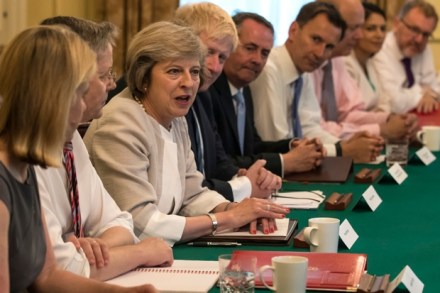
Theresa May has been keen to stress that she doesn’t want this country or her government to be defined by Brexit. In her first week as Prime Minister, she has moved quickly to show that she isn’t going to be continuity Cameron. Her reshuffle made the cabinet less posh and more suburban than her predecessor’s. She has suggested that grammar schools might be on the way back, and national-interest tests could be introduced for foreign takeovers. Things are changing fast. May — and those around her — are modernisers. It’s just that they feel the previous modernisation was wrong.

The bust that wasn’t

From our UK edition

It has been a month since the UK voted to leave the European Union — but something is missing. Where is the economic collapse? What of EUpocalypse Now? Where is the Brexageddon that we were promised? To the shock of many — not least business titans who bankrolled the Remain campaign — the instant collapse doesn’t seem to be happening. The UK economy is, for now at least, taking Brexit in its stride. The oft-predicted job losses? During the three weeks from 23 June, job listings were up 150,000 compared to the same period last year according to Reed Group, a recruitment consultant. ‘That’s an 8 per cent rise,’ says James Reed, its chairman. ‘The vote hasn’t affected things — people are still hiring.

Never gonna give EU up

From our UK edition

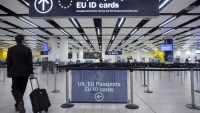
June the 24th was a grim morning for Remain voters, and we’ve been working through the seven stages of grief ever since. Given that nobody has the faintest idea when, how or even if the UK will actually leave, acceptance is still some way off. But Remainers are a pragmatic bunch and many have now worked out that their own personal Brexit can be deftly avoided by taking another EU nationality. Likewise, UK citizens living in the EU, who have found to their horror that they are pawns in a very complex game of migrant chess between Theresa May and Jean-Claude Juncker, are concluding that now is a wise moment to complete the paperwork for residency or citizenship. So which variety of passport would we most like? Controversially, Belgium is the top of many Remainers’ wish lists.

Don’t knock ‘secret deals’. We’ll need one soon

From our UK edition

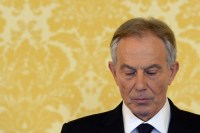
As a founder member of the Guild of Blair-Bashers, someone who reacted strongly against him from our first encounter at dinner when he was only an opposition spokesman, as a commentator who railed against the invasion of Iraq the moment the idea was mooted and right through to the end, and as a journalist who throughout Tony Blair’s time at No. 10 beat my tiny fists against the imposter I always thought him to be, perhaps I may deserve your attention now, after Chilcot, that I have something to say in Mr Blair’s defence? I don’t believe that in any important way the former Prime Minister lied. And I don’t agree there would have been anything wrong with his giving secret undertakings to the President of the United States.

The show’s over for the Women’s Equality Party

From our UK edition

In the post-Brexit upheaval, the Women’s Equality Party (WEP) has fallen out of sight. Its members once told us 'WE can, WE will', but now WEP isn’t doing anything at all. Not since 24 June when leader Sophie Walker offered her most prophetic statements to date. In Newsweek Europe, she wrote that post-Brexit, we would urgently need 'women on the table', and that 'Britain leaving the EU means more women will get involved in politics'. Little did she know her words would ring true, in the most unexpected way; as weeks later, a woman would not only be on the table, but head of it. And since Theresa May became Prime Minister, it’s been win, win, win for the ladies - with Amber Rudd, Justine Greening and Liz Truss now in some of Britain’s top roles.

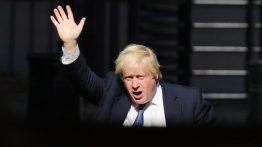
Boris’s charm wins over at awkward press conference

From our UK edition

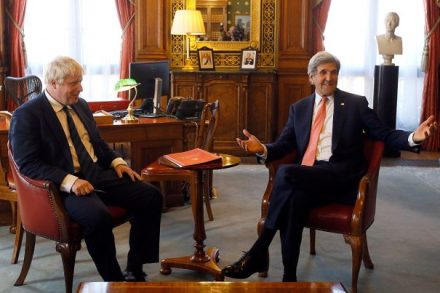
Fresh from banging his head on the door of Downing Street, John Kerry has just been speaking at a press conference alongside Boris. But it wasn’t the US Secretary of State coming to blows during the heated Q and A session at the Foreign Office. John Kerry might be heading home tomorrow, but most of the eyes – and the barbs being flung from the audience of gathered journalists – were aimed squarely at one man: Boris. American journalists in London for Kerry's visit appeared to see it as their sole opportunity to hammer the Foreign Secretary - and they certainly tried their best to make the most of it.

Inflation is up. But don’t panic, it’s nothing to do with Brexit

From our UK edition

Inflation is up: between May and June it jumped from 0.3 per cent to 0.5 per cent. But before the doomsayers blame Brexit, it’s worth remembering that these latest Consumer Price Index figures are nothing to do with the EU referendum. Instead, the numbers behind today’s inflation rise were collected in the middle of June, before the Brexit vote took place. So what’s going on? The short answer is that there’s nothing to panic about. The rise was almost wholly brought about by a leap in the cost of air fares – particularly those to European countries. Here’s what the ONS, who released the numbers, said: ‘The 10.

Thanks to Brexit, New Yorkers discovered ‘the inequality thing’

From our UK edition

A few days before the vote on Brexit, a crowd of Democratic Party grandees gathered in one of Manhattan's toniest venues. Old friends and allies happily greeted one another, and as liquor unlocked emotions, one of them turned nostalgic about his stint in the Clinton Administration -- a happier time, when the party was unified around the cult of political pragmatism known as triangulation. 'Yes,' said a misty-eyed associate who also remembered those days fondly. 'We didn't have the inequality thing.... How did we miss it?' Propriety prevents me from identifying the participants, but the clueless arrogance about 'the inequality thing' largely sums up the reaction to Britain's Leave vote in America's capital of high finance and outsized intellectual pretentions.

George Osborne – non, je ne regrette rien

From our UK edition

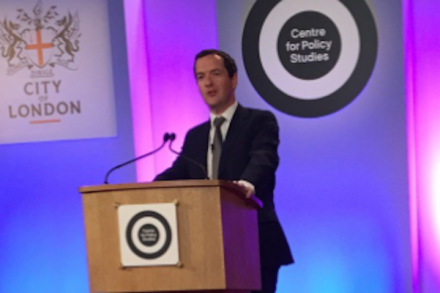
In David Cameron's final speech as Prime Minister, he attempted to set out what he would like to be remembered for -- focussing on progressive social change over the Brexit result. Tonight it was George Osborne's turn. Speaking at the annual Margaret Thatcher lecture for the Centre for Policy Studies, Osborne found himself giving a speech he had expected to give as Chancellor of the Exchequer. Now on the backbenches -- 'more ex than chequer' -- Osborne used the address to defend his record in government and point to his efforts to build a fairer society. Despite his recent sacking from the Cabinet by Theresa May, Osborne said he had no regrets when it came to his role in the referendum.

Of course Britain is ‘open for business’. That was the point of Brexit

From our UK edition

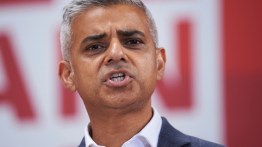
Today the Mayor of London, Sadiq Khan, has launched a campaign telling the world that London is 'still open for business'.  He has announced a Twitter hashtag: #LondonisOpen. It’s an odd campaign, echoing the 'Britain is open for business' line that George Osborne was trying to peddle before being sacked. The premise seems to be that the Brexit vote was a disaster, but one we can recover from if we grit our teeth and adopt the spirit of the blitz. But the only people who thought that Brexit would somehow not mean being open for business were Osborne, Khan and others advocating Project Fear. Their gloom was outvoted by the optimism of Vote Leave. I’m sure that Mr Khan is very well-intentioned.

Labour’s dismal showing gives Sajid Javid a gentler first day in the job

From our UK edition

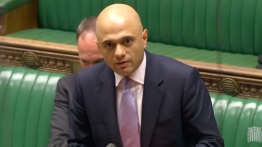
Theresa May's new government gets to work today, and first to face the heat of the Chamber was the Communities and Local Government frontbench. Unfortunately, the Chamber turned out to be rather cool, as very few Labour MPs had managed to turn up, giving Sajid Javid and his team a rather gentler introduction to their new jobs. One of them, Andrew Percy, told the Chamber that 'I share the House's surprise!' on this appointment as he rose to take his first question. But largely the questions that were asked were not a surprise for the frontbench. Some Tory MPs were anxious for a renewed commitment from the new ministers to the sanctity of the Green Belt, as even a perceived threat to those doughnuts of protected land around cities can send Tory voters into a wild panic.

Boris’s EU summit debut shows why he is the perfect pick for Foreign Secretary

From our UK edition

After a bit of initial drama involving an emergency plane landing, Boris Johnson is in Brussels. There's been a lot of social media chatter about why Boris is the wrong choice for Foreign Secretary and how he's going to embarrass Britain in his new role. Some are quoting Boris' past articles to prove he is only going to upset those he meets on the world stage - and Boris' prize-winning President Erdogan poem in the Spectator has also gathered much interest. But for all those worrying about the 'damage' Boris is going to do, look instead to the huge interest in his debut at the EU summit to see why he is the perfect choice for the role. It's important to contrast the huge media scrum which greeted Boris today with the fact that Britain is on its way out of the EU.

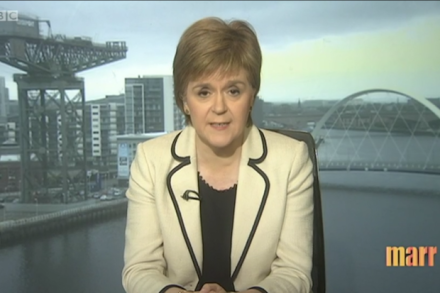
Nicola Sturgeon says Scotland could stay in the EU and the UK

From our UK edition

We are ‘in uncharted territory with, effectively, a blank sheet of paper’ in front of us – and that means ‘there might be’ a way that Scotland could stay in both the UK and the EU after Brexit, Nicola Sturgeon said on the Andrew Marr Show this morning. So England and Wales would get what they want and Scots what they want – except for the two-in-five Scots who voted to Leave. But Ms Sturgeon had no suggestion as to how such a plan might work in practice, because it wouldn't work in practice. Scotland voted in 2014 to stay in the UK, and the UK voted in June to leave the EU. And EU countries including Spain and France don't want to give Scotland the choice to stay in.

Is racism really on the rise in Britain?

From our UK edition

It keeps being said that racist ‘hate crime’ has increased as a result of the referendum. One must bear in mind how the public authorities define these things, as confirmed this week by Alison Saunders, the Director of Public Prosecutions. The Macpherson report on Stephen Lawrence set the current rule. It defined a racist incident as ‘any incident which is perceived to be racist by the victim or any other person’. The police are instructed to log all such incidents as racist incidents. So you only have to have more people reporting what they see as racist incidents for an exactly corresponding rise in the number of recorded racist incidents.

Is Theresa May rowing back on ‘Brexit means Brexit’?

From our UK edition

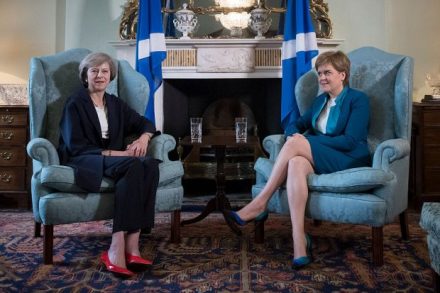
Theresa May has told us repeatedly that ‘Brexit means Brexit’ and Philip Hammond has been at it too: just in case you weren’t aware, Brexit really does mean Brexit. Whilst it’s a catchphrase which is meant to reassure those who want Britain to leave the EU (and those who don’t, but respect the outcome of the vote), it’s actually pretty vapid. And on her trip up to Scotland today, the PM may have shown how her phrase could easily unravel. Theresa May said she was ‘very clear’ about involving the Scottish government in the Brexit negotiations and that she was eager to ‘get the best possible deal for the entire United Kingdom’. So far, so good, you may think.

Theresa May faces an impossible test over Scotland and Brexit

From our UK edition

For some time now, and especially since September 2014, the SNP administration in Edinburgh has been inspired by a single, powerful, notion: govern as though you were enjoying the early days of a newly-independent state.  Of course, Scotland is not - or not yet - an independent state and, for the time being at least, still has two governments, one in Edinburgh and another in London. But in attitude and demeanour, the SNP behaves as though independence has already arrived in everything except the formal recognition of that fact. This is a matter of mood and framing, for sure, but it's also something which has consequences. It's why Theresa May's visit to Scotland and her meeting with Nicola Sturgeon today is a heavily symbolic matter.

Real life | 14 July 2016

From our UK edition

Bonjour mes amis! Cydney spaniel ici, en France! Well, the Eurotunnel was very nice, although the dog departure lounge could have been grassier. I’m not a fan of AstroTurf. Doesn’t hold a scent very well. No one checked my passport either. Mummy passed it through the window with hers and his as we went through, but the French police laughed and said they didn’t want it. What a cheek. Mummy was cross because it cost over a hundred pounds. Hopefully they will check it on the way back so we can get our money’s worth. The other passengers were friendly. There were a few dachshunds and a Hungarian vizsla in the dog-agility area, stretching their legs before departure. No sarcastic growls about Brexit.

Long life | 14 July 2016

From our UK edition

When you are recovering from a stroke, you spend much of the time asleep. But when you are not sleeping, you are told that the most important thing you have to do is avoid stress. All doctors agree that stress is the main impediment to recovery. But how can you possibly protect yourself against it? The causes of stress can creep up on you from anywhere without warning, and there is nothing you can do about it; and lately I have been bombarded by shocks. I was one of the ignorant for whom the victory of Brexit in the referendum was itself a shock, but this also set in train a whole bunch of further assaults on the nervous system.

Diary – 14 July 2016

From our UK edition

I first met a boyish, sunny Tony Blair more than 20 years ago. Our encounters have always been slightly tense since I reported some clumsy remarks he made about tax when he was still an apprentice PM — and he reacted much as Andrea Leadsom did against the Times last week (though via A. Campbell rather than Twitter). On Wednesday afternoon at Admiralty House he is a stricken caricature of how he was: painfully thin; waxy skin; astonishingly terrible teeth. He is a brilliant actor but not that good: he has been tormenting himself over Chilcot. But he isn’t sorry for the invasion, as he told me, and would do it again if circumstances repeated. His journey from fêted hero in 1997 to perhaps the most isolated man in Britain is a national tragedy.