Brexit

Theresa May’s Ukip opportunity

From our UK edition

Since Nigel Farage’s latest resignation as Ukip leader, it has become clear that he is the only person who can hold the party together. Without him, Ukip has become a seemingly endless brawl between various hostile factions. Still, this leaderless mess has more supporters than the Liberal Democrats. That’s because Ukip, for all its flaws, has given a voice to those ignored in an overly centrist political debate — first Eurosceptic Tories, then working-class Labour voters. With decent leadership, Ukip could still do to the Labour party in the north of England what the SNP has done to it in Scotland. Steven Woolfe might have been able to supply that leadership, had he not been hospitalised by a fellow MEP. He has now quit, saying that Ukip is over.

Brexit relief as government insiders expect Nissan to announce it is building its new car in Sunderland

From our UK edition

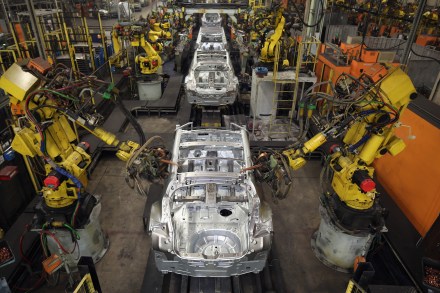
Government insiders expect Nissan to announce that it is building the new Qashqai in Sunderland in the next week or so. As I write in The Sun today, the Business Secretary Greg Clark has been in Japan to see Nissan high-ups and the government is now optimistic the deal will be done. This news will be a major relief for the government. It shows that the British car industry isn’t being written off by Brexit and given how some in Brussels seem to think that bad economic news will send this country scurrying back to the EU, will strengthen the UK’s negotiating hand. One can also just imagine how Brexit’s critics would have reacted if Nissan had announced it was moving production away from Sunderland, which voted heavily to leave, to an EU-27 location.

It’s time for Mark Carney to go

From our UK edition

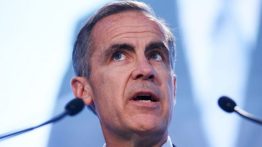
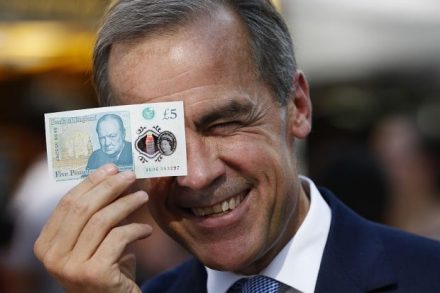
Oh dear. Mark Carney is irritated. His proud independence has been challenged. The Prime Minister had the temerity to admit that she was not altogether thrilled with his ‘super-low’ interest rates and quantitative easing. These policies meant that people with assets got richer, she pointed out. ‘People without them suffered… People with savings have found themselves poorer.’ Mr Carney found this intolerable and haughtily rebuffed her, saying, ‘The policies are done by technocrats. We are not going to take instruction on our policies from the political side.’ Back in your box, Mrs May. Carney’s in charge!

We should be flattered not threatened by France’s bid to take on the City

From our UK edition

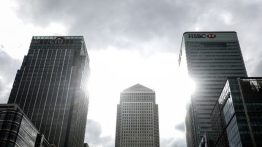
The French are trying to seduce the British to come and work in Paris. A video hymns the delights of La Defense, the Gallic Canary Wharf. It is a healthy Brexit effect that the French now feel that they can no longer fight the City of London solely by trying to regulate it, and must try persuasion instead. The prospect of British departure reawakens the spirit of competition in a continent which had largely replaced it with bureaucracy. By leaving, Britain ought to win first-mover advantage in this contest, but even if we don’t, we will have done a service to our neighbours which we could never have managed if we had voted to stay.

Arron Banks revisits old wounds

From our UK edition

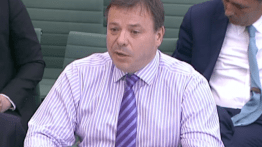
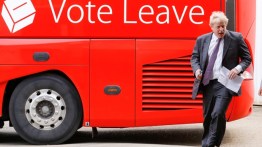
During the EU referendum, there was a fierce contest between Vote Leave and Grassroots Out over which would win the official designation to campaign for Out. In the end, it went to Vote Leave -- after it was decided that they held the widest cross-party support. Part of the issue was that the majority of eurosceptic Conservative MPs backed Vote Leave. This was down -- in part -- to an unhelpful interview, Grassroots Out's Arron Banks gave to the Times. The Ukip donor struck a low note when he accused David Cameron of using his late disabled son Ivan as a prop over NHS policy. At the time, the comments were put down to the Ukip donor having one too many during the interview. So, has time healed old wounds? Apparently not.

When is a hate crime not a hate crime?

From our UK edition

I’ve always been somewhat bemused by the concept of ‘hate crime’ - a phrase which first came into use in the US in the 1980s and into practice in the UK in 1998. I must say that the idea that it is somehow worse to beat up or kill someone because you object to their race or religion, than because you’re a nasty piece of work who felt like beating up or killing someone, strikes me as quite extraordinary - hateful, even, implying that some lives are worth more than others. Are we not all human, do we not all bleed? If we’re murdered, do not those who love us grieve for us equally? Why, then, are attacks on some thought to be worse than attacks on others?

Barometer | 20 October 2016

From our UK edition

Ape escapes A gorilla got out of its enclosure at London Zoo and entered a keepers’ area, prompting an evacuation of visitors. Other gorillas who tried to emulate King Kong: — Casey, a 400 lb male, scaled a 15-foot wall and a four-foot fence at Como Zoo in Minnesota in 1994 and spent an hour at large before being coaxed back. — Little Joe, a 300 lb male, got out of Franklin Park Zoo, Boston, in 2003 and roamed free before being shot with a tranquiliser dart. Two people were injured. — Jabari, a 300 lb Western Lowland Gorilla, scaled 16 ft walls to escape at Dallas Zoo in 2004. He injured four people, including a boy of three, before being shot dead. A 19-year-old female gorilla escaped briefly at the same zoo in 2010.

From Socrates to Boris

From our UK edition

In writing an article that argued both for and against the European Union, Boris Johnson was following a solidly classical precedent — that the finest exponents of the art of persuasion were those able to argue equally convincingly on both sides of any question. An anonymous document entitled Dissoi Logoi (‘Two-sided arguments’, c. 4th Century BC) provided a long list of examples: ‘Death is bad for those who die, but good for the undertakers and the grave-diggers. Farming, when it makes a handsome success of producing crops, is good for the farmers, but bad for the merchants… It is shameful for a husband to adorn himself with white lead and wear gold ornaments, but proper for a wife. It is proper to do good to friends, but shameful to do it to enemies.

The Spectator’s notes | 20 October 2016

From our UK edition

Vote Leave was the most successful electoral campaign in British history. Against the opposition of all three political parties, it won, achieving the largest vote for anything in this country, ever. But voting to leave is only the essential start, not the fulfilment, and now there is no Vote Leave. After victory, the campaign’s leaders went their various ways. Some were lulled into a false sense of security by Mrs May’s clear declaration of Brexit intent, and by the fact that one of their top colleagues, Stephen Parkinson, is now installed in 10 Downing Street. Nick Timothy, now all-powerful in Mrs May’s counsels, was running the New Schools Network during the campaign.

Diary – 20 October 2016

From our UK edition

The week began badly when I spotted three grey squirrels gathering beechnuts in our arboretum. During our time at our home in Northamptonshire, my wife and I have anguished over our reluctance to indulge in wanton killing — and how far our tolerance of damage to the trees and nesting birds will stretch. But two years ago, we resolved the dilemma when squirrels wrecked our 30 nesting boxes. They had gnawed into the entrance holes before destroying the eggs and chicks. We employed two expert keepers who, in nine months, shot or trapped more than 400 squirrels over the 70-acre area. The increase in young birds the following summer has made us determined to maintain our ‘no squirrel’ policy.

Order, order! It’s up to May to stop this ministerial bickering

From our UK edition

Even by the accelerated standards of modern politics, this is fast. Three months after the Chancellor was appointed, the Treasury has had to deny that he has threatened to resign. No. 10, for its part, has had to declare that the Prime Minister has ‘full confidence’ in Philip Hammond. It is telling that neither felt that they could just laugh off the reports. So what is going on? The most innocent explanation is that Westminster is still adjusting to the return of normal relations between Downing Street and the Treasury. David Cameron and George Osborne did everything but actually merge the two. Indeed, until the coalition came along, they planned to work out of the same office in No. 10.

The Nissan test: can we really negotiate Brexit sector by sector?

From our UK edition

I wrote last month that a key test of Brexit success will be whether Nissan is still making cars here in ten years’ time. A few days later, Nissan chief Carlos Ghosn issued a warning that ‘If I need to make an investment in the next few months and I can’t wait until the end of Brexit, then I have to make a deal with the UK government.’ The investment decision he referred to — expected by Christmas, which means before Brexit talks even begin — is whether to build the next Qashqai model at Sunderland or in France, to avoid tariffs on exports when we leave the single market. And the deal he was fishing for was a promise of compensation if tariffs are imposed. What’s at stake is huge: the wider UK automotive sector supports 800,000 jobs.

Carney must go

From our UK edition

Oh dear. Mark Carney is irritated. His proud independence has been challenged. The Prime Minister had the temerity to admit that she was not altogether thrilled with his ‘super-low’ interest rates and quantitative easing. These policies meant that people with assets got richer, she pointed out. ‘People without them suffered… People with savings have found themselves poorer.’ Mr Carney found this intolerable and haughtily rebuffed her, saying, ‘The policies are done by technocrats. We are not going to take instruction on our policies from the political side.’ Back in your box, Mrs May. Carney’s in charge!

Don’t listen to the doom-mongers: A rise in inflation isn’t some kind of crisis

From our UK edition

It takes quite a determined Cassandra to see the rise in Consumer Prices Index (CPI) from 0.6 per cent in August to one per cent in September as some kind of crisis, not that that will stop the holdouts of the Remain campaign from trying to do so. When CPI fell below one per cent at the end of 2014, you might remember, there were dark warnings about the threat of deflation – with the horrors that would imply for borrowers, who would see the real value of their debts increase. Now, some are trying to present a rise to one per cent as bad news, with former Monetary Policy Committee member Andrew Sentance, for example, calling it the ‘tip of an inflationary iceberg’. Steady on. Sure, inflation is likely to increase over the next few months.

UK farmland: will the fields still be gold after Brexit?

From our UK edition

I first started tracking the farmland market in the UK at the turn of the century when I joined Farmers Weekly magazine as its property editor. Back then decent farmland was priced at around £2,500 an acre. Fast forward to the present day and land routinely changes hands for more than £10,000 an acre. According to the Knight Frank Farmland Index (I jumped the journo/corporate fence in 2008), the average price of bare farmland in England and Wales – that’s land with no houses or buildings on it, just crops or animals – was worth £2,037 an acre in 2000. It’s now £7,672 an acre – a rise of almost 280 per cent. So what’s happened during that time to drive up prices?

In defence of small nation states

From our UK edition

Scotland may have a second referendum within three years, as many Remainers correctly predicted. If the British government makes a mess of Brexit, the Scots may be inclined to leave the sinking ship and rejoin the EU. If Britain succeeds in going it alone outside a larger federation and doesn't suffer a huge economic setback then perhaps the Scots might think they can do so too. I'm rather inclined to believe that neither the UK or the EU will necessarily be around as this century matures, and it won't be the economic or emotional catastrophe people imagine. Sad though it would be to see ane end of ane auld sang, Scotland would do fine as an independent nation. They gave the world Adam Smith, after all.

UK consumer confidence hits five-year high as Brexit bounce continues

From our UK edition

Another day, another piece of embarrassing data for those who predicted that the Brexit vote would trigger an immediate recession. Their foundation was based on the belief that confidence would plunge. As things turn out the Deloitte Consumer tracker has hit an all-time high. It has only been running for five years, so the real story could be even more impressive. And while George Osborne was talking about half a million jobs going as a result of the Brexit vote, the Deloitte survey found a strong increase in confidence of job security, up from -10 per cent to -4 per cent. [caption id="attachment_9651592" align="alignnone" width="560"] Source: Deloitte[/caption] And how does this compare with what was being said about consumer confidence before the vote?

Why we should celebrate the fall of the pound – and keep it low

From our UK edition

The fall of the pound has been the political event of the week, but is it all bad news? Many thanks to Civitas for allowing us to republish the below essay, an extract from a pamphlet (pdf) about the merits of a low currency and case for keeping the pound at its new competitive levels.  Many people in the market and much of the commentariat are currently concerned with the recent weakness of the pound on the exchanges. They are barking up the wrong tree. The real sterling crisis is that the pound has been too high. Accordingly, the Brexit-inspired bout of sterling weakness was extremely good news for the British economy.

Will Brexit butcher the banks? | 16 October 2016

From our UK edition

The financial crisis defines our age. It helps explain everything from the presidential nomination of Donald Trump to Jeremy Corbyn’s leadership of the Labour party after 30 years on the political fringe. Certainly, the Brexit vote wouldn’t have happened without it. The crash of 2008 created a sense of unfairness that is still roiling our politics, as well as calling into question the competence of the West’s ruling class. The soi disant ‘experts’ were easily dismissed during the EU referendum campaign because nearly all of them had got the economic crisis so wrong. The Brexiteers asked: why should the public listen to the arguments of organisations and businesses that had made such disastrous misjudgments?