Brexit

Barclays has woken up to the good news about Brexit

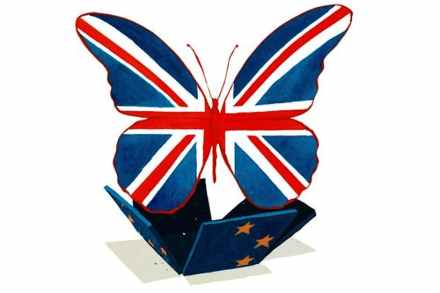
The bankers would all move to Frankfurt. The hedge funds would all decamp to Zurich. The asset managers would be off to Paris and Dublin, and the lawyers, accountants and consultants would swiftly follow them.  For much of the last four years since the UK voted to leave the European Union, it has been assumed across most of the continent that one of the big prizes of Brexit would be repatriating the lucrative financial services industry out of the City of London to a series of European centres. Indeed, Paris was confidently expecting to boom on the back of all the business that would hop on the first Eurostar to

What if Covid had struck in the 1970s?

We have reached Covid-19’s first anniversary in the UK — and I really think we should do something fitting to mark the occasion. The actual date is pretty much a moveable feast. The first patient in the UK known to have died of the disease was Peter Attwood, aged 84, on 30 January. But we didn’t know then that he had Covid, finding out only about six months later. On 4 February, the government instructed all Brits living in China to get the hell out and return to the UK sharpish and breathe all over us, as I believe the press statement had it. On 11 February, the little baby

Vaccine success is a boost for Boris – and the Union

Imagine for a minute what British politics would be like without a Covid vaccine. The cabinet would be deeply, and possibly irrevocably, split between those who favoured another year of lockdown on public health grounds and those who thought that the country had no alternative in the circumstances but to ease restrictions and learn to live with the virus. The 100,000 death toll would have been reached with no hope in sight and a public sense that, almost inevitably, things were going to get worse. The vaccine has changed so much. It has given people hope. There is a belief in the general public that this will be the last

How the EU can help calm Brexit tensions in Northern Ireland

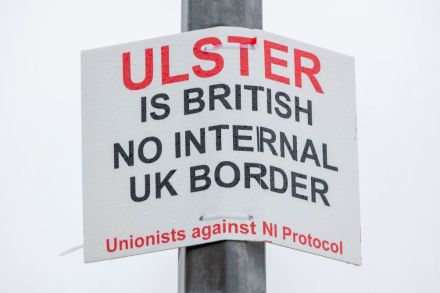
The next Northern Ireland assembly election must take place by 5 May next year. The MLAs voted in then will decide whether or not to continue the Northern Ireland protocol, which requires the UK authorities to apply EU rules on various goods entering Northern Ireland. If a majority voted against (that is all that would be needed as the petition of concern, which requires a higher threshold, would not apply), then the protocol would fall. At the moment, it looks very unlikely that the election will result in an anti-protocol majority. But it would clearly be bad for stability in Northern Ireland if the campaign turned into an attempt by Unionists to rally

Ursula von der Leyen has broken the first rule of leadership

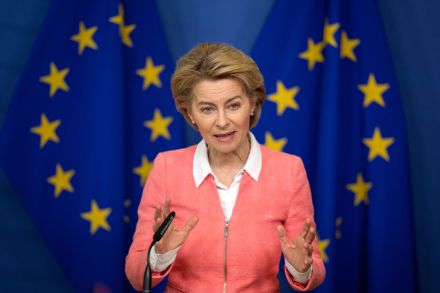
Valdis Dombrovskis could probably do without his moment in the limelight. His spell as prime minister of Latvia, a country with a population of 1.9 million, was largely successful, at least until the collapse of a supermarket roof in 2014 brought his coalition to an early end.  Shunted off to Brussels, he worked quietly as commission vice-president for the euro and social dialogue– nope, I don’t know what the heck that means either – before being promoted to the slightly more important trade portfolio last year. Now it turns out he is responsible for what is rapidly turning into the biggest policy catastrophe in Europe since the Second World War,

Philip Hammond's Brexit muddle

You won’t be surprised to learn that Philip Hammond was no big fan of Brexit. But Mr S was still somewhat taken aback by just how little the former chancellor made of Theresa May’s ‘Brexit means Brexit’ strategy: ‘My assessment of Theresa May’s Prime Ministership, in terms of Brexit, is that she dug a 20-foot-deep hole in October 2016 in making that speech’ Hammond was, of course, referring to the speech May made to Tory party conference in her first year as prime minister. But Hammond’s interview, released this week by UK in a changing Europe, has opened up something of a riddle. The Eeyore-ish ex-Chancellor said he had not seen May’s

Starmer needs to be more like Blair to beat Boris

If Keir Starmer has a strategy, it’s this: to paint his party as more competent than the Tories while keeping his head down on almost everything else. The aim of this is to ensure Labour can crawl across the line come the next election, winning a majority with a bit of help from the SNP. There’s a big problem with this approach though: it’s the same one that failed to work for Ed Miliband. To beat it, Boris Johnson need do little more than recycle the Tories’ 2015 campaign, which depicted Miliband in Salmond’s pocket, substituting Sturgeon in his place. The other problem with the ‘do as little as possible’ strategy is that it will almost certainly result

The EU's vaccine debacle has finally ended the 'People's Vote' myth

Of all the charges made against Brexiteers, the notion that we ‘don’t understand the modern world’ is the one that some Remainers have most often returned to; their equivalent of the boxer’s stinging jab that relentlessly wears down an opponent. In a global system increasingly dominated by a handful of big players with huge populations and land mass – the US, China, India, Russia – being a medium-sized nation in Europe without the umbrella of the EU was supposed to be a mug’s game. In the European Parliament, that arch-federalist Guy Verhofstadt would often refer to the countries of Europe as ‘dwarfs’ who needed to band together to compete in

Martin Selmayr's EU vaccine boast backfires

In the aftermath of the EU’s vaccine bungle, Brussels remains in damage limitation mode, determined to ensure that someone else gets the blame for its own crisis. But Mr S wonders whether top EU diplomat Martin Selmayr’s bid to put a positive spin on what has unfolded over the last few days was really so wise. Selmayr, who revelled in his nickname ‘the Rasputin of Brussels’ during his time serving as Jean-Claude Juncker’s aide, attempted to make a comparison between Europe’s vaccine rollout rate and that of Africa, the poorest continent on Earth. Selmayr, who now serves as the EU Commission representative in Austria, wrote: ‘The EU, thanks to the joint work of 27 governments,

One year after Brexit, Britain is reaping the benefits

A year ago today Britain awoke to a rather muted celebration – which seemed to consist largely of a bubble car driving around Parliament Square with a Union Jack in tow – ready to face up to a brave new future outside the EU. Who would have imagined then that the Observer would mark the first anniversary by running a leading article condemning the EU as ‘shambolic’ and instead praising Boris Johnson’s government for something Britain did all by itself? Of course, the Observer’s judgement is only in respect to one thing: the EU’s joint vaccination procurement programme. Nevertheless, it is something rather important, on which a great number of

Can Spain's faith in the EU survive Covid?

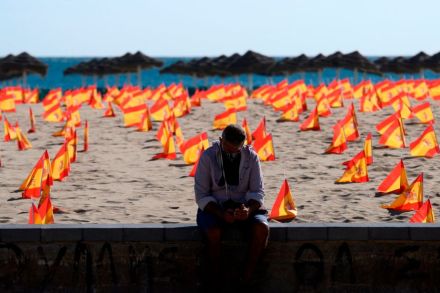
According to ancient Moorish legend, when the world was created each land was given five wishes. Spain’s first four wishes – for clear skies, seas full of fish, good fruit, and beautiful women – were all granted, but the fifth, for good government, was denied on the grounds that to grant that too would create a paradise on earth. Certainly over the last couple of centuries, good government in Spain has tended to be conspicuous by its absence. Philosopher Ortega y Gasset summed up Spain’s tragic history and its desire to become more like the liberal democratic European countries in his famous phrase: ‘Spain is the problem and Europe the

The EU's vaccine opportunism will not be forgotten

At first, it sounded like empty rage. The European Union had spent all week making wild statements about controlling vaccine exports — even challenging the notion of contract law. On Friday, it has started to act on its words and announced it will introduce controls on vaccines made in the EU — potentially giving itself the power to stop Pfizer sending Britain the vaccines it has paid for. Worse, when it made the announcement, it included Northern Ireland. The EU was set to use the ‘last resort’ mechanism in the recently-agreed Northern Ireland Protocol, Article 16, that can unilaterally impose a land border: something both the UK and EU spent years trying to

Can the EU win a case against AstraZeneca? I'm not convinced

The contract between AstraZeneca and the EU has now been published. It confirms my view, expressed on Coffee House, that the EU does not – despite its claims – have any form of ‘strong case’ or way to jump a queue to speed up its vaccine rollout. Both contracts (the one, published previously, which I used as an example in my last post, and today’s) are what the EU calls advance purchase agreements, or APAs. The latest contract has slightly different wording in some places. But the differences are not substantial. This, then, appears to be bad news for the EU if it is serious about taking action against AstraZeneca.

The EU vaccine debacle poses a dilemma for Remainers like me

There is no question about it, at least if you want to evaluate things objectively: the UK has handled Covid vaccine rollout well (at least so far) and the EU has dealt with it badly. For a Remainer like me, this raises a difficult question: does this prove that Brexit was a good idea after all? Compared to the EU27, the UK has been able to act nimbly in vaccine negotiations. While Brussels has been held up by various delays and supply issues, these have not affected the UK. This is thanks in large part to the fact that its contract with AstraZeneca was signed three months before the EU

This is just the start of the Brussels-Britain bust-ups

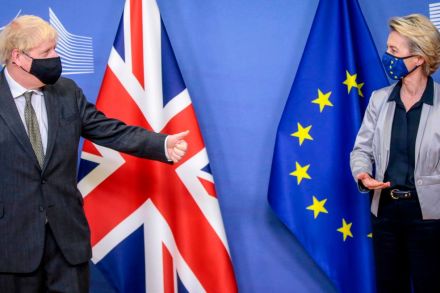
This is a crucial year for the UK’s two most important relationships, I say in the magazine this week. If the Johnson/Biden diplomatic relationship has got off to a better start than expected, the same cannot be said of the post-Brexit UK/EU one. The alignment between Johnson and Biden on climate change, Russia and China is helping the alliance. This relationship should become closer still given the two side’s agreement on China, the most important geo-political issue of the decade. The EU will attempt, often in not particularly edifying ways, to assert itself as the bigger partner. Earlier this month, Kurt Campbell — who will hold the pen on Asia

The vaccine row shows the EU doesn't understand contract law

The EU rejects ‘the logic of first-come first-serve,’ said the EU’s health commissioner Stella Kyriakides. ‘That may work at the neighbourhood butcher’s but not in contracts, and not in our advanced purchase agreements’. Contract law is an area of law I know well. And it is not a political comment to say the commissioner is wrong. We don’t know precisely what the contract between AstraZeneca and EU member states says. But the EU did publish another vaccine supply contract here. All this makes it very difficult to see what case the EU has In any would-be-case involving this contract, the EU has two massive hurdles to jump. Firstly, contractors undertake to

Britain will prove more Biden-friendly than the EU

This is a crucial year for the UK’s two most important relationships. The Anglo-American alliance, our strongest diplomatic and security partnership, now needs to adjust to a new president in the White House. Meanwhile we are also starting our new relationship with the EU. The question is: can the two sides move on from the wrangling of the Brexit negotiation? To great relief in British diplomatic circles, the new US administration and the UK have got off to a good start. Joe Biden has shown that he is keen to move on from the Donald Trump era. Small as it may seem, the fact that Boris Johnson received the new

How the EU vaccine row could escalate

The EU is now insisting that AstraZeneca use vaccine produced at its UK site to make up for a shortfall in its supplies to the EU. This is likely to kick off a major row as the UK went to great trouble to ensure that it had first refusal on all the Oxford vaccine produced in the UK. Indeed, AstraZeneca’s willingness to accept that condition is a major reason why Oxford ended up partnering with them. It is not hard to see how this situation could escalate. The EU is already saying that companies should notify them before exporting vaccine out of the bloc, and the German government is going further, calling for

The EU is blaming everyone but itself for its vaccine debacle

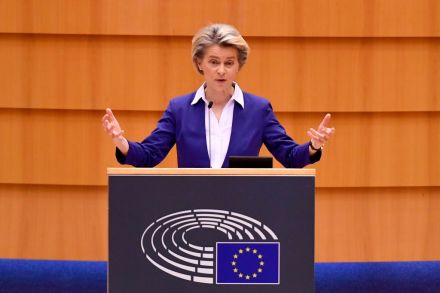
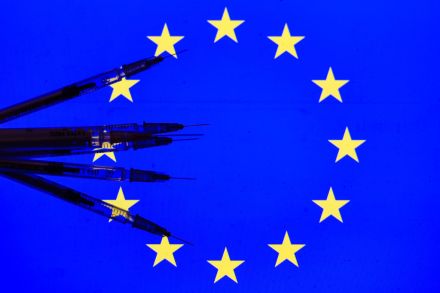
Something has gone badly wrong with the EU’s rollout of the Covid vaccine. Yet in its response to this debacle, Brussels seems determined to double down, engaging in behaviour of the pettiest kind as it blames everyone but itself for what has happened. ‘The companies must deliver’, Ursula von der Leyen, the EU commission’s president said this week, as she announced the launch of a ‘vaccine export transparency mechanism’. In reality, this plan to oblige companies to notify the commission when vaccines leave the EU (into Britain, for example) is an attempt to pile pressure on the pharmaceutical firms who have given us the only way out of the situation we find ourselves in.

Are we heading for a golden era in British-Indian relations?

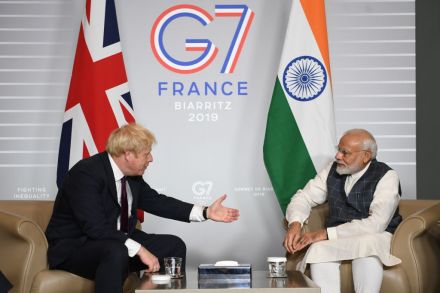
Britain’s departure from the EU presents an exciting opportunity to build on old alliances around the world. Nowhere is this more true than in the UK’s relationship with our old Indian friends.  India was preparing to roll out the red carpet for Boris Johnson this week. Being India’s annual guest of honour at their Republic Day celebrations is equivalent to the Buckingham Palace treatment or the Bastille Day invitation. Soldiers on double-humped camels, anti-satellite weapon systems on display and giant papier-mâché tableaux tributes to Mahatma Gandhi parade down New Delhi’s ceremonial boulevard that was once lined by statues of Britain’s kings and viceroys. Boris is only the second UK Prime Minister since