Brexit

Brexit is the new low point of British democracy

From our UK edition

As faith wanes in democracy, arguments against it have more power than arguments for the status quo. People still quote Churchill’s line about democracy being the worst system of government apart from all the others as if it settles the matter. For what it is worth, I think it is true. But as memories of the cataclysms of the 20th century fade, it sounds exhausted. ‘Our system is better than the Nazis’ has lost its purchase. Soon we will be living in a world where no one alive can remember the Nazis in power. The law of diminishing returns applies equally to the argument that at least our system is better than communism or Western imperialism. Maybe democracy is like peace: the longer a society lives with it, the more likely it becomes to disparage it.
Will Labour practise what they preach on commercial confidentiality?

From our UK edition

Today MPs are working themselves into a bother over the government's Brexit impact reports. Although David Davis has handed them to the Brexit select committee – as ordered by the Speaker – MPs have been left disappointed given that the document in question is rather sparse on details as it does not include anything the government has deemed market sensitive or damaging to the UK’s negotiations with the EU27. With Keir Starmer to ask an Urgent Question on the issue, Labour is expected to criticise the government for keeping out relevant information. However, Mr S suspects the Labour party ought to tread with caution before going on the offensive.

No, the Kremlin is not behind Legatum – or Brexit

From our UK edition

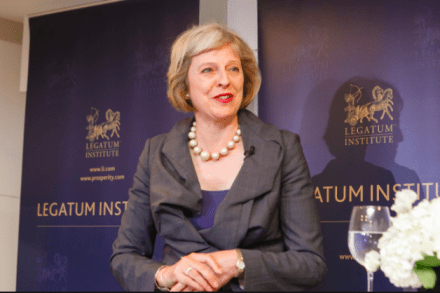
Given that most think tanks and universities are heavily against Brexit, the recent arrival of the Legatum Institute into the arena of trade policy mattered. It was filling a a gap in the market: proper research into potential trade relationships, on the basis that Brexit might not be a disaster. It has also acquired the services of Shanker Singham, an experienced trade lawyer. Both he and Legatum have come under the microscope today with a Mail on Sunday splash suggesting that the Kremlin might be behind it all. Its headline: ‘Putin link to Boris and Gove Brexit “coup”’. Did this relationship go too far, and did Singham end up advising Michael Gove and Boris Johnson on a private (now leaked) memo to the PM?

Sunday shows round-up: Borrowing and Brexit

From our UK edition

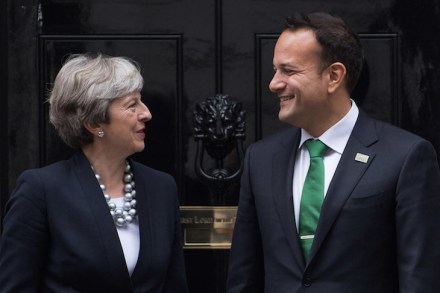
Liam Fox: EU trade deal must be settled before Irish border The International Trade Secretary has stated today that no final decision can be reached on the border between Ireland and the UK until a trade deal is settled, defying an EU ultimatum that the border question must be settled within the next ten days. The Irish Taoiseach, Leo Varadkar, has requested that the UK government gives a guarantee in writing that there would be no ‘hard’ border as a result of Brexit. Speaking to Sky's Niall Paterson, Liam Fox asserted that the UK would be leaving the single market and customs union, but argued that this did not necessarily mean the appearance of a hard border between Northern Ireland and the Republic: https://twitter.

Theresa May’s inner Cabinet is considering a role for the ECJ after Brexit

From our UK edition

‘It’ll be curtains for the process’ if the Brexit talks don’t move on to trade and transition in December, according to one of those familiar with the UK government’s negotiating strategy. In Downing Street, there is a feeling that Theresa May has twice made significant compromises—in the Florence speech and the enhanced financial offer the inner Cabinet agreed on Monday—and if the EU again pockets the concession and says still more is needed, it’ll be hard to see how the UK can stay at the table. Even one of the Cabinet Ministers most keen on a deal with the EU says that ‘we have to get through in December’.

Ireland has punctured Brexiteers’ wishful thinking

From our UK edition

In his column this week, James Forsyth reports there is ‘mounting anger’ inside the government at the way the Irish government are behaving over Brexit. I am sure there is, though it still surprises me that people are surprised to discover that the Irish government is defending its own interests. Doubtless this is why you will sometimes find exuberant Brexiteers suggesting that the answer to the Irish problem is for the Irish to leave the EU too. That might work in theory; it doesn’t do so in practice. I’m afraid things are a little more complicated than that. Now it is, of course, tiresome that Brexit is being complicated by the Hibernians. But none of this was unforeseeable and none of it should be a surprise.

After Brexit, Britain will still have European cities. Can someone tell the EU?

From our UK edition

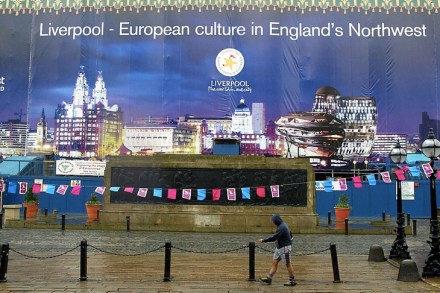
When Britain voted to leave the EU, it didn’t necessarily follow that we’d be kicked out of its European Capital of Culture scheme – given that it aimed to be exactly that, rather than an EU Capital of Culture. After all Istanbul, Reykjavík and Stavanger all qualified and all won. There were some ominous signs: a few weeks ago, the European Parliament voted to amend the rules the scheme should be open to candidate states and EEA nations - butno mention was made of former members. So Iceland would be included in consideration for European status, but Britain excluded. It looked like a mean-hearted attempt to punish Britain for leaving, but could it really be so?

The Spectator Podcast: Merkel’s crack-up

From our UK edition

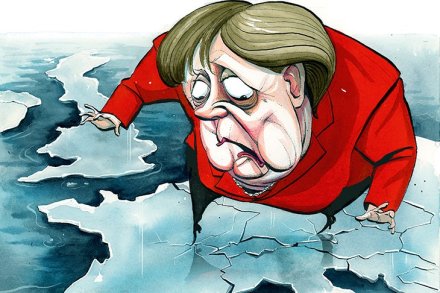
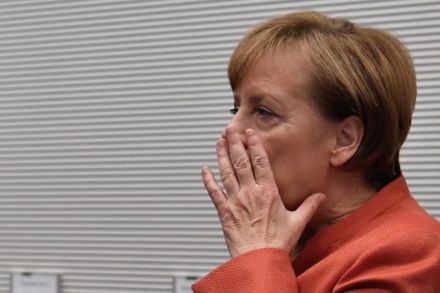
On this week’s episode, we look at the situation in Germany, and whether Angela Merkel can hold things together. We also speak to Norway’s immigration minister, and discuss the dying art of cottaging. After 12 years as Germany’s chancellor, Angela Merkel is this week facing the worst crisis of her premiership. Coalition talks collapsed after the Free Democrats walked away from negotiations with Merkel’s Christian Democrats. So where does this leave Germany? In the magazine this week, William Cook calls the situation ‘uniquely damaging’, whilst James Forsyth outlines the implications for Brexit. James joined the podcast, along with Thomas Kielinger, London correspondent for Die Welt.

Legal challenge

From our UK edition

Last week the Daily Telegraph’s front page showed the 15 Tory MPs who had voted against the government under the headline ‘The Brexit Mutineers’. One of the first things pointed out was that two thirds of the group were lawyers. (In fact, only nine of the 15 are barristers or solicitors; a tenth is the son of a High Court judge, but in the hereditary meritocracy in which we live, that counts as the same thing.) This seemed to be taken as a point in their favour — who wouldn’t want our politicians to be sensible lawyers? Certainly, it contrasted with the disdain shown for journalist-politicians, like Michael Gove or Boris Johnson. Would we really rather our MPs were lawyers than hacks?

The Irish gamble

From our UK edition

Never has a European Council been so important to a British prime minister as this December’s is to Theresa May. In No. 10 there has long been a belief that if she can get ‘sufficient progress’ in the Brexit talks to move on to trade and the transition, it will provide her with a political adrenalin shot. This is why a reshuffle has been pencilled in for afterwards. But if she fails to achieve her aim at the December council, her premiership will be further destabilised. The trouble is that when it comes to Brexit, the Prime Minister tends to postpone talking to her cabinet until as late as possible. It was only this week that the cabinet’s new Brexit strategy committee discussed how much the UK was prepared to offer to move things on.

The very simple reason why Hammond’s housebuilding target is pie in the sky

From our UK edition

The Chancellor sounded purposeful when he declared that he’ll do ‘whatever it takes’ to boost the rate of housebuilding — including pushing developers and councils to use up land banks and act on existing planning permissions — with a view to hitting a politically symbolic target of 300,000 units per year. But I wonder whether the post-Budget small print will reveal any sort of plan to overcome the most basic obstacle to achieving this objective, which is a critical shortage of bricks? When housebuilding went into sharp decline after the 2008 crisis, many British brick factories closed down. To build even half of Philip Hammond’s target, the industry needs more than 2.

Jeremy Corbyn says the B word during PMQs

From our UK edition

Jeremy Corbyn rarely talks about Brexit at Prime Minister’s Questions, and it is interesting that he chose today’s session, which will get little attention as a result of the Budget, to probe Theresa May on the matter. The Labour leader did have a good stint, quoting a number of European negotiators, Tory backbenchers and Cabinet Ministers who have made comments to the effect that the British government doesn’t know what it is doing on Brexit. He also accused the Tories of blocking measures protecting workers’ rights and acknowledging that animals are sentient beings. But Theresa May was on good form, too, continuing to appear as though she is regaining her confidence somewhat.

Stop Funding Hate has a simple aim: political censorship

From our UK edition

Here’s a law of politics that is about as cast-iron as a law of politics can be: people who hate tabloid newspapers are snobs. Every time. Scratch a Daily Mail basher or those people who seethe daily about the Sun and you will find someone who’s really just scared of the throng and of what all this tabloid fare is doing to their brains.

What the papers say: Hammond must beware the danger of playing it safe

From our UK edition

Philip Hammond’s second Budget of the year will mean that the Chancellor has another 'bite at a not especially flavoursome cherry’, says the Daily Telegraph. The last time, his announcements ‘misfired’; since then Hammond's ‘room for manoeuvre’ has become even more limited. This means that many in the Tory ranks are not filled with ‘great expectations’ about what Hammond might say and instead, says the Telegraph, they ’are just anxious to see Mr Hammond through the day without mishap’. But playing it safe won't be enough for the Tories, according to the paper, which argues in its editorial that it doing so would ‘throw away the opportunity’ for the government to ‘take the initiative’.

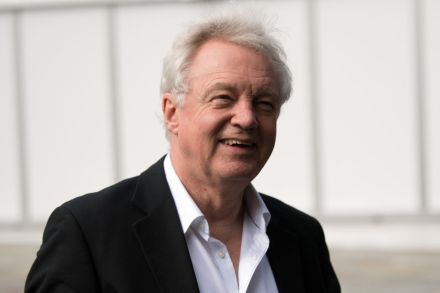
Watch: David Davis crashes out

From our UK edition

David Davis has just given a speech on the Brexit transition period – intended to prevent Britain from crashing out of the EU in a disorderly manner. But at the end of his address, it seems that he was personally advocating a different type of transition. As Davis said his goodbyes, he took a tumble. Mr S hopes it's not a sign of things to come...

What the papers say: The EU is in the grip of chaos

From our UK edition

Donald Tusk’s jibe that Britain was no longer attempting to have its cake and eat it in Brexit talks was a clear dig at the Foreign Secretary. But now the EU is guilty of adopting the same approach, according to the Sun. Michel Barnier said yesterday that ‘he wants all his demands met’ on various issues, and also ‘wants a monstrous exit bung from Britain’. Theresa May has reportedly received the backing of her Cabinet to up this payment to £40bn. Yet this ‘won’t nearly suffice’ for the EU, says the Sun. And even if Brussels does agree, what will we get in return?

What fresh German elections would mean for Brexit and Europe

From our UK edition

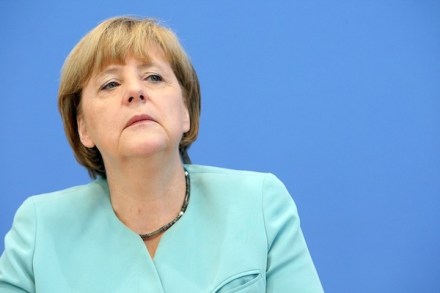
Angela Merkel’s declaration that new elections would be better than a minority government suggests Germany will be heading back to the polls soon. Though, it should be noted that the decision on whether to call fresh election is technically the German president’s, not Merkel’s. The so-called Jamaica coalition, bringing together Merkel’s CDU, the CSU, the Greens and the economically liberal Free Democrats, can’t be made to work as the collapse of the talks last night showed. The other alternative that would produce a majority government, another grand coalition between the CDU and the SPD, remains highly unlikely. The current consensus in the SPD is that the party needs a spell in opposition to recover; in September, it garnered only 20.

For real political chaos, take a look at Germany

From our UK edition

The female leader of a prominent European country fails to win a majority in an election and then struggles to form a coalition. Meanwhile, her government limps from crisis to crisis and finally negotiations break down, leading to another general election just weeks later. Not Theresa May, obviously, because she had little difficulty in forming a workable coalition with the DUP. But it is the situation in Germany where today Angela Merkel said that she has given up on trying to create a workable government with the Free Democratic Party, the Christian Social Union and the Greens. There will now almost inevitably have to be another general election, with Angela Merkel – rather than Theresa May – likely to be out on her ear by Christmas.

Michel Barnier’s Brexit trade deal warning

From our UK edition

The furore over the Brexit divorce bill has been such that it is easy to forget that it isn't the only major sticking point in talks with the EU. Theresa May looks set to up Britain’s offer this week (from €20bn to around €40bn), in the hope that more cash on the table will unlock the next stage of negotiations. But Michel Barnier’s speech today should serve as a warning to the British government: things won’t necessarily get easier when the Brexit divorce bill is sorted. In fact, Barnier makes it clear that talks could get even more difficult. The EU’s chief negotiator hinted that Britain would still miss out on a trade deal if it doesn’t agree to tie itself down to a ‘European model’ after Brexit.