Brexit

A price worth paying

From our UK edition

There will be howls of outrage in some quarters if it is confirmed that the government has offered the EU a ‘divorce’ bill of up to £50 billion (over several years). Some on the leave side of the debate insist that the bill should be zero. They ask: does the EU not owe us some money for our share of all the bridges we have helped build in Spain and railway lines in Poland? But it was never realistic to think we could leave the EU and maintain good relations with the bloc without paying a penny — even if a House of Lords report did seem to suggest that this would be legally possible. We are in the process of creating a new relationship with the EU, not ending it altogether.
My holiday hell with a gaggle of raging Remainiacs

From our UK edition

I’m writing this on the easyJet flight back from Marrakech, where I have just spent a long weekend as a house guest of Rachel Johnson. She had managed to secure a marvellous villa by the name of Ezzahra, about a 20-minute drive from the airport, complete with a pool, spa and paddle tennis court. There were 12 of us in all, five couples and two men travelling solo — Harry Mount, the editor of the Oldie, and Mark Palmer, the travel editor of the Daily Mail. Harry, Mark and I quickly discovered we were the only Leavers in a nest of die-hard Remainers. Now, it will not come as news to Spectator readers that the result of last year’s referendum has left some pro-Europeans feeling a teensy-weensy bit annoyed.

Portrait of the week | 30 November 2017

From our UK edition

Home The engagement was announced of Prince Henry of Wales, aged 33, and the Los Angeles-born Meghan Markle, an actress aged 36. They are to marry at St George’s Chapel, Windsor, in May. Ms Markle scotched rumours that she might be a Catholic, declaring herself a Protestant preparing to be baptised into the Church of England and receive Confirmation before the wedding. Though Ms Markle is divorced, she has been allowed to marry in a church service. The couple told the broadcaster Mishal Husain in a televised interview that they were attempting to cook a chicken one day last month when the prince went down on one knee to propose. During the interview, Prince Harry said: ‘The corgis took to you straight away.

Immigration figures show that ‘Brexodus’ is still a myth

From our UK edition

Government figures today show a sharp fall in net migration – 230,000 over the year to June, compared with 336,000 in the previous 12 months. If it keeps falling at that rate for another 18 months, Theresa May will have fulfilled David Cameron’s rash promise to reduce net migration to tens of thousands – if that, indeed, is an achievement worth trumpeting. For many it isn’t. The fall has reignited claims that the NHS, business and other employers are suffering a Brexit-induced drought of qualified staff, as EU workers desert ‘xenophobic’ Britain and are not replaced.

If you voted Remain, you’ll never ‘get’ Trump

From our UK edition

How do you defend Donald Trump without coming across like a rabid lunatic? This was my challenge as the only ‘out’ Trumpophile on a panel at the Dublin Festival of Politics last weekend. What made me especially trepidatious is that Ireland is even more painfully right-on than we are these days. It has ditched most of that Roman Catholicism and Cúchulainn and Yeats malarkey and become just another compliant satrapy of the ahistorical, cultureless, communitarian Brussels empire. Happily there are still one or two Irish who feel just as strongly as I do about what has been done to their wonderful country. There were about a dozen of them in the audience.

The Tories’ fate is in their hands

From our UK edition

How will the Tory party remember 2017? Will it be the year it lost its majority, alienated key sections of the electorate and paved the way for a Jeremy Corbyn premiership? Or the year when uncertainty about Britain’s future relationship with the European Union peaked, when debt finally began to fall and the Tory party resisted the temptation of a Corn Laws-style split? We won’t know for several years. What we can say with confidence is that Brexit will prove key to determining which view of 2017 wins out. On Monday, Theresa May heads to Brussels for a meeting with the European Commission. Over lunch, she will set out what Britain is prepared to offer on the financial settlement, EU citizens’ rights and the Irish border.

Crossing the line

From our UK edition

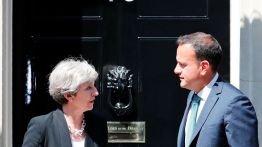
When I negotiated the Good Friday Agreement nearly 20 years ago, no one foresaw a day when the -United Kingdom would be leaving the European Union. It was impossible to imagine how the issue of the border between Northern Ireland and the Irish Republic, from which the barriers were removed as part of the agreement, would again become an issue of such political importance. We have the Taoiseach, Leo Varadkar, threatening to veto the Brexit negotiations unless Theresa May gives a formal written guarantee that there will be no hard -border, and we keep hearing the argument that a departure of the UK from the single market and the customs union would put at risk the peace process and Good Friday Agreement.

This EU ‘divorce bill’ is more like a ransom

From our UK edition

A  ‘bill’ is not commonly subject to negotiation. It arrives after a customer has contracted for the purchase of goods or services, whose price — with the unique exception of American health care bills, which are more like muggings by gangs on mopeds — has been established in advance. For the average upstanding Briton, a bill is not a starting point, subject to haggling. It is something you pay. The Lisbon Treaty’s Article 50 makes no mention of paying financial liabilities in order to leave the EU. Once the post--referendum conversation turned immediately to the ‘divorce bill’, the May government’s big mistake from the off was bickering about its size. A better opening strategy would run not ‘How much?

This EU ‘divorce bill’ is more like a ransom | 29 November 2017

From our UK edition

A ‘bill’ is not commonly subject to negotiation. It arrives after a customer has contracted for the purchase of goods or services, whose price — with the unique exception of American health care bills, which are more like muggings by gangs on mopeds — has been established in advance. For the average upstanding Briton, a bill is not a starting point, subject to haggling. It is something you pay. The Lisbon Treaty’s Article 50 makes no mention of paying financial liabilities in order to leave the EU. Once the post-­referendum conversation turned immediately to the ‘divorce bill’, the May government’s big mistake from the off was bickering about its size. A better opening strategy would run not ‘How much?

The Brexit divorce bill is ghastly but we can still make it work to our advantage

From our UK edition

There is much outrage, among both Leave and Remain voters, at the size of the ‘divorce bill’ ministers have reportedly agreed to pay the EU. Figures of €60-65bn (£53-58bn) – more than one and a half times’ the UK’s annual defence budget – are being presented as fact. I share much of this outrage. The sheer range of numbers floated – not least the notorious €100bn figure reportedly demanded by Brussels – show that the cash-strapped EU is simply chancing its arm. The amount the UK will pay clearly has little to do with our provable liabilities. It is all about how much Brussels thinks it can extract. The strict legal position is that the UK owes zilch.

Here’s what we should get from Brussels for our £40 billion

From our UK edition

A high speed rail line from Manchester to Glasgow. Three of the shiny new Elizabeth lines crossing London. Thirty or forty hospitals, almost sixty Manchester City squads, and perhaps a dozen Bitcoins (although it might be only eleven by the time you are reading this). There is still a lot you can get for 40 to 50 billion euros. In the Brexit negotiations, the UK now seems to have increased its offer to the European Union to that range. If that is indeed the final settlement, we can expect to hear lots about all the other things we could have done with the money. Remainers will gloat over the cost, and furiously tweet pictures of that red bus, while Leavers will fume about how the cliff edge would have been better. And yet, there is a more important question.

David Trimble: the Taoiseach should stop trying to out-Sinn Fein Sinn Fein

From our UK edition

When I negotiated the Good Friday Agreement nearly 20 years ago, no one foresaw a day when the United Kingdom would be leaving the European Union. It was impossible to imagine how the issue of the border between Northern Ireland and the Irish Republic, from which the barriers were removed as part of the agreement, would again become an issue of such political importance. We have the Taoiseach, Leo Varadkar, threatening to veto the Brexit negotiations unless Theresa May gives a formal written guarantee that there will be no hard border, and we keep hearing the argument that a departure of the UK from the single market and the customs union would put at risk the peace process and Good Friday Agreement. In other words, if the border gates go back up again we will be back into the Troubles.

Labour’s Brexit strategy remains as confused as ever

From our UK edition

All eyes this morning are on Britain’s Brexit divorce bill, but meanwhile Labour’s Brexit strategy remains as confused as ever. Diane Abbott is the latest figure from the party’s frontbench to hint at the possibility of a second referendum, despite this being ruled out by Jeremy Corbyn in the run-up to June’s snap election. In a letter to two constituents this month, the shadow home secretary wrote: ‘I will argue for the right of the electorate to vote on any deal that is finally agreed.’ Abbott is now suggesting those remarks were ‘poorly worded’. This seems hard to believe; indeed, that sentence couldn’t have been much clearer: voters should get another say.

Even at £50 billion, the ‘divorce’ bill from the EU is a price well worth paying

From our UK edition

There will be howls of outrage in some quarters if it is confirmed that the government has offered the EU a ‘divorce’ bill of £50 billion or so. Some on the leave side of the debate have insisted that the bill should be zero. They ask: does the EU not owe us some money for our share of all the bridges we have helped build in Spain and railway lines in Poland. But it was never realistic to think that we could leave the EU and maintain good relations with the bloc without paying a penny – even if a House of Lords report did seem to suggest that that would be legally possible. We are in the process of  creating a new relationship with the EU, not ending it altogether.

Ireland’s domestic problems are overshadowed by Brexit

From our UK edition

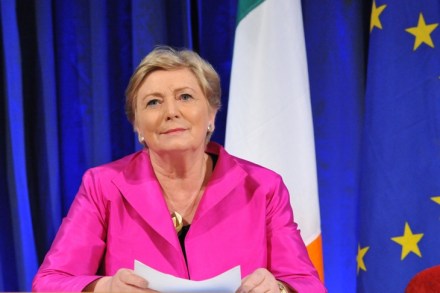
The Irish government has just survived a precarious wobble which would have plunged Britain and Ireland into further chaos over a future Northern Ireland border. Until the resignation of Tánaiste (deputy prime minister) Frances Fitzgerald earlier today, there was a clear and present danger of Leo Varadkar’s minority administration falling apart – all because of a police corruption imbroglio nobody in mainstream Irish politics seems prepared to grasp with both hands. Hours ahead of a no-confidence motion Varadkar looked certain to lose, Fitzgerald declared she would be stepping aside 'in the national interest'.

Brexit means… a £40bn divorce bill

From our UK edition

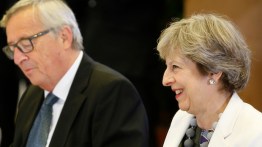
Ahead of the crunch EU council meeting next month, the government is doing everything it can to try and ensure the UK is given the green light from Brussels to move the negotiations on to trade. As part of this, talk has been rife that Theresa May is ready to considerably up her financial offer for the so-called Brexit bill. This afternoon, Peter Foster, the Telegraph's Europe Editor, reports that British and EU negotiators have reached a deal over the bill in good time for Theresa May's lunch with Jean-Claude Juncker on Monday. British and EU negotiators have reportedly agreed that the final figure, deliberately left vague, will be somewhere between €45bn and €55bn.

Ministers have created their own mess in the Brexit impact assessments row

From our UK edition

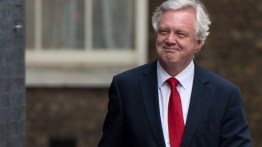
Nobody said Brexit was going to be easy, did they? It turns out that even talking about how difficult Brexit is going to be is pretty tricky, and the person feeling that most keenly is David Davis. Today the Brexit Secretary came under fire from all parts of the House of Commons for the heavy editing of some impact assessments on Brexit which it wasn’t entirely clear had ever actually been written in a form long enough for them to be edited down. Last year, Davis told MPs that ‘we’ve carried out or are in the midst of carrying out about 57, I think, sectoral analyses, each of which has implications for individual parts of 85 per cent of the economy, and some of those are still to be concluded.

The government’s deeply cunning Brexit plan comes unstuck

From our UK edition

So, Frances Fitzgerald, the Tánaiste, has resigned. It now looks as though Leo Varadkar’s minority Irish government will not face a vote of no-confidence that it would likely have lost and, consequently, there will be no Irish election before Christmas. That’s a matter of considerable relief in Dublin but also in London.  Irish political scandals are often esoteric but this, frankly, was no time for an election and that recognition, above all else, compelled Fitzgerald’s departure. In other circumstances she – and Fine Gael – might have fought this to the final furlong. But these are not ordinary times in Dublin.