Boris johnson

Is Boris Johnson losing the south?

From our UK edition

The great Tory success in 2019 was winning a host of new seats while keeping hold of their traditional southern heartlands, including many seats that had voted Remain. But the local election results will increase concern among Tory MPs that these seats are becoming vulnerable. The Tories have in the last couple of hours lost control of Maidenhead, Huntingdonshire, and Wokingham. Talk to Tories in these types of places and they cite a variety of reasons for their difficulties. Some say that these voters don’t like levelling up – they suspect it is code for taxing them more so that more can be spent in the Tories’ new northern seats. Then, there is a more general complaint that No. 10 pays more attention to the newest parts of the Tory coalition.
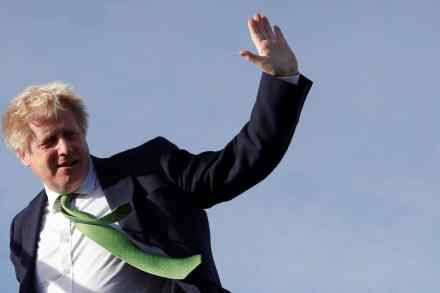
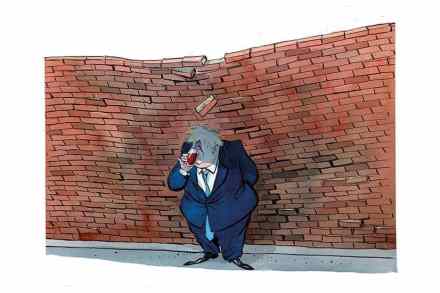
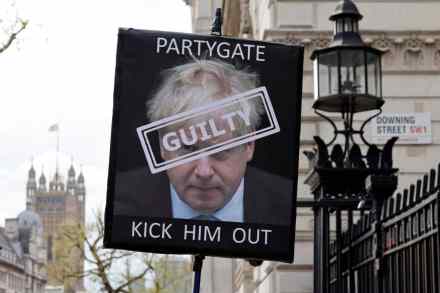
Local elections: Boris Johnson faces his first post-partygate test

From our UK edition

The polls have now closed in this year’s local and devolved elections. The parties – and their leaders – face a nervous wait for the results. For Boris Johnson, this is the first electoral test since he was fined by the police for breaking his own Covid rules. Tory MPs will be watching nervously to see how much damage has been done. Tory MPs will be watching nervously to see how much damage has been done CCHQ have done a canny job of expectation management, suggesting that the loss of 800 seats – which would be a truly diabolical night for the party – should be seen as par. But there is real Tory nervousness about how bad results might be in the south. I suspect that Tory MPs in Lib Dem facing seats will be more nervous once these results are in.

All talk and no trousers: is Oxford really to blame for Brexit?

From our UK edition

Attacks on British elitism usually talk about Oxbridge, but Simon Kuper argues that it is specifically Oxford that is the problem, which has provided 11 (out of 15) prime ministers since the war. So what’s the explanation? Kuper thinks it’s all the fault of the Oxford Union, which fosters chaps who are clever at debating without particularly caring which side they are on. As a result, they acquire enough rhetorical skills to enable them to beat opponents who rely on thoughtful, fact-based arguments. Such arguments are ‘boring’, and being boring in the Oxford Union is the worst crime you can commit. This wouldn’t matter if it were confined to undergraduates but, Kuper argues, the Union is often the rehearsal for, and gateway to, a Westminster career.

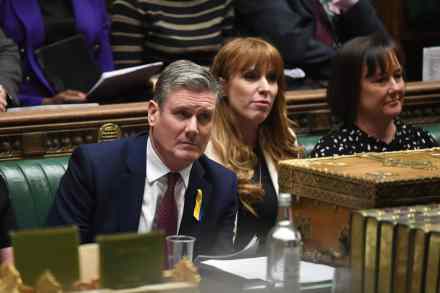
The quiet dignity of Angela Rayner

From our UK edition

In those gentle days before internet pornography there was a book you could buy which listed the precise moment in each Hollywood film when the sex scene began, or when the leading lady – very often Greta Scacchi – got her kit off, thus enabling one to buy the video, or rent it from Blockbuster, and fast-forward to the, uh, important bit. Apparently the most requested fast-forward was of Sharon Stone in Paul Verhoeven’s Basic Instinct: a film as dumb as pretty much everything else the Dutchman has committed to celluloid, even if his reputation has lately been rehabilitated (for reasons I do not understand).

What’s going on with the Met and partygate?

From our UK edition

I don't understand the logic behind how the Met Police is conducting its probe into unlawful parties at Downing Street and the Cabinet Office. My confusion reached brain-aching proportions after my ITV colleague Anushka Asthana disclosed on Friday that officials had received fixed penalty notices – fines – for attending perhaps the most famous of all the Downing Street events, the Bring Your Own Booze garden party on 20 May 2020, revealed by an email leaked to ITV News. The point is that I know of at least two relatively junior officials who have been informed by the police that they've been fined. So there is no longer any doubt this was a law-breaking party.

Why the Tories can’t replace Boris with a Remainer

From our UK edition

Readers of a certain vintage will remember the 1980s heyday of the light entertainment show Blind Date. A series of well-scrubbed young men and women would compete to be taken out by a potential paramour who was hidden on the other side of a screen. They would begin their moment in the spotlight with a tightly-scripted introduction in which they would offer their name and where they were from. The mass television audience, who had the advantage of being able to see each contestant, would very often form an instant impression based on these few seconds of exposure and its own prejudices. I have often thought this merciless formula is not a bad approximation for the challenge a new political leader faces when seeking to make an impression beyond the party faithful.

Why does India get a free pass for supporting Russia?

From our UK edition

When Russia invaded Ukraine the Indian government rapidly launched ‘Operation Ganga’. This was not a military operation, nor did it aim to supply Ukraine with weapons – it was an operation to extract the 500 Indian students stranded in Ukraine. After Prime Minister Narendra’s Modi’s video call with Putin, the Russian president ordered his invading army ‘to ensure the safe exit of Indian nationals from the armed conflict zone.’ The Indian government quickly dispatched civil servants, not weapons, to Poland, Hungary and Romania to assist their fleeing citizens. Since February more than 22,000 have been repatriated. Otherwise, Modi’s attitude to Ukraine has been decidedly non-committal.

Boris’s grumpy grilling

From our UK edition

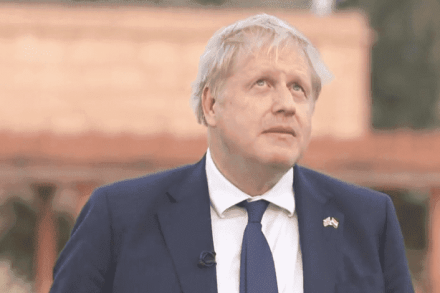
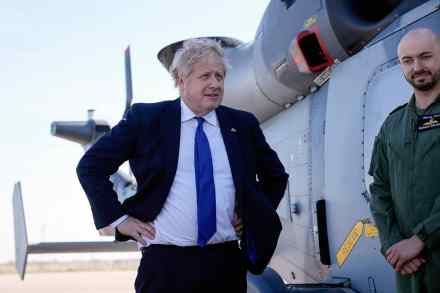
Boris Johnson's India trip hasn't got off to the best of starts. Seeking to escape domestic woes, the Prime Minister jetted off to the subcontinent yesterday, only to face a fresh row about the Commons U-turn on the parliamentary investigation into Partygate. And Johnson's irritation at the prospect of yet another inquiry was palpable in an interview he gave to Sky's Beth Rigby earlier today. Throughout the ten-minute long grilling, the PM sighed exaggeratedly, rolled his eyes, looked at his watch and barely concealed his disdain at his interrogator's questions. He asked Rigby 'how many' times she would ask him about Covid parties, claiming that: 'You promised to get on, you did promise to get onto the substance of this trip?

Portrait of the week: Boris packs his bags, XR blocks bridges and Netflix viewers switch off

From our UK edition

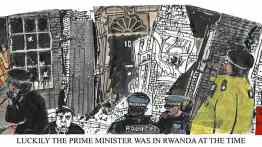
Home Boris Johnson, the Prime Minister, told the House of Commons that it did not occur to him that the gathering in the Cabinet Room on his birthday (for which he had been issued a fixed-penalty notice) could amount to a breach of the rules on coronavirus. ‘That was my mistake and I apologise for it unreservedly,’ he said. He packed his bags for a visit to India to coincide with a Commons debate on whether he had misled parliament. Priti Patel issued a ministerial direction (the second in the Home Office in 30 years) to implement a scheme whereby people deemed to have entered Britain unlawfully since 1 January could be flown to Rwanda, where they would be allowed to apply for the right to settle there. More than 6,000 people had crossed the Channel in small craft in 2022.

Boris gets airbrushed in his backyard

From our UK edition

Boris Johnson was always dubbed the 'Heineken Tory' – the man who could always reach parts of the country which other Conservatives couldn't. But now it seems that appeal hasn't extended as far as, er, his own backyard ahead of next month's local elections. For Hillingdon Tories appear to have removed any trace of the Uxbridge and South Ruislip MP from their election literature, following his recent woes over Partygate and the cost of living crisis. Local elections are of course a matter for local candidates but political parties haven't hesitated to put their leaders onto past leaflets when they think they're onto a winner.

The missing mandarins: why won’t civil servants go back to work?

From our UK edition

‘Mother nature,’ says Boris Johnson, ‘does not like working from home.’ The Prime Minister wants workers to return to offices so they can have the ‘stimulus of exchange and competition’. His ministers are just as evangelical. Kwasi Kwarteng, the Business Secretary, says he favours ‘being able to interact directly’ with colleagues and Rishi Sunak has spoken about how young people need the office space to learn. The nation’s employers should, they say, get their staff back to their desks. Yet nine months since the end of lockdown and tumbleweed is still blowing through the corridors of power.

PMQs: Starmer’s attacks are working

From our UK edition

Prime Minister's Questions took a rather bizarre twist this afternoon when the Labour leader ended up demanding Boris Johnson apologise to the Archbishop of Canterbury. The Prime Minister reportedly complained to Tory MPs last night about Justin Welby's criticism of the government's Rwanda asylum policy. Sources at the meeting said Johnson had claimed Welby was ‘less vociferous’ about Vladimir Putin than he had about this policy – something the Church of England has already condemned as a 'disgraceful slur'. Johnson did not apologise, instead saying:  I was slightly taken aback for the government to be criticised over the policy that we have devised to end the deaths at sea in the Channel as a result of cruel criminal gangs.

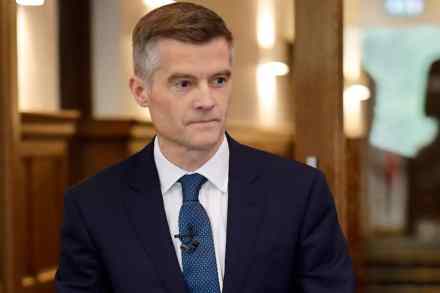
Mark Harper is an honourable politician

From our UK edition

This is a short story about Mark Harper MP, who is making headlines. These days Harper is probably best known as a backbench critic of Covid restrictions, but he once had a promising career as a minister, including a spell in David Cameron’s cabinet between 2015 to 2016. But that career hit a bump in early 2014 when he quit his post as immigration minister. I was running the Telegraph’s political team at the time. Many ministerial resignations are unmemorable, but Harper’s sticks in the memory. He quit because he learned that a cleaner he paid to look after his London flat did not have legal permission to live and work in the UK.

What did Boris tell his MPs about partygate?

From our UK edition

After Boris Johnson faced a hostile response in the chamber from opposition MPs over his partygate fine, on Tuesday evening the Prime Minister addressed his own MPs in a meeting organised by the government whips. Ahead of the meeting, Johnson had been dealt a blow when former chief whip Mark Harper said he no longer had confidence in his ability to lead the government. Johnson’s meeting was notable for what it missed: no mention of partygate. ‘It was more like an election rally speech,’ says an attendee. The Prime Minister embarked on a call and command as he asked MPs who they would trust more with the economy – Rishi Sunak or Rachel Reeves – and who would best control the borders – Priti Patel or Yvette Cooper.

Russia bans Nadine Dorries

From our UK edition

Since her appointment as Culture Secretary in September, Nadine Dorries hasn't been shy about making the odd enemy or two. Whether it's the BBC, Channel 4, Facebook or Ofcom, the former nurse has shown no compunction in dishing out the harsh medicine during her seven months in office. And now it seems the Bedfordshire MP can add another name to her growing list of foes: Vladimir Putin's kleptocratic Russian regime. For Dorries is one of the more surprising additions on a list of 13 British politicians who have today been banned by Moscow over the UK's 'hostile' stance on the war in Ukraine.

Boris isn’t safe yet

From our UK edition

It is worth thinking back to late January when Boris Johnson’s premiership seemed in the greatest danger. As I say in the Times today, back then those Tories trying to remove Johnson were split into two camps. One group thought that they should go hell for leather to get the letters to force a no-confidence ballot. They worried that if they waited, Johnson might escape a police fine. He could then use that as a shield against the criticisms that the Gray report would contain. The other faction, which contained several former cabinet ministers, argued that the danger in going early was that Johnson could survive the no-confidence ballot. Better, they argued, to wait for the police to fine him and then move at a point when they could be sure he would lose.

The problem with Boris’s Rwanda solution

From our UK edition

Is the Prime Minister’s plan to divert some asylum seekers to Rwanda racist? Is it inhumane? Is it a dead cat to distract from his fixed-penalty notice for breaching Covid rules? These are the questions fixating the political-media-activist class today and while they are not necessarily unimportant, they neglect a question that might be of more immediate concern to the average voter concerned about border integrity and abuse of the asylum system. Namely, will the Prime Minister’s plan work? To answer this, we must acknowledge its provenance in Australia’s policy of offshore processing, detention and turn backs, introduced in 2001 as John Howard’s Pacific Solution and reintroduced by Tony Abbott in 2013 as Operation Sovereign Borders.

Partygate cuts through with voters

From our UK edition

The Tory task at the next election is enormous. No party in the democratic age has ever won a fifth consecutive term in office and bruising battles over Brexit and Covid mean the Conservatives will have a tough ask next time out. Boris Johnson's team still have two years left in office but inside No. 10 minds are already turning to the looming clash with the Starmer army. On what fertile ground can the forthcoming general election be fought and won by the Tories? Unfortunately for the bright young things of CCHQ, it looks like Labour's traditional weak spot on 'law and order' has now been nullified. There were hopes that Sir Keir's record as a QC – defending all kinds of unseemly sorts – might make him susceptible to jibes of being soft on crime or terror.

Portrait of the week: Boris in Kyiv, Rishi in hot water and crystal meth in a cereal packet

From our UK edition

Home Boris Johnson, the Prime Minister, travelled to Kyiv in secret and joined President Volodymyr Zelensky for the cameras in his office and in empty streets. He was given a pottery cock by local people. He said: ‘We are stepping up our own military and economic support.’ Mr Zelensky said: ‘It is time to impose a complete embargo on Russian energy resources.’ Britain would send 120 armoured vehicles, Starstreak anti-aircraft missiles, 800 anti-tank missiles and anti-ship missile systems. Supporters of Extinction Rebellion sat down in the road at Oxford Circus in London. The tyres of 100 SUVs were let down in Edinburgh by campaigners who left notes saying ‘Your gas-guzzler kills’.