James Joll

The man who was mistaken for a deer

From our UK edition

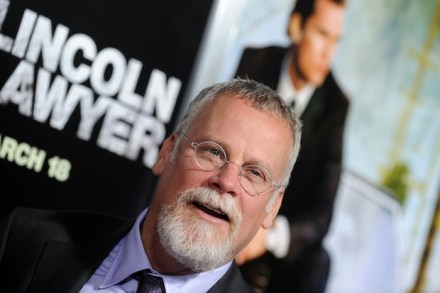
‘And anything by Michael Connelly’ were the final words of advice from one of my best friends in discussing books to read one summer. I’ve been hooked ever since by a master of narrative tension, complex but believable plotting and three-dimensional characters. Luckily Connelly is a prolific author of detective and investigative fiction with a number of protagonists who sometimes appear in each other’s books. His latest novel maintains the same high standard and relentless forward impetus that keeps one turning the pages. Hieronymous ‘Harry’ Bosch, a Vietnam veteran, has had a distinguished but somewhat bumpy career as a detective and is now deployed in the Open-Unsolved unit of the Los Angeles Police Department looking at old, cold murder cases.
He killed off Georgian style

From our UK edition

God’s Architect: Pugin and the Building of Romantic Britainby Rosemary Hill Pugin is not unknown in the way he was 50 years ago. Two major exhibitions in the 1990s, in New York and London, the formation of a flourishing Pugin Society and 3,000 people who one weekend last summer crowded in to see his highly original home in Ramsgate, lovingly restored by the Landmark Trust, attest to his growing popularity. However, he has hitherto lacked a considered full-length biography, despite the rumour of 1,000 pages going into Phoebe Stanton’s publisher’s office, from which they have yet to emerge.

Myth and minstrelsy

From our UK edition

Winston Churchill once famously declared, ‘this pudding has no theme’. Michael Alexander’s book, subtitled ‘The Middle Ages in Modern England’ — a period which in his view stretches from well before the Industrial Revolution virtually to contemporary culture — has far too many. His contention is that medievalism sprang from two main impulses: the rise of antiquarianism in the second half of the 18th century, studying the material evidence of the Middle Ages, on one hand, and the imaginative adoption of what were conceived to be the ideals of that era, on the other. As a word, it is surprisingly recent with the first recorded use in the Gentleman’s Magazine as late at 1827.