Book review

The Tudor sleuth who’s cracked the secret of suspense

From our UK edition

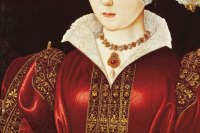
Some reviewers are slick and quick. Rapid readers, they remember everything, take no notes, quote at will. I’m the plodding sort, making more notes than I can ever use and underlining so many quotes that, if I put them all in, it would constitute a republication of the book. But I’ve not done this with Lamentation, the sixth novel in C.J. Sansom’s Tudor crime series featuring his credible and likeable hero, the lawyer Matthew Shardlake. I intended to proceed as normal, but so engrossing is the tale that I didn’t pause long enough to take a note. Even when judged by the high standards of the earlier Shardlake novels, this one stands out — not least because it successfully maintains suspense for over 600 pages, which is going it a bit.

Michael Frayn’s new book is the most highbrow TV sketch show ever

From our UK edition

Enough of big ideas and grand designs. Instead, here are 30 unusually small ideas from the giant pulsating brain of Michael Frayn. Matchbox Theatre is a collection of tiny playlets, all one-handers or two-handers, designed to be performed in the most intimate theatrical space of them all: your mind. In ‘Sleepers’, Sir Geoffrye de Frodsham and Lady Hilarye lie motionless in their tomb, and bicker throughout eternity. ‘Since when has he been doing choral Evensong in the crypt?’ ‘Since 1997.’ ‘I’ve never heard any choral Evensong in the crypt.’ ‘You were asleep.’ ‘You’re telling me I slept through that?’ ‘You slept through the second world war...

Terror plots, threats to liberties, banks in crisis: welcome to Britain during the Napoleonic Wars

From our UK edition

In our own troubled times it is useful and comforting to recollect that ’twas ever thus.  Violent threats against prominent politicians? Jenny Uglow reminds us that in 1802 Colonel Edward Despard, a British officer turned radical agitator, was the last person in England to be sentenced to be hanged, drawn and quartered, for a plot to kill King George III and the cabinet; while in 1812, the wildly unpopular hardline Tory Spencer Perceval became the only prime minister (so far) to be assassinated, the victim of John Bellingham, a deranged bankrupt. Threats to civil liberties?

Care for the dying needs more imagination – and less hospitalisation

From our UK edition

‘To die of age is a rare, singular and extra-ordinary death’, wrote Montaigne, ‘and so much less natural than others: it is the last and extremest form of dying.’ Not any more. Thanks to the marvels of modern medicine, we are limping and stumbling and mumbling and forgetting our way into the grave at greater ages than ever before. Since such longevity is still new, we’re not really prepared for it: we are dying beyond our means, outliving our usefulness, our pensions and even our individual body parts. Outliving, too, the patience of our families. In affluent countries like ours, the spectre of the care home holds more menace than death itself. Atul Gawande is a surgeon, as well as a professor at Harvard Medical School.

While Holmes is away

From our UK edition

Careful Sherlockians, on returning in adulthood to the four novels and 56 short stories that they devoured uncritically in their teens, tend to notice an endearing vagueness on the part of Sir Arthur Conan Doyle when it comes to details. There is Watson’s old war wound, for instance, which journeys absent mindedly between shoulder and leg. And there is Doyle’s inability to remember dates or even his own characters’ names. In ‘The Creeping Man’ the client, Trevor Bennett, is met by his fiancée with a gushing, ‘Oh, Jack, I have been so dreadfully frightened.’(Watson himself has form here. In ‘The Man With the Twisted Lip’ his wife calls him James and he does not find it odd, even though his name is John.

The man who was mistaken for a deer

From our UK edition

‘And anything by Michael Connelly’ were the final words of advice from one of my best friends in discussing books to read one summer. I’ve been hooked ever since by a master of narrative tension, complex but believable plotting and three-dimensional characters. Luckily Connelly is a prolific author of detective and investigative fiction with a number of protagonists who sometimes appear in each other’s books. His latest novel maintains the same high standard and relentless forward impetus that keeps one turning the pages. Hieronymous ‘Harry’ Bosch, a Vietnam veteran, has had a distinguished but somewhat bumpy career as a detective and is now deployed in the Open-Unsolved unit of the Los Angeles Police Department looking at old, cold murder cases.

Four ways to win Waterloo

From our UK edition

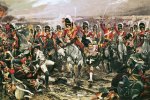
The Kaiser’s war deprived Britain of her centenary celebrations of the victory at Waterloo. It also set the propagandists something of a challenge, for the Kaiser himself had sent an aide-de-camp to the British embassy the day after the declaration of war deploring ‘the action of Great Britain in joining with other nations against her old allies at Waterloo’. A hundred years and all that had passed therein evidently counted for nothing to the imperial mind, though the emperor appeared to have forgotten that Belgian troops had also stood with the allies at Waterloo.

Jeff Koons’s latest achievement: a new standard in prolix, complacent, solipsistic, muddled drivel

From our UK edition

Jeff Koons is, by measures understood in Wall Street, the most successful living artist. But he’s a slick brand manager rather than a tormented creative soul. The Koons brand includes a stainless steel bust of Louis XIV, a red aluminium lobster and balloon dogs, plus countless knock-offs of novelty-store dross. It is tempting to think Koons a vulgarian and condemn his art as crapola, but to do so would be lazy. There’s no point in criticising him for his cynical exploitation of the credulous art market, since that is exactly his intention. Futile to damn him as vacuous; he’d be flattered. All artistic achievement can be assessed in terms of skill, talent and genius. Koons has very little technical skill: his work is made by production-line assistants.

Lolita’s secret revenge mission, and other daft theories of literary spite

From our UK edition

Richard Bradford has written more than 20 books of literary criticism and biography. This latest one is a compendium of writers’ feuds and resentments. Reading Literary Rivals is a curious experience; from the quotations and bare facts you can just about make out a version of reality, but it’s fighting so hard against the author’s interpretations that it’s sometimes obscured altogether. It feels as if Bradford has done his research with a baleful monocle pressed to his eye, giving a ghastly pallor to everything he reads. When Dickens read Thackeray’s review of his work, he wrote to thank him, but when Professor Bradford read the same review, he saw nothing but mockery and malice. Nabokov and his friend Edmund Wilson disagreed about communism.

Does Boris Johnson really expect us to think he’s Churchill?

From our UK edition

As you would expect, it’s impossible to read this book without drawing fairly direct comparisons between its author and its subject. In promotional exchanges, with the well-worn practice of self-deprecation, its author will of course insist that there is no comparison between the great man and the present humble supplicant.

Ezra Pound – the fascist years

From our UK edition

‘There are the Alps. What is there to say about them?/ They don’t make sense. Fatal glaciers, crags cranks climb, /Jumbled boulder and weed’, was Basil Bunting’s 1949 opinion of Pound’s Cantos; but as the sometime friend of Pound continued: ‘There they are, you will have to go a long way round / If you want to avoid them.’ This judgment has proved wise. Here we are in 2014, not avoiding one of the most contentious figures in 20th-century literature: poet, midwife of Eliot’s The Waste Land, economist, translator, committed Fascist, anti-Semite, avid supporter of James Joyce and Mussolini, later alleged traitor to the United States of America and — meaning he never had to stand trial for treason — patient of St Elizabeth’s psychiatric hospital, Washington DC.

When Irish nationalism meant sexual adventure

From our UK edition

One of the easiest mistakes to make about history is to assume that the past is like the recent past, only more so. It’s a natural human tendency to project the outcome of events backwards, ignoring the fact that the arc of history really doesn’t work like that. In the case of Ireland that tendency to see the past in terms of outcomes is particularly misleading. The state that came about less than a century ago as a result of the Easter Rising, the war of independence and partition was socially conservative and strongly Catholic. Roy Foster’s achievement is to show that this need not have been so. This book — the title is from W.B.

Why prefabs really were fab

From our UK edition

Sir Winston Churchill did not invent the prefab, but on 26 March 1944 he made an important broadcast promising to manufacture half a million of them to ease the new housing emergency caused by enemy bombs and the continued growth of inner-city slums. He went on to claim that these easy-to-assemble, factory-made bungalows would be ‘far superior to the ordinary cottage’. Readers of this richly illustrated, hard-hitting little book will find that Churchill was right. The new prefab — an early prototype immediately went on show at the Tate Gallery, of all places — did not meet the approval of George Bernard Shaw, who called it ‘Heartbreak House’ and that ‘Damn Tin Can’ — but seems to have been hugely enjoyed by most of those lucky enough to live in one.

Detective drama Dostoevsky-style

From our UK edition

In the world of Gaito Gazdanov, a Russian émigré soldier turned taxi driver who began writing fiction in the 1920s, doublings abound, though their meanings are rarely resolved. As with his great contemporary Nabokov, this hall-of-mirrors effect provides a pleasant means of exploring the fragmentary and illusory self. But it is Dostoevsky, and his novel The Double, that really loom larger here than Nabokov. Gazdanov shares Dostoevsky’s penetrating psychological insight, and is drawn to characters in the midst of a breakdown. While Gazdanov seems in thrall to these vastly different novelists, he has his own utterly distinctive voice.

A woman who wears her homes like garments

From our UK edition

Depending on your approach, home is where your heart is, where you hang your hat, or possibly where you hang yourself. Our homes reflect our characters, social milieux and finances, but we also reflect them. Leonard Woolf wrote that a house ‘has an immense influence on its inhabitants’, and contended that Monk’s House (where he lived with Virginia Woolf from 1919–1941) was ‘the most powerful moulder’ of how they had lived their lives. Taking a lead from this notion, Margaret Forster has produced a memoir focussing on the homes she has lived in throughout her 76 years. This is no history of the buildings or who came before, like Julie Myerson’s Home.

The Etonian peer who became an assistant to a Mexican commie

From our UK edition

The lefty hereditary peer has few equals as a figure of fun, in life or literature. The late Tony Benn comes inevitably to mind here, as does the Earl of Warminster — ‘Erry’ — in Anthony Powell’s A Dance to the Music of Time. As his name would suggest, Francis John Clarence Westenra Plantagenet ‘Jack’ Hastings, the 16th Earl of Huntingdon, emerged into the world bedecked with promisingly absurd trappings. And for a time it looked as if his life would follow a predictably conventional path. But then everything changed. After some routine torturing by his nanny — she branded him with an iron — he went to Eton.

The bonkers (and not-so-bonkers) theories of what the pre-historic people of Cornwall believed

From our UK edition

Philip Marsden’s book is about place. He makes a distinction between place and space. In his mind ‘place’ is something resonant, evoking a connection with the land and its meaning. Marsden is obsessed with pre-history and the beliefs and practices of the earliest inhabitants of Cornwall. He cites with approval someone’s judgment that written history is a palimpsest and he is demonstrably eager to see what was written over. Although his area of special interest is Cornwall, he describes expeditions to other European countries in search of a kind of kinship of belief and practice among them.

Tolstoy’s favourite novel is a guide to being idle

From our UK edition

Oblomov, first published in 1859, is the charming tale of a lazy but lovable aristocrat in 19th-century Russia. The novel’s eponymous hero cannot see the point of doing anything at all, and spends his time lying in bed or wandering around his St Petersburg flat in his beloved oriental dressing gown, bickering about the dusting with his manservant. The newspaper on the desk is a year old; flies buzz from the inkwell. Oblomov broods; he worries; he thinks. The book’s author, Ivan Goncharov, is perhaps little-known now, but in its time Oblomov was hugely popular in Russia. Tolstoy, that venerable, saintly moralist, was deeply in love with it, writing: ‘Oblomov is a truly great work, the likes of which one has not seen for a long, long time.