Book review

Tree devotion

From our UK edition

I have never written much about the one-acre shaw of native trees I planted in 1994, even though it is the delight of my heart, especially when the wild cherries flame in autumn. That’s because I am well aware that en masse tree-planting is a niche activity, open only to the fortunate few. But no one can have envied Thomas Pakenham when, in 1961, he unexpectedly inherited Tullynally Castle in County Westmeath in central Ireland, with its 1,500-acre ‘demesne’ — a third of it park and garden — since he was heavily burdened with death duties. It took nearly 30 years to pay off the debts, before he could begin to concentrate on the delight of his heart, which is planting, caring for and observing the ways of trees as well as travelling the world to look at them.

How cool is Britannia?

From our UK edition

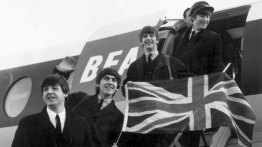
Is it true that, having lost an empire, we reinvented ourselves as an island of entertainers? Do we channel the same rigour and vigour into film and music and literature as once went into conquering continents? Is there a residual colonialist bias in our arts, seen, for instance, in our cinematic penchant for creating patriotic period dramas such as Henry V or The King’s Speech? How much of our cultural success depends on the US market and the accident of a shared language? To what extent does our cultural expression reflect not our idea of ourselves but an American distortion?

The voice of Crow

From our UK edition

A dead parent, the interrogation of a literary inheritance, and over everything, a bird: Max Porter is apparently unafraid to step into massive shoes. Not just the colossal ones belonging to Ted Hughes, whose ‘Crow’ poems are the jumping-off point for this free-verse novella about a bereaved Hughes scholar visited by Hughes’s corvine manifestation, but also those of Helen Macdonald. H is for Hawk, her memoir of loss, writing, recovery and nature, drawing ingeniously on the life and work of T.H. White, covered this territory with ferocious honesty and eloquence. The comparison is impossible to avoid, and not kind to Porter. That’s somewhat unfair, since Grief is the Thing with Feathers is fiction, and cannot compete with the rawness of real grief written down.

Complicated, but unfussy

From our UK edition

Amory Clay, photographer and photo-journalist, was born in 1908, only two years after Logan Mountstuart, writer, poseur and ‘scribivelard’. Amory died in 1983; Logan in 1991. Though shaped by the same era, their accounts of their lives are tonally worlds apart. Logan is flamboyant, self-regarding, lyrical, self-pitying; Amory plainer, braver, yet less self-revealing. Both, of course, are fictional, and both are protagonists woven by William Boyd into novels where they rub shoulders with historical characters. Amory, however, born into an era in which Vivians, Evelyns and Beverleys could be of either sex, is female. Boyd’s representation of a certain sort of female voice is pitch-perfect, chiefly because he is not trying too hard to signal Amory’s femininity.

Cry havoc

From our UK edition

If you love dogs and or live with one — I declare an interest on both counts — there is enough here about what the authors too often call ‘doggies’ to keep you interested. But what I liked about this book, despite its trickle of cute language, is that the title exactly tells the story. The dogs indeed went to war, and they were trained to do unpleasant things, including committing suicide by charging into German strongholds carrying bombs, seeking out and identifying landmines, finding bodies under rubble, and guarding bases. But according to Clare and Christy Campbell, war dogs’ effectiveness, despite much heroic, sometimes false, publicity, is doubtful.

Lines of beauty | 24 September 2015

From our UK edition

David Jones (1895–1974) was a remarkable figure: artist and poet, he was a great original in both disciplines. His was an art of ‘gathering things in’ that engaged imaginatively with history and myth, with his Welsh heritage and the Christian religion. But art also comes out of conflict, and the tension between the two sides of Jones’s creative nature was the motive force that powered so much, both visual and written. Thus it can be misleading to separate his writing from his painting, for they form and express a single vision. However, Jones is presently most celebrated for his writing, particularly his first world war epic poem, In Parenthesis.

Sibling rivalries

From our UK edition

In The Past (set chiefly in the present) four middle-aged siblings spend an eventful summer holiday in the Devon country house vacated by their dead grandparents. When Alice, a failed actress, turns up with an unannounced male guest who’s still at university, her footloose ways vex the others — particularly the youngest, Fran, a harassed teacher with two small children, Ivy and Arthur. Then there’s demure Harriet, the eldest sibling, who needed to grow up fast when their mother Jill died young. Her secret diary shows how far her selflessness edges into repression, not least after she accidentally spies on her brother Roland in bed with his latest wife, a taut Argentinian named Pilar.

Pillar of the Victorian age

From our UK edition

Briefing his illustrator for the jacket of A Handful of Dust (1934), Evelyn Waugh asked for a country house in ‘the worst possible 1860’. The result was a neoGothic extravaganza with a pinnacled entrance tower and spiky dormer windows — just the sort of thing that might have come from the drawing board of George Gilbert Scott, the most eminent architect of that time. Scott’s Kelham Hall in Nottinghamshire, its bright red brick distantly visible from the western side of the carriage as the train heads north from Newark, gives the picture perfectly. And if you strain to spot Kelham amidst its trees, no one could miss Scott’s Midland Hotel at St Pancras —same style, but twice as big — or that staggering object, the Albert Memorial.

Theatre of politics

From our UK edition

We don’t usually pay all that much attention, as James Shapiro points out, to the Jacobean Shakespeare. We’re in the habit of thinking of him as an Elizabethan playwright: look in most cradle-to-grave biographies for ‘what Shakespeare was doing after James came to the throne in 1603 and there usually aren’t many pages left to read’. That’s to scant his decade-long engagement with the dawning of the Stuart era. Also to ignore that, as Shapiro argues, only three cultural artefacts created during the first decade of King James’s reign still matter 400 years later: the King James Bible, the mythology of the Gunpowder Plot, and Shakespeare’s late plays. Shakespeare, as 1606 began, was 41.

A new track record

From our UK edition

Simon Bradley dates the demise of the on-board meal service to 1962, when Pullman services no longer offered croutons with the soup course. That may be a touch fanciful— there were other reasons for the decline, such as faster trains, cost cutting and the growth of fast food. Nevertheless, it is the type of anecdote that illustrates the thoroughness and depth of Bradley’s research. It is indisputable that the railways were the most important invention of the early 19th century. Before their creation, travel between towns and cities was a desperately slow and difficult enterprise and moving goods around was even harder, given the terrible state of the roads.

Ticks and crosses

From our UK edition

Houses, as any plumber will testify, do sometimes blow up in gas explosions, destroying their contents and inhabitants, but would that really happen on the night before a wedding in a swanky house in Connecticut, killing daughter, daughter’s fiancé and owner’s lover? It seems too good to be true —the perfect big bang to set a novel in motion — and it made me distrustful from the start. It’s bad enough for a fictional weirdo to engineer such a disaster, but it’s worse for a novelist to engineer one, just so he can crack open a cast of characters’ sorrowful interior monologues and keep them going for a novel’s length. Did You Ever Have a Family is a strange book: a psychological thriller that intrigues rather than thrills.

A captivating prospect

From our UK edition

What could happen in literature to a young couple — or a pair of young couples — who fall off the beaten track and enter a magical place not quite of this world? They might end up, like Adam and Eve, in paradise. Or, like The Tempest’s Miranda and Ferdinand, under the control of powers greater than they can hope to understand. Or, like the lovers in A Midsummer Night’s Dream, they could find themselves unsure who they love, or whether they can ever trust what they see, or feel. Or, like Charmaine and Stan, the star-crossed heroes of Margaret Atwood’s dazzling and hilarious new novel The Heart Goes Last, which plays effortlessly with tropes from Shakespeare and Milton, they could take shelter from a world ravaged by economic crises in a prison.

Following the fickle fish

From our UK edition

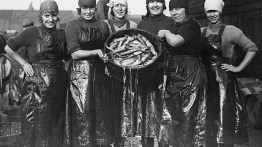
Fish stories come in two varieties: the micro-version of a hundred riverside bars, blokeish boastings of rod-and-line tussles with individual fish in which man and beast are fairly evenly matched. Then there is the macro-version, the one that tells of the fate of entire stocks — the cod of the Grand Banks, the European hake, the bluefin tuna of the Mediterranean, the haddock of the Atlantic, the whale everywhere. In this version, technology and greed have the upper hand and the narrative invariably moves from scenes of boundless plenty to ones of catastrophic scarcity. Donald S. Murray’s Herring Tales is one of these. As a native of Lewis, a Gaelic speaker, he recalls Stornaway crammed with herring boats; you could cross the harbour on their decks.

A myth is as good as a mile

From our UK edition

We live in disenchanted times. We barely do God, most of us don’t do magic and frenzied consumerism occupies our minds more than any local spirit of place. At first glance it looks as though the supernatural folktales of old — those witches and giants who lend their names to pools or hilltop crags in Britain’s remoter spots — are all but lost. From this premise, the medievalist Carolyne Larrington examines the stories that characterise some of Britain’s place names, and considers how the mythological patterns of fairy brides and rampaging dragons might have shaped the way our ancestors saw both the places they inhabited and the world at large.

Marvellous, murderous city

From our UK edition

When Stefan Zweig first arrived in Rio de Janeiro in 1936, he was overwhelmed not only by the city’s magnificent landscape but also by its ordered architecture and city planning. This encounter he would later describe as being ‘one of the most powerful impressions of my whole life’. In his Brazil: Land of the Future, a book that was an exercise in wish-fulfilment masquerading as travelogue, Zweig believed the country to be the embodiment of ‘future civilisation and peace in our world’. Over 70 years later Brazil held the world’s worst record for homicidal violence: for every ten people killed, one was a Brazilian. Rio, the cidade maravilhosa (marvellous city), may have retained its beauty in spite of being hemmed in by favelas, but it was now damned.

When the boys come home

From our UK edition

Matthew Green, former Financial Times and Reuters correspondent, remains unimpressed by officialdom’s response to casualties who aren’t actually bleeding: Ever since October 1914, when ‘Case One’ arrived in Myers’s care, the system for tending to the mental wellbeing of soldiers has grown up in a piecemeal and ad-hoc fashion, overshadowed by the Army’s stubborn ambivalence towards psychological injury (Dr Charles Myers was the Cambridge psychologist seconded to the Royal Army Medical Corps who first used the term ‘shell shock’.) Green acknowledges that ‘experience teaches that the psychological wounds of war have proved stubbornly difficult to treat’.

A hero of our time

From our UK edition

I have met Dr Kissinger, properly, only three times. First, in Cairo, in 1980, when, as a junior diplomat escorting Edward Heath, I had to secure for an almost desperate former British prime minister a meeting with the former US secretary of state, also in town. Once with Kissinger, Heath promptly subsided into a deep slumber. I had the alarming experience of trying to keep the conversation going. The other occasions were more recent, but almost as scary. My hostess at the ‘secret’ (but much publicised) transatlantic talkfests which Kissinger (92 this year) still attends twice summoned me to sit beside the great man at dinner. On each occasion I felt like the luckless passenger in the Economist’s vintage television commercial.

For better, for worse | 17 September 2015

From our UK edition

Before I read this book, I wasn’t aware that I was a creationist. But Matt Ridley tells me I am, in his broad sense of someone who foolishly believes that any good can come of ‘human intentionality, design and planning’. With no little intellectual chutzpah, he offers to treat us to a ‘general theory of evolution’ of everything, surpassing Charles Darwin’s ‘special’ one that applied only to living organisms. According to the author, ‘top-down’ is always bad, ‘bottom-up’ is always good. By what evolutionary method he avoided consciously designing this book itself remains a mystery to the end. The book’s many short chapters are determined to find evolutionary virtues in different arenas.