Book review

Down and out in Park Lane and Plaistow

From our UK edition

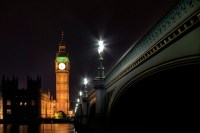
‘I was born in London,’ Ben Judah tells us early in this vivid portrait of Britain’s capital, ‘but I no longer recognise the city.’ London has become a building site where dirty money is converted into gleaming blocks of bullion. The smartest parts of town are lined with empty houses owned by foreign plutocrats, and London’s spirit is embodied not so much by the bearded hipster brewing your £3 cup of coffee as by the Shard, a soaring monument to wealth and inequality. Judah isn’t all that interested in the well-shod hirelings who lubricate this shiny capitalism. We’re halfway into the book before we encounter anyone who could be described as privileged (other than the widely-travelled, Oxford-educated Judah).

Odi et amo

From our UK edition

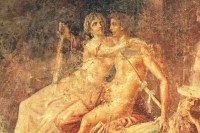
Reading Daisy Dunn’s ambitious first book, a biography of the salty (in more ways than one) Roman poet Catullus, it struck me how lucky we are: only one copy of his collection of poems survived the ages, hidden under a bushel in Verona. Catullus might have gone the way of his contemporaries, such as Cinna, whose lynching is immortalised in Julius Caesar, and whose poems are now dust. Happily, we have Catullus’s small, polished oeuvre, varied and ravishing: there are squibs, lambasting his fellow Romans (‘The father has the filthier right hand/ But the son’s anus is the more voracious’); fascinating mini-epics traversing all of Greek myth; beautiful marriage hymns; and the ‘Lesbia’ poems, recounting his affair with the aristocratic Clodia Metelli.

Roaming in the gloaming

From our UK edition

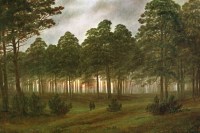
One of the epigraphs to Peter Davidson’s nocturne on Europe’s arts of twilight is from Hegel: ‘The owl of Minerva begins to fly only at dusk’, an image of philosophy as posthumous, able to explain things only after we have experienced them. Or an image of dusk as threshold, the blue hour when light transforms itself, and other worlds become possible. The Last of the Light is a cultural companion to such notions. A cabinet of curiosities — paintings, poems, music — framed by the idea of Europe as an archipelago of regret, many of whose most vital artefacts have dealt in echo and obscure longing, translated into a feeling for light. This is a trail going back to Virgil, poet of shadows, or else starting from Christian ideas of a crepuscular fallen world.

No end to the Final Solution

From our UK edition

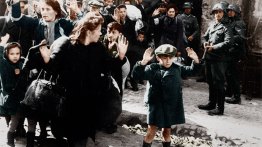
David Cesarani, Research Professor of History at Royal Holloway University of London, died at the age of 58 on 25 October 2015. The book now appears without its author, a kind of huge mausoleum for an astonishing enterprise. Cesarani wants to change our view of the Holocaust and to close the yawning gap between popular understanding of this history and current scholarship on the subject… to challenge the traditional concepts and periodisations … the term itself. He substitutes the ‘Final Solution’ for the Holocaust, but that Nazi term has become an alternative name for the Holocaust, which remains after 900 pages entirely unchallenged.

‘Crazy mixed-up Yid’

From our UK edition

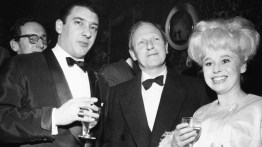
Even David Litvinoff’s surname was a concoction. It was really Levy. Wanting something ‘more romantic’, he appropriated that of his mother’s first husband. So his elder half-brother, the respected writer Emanuel Litvinoff, informed Keiron Pim, adding that David was ‘an unfortunate character altogether’, prone to ‘inventing roles for himself that didn’t have any reality’. Yet this fantasist is the elusive figure whom Pim has endeavoured to capture in an ambitious book which seeks to resurrect an era as much as an individual.

Tawdry tales of Tinseltown

From our UK edition

This is a very odd book that Jean Stein has compiled — about the evanescent splendour of Los Angeles, which only occasionally touches on the film industry. Its setting’s most memorable landmark appears to be the name of one of its districts, written in enormous white letters on a hillside. That, and various opulent houses, preserved in one movie after another and generally concealed from public view. Stein’s subject is the failure to leave any kind of a mark — despite huge spectacle and expenditure; and witnesses are reduced to repeating over and over again,‘Well, you should have been there at the time.’ She tells five stories. The first concerns the Doheny family, whose wealth derived from Los Angeles’ main commodity before films: oil.

A legend in her own time

From our UK edition

I usually dread the final 15 minutes of a celebrity interview: the awkward section during which the writer must steer the conversation away from the polite, mutually enjoyable discussion of whatever the star is currently promoting toward the juicy personal details that your readers really want to know and your subject really (and justifiably) wants to keep private. You sit in the consciously impersonal atmosphere of an upmarket hotel room with a total stranger, and broach topics you might spend decades dancing around with friends and family. I still have nightmares in which I blurt out lines worthy of Alan Partridge: Yes, the bass line on that track is terrifically deep isn’t it!

Very much like a whale

From our UK edition

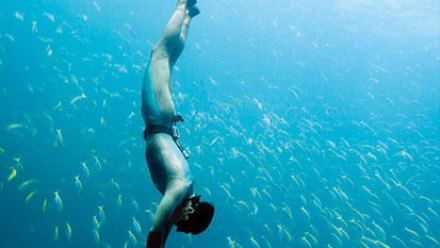
In principle, freediving is simple and perilous: divers take one breath, then dive as deep as they can, with no tanks or air, and come back up again. Watch a video of this — or Luc Besson’s 1988 film The Big Blue — and you have to hold your own breath, because it is beautiful, streamlined, pitiless: a human in the most powerful and unnatural element for humans. The beauty of freediving is that it does not look unnatural, but pure. What Adam Skolnick conveys in One Breath is how deceptive that is, and what a dreadful toll diving takes on the human body. He does this by telling the tale of one death, but also of the small freediving community that travels the world from one deep ocean hole to another to go as deep as possible, on one breath.

Tricks of the trade | 28 January 2016

From our UK edition

This book, the blurb warns us, was written by ‘an established voice in popular psychology, with a regular column on the New Yorker online’. Maria Konnikova is also the ‘bestselling author of Mastermind’, a book which explains how we can train our minds to see the world as Sherlock Holmes saw it. The Confidence Game identifies a template pattern of stages peculiar to every successful confidence trick, and devotes a chapter to each: the Put Up, the Play, the Rope, the Tale, the Convincer, the Breakdown, the Send, the Touch and the Fix. (The first chapter offers a psychological profile of ‘the Grifter’ or confidence trickster and ‘the Mark’ — his prey.

Alive and kicking | 28 January 2016

From our UK edition

Four years after his death, it is still faintly surprising to recall that Christopher Hitchens is no longer resident on this Earth — or on any other sphere, if his friend Richard Dawkins is correct. A quote from Dawkins graces the cover of And Yet..., a final gathering together of Hitchens’s essays and the sequel to the bestselling anthology Arguably; he was, notes his ‘fellow horseman’, the ‘finest orator of our time’. And here is that voice again, alive, fiercely engaged with many of the same issues he left us to deal with: politics, patriotism, God or His absence, death and, inevitably, books. There was much about Hitchens that was contradictory and he knew it and embraced it in his work.

Poverty + anarchy + drug dollars = Mexico

From our UK edition

You may not have heard of the Maras. Or Barrio 18. Or the Jalisco New Generation Cartel, or the Zatas, or the Knights Templar, or the Shower Posse. But you should have heard about them, says Ioan Grillo in his new book about transnational drug and crime gangs, because any one of them may have played a profitable and blood-drenched role in bringing you not only your weekend baggie of recreational powder, but also the gold in your earring, the lime in your gin and tonic, the avocado in your salad and even the steel in your Volvo. These ‘gangster warlords’ are the new century’s international mafias. They originate in Central America, Mexico and the Caribbean, although now they have trading subsidiaries everywhere from Bombay to Brixton.

Not so happy valley

From our UK edition

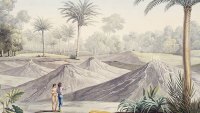
Simon Barnes opens with a presumably true idea, that we are all in search of our own versions of paradise — a special place presented here as the sacred ‘combe’ of the title, being a word with Celtic origins that describes a steep hollow or hidden valley. These paradises might be real or imagined, exist only in memory, or live in fiction like Narnia or Robin Hood’s forest; they can be unattainable, beyond reach, or ruined, like Eden. His point, frequently stated, is that we are always on a quest for them, and need them. The particular combe of this book is not on the edge of Dartmoor but in the national parklands of Zambia’s Luangwa river valley.

Autocracy tempered by strangulation

From our UK edition

‘It was hard to be a tsar,’ Simon Sebag Montefiore writes in his opening sentence, and what follows fully bears this out. In his thought-provoking introduction, he stresses the unique nature of Russian autocracy and its perverse contradictions; the tsar was absolute ruler, yet he was bound by a tangle of restrictions. His subjects were prepared to accept his tyranny and any cruelty its exercise required, but claimed the right to punish him if he failed to provide strong leadership. The system was never meant to give one person tyrannical powers over everyone else. Nor was it intended to work for the greatest good of the greatest number.

The medium is the message

From our UK edition

Molly Crabapple is an American artist and Drawing Blood is the story of her life. That life has only been going on since 1983, but despite its author’s relative youth Drawing Blood is a valuable political document. It tells of a life lived in struggle — against the prospect of going dead broke, against gross misogyny within the arts and against sex workers, against the obscene wealth splattering the fine art business — redeemed by intoxicating levels of exposure, then finally reoriented by a new political consciousness. Crabapple describes an artistic childhood followed by a pretentious adolescence spent performance-reading Nietzsche and hating everybody. Bored of America, the teenage Crabapple goes on holiday to Paris and Turkey.

Drying out in the Orkneys

From our UK edition

‘If I were to go mad,’ Amy Liptrot writes in her memoir of alcoholism and the Orkneys, ‘It would come as no surprise at all.’ One surprise of this book is its sanity, which is remarkable, given Liptrot’s beginnings. We open, unforgettably, with her parents passing each other on an island runway. Her mother is being flown home from hospital, holding the newborn Amy; her father, in the grip of a manic episode and a strait jacket, is heading the other way. Liptrot recalls another fit which drove him to smash all the windows of the family farm and hide with her, aged 11, from the police and doctors. ‘As his sedatives kicked in I crouched with my father in a corner of my bedroom, sharing a banana. “You are my girl,” he said.

Age cannot wither her

From our UK edition

There’s something reassuring about 98-year-old Diana Athill. She’s stately and well-ordered, like the gardens at Ditchingham Hall in Norfolk, her grandparents’ Georgian house where she spent long periods of her childhood. Yes, she really is of that class, though she doesn’t trumpet it (she was presented at court in the brief reign of King Edward VIII) and, as is well known, she is of more than a certain age — born in 1917, towards the end of the first world war but, in social terms, a throwback to the Edwardian era, and half a decade before the publication of Ulysses and The Waste Land signalled the arrival of Modernism. One of the ten essays in this delightful collection is about her attitude to clothes.

One holy mess

From our UK edition

This novel, John Irving’s 14th, took the sheen off my Christmas, and here are the reasons.   The comments on the back of the book (‘Irving is the wisest, most anguished and funniest novelist of his generation’ — Chicago Sun Times) made me feel lonely. He might have been wise, anguished and funny in The World According to Garp, 33 years ago. But never once in these 458 pages did I laugh, sympathise, or glean an ounce of wisdom. Instead, I lost confidence that reading novels could ever be a pleasure.   Take the main character, Juan Diego, a ‘dump kid’ growing up on one of the vast rubbish dumps on the edge of Oaxaca (‘Wahaca’). I enjoy reading about a dump as much as the next person, so was hopeful.