Book review

Nothing quite adds up

From our UK edition

Whimsy, satire and deadpan humour: welcome to the world of Andrey Kurkov. If you know Kurkov’s work, The Bickford Fuse will be no surprise and need no introduction. It’s not Death and the Penguin or A Matter of Death and Life (read them first), but it’s certainly Kurkov in welcome and familiar mode. For newcomers and to summarise: he’s really a kind of Ukrainian Kurt Vonnegut, a serious writer never more serious than when he’s being funny about unfunny things, and with a whole lifetime of unfunny things to be serious about. As the second world war was to Vonnegut, so the Soviet Union is to Kurkov. If — as Oscar Wilde believed — our duty towards history is to rewrite it, then Kurkov has long been working overtime.

Everyone’s favourite dinosaur

From our UK edition

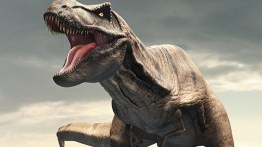
Tyrannosaurus rex is the greatest celebrity of all time. The 68–66 million-year-old carnivore is far older than any actor or musician, including Keith Richards, and yet is still must-have talent for Hollywood blockbusters, comics, museum displays and more. But all that fame comes at a cost. There seems to be as much mythology as science surrounding the ‘tyrant lizard king’. The paleontologist David Hone seeks to slice through fiction and chew over fact in his new book The Tyrannosaur Chronicles. From the title, you can be forgiven for thinking that this is the journal of an angsty T. rex. Rather, Hone has written a handbook to almost everything you’d want to know about the celebrated dinosaur and its various kin.

The bane of Albania

From our UK edition

In his final public appearance, the Albanian dictator Enver Hoxha addressed a Tirana crowd to commemorate the capital’s liberation from German invaders on the 28 November 1944. The Hoxha who had entered the city as a communist partisan was now a weak old man. He was often confined to a wheelchair, had to be hoisted on to his podium using a custom-built lift and was only prevented from falling by camouflaged safety rails. The dictator was deeply vulnerable but still formidably powerful.

Goodbye to all that | 12 May 2016

From our UK edition

Glimpsing the title of Lynsey Hanley’s absorbing new book as it fell out of the jiffy bag, I found myself thinking of my grandmother, Mrs Lilian Taylor. This lady, who died in 1957, spent the first part of her married life inhabiting a couple of furnished rooms on the western side of Norwich and the second part of it living in a white stucco council house on the newly built Earlham estate. She was an intensely respectable woman, implacably opposed to strong drink and strong language, but of what, materially, did her respectability consist? On the one hand it meant goading my father through the scholarship exam to a place at the local minor public school.

One day, two lonely people

From our UK edition

Twenty-four long hours, two lonely people, one city in decline. This is the premise of A.L. Kennedy’s new novel Serious Sweet, a work full of anger at what has happened to London since the Thatcher revolution and concern for the city’s isolated, impotent inhabitants. Kennedy’s representative Londoners are Jon, a divorced and fusty civil servant, a ‘passed over man’ plagued by failure, and Meg, a bankrupt accountant and recovering alcoholic who jokes at her own expense that she is ‘Fine: Fucked-up Insecure Neurotic and Emotional’.

The grit in the oyster

From our UK edition

Richard Dorment doesn’t do whimsy. Or Stanley Spencer. He’s a fan of Cy Twombly and Brice Marden, Gilbert and George and Mark Wallinger, Rachel Whiteread and Susan Hiller. He loves writing about contemporary art. And he worked as art critic of the Daily Telegraph for 25 years. Like the grit in the oyster he irritated the establishment, producing pearl after pearl that occasionally had even his own paper distancing itself from his opinions. ‘I looked edgy and transgressive,’ he says, ‘when in reality my taste in art was fairly cautious.’ Born in America, Dorment studied art history at Princeton and was assistant curator in European painting at the Philadelphia Museum of Art before moving to London and working as an exhibition organiser and writer on art.

The dog it was that died

From our UK edition

Appropriately for the dog days of British politics, there’s plenty of canine activity in this neatly groomed account of the bizarre circumstances behind the murder plot which cost the Liberal party leader Jeremy Thorpe his job and his debonair reputation in the 1970s. First yelps from the kennel came from the Honourable Brecht Van de Vater’s five springer spaniels. Ostensibly they added a veneer of respectability to their owner’s comfortable Cotswolds existence. But like many of the characters involved, appearances were illusory. His real name was Norman Vater, the son of a Welsh miner and an undisclosed bankrupt.

Throned on her hundred isles

From our UK edition

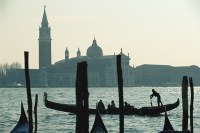
Approximately 500 new books on Venice are published every year and this is not the first literary anthology devoted to the city. But Marie-Jose Gransard lectures in Venice about Venice to Venetians, and conducts her students on guided tours of the city. Her selection draws on sources going back over 800 years and across six languages. So the text, based on very wide reading, is crowded with unfamiliar observations and includes the impressions of artists, musicians and diplomats as well as writers. This is not a guide book for the first-time visitor, but for anyone who knows Venice, and cannot keep away, it provides a delightful change. We are given Ruskin, Byron, Goethe, Henry James, Thomas Mann and Hemingway.

The gooseberry fool

From our UK edition

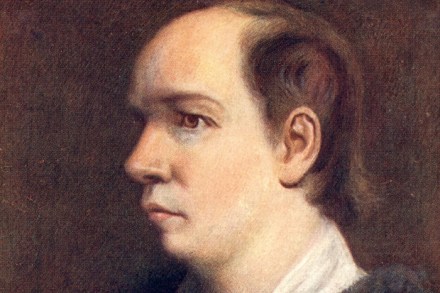
On 10 April 1772, the biographer James Boswell recorded in his diary that he had hugged himself with pleasure on discovering he would be dining with Oliver Goldsmith. This was not because he hoped to elicit from the Irish-born writer some fruity details for the life of Dr Johnson, the dictionary-maker, that he was planning to write (although Goldsmith did know Johnson intimately). On the contrary, Boswell, the literary groupie, was fascinated by Goldsmith himself. He devotes several pages of his Life of Johnson to him in an attempt ‘to make my readers in some degree acquainted with his singular character’. But, frustratingly, Goldsmith remains an enigmatic figure.

A selection of short stories

From our UK edition

How many debut collections does it take to stand up to one of the most accomplished short-story writers of the past half-century? In this case, it’s three against one. Under the Rose is Julia O’Faolain’s first short-story collection in over 20 years, bringing together stories published between 1968 and 2006. Danielle McLaughlin follows in her wake, picking up the pieces of post-crash Ireland in her debut Dinosaurs on Other Planets. Greg Jackson is the latest virtuoso on the US literary scene, writing stylistically self-conscious stories with titles like ‘Wagner in the Desert’ and ‘Metanarrative Breakdown’. As a practising psychiatrist in New York City, Arlene Heyman has no shortage of material.

Who’s who and what’s what

From our UK edition

Asked to name a reference book, you may well choose the Encyclopaedia Britannica or the 20-volume Oxford English Dictionary. But perhaps you’d pick something less elephantine — the Guinness Book of World Records, with its tributes to figures such as Smudge, holder of the record for most keys removed from a keyring by a parrot, or Brewer’s Dictionary of Phrase and Fable, which informs us that the Russian equivalent of ‘to carry coals to Newcastle’ is ‘to go to Tula with one’s own samovar’.

Running the triple crown

From our UK edition

The story of the Czechoslovak runner Emil Zátopek is a tale from athletics’ age of innocence. Without the aid of qualified coaches, state-of-the-art equipment or ‘performance-enhancing’ drugs, Emil Zátopek set no fewer than 18 world records over distances between 5,000 and 30,000 metres with a style memorably described as that of ‘a man wrestling with an octopus on a conveyor belt’: all eccentricity above the waist, all efficiency below it. Brought up in poverty, he ate when he could and what he could, and treated beer as a prototype isotonic drink.

Crossing continents | 5 May 2016

From our UK edition

Mysteries abound here — enigmas of identity and betrayal, long-buried secret transactions leading to quests — for a lost child, an abandoned wife, a missing mother… The Bones of Grace has a narrative as fragmented as a scattered jigsaw, initially puzzling, with seemingly disparate stories slowly coming together one by one, until the moment a last piece clicks sweetly into place to give us the revelation of a perfect, satisfying whole. The book is conceived as a love letter from Zubaida, a young Bangladeshi palaeontologist at Harvard, to Elijah, a stranger who comforts her when she weeps at a Shostakovich concert.

Gods and monsters

From our UK edition

Although Nepal’s earthquake last April visited our television screens with images of seismic devastation, the disaster has probably had little impact upon the prevailing western impression of this country. For many the mountain state remains steadfastly exotic and remote. This is not just a consequence of those sublimely unattainable Himalayan peaks. For generations Nepal was a source of western fantasy that bordered on the obsessive and carried an undercurrent of late-imperial eroticism. What had so stirred European appetites was the long-standing Nepalese policy of playing hard to get. A short, bitter conflict in 1814–1816 with the East India Company inspired its militant Gurkha elite to pursue the rigorous exclusion of all foreigners.

Chance would be a fine thing

From our UK edition

If I prang your car, we can swap insurance details. In the past, it would have been necessary for you to kill me. That’s the great thing about money: it makes liabilities payable and blood feud unnecessary. Spare a thought, then, for the economist Robin Hanson, whose idea it was, in the years following the attacks on the World Trade Center, to create a market where traders could speculate on political atrocities. You could invest in the likelihood of a biochemical attack, for example, or a coup d’etat, or the assassination of an Arab leader. The more knowledgeable you were, the more profit you would earn — but you would also be showing your hand to the Pentagon.

A clash of two cultures

From our UK edition

‘They fuck you up, your mum and dad.’ Philip Larkin’s most famous line has appeared in the Spectator repeatedly, and there has even been a competition devoted to its refutation. Steve Jones, though, thinks it too coarse to be quoted in what he himself describes as a popular science book. This is just one of many indications of the way in which this book is haunted by C.P. Snow’s two cultures. I was a bit shocked to see Jones describe his book as popular science because I had been under the impression that he thought it was, in part at least, a history book. As a popular science book, it’s quite good. As history, not. Jones begins by looking out over Paris from the Eiffel Tower and identifying places where important science was done.

All is not lost | 5 May 2016

From our UK edition

Marina Lewycka’s latest happy-go-lucky tale of migrant folk in Britain takes a remark by the modernist architect Berthold Lubetkin as its epigraph: ‘Nothing is too good for ordinary people.’ In the vertical community within one of Lubetkin’s postwar blocks of flats in East London we meet hapless Bertie, resting actor caught on the hop by the spare-bedroom tax; disabled Len, thinking positive about his benefit reassessment; Violet, dreaming of her childhood in Kenya at her desk in a City insurance firm; and many more — some powering ahead in our new age of golden job opportunities and zero-hour contracts, others not so much.

The American dream goes bust

From our UK edition

One happy aspect of Lionel Shriver’s peek into the near future (the novel opens in 2029) is the number of unusually rounded elderly characters she presents. Her pitiless eye notes every mark of age and vanity in the older generation of the Mandible family, but they remain in robust health, sharp without being merely spry, and full of personality. They have too much life as far as the younger family members are concerned, waiting impatiently for the wealth to trickle downwards. Jayne and Carter, already in their sixties, will be disappointed, for Shriver’s doomsday scenario concerns a catastrophic devaluation of the dollar which wipes out the family fortune overnight. The Mandibles descend the social order rapidly, along with everyone else in the United States.