Book review

Descent into hell

From our UK edition

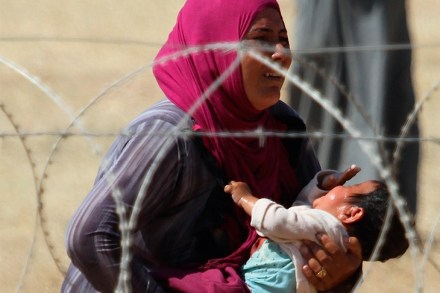
In my work as a reviewer, a small, steady proportion of all the books publishers send me concern the Holocaust. With middle age has come a curious foreshortening of my perspective on modern history so that, paradoxically, the Nazis’ inhumanity has begun to seem less distant in time and, therefore, more horrible still. Fortunately I can reassure myself that, objectively, it happened long ago and that even the atrocities of eastern Europe and Rwanda are now a couple of decades safely in the past. Such consolations vanish when confronted by The Raqqa Diaries, which is shockingly of the present. It is a terrible reminder that we are unwise to impute any kind of teleology to history.

Light in the East | 9 March 2017

From our UK edition

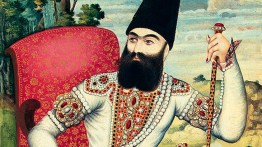
Christopher de Bellaigue, a journalist who has spent much of his working life in the Middle East, has grown tired of people throwing up their hands in horror at Isis, Erdogan and Islamic terror, and declaring that the region is backward and in need of a thorough western-style reformation. As he argues in this timely book, the Islamic world has been coming to terms with modernity in its own often turbulent way for more than two centuries. And we’d better understand it, because it’s an interesting story, and often a positive one — the way vast crowds streamed onto the streets of Cairo, Istanbul and Tehran in demonstrations against authoritarian rule over the past decade, for example. Western-style participatory democracy remains the dream of the man and woman in the souk.

Night of the living dead

From our UK edition

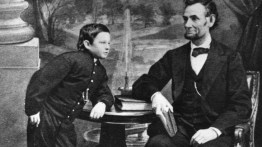
On 5 February 1862, the night Abraham Lincoln and his wife gave a lavish reception in the White House, with the civil war swelling outside and their 11-year-old son Willie dying of typhoid fever upstairs, what was the state of the moon? Was it a ‘fat green crescent’? Or was it ‘yellow-red, as if reflecting the light of some earthly fire’? According to George Saunders’s hugely ambitious Lincoln in the Bardo, his first novel after four peerless collections of short stories, neither of the above descriptions might be true, but when read in their tragic context, either can impart symbolic meaning. And meaning, as this novel so cleverly demonstrates, is not the same as truth. Lincoln takes place on a single night, 17 days after the party.

Father, son and holy ghost

From our UK edition

No disrespect to any of the present incumbents, but Karl Miller (1931–2014) was a literary editor in an age when such jobs mattered. Between the late 1950s and the early 1970s he not only ran the books pages of two weekly magazines — The Spectator, and the Paul Johnson-era New Statesman — before moving on to edit the Listener, but did so with a conviction that their cultural stance was quite as important as the political material that crowded out the front end. The virus that had propelled him into literary journalism burned away for nearly 60 years, and his last book review appeared in these pages four days before his death.

Comfort the suffering

From our UK edition

If a single book could help you to be kinder and more compassionate, could expand and deepen your understanding of other people (and possibly yourself) and make you less afraid of dying in the process, you would surely be eager to acquire it at once. Well look no further, for Grief Works is that book. The King Lears among us — whose every third thought is the grave — will need no persuading that a collection of essays about surviving bereavement is an enthralling read. For those of a more timid or sunny disposition, ask yourself this: when someone you love dies, how will you manage? The odds of avoiding grief are not in anyone’s favour. In Britain half a million people die each year and it’s estimated that each death affects at least five people.

Nothing matters very much

From our UK edition

Nothing will come of nothing, said Lear, because he wasn’t familiar with quantum physics. According to our current best theories, a region of space that contains nothing at all is still seething with pairs of virtual particles popping in and out of existence for no good reason. Meanwhile, it is possible to be mathematically sure that an entire universe contains nothing whatsoever, but then if you go looking for stuff in a particular part of this same universe you could find a wheelbarrow. But what did I mean by ‘a region of space’? It turns out that all sorts of assumptions are baked into such a phrase depending on what cosmology I have — and similarly with the ideas of ‘stuff’ and its alleged opposite, ‘nothing’.

Back with a vengeance

From our UK edition

One hour in No. 5 Cheyne Row, Virginia Woolf observed, will tell you more about the Carlyles than all the biographies. The house lived in by Thomas and Jane Carlyle from 1834 until their respective deaths, and now owned by the National Trust, was one of the great battlegrounds of domestic history. Here Jane warred against bedbugs and coal dust and her husband’s obsession with the vast and unstoppable Lady Harriet Ashburton (there were three people in her marriage), and Carlyle warred against the intrusions of the outside world.

Worming out the truth

From our UK edition

In Delmore Schwartz’s story ‘In Dreams Begin Responsibilities’, a young man dreams he is watching his father and mother’s engagement onscreen from a seat in a cinema. Weeping at the certain knowledge of the pain to come, he’s patted on the back by a woman. ‘There, there,’ she says, ‘all of this is just a movie.’ In a way, this moment distils the challenge of all oneiric narratives — it’s a fiction within a fiction, one in which anything can happen, but without real-world consequences. In this dark, brilliantly controlled debut, the Argentinian Samanta Schweblin uses the fabric of a dream to weave a novel in which everything is at stake and at risk: identity, love and existence.

It’s in the memes

From our UK edition

The greatest of Bach’s 224 cantatas is BWV 109, ‘Ich glaube, lieber Herr, hilf meinem Unglauben’. Its subject — the title translates as Mark 9:24, ‘I believe, dear Lord, help my unbelief’ — is that strange cognitive dissonance of believing something yet not believing it at the same time. Daniel Dennett’s new book, From Bacteria to Bach and Back, is aimed at those who suffer from this intermittent unbelief, though not about God — Dennett is, after all, one of modern philosophy’s most prominent atheists — but about his specialist subject: evolution by natural selection. Of course, most educated people nowadays accept Darwin’s great insight.

Short – but far from sweet

From our UK edition

Like his Pulitzer Prize-winning first novel, The Sympathisers, the stories in Viet Thanh Nguyen’s The Refugees are set largely among the Vietnamese diaspora on the west coast of America, where Nguyen himself lives, having fled to the US from Vietnam with his family in 1975. They mostly feature characters juggling the lives they’ve made in their adopted culture with their memories of — and loyalties to — the old land. In one story, set in the Reagan era, a penny-pinching woman who runs her family’s New Saigon grocery store is reluctantly moved to donate money to the futile guerrilla war against communism back in Vietnam.

Undone by love

From our UK edition

On the Whitsun weekend of 1935 an art student called Denton Welch was knocked off his bicycle by a car and suffered catastrophic injuries, including a fractured spine. Although he made a remarkable partial recovery, he subsequently endured regular bouts of disabling illness, and would die in 1948 aged only 33. Welch continued to paint after the accident, but also began writing the autobiographical fiction for which he is now best known, publishing his first novel, Maiden Voyage, in 1943. By this time he was living in a chauffeur’s flat over a garage in rural Kent.

All in the mind’s eye

From our UK edition

Everyone knows what the Rorschach tests are. Like Freudian slips, boycotts, quislings and platonic friendships, however, it was long ago forgotten that they had been named after an individual human being. Hermann Rorschach was a Swiss doctor and psychiatrist with curiosity about the visual arts, a contemporary of Freud and Jung. He created the tests in a book published in 1921, and a structure for evaluating patient responses to them before dying of appendicitis the following year. Rorschach’s life has its interests, and certainly casts some unexpected light on the Europe of his time. His father wrote an artistic treatise which sounds extraordinarily like the Bauhaus writings of Paul Klee, decades later.

Dead poet’s society

From our UK edition

Alex Salmond, former first minister of Scotland, once claimed that he could always tell Scottish fiction from English. Novels, he said, reveal fundamental differences in the values of the Scots and the English. I wonder then what he would make of Annalena McAfee’s book, Hame — about the most Scottish work of fiction that any English novelist could possibly write. So committed is the former Guardian journalist authentically to explore every aspect of life north of the Border that she learnt to speak Braid Scots — from Lallans to Doric dialects — and crafted poetry in them. Surely that makes her more Scottish than most born-and-bred Caledonians? For what drives Hame is this question of national identity and whether (like gender?) it is simply a construct.

Conning the connoisseurs

From our UK edition

Rogues’ Gallery describes itself as a history of art and its dealers, and Philip Hook, who has worked at the top of Sotheby’s for decades, is well versed in his subject. Sadly for the prurient, this is not an exposé of the excesses of the market from one of its high priests; and Hook says that where possible he has avoided writing about the living. It is hard not to feel a bit disappointed. For an alarming moment in the introduction, it seemed as if he was preparing to write an academic treatise about how dealers influence art and taste.

All human life is there

From our UK edition

This book kept reminding me of Robin Williams in One Hour Photo. Just as his character spied on customers’ private lives while developing their pictures, so Chris Paling gets to know the readers at the library where he works. Unlike Williams he doesn’t follow them home at the end of the day (in fact some of the female librarians have the opposite problem), but Paling’s anonymous, functional role lets him observe without being observed. He sees the woman with two small children who takes out Is Daddy Coming Back in a Minute?, explaining sudden death to children in words they can understand. The ‘effete, shaven-headed man in a well-cut suit’ who angrily discusses his new shrink on his mobile phone.

Light in the East

From our UK edition

Christopher de Bellaigue, a journalist who has spent much of his working life in the Middle East, has grown tired of people throwing up their hands in horror at Isis, Erdogan and Islamic terror, and declaring that the region is backward and in need of a thorough western-style reformation. As he argues in this timely book, the Islamic world has been coming to terms with modernity in its own often turbulent way for more than two centuries. And we’d better understand it, because it’s an interesting story, and often a positive one — the way vast crowds streamed onto the streets of Cairo, Istanbul and Tehran in demonstrations against authoritarian rule over the past decade, for example. Western-style participatory democracy remains the dream of the man and woman in the souk.

Let me take you through the night

From our UK edition

As a child, I used to travel with my mother from London to Cannes, a journey that took slightly under 24 hours. The strangest part of the trip was the three or four hours in Paris, where the train trundled between the Gare du Nord and the Gare de Lyon along the Petite Ceinture, giving us a view of rundown parts of Paris which tourists never normally saw. Sometimes we would cheat and take a cab, giving us a couple of hours off the train, during which we enjoyed a relaxed steak frites in the Train Bleu restaurant with its elaborate belle époque decor. I often wondered why the train meandered so long in Paris, and Andrew Martin now provides the explanation.