Book review

Rules of behaviour

From our UK edition

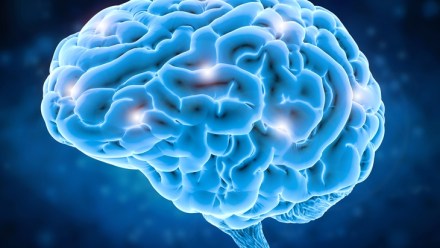
It’s the constant dilemma of the pop science author: how to write something flashy enough to grab readers, but solid enough that it won’t be embarrassing in a few years when the science has moved on. Full scientific rigour entails tedious jargon and even more tedious equations, and nobody wants that. But neither should the messy, uncertain world of scientific research be oversimplified. In his lengthy new book, Behave, the Stanford neuroscientist primatologist Robert Sapolsky walks this tightrope as he explains the biology of humanity’s ‘best and worst’ behaviours. Behave is a crammed compendium of scientific findings, organised in an ingenious way.

His own worst enemy | 27 July 2017

From our UK edition

One fail-safe test of a writer’s reputation is to see how many times his or her books get taken out of the London Library. Here, alas, John Lodwick (1916–1959) scores particularly badly. If The Butterfly Net (‘filled with a lot of booksy talk and worldly philosophising,’ Angus Wilson pronounced in 1954) has run to all of five borrowers in the last five years, then The Starless Night (1955) seems not to have left the shelves since 1991. All this suggests that the title of Geoffrey Elliott’s valiant attempt to reconstruct Lodwick’s lost, vagrant and sometimes violent life is painfully accurate.

Down – if not out – in Paris

From our UK edition

Virginie Despentes remains best known in this country for her 1993 debut novel, Baise-Moi, about two abused young women who set off on an orgiastically murderous road-trip round France. In 2000, she became notorious when she collaborated on the hardcore film of the book, which ran into certification problems, with Alexander Walker fulminating about the complete collapse of public decency. Despentes has now published some 15 novels altogether, celebrated in France as grunge or ‘trash’ fiction — and a polemical, erratically feminist, memoir, King Kong Theory, describing her own experience of rape and prostitution, and calling for a new aggression in female sexuality.

Towering extravagance

From our UK edition

The Shard is an unnecessary building. Nobody apart from its developer asked for it to be built. Nobody was crying out for a big spike of concrete, steel and glass filled with a mix of superluxury hotel, ultraprime apartments and loads of speculative offices right above London Bridge station, with an expensive viewing gallery as a sop to public accessibility. Had it never happened, we would not regard the air it did not fill as a waste of atmosphere. The Shard is merely a gigantic financial speculation, majority-funded by Qatari money. And yet it is a very good piece of architecture. Its veteran Italian architect, Renzo Piano, succeeded in designing a (by London standards) startlingly tall tower that is not like other very tall towers.

Drowning in mud and blood

From our UK edition

George Orwell’s suggestion that the British remember only the military disasters of the first world war is certainly being borne out by the centenary commemorations. The focus of each year so far has been Gallipoli, the Somme and now the Third Battle of Ypres, popularly known as Passchendaele. The basic story is familiar. On 31 July 1917, in torrential rain, General Haig launched an attack against German positions in the Ypres Salient. The troops had to advance over ground that rapidly turned into a quagmire, shells having already destroyed the area’s network of drainage ditches. The attacks would continue sporadically, against the advice of those on the ground and often in atrocious weather, until November.

A choice of short stories

From our UK edition

It can’t be easy to switch between editing others people’s fiction and writing your own: how do you suspend that intuitive critical impulse? Gordon Lish, who is best known as the editor of Raymond Carver’s short stories but has also written plenty of fiction in his own right, is familiar with this dilemma, and in White Plains (Little Island Press, £18.99) he has fun with it. These stories are replete with parenthetical um-ing and ah-ing over synonyms, punctuation and grammatical solecisms — a prolix testament to the agonies of prose composition: ‘Losing tone here, not retaining purchase on stance here, falling to pieces with the coward’s frolic along the phraseological here.

The cold grip of fear

From our UK edition

A screenwriter sits in a lovely rented house somewhere up an Alp in early December. The air is clear, the views stunning, the isolation splendid. He rented the home through Airbnb — surprisingly cheaply, as it happens. He has come to this place for a family holiday with his wife Susanna and their four-year-old, Esther, but also to get some peace and quiet in which to concentrate on his current job. His last movie, Besties, was a smash hit, and now the producer wants a screenplay for Besties 2, and the sooner the better. And as we read through his notebook, in which he’s hoping the screenplay will take shape, the whole set-up seems quite promising, really.

By Patten or design?

From our UK edition

My old friend Richard Ingrams was said always to write The Spectator’s television reviews sitting in the next-door room to the TV set. I’m more assiduous: I have actually read this book under review. And Chris Patten’s latest memoir is a very enjoyable read — the account of a life of considerable privilege. Born into a middle-class family in suburban London, Patten won an exhibition to Balliol before — after a brief dalliance with US politics — he became a Conservative apparatchik and, in due course, an MP.

The infamous four

From our UK edition

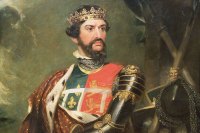
Most books about British traitors feature those who spied for Russia before and during the Cold War, making it easy to forget that we also spawned a few who worked for the Germans in the second world war. This book concerns four of them: John Amery, wastrel son of a Conservative cabinet minister; William Joyce, the Irish-American Nazi propagandist better known as Lord Haw-Haw; Harold Cole, soldier and petty criminal who sent 150 or more Resistance members to their deaths; and Eric Pleasants, a circus strong-man who disavowed national loyalties while donning German uniform. Their motives were mixed but, treachery apart, they had one thing in common: an insistence on their own rightness and thus their entitlement to whatever they wanted at the expense of all others.

Something in the water

From our UK edition

‘It was a shock, and an epiphany,’ says Fiona Sampson, to realise that many of her favourite places were built on and out of limestone: the cosy Cotswold village of Coleshill, the shambolic hamlet of Le Chambon in the Dordogne, the limestone Karst region of western Slovenia, and the honeycombed hills of Jerusalem and the Holy Land. ‘Surely, I thought, this has to be more than mere coincidence.’ From a strictly demographic point of view, it isn’t even much of a coincidence: about one quarter of the world’s population lives in limestone country or depends on it for its water. But the mind of a poet can feed on the slightest chance connection.

The new age of the refugee

From our UK edition

After years of estrangement in a foreign land, what can immigrants expect to find on their return home? The remembered warmth and blazing beauty of Jamaica have remained with some British West Indians for over half a century of exile. Yet 100 changes will have occurred since they left. Long brooding over the loss of one’s homeland can exaggerate its charm and sweetness. The first mass immigration to British shores occurred in the late 19th century, when Ashkenazim arrived by the thousand after escaping the pogroms in Tsarist Russia. Many changed their names and even their accents. The trappings of orthodoxy — beards, sidelocks — left them vulnerable to anti-Semitic abuse as they settled in cramped London streets north of Whitechapel Road.

A strange vibration

From our UK edition

Among the many curiosities revealed in this book, few are more startling than the fact that at the height of the so called ‘summer of love’ in 1967 the British historian Arnold Toynbee, on a visit to San Francisco, made his way to the Haight-Ashbury district — hippy central — to catch a concert by one of the Bay Area’s most popular bands, Quicksilver Messenger Service. Just what Toynbee, who was 78 at the time, made of the group’s epic exercise in free form, psychedelic improvisation, ‘The Fool’, Goldberg does not mention.

A choice of first novels | 29 June 2017

From our UK edition

Patty Yumi Cottrell’s blackly comic and sophisticated debut Sorry to Disturb the Peace (And Other Stories, £10) opens with Helen Moran learning that her brother —adopted, as she was — has committed suicide. Helen lives in New York, working with troubled teenagers who have dubbed her ‘Sister Reliability’. Against familial expectations she returns to Milwaukee to her adoptive parents’ home for the funeral. But Helen has not arrived simply to grieve: Perhaps to investigate his death would revitalise my own life, and if I could communicate my eventual findings to them, it would strengthen and support the lives of my adoptive parents as well.

Life classes

From our UK edition

It has taken much of a celebrated literary life for Elif Batuman to produce a novel. At the beginning of her wonderful 2010 book The Possessed —a chimera of memoir, travelogue and literary criticism — she declares: I remember believing firmly that the best novels drew their material and inspiration exclusively from life... and that, as an aspiring novelist, I should therefore try not to read too many novels. Selin, the Turkish-American protagonist of her first novel, is engaged in gathering writerly experience at Harvard, reading novels and falling for Ivan, a Hungarian mathematics student with a girlfriend. The pair begin an online relationship at the dawn of email.

Whimsical digressions

From our UK edition

The practical difficulties of extracting keys from the pockets of tight-fitting trousers while ascending stairs; the logistical hazards of seducing pub landladies; the absurdity of certain idiomatic expressions if interpreted too literally; the qualitative difference between homemade and shop-bought pizza. Such are the disparate matters occupying the mind of Simon Okotie’s unnamed detective protagonist as he goes about investigating the disappearance of a colleague. In the Absence of Absalon holds a plethora of whimsical digressions in a wafer-thin plot, as Okotie’s story-telling is repeatedly driven off-piste.

Two dark tales

From our UK edition

Just over halfway through this grim and gripping book, the author describes herself and her girlfriend ‘lying on my bed kissing’. She says: ‘I love kissing her.’ And: ‘We kissed and kissed, and soon my hands were at her shirt and I was tugging it off.’ And: ‘I kissed her again.’ And: ‘I reached down between her legs.’ And: ‘She reached down to touch me and then we were moving together and it felt good and I moaned and it felt good again.’ Then she says: ‘And then it didn’t.’ The sex feels good. Then it doesn’t. Something has happened to the author, deep in her past, and it comes back to haunt her. ‘I realised I was going under, into the memory,’ she tells us.

Size matters | 29 June 2017

From our UK edition

Trust scientists to ruin all our fun. The spectacularly beautiful 2014 film reboot of Godzilla, it turns out, is anatomically misleading. At 350ft tall, such a beast would simply collapse under its own weight, because an animal’s mass cubes with a doubling of its size, while the strength of its supporting limbs only squares. The basic principle was known to Galileo, and it turns out that the simple observation that things do not scale linearly can tell us much else besides, as this quite dazzling book amply demonstrates.