Book review

A Charles Dickens patchwork

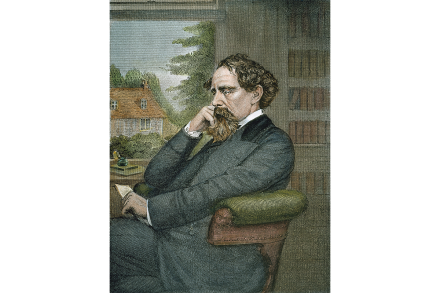
What connects pistachios, hay, and Mr. Krook in Charles Dickens’s Bleak House? Asked this question on a recent episode of the British TV quiz show Only Connect, the contestants noted all three are prone to spontaneous combustion, although, as one player exclaimed, “I can’t imagine that happening in a novel, but things were different back then.” Novels contain novel imaginings, but people back then were equally skeptical. Dickens eventually had to defend the death of Krook, the sozzled owner of a rag-and-bottle shop, by listing the historical precedents. He knew a thing or two about a rapid reaction between fuel and oxygen that emits a fiery blaze of energy. By night he walked and walked, to still his beating mind.

dickens

A crisp and refreshing account of the apple

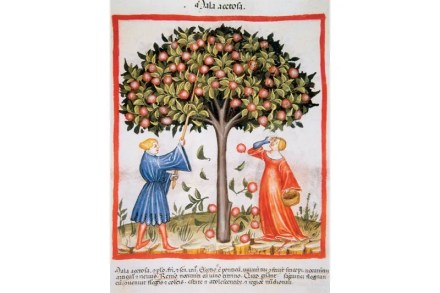
In Food for Life, Tim Spector’s book on the science of eating, the author gives the chemical makeup of a mystery food, listing more than 30 scary-sounding E numbers, sugars, acids and chemicals, before revealing that it is an… apple. Sally Coulthard’s book, The Apple, shows that it’s the apple’s complexity as well as its familiarity, that makes it the ideal punchline for Spector, and, for Coulthard, a perfect vehicle to carry the history of how we grow, trade, cook and eat together and take responsibility for each other and the environment (or not).

apple

Caroline Calloway wants to give you some advice

Caroline Calloway — “It” girl, Instagram phenomenon, scammer, grifter — wants to give you some advice. Except, like most things in Calloway’s world, it’s not that simple. What she actually wants is for Elizabeth Wurtzel, author of Prozac Nation (1994), to give you some advice. But there’s just one problem: Wurtzel is dead. No matter: Calloway is stepping in, updating Wurtzel’s unpublished advice guide with some of her own insights and social-media savvy. If this unbidden collaboration from beyond the grave sounds farfetched, that’s because it is. Elizabeth Wurtzel and Caroline Calloway’s Guide to Life is about as mad as you would expect from the self-published author of Scammers and no less extraordinary for it. Of collaboration, Calloway knows a fair bit.

Calloway
Turow

Scott Turow’s latest novel attempts to understand humanity

Scott Turow’s Presumed Innocent burst into the world in 1987, zinging out of bookstores into bestseller-dom like nobody’s business. It concerned Rusty Sabich, a lawyer who became a suspect in the case he was prosecuting. There were enough twists and turns to satisfy the most Daedalian of labyrinth-makers, and its longevity was demonstrated by its being adapted into a new, Jake Gyllenhaal-starring show last year on Apple TV+. Presumed Guilty’s title plays nicely on its predecessor’s, and also points toward this new book’s consideration of racism within the American justice system. Sabich is now an old man, nearing his eighties. But boy, is he active. We know this because he likes to canoe while stripped to the waist. He chops wood in the outdoors!

Lorne

A biography of Lorne Michaels that strays into hagiography

The gilt fell off Saturday Night Live’s reputational gingerbread almost from the moment of its inception. Long before the arrival of Bob Woodward’s Wired: The Short Life and Fast Times of John Belushi (1984) — its antihero dead at the age of thirty-three — whatever luster the show had possessed had been well-nigh obliterated by a tide of scuttlebutt. The girls were (apparently) all bulimics and anorexics. The guys were coke fiends and egomaniacs. Misogyny (exemplified by Belushi’s dislike of sketches written by women) and back-stabbing were endemic; drug dealers sat in on the writing sessions.

Why Europe needs to take the Putin threat more seriously

Russia’s war on Ukraine presages a dire future for all of Europe unless Vladimir Putin’s military is decisively defeated. That is the powerful and persuasive argument advanced in Keir Giles’s new book. To appreciate fully the importance of his contentions, you must acknowledge not only Giles’s own status as a supremely well-connected senior fellow at the famed Chatham House think tank in London but even more so the all-star cast of international military luminaries who have publicly endorsed his analysis: the now-retired US generals John Allen and Ben Hodges, UK general David Richards, Australian general Mick Ryan, plus former Estonian president Toomas Hendrik Ilves. Giles’s assertions thus should be taken with the utmost seriousness.

Giles

Evie Wyld’s latest novel is unsettling yet hopeful

Evie Wyld’s powerful fourth novel opens from the perspective of Max, a ghost who haunts the south London apartment where he lived with his girlfriend Hannah. A ghost story is new ground for Wyld, the multi-award-winning Anglo-Australian writer, but her signature traits are immediately evident — poetic observations of unusual details; a pervasive sense of grief and palpable trauma, leavened with a wry sense of humor (Max notes his "strong urge to file a complaint" about being a ghost); and an intricate plot that compels readers to delve into complex past events.

Wyld

The Einstein family atrocity

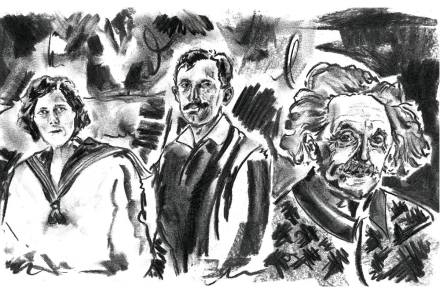
What’s in a name? Well, if it’s Einstein, quite a lot. For Roberto Einstein, it was to prove a devastating connection, even though he had lived in Italy all his adult life, was married to an Italian Christian woman, Nina, with whom he had two children who regularly attended church, and was father to two motherless nieces who were brought up Catholic. In 1944, the increasingly paranoid German occupation decided that Roberto’s whole family was Jewish and inextricably linked to the world-famous Nobel prizewinning scientist Albert Einstein, now in America and high on the Nazi death list. There were connections, of course. Roberto and Albert were first cousins — their fathers were brothers — and were both committed atheists.

Einstein
Gates

Bill Gates’s memoir offers an oddly revealing look into the Microsoft founder’s psyche

In 2024, a Swiss company called FinalSpark claimed to have built the world’s first computer processor fired by human brain cells. To do this, the company evidently took small samples of living brain tissue, and — so the press release says — “connected them to specialized electrodes to perform computer processing and digital analog conversions to transform neural activity into digital information.” Frankenstein undertones aside, the whole FinalSpark initiative raises the issue of how far a computer can be humanized, made not only to respond with factual accuracy but with something approaching emotional intelligence.

Masa Son: the world’s most reckless investor

For a few days in February 2000, Masayoshi Son was the richest person in the world. A risk-taker and showman, universally known as Masa, he had long been disdainful of Japan’s staid "salaryman" business culture and was riding the wave of dot-com mania. His company SoftBank, founded in 1981, had bet big on the growth of online shopping. The bullish mood didn’t last, and Masa slunk away from the limelight — but only for a while. A techno-optimist, the now sixty-seven-year-old has repeatedly reinvented himself, urging doubters to see beyond the immediate: "You’re limiting your field of vision to thirty years… Start bold and think 300 years ahead.

Masa

Ali Smith’s latest novel falls flat

"Gliff" is a word which can mean "a short moment," "a wallop," and "a post-ejaculatory sex act;" to "dispel snow," "to frighten," and to "escape something quickly." It’s "really excitingly polysemous," says one of Ali Smith’s characters. It’s certainly an apt title for a book which can’t seem to define itself. At its center are two children, Briar and Rose, who have been abandoned. Their mother is absent, caring for a sick sister, and their other responsible adult leaves to find her. The children exist in a stock dystopian world (people are surveilled by CCTV cameras and zombified by screens) with a twist: they repeatedly wake up to find that a red line has been painted around their house or camper van. They are on a list of "Unverifiables.

Gliff

Bill Clinton’s latest memoir sees him at his chirpiest — and most combative

In February 1974, the British prime minister Edward Heath, then facing one of his country’s cyclical economic crises, called a snap general election. The result was close; Heath’s Conservative Party won the popular vote but secured fewer parliamentary seats than the Labour opposition. After power-sharing discussions broke down, Heath resigned from office. A fifty-seven-year-old bachelor without a London home of his own, he lodged for the next several months at a small Westminster flat owned by his political secretary Timothy Kitson. The man who had served as his nation’s head of government for the previous four years was left with a typist, a single daytime detective and a part-time driver at his disposal.

Clinton

Will science lead us back to God?

After generations of treating the universe as mere matter to be bent to our will, it seemed inevitable that the future of humanity would be to merge with machines. Billionaires and tech utopians now predict a near future in which the human mind itself might be “downloaded” or transferred into a digital realm, allowing us to overcome death itself by slipping the bonds of our physical existence altogether. Modern-day prophets like Yuval Noah Harari proclaim that we have embarked on a second industrial revolution, though the product this time will not be machines or vehicles or powerful new weapons but human beings themselves. There’s a certain logic to this way of thinking.

science

Wrestling with Jordan Peterson

Jordan Peterson is one of those curious figures who has, thanks to the mysterious operations of the internet, been thrust into the limelight, willingly or not. While he has become a locus of hatred for certain left-wingers, thanks to his implacable attitude toward “woke” phenomena, in reality his supposedly controversial advice amounts to little more than that young people should work hard and take responsibility for their actions. Even the bolshiest socialist couldn’t really disagree. His 12 Rules for Life is a bestseller on both sides of the Atlantic, and he has a large and adoring fanbase.

Peterson

Cher should stick to what she knows best

The worst celebrity memoirists write first-person Wikipedia pages. Like Michelangelo carving a beautiful posterior out of Italian Carrara marble, the best celebrity memoirists edit their lives into tawdry yet moving epics. When they work, celebrity memoirs are the Warhols of American literature. When they fail, they’re the literary equivalent of a CVS receipt: boring and destined for the trash. Cher: The Memoir, Part One falls somewhere in between. It takes a miracle to reach Cher’s narrative peak. For more than a hundred pages, she details her childhood criss-crossing America as her mom marries and divorces man after man. I lost track of how many jerks Cher’s mother married, but according to Google, she married six different men (Cher’s heroin-addict biological father twice).

Cher

An insightful account of America’s decline

I wouldn’t have thought a book about America’s decline would cause me to laugh out loud, but having enjoyed its author Matt Purple’s work for years now (full disclosure: he’s a personal friend and former Spectator colleague), I should not have been the least bit surprised that his debut book is as funny as it is insightful. Decline from the Top: Snapshots from America’s Crisis and Glimmers of Hope is a veritable joy to read. Though he declares himself to be a “cranky conservative,” Purple’s humor and wit offer a diagnostic examination of the American condition that exudes warmth and obvious heartfelt concern for our nation’s wellbeing.

Purple
Lisa Marie

Lisa Marie Presley’s posthumous book exposes the horrors of celebrity

The title of this book may offer a clue to its prevailing tone. There’s a certain amount of showbiz gossip involved, but it is essentially a protracted rumination of the “What’s it all about, Alfie?” variety, with plenty of unflinching discourse on matters such as spirituality, depression, addiction and the precariousness of the human condition. “I wondered how many times a heart can break,” the authors write near the end of their tale of untold material privilege and wrenching emotional grief. All too often, is the inescapable answer. The book is freighted with a certain amount of woe from the start, because its principal author, Elvis Presley’s only child, herself tragically died in January 2023, aged fifty-four, due to weight-loss surgery complications.

Boyd

William Boyd’s latest novel is a smoothly gripping read

Gabriel’s Moon is William Boyd’s eighteenth novel, swiftly following last year’s The Romantic, which delightfully described the adventures of a man living through the nineteenth century in Europe. Though Boyd relates a smaller section of his new hero’s life here, many of his characteristic themes are fully at play: surveillance, deception, honor, love, art, fraud, real historical characters jostling with fictional ones, and relationships between mothers and sons. Essentially, this new book is a spy story, well within the lineage of John le Carré (complete with liberal ambivalence about duty to one’s country), and with skillfully handled layers of double-dealing.

Pat Barker dives into the first part of Aeschylus’ Oresteia

Emily Wilson, the distinguished translator of Homer, has remarked that Pat Barker’s The Silence of the Girls about the Trojan War is a distinctly feminist book. Renowned for her first world war Regeneration trilogy, Barker has now written The Voyage Home, a powerful novel about the first part of Aeschylus’ Oresteia. She takes the infrastructure of legend and invests it with brutal realism. Agamemnon’s return home to Mycenae after ten years of war is told entirely from the points of view of women. The narrator is Ritsa, Cassandra’s maid, her intimate “catch-fart.” (There is no reticence throughout about the use of crude colloquialisms.) Agamemnon the victor becomes the victim.

Barker
wood

Imperfections in wood lead to perfection in carvings

I am married to a wood snob. When we bought our house in 1999, my husband insisted that all the shelves (he is an antiquarian book dealer, so there are miles of them) should be made of “real” wood, with not an inch of Medium Density Fibreboard. The price made me squeal. But a quarter of a century on, while friends’ MDF shelving droops like cables between telegraph poles, ours remains beautifully strong and straight. Callum Robinson would understand why this matters, and he demonstrates it in his new book, Ingrained.