Book review

All heart, trust and gut feeling

From our UK edition

‘To me, he was sort of like a unicorn,’ writes Mrs Obama, looking back on her courtship days with Barack. He was affectionate, loving, secure and brainy. Very brainy. ‘He consumed volumes of political philosophy as if it were beach reading.’ He was laid back but his sense of purpose was strong. ‘Barack was serious without being self-serious. He was breezy in his manner but powerful in his mind. It was a strange, stirring combination.’ In a languid late-night moment, she asks a penny for his thoughts. ‘Oh, I was just thinking about income inequality.’ This book takes you right back to those days when we all fell in love with Obama.

Tudor England’s other Bess

From our UK edition

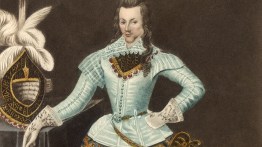
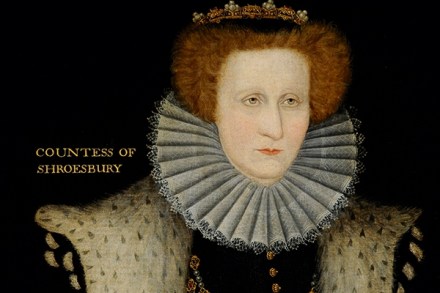
Bess of Hardwick — who died Elizabeth Talbot, Countess of Shrewsbury — was a remarkable and fascinating woman. The wife of four men, builder of four houses, and by her death the second richest woman in the country, the exceptional Bess has attracted many biographers. Kate Hubbard’s new book differs from these by examining Bess’s life as a ‘builder within the context of the Elizabethan building world’. It is, consequently, part biography and part building history, considering along the way the erection of Elizabethan prodigy houses, such as Longleat, Theobalds, Wollaton (‘a monstrous building, heavy and hectic, overcrowded with ornament, overwhelmed with glass’), and, above all, Bess’s Hardwick New Hall.

Lost cities in the sands

From our UK edition

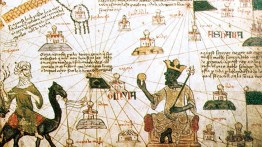
The main attraction in the Kenyan port of Mombasa is Fort Jesus, a vast, ochre-coloured bastion overlooking the Indian Ocean. Dominating a dusty skyline of palm trees, minarets and tower blocks, it was erected during the opening cannonade of European empire. In 1505 a Portuguese armada sacked and torched Mombasa, shortly after its ‘discovery’ by Vasco da Gama. The fort stamped the city as theirs. The coming of the Portuguese is sometimes considered the beginning of African history — a story not about Africa itself, but about bemused Europeans exploring and taming a ‘dark’ continent. And if we look at Africa before 1505, we find a world as blank as one of da Gama’s maps. This has led many to believe, as G.W.F.

The best-kept secret

From our UK edition

In the winter of 1820–1 a 29-year old woman named Anne Lister went to stay with some female friends who lived nearby. This was a visit between gentry families of the sort that Jane Austen describes in her novels. But there the resemblance ends. By the end of her stay Anne had flirted with four women and gone to bed with three of them. She then wrote a letter to another woman, swearing undying love. We know about Lister’s sex life from the lengthy daily diaries that she kept. She devised a clever code in which she described her sexual encounters in remorseless detail. The German writer Angela Steidele has used the diaries to construct a life of Anne Lister, and a fascinating story it is too.

Ruling the waves | 22 November 2018

From our UK edition

The sea — that wine-dark whale road, to mix Homeric and Anglo-Saxon evocations of it — has always held a special place in the human psyche. A site of both great peril and great opportunity, it has influenced our languages and our cultures, just as it has our economic systems and the contours of our many histories. A presence experienced almost as universally as the sun and the soil, the sea is one of human civilisation’s shared foundations. Andrew Lambert, an eminent naval historian, is a strong believer in the power of the sea to shape the destiny of nations.

Top of the Christmas lists

From our UK edition

The ‘gift books’ are out again, piled high in Waterstones, books that have only one reason to exist: to be given to people who don’t want them on Christmas Day. Having written one or two myself, I have seen the look on the faces of potential purchasers as they pick one up and leaf idly through its well-crafted pages. The look that says: whose Yuletide can we ruin with this? As ever, happily, there are a few genuinely decent books in among all the drivel and nonsense and tired jokes about Brexit and Donald Trump. The Spectator’s own Mark Mason is a long-serving truffler of trivial facts, which he often frames within some sort of weird travelogue: in one book he walked between every London underground station, just because he could.

Life, death and everything in between

From our UK edition

The most striking and difficult aspect of this novel is its incredible scale. How can a reviewer best discuss an enterprise containing a vast survey of life in Germany, Britain and the United States and the transformations of these societies from the end of the 19th century to the 1980s? Two volumes cover the experience of age and youth, the rise of the Nazis in Mecklenburg, the second world war, life and death in a small German town, the evolution of East German communities and the emergence of a Soviet state after the war. The New York Times appears in more or less every chapter, as the conveyer of the story of the Vietnam war and events in the city of New York itself. There are accounts of Mafia dealings and other street crimes.

The madness of Charles III

From our UK edition

Republicans hate to admit it, but the stability brought by the long reign of that most careful of monarchs Elizabeth II has helped Britain manage the decline from empire to middle-ranking power surprisingly well. As the Treason Act of 1351 is no longer in force, and to ‘compass or imagine’ the death of the sovereign no longer carries the death penalty, I can state the obvious. Her Majesty is 92. She is entering her last days as Brexit threatens the peace in Ireland and the union with Scotland, and divides England and Wales into hostile camps. A vigorous PR campaign is underway to persuade us that now is not the worst possible moment for her zealous and under-educated son to succeed. The Prince promised the BBC that he would stop interfering in politics when he became king.

Messing about on the river

From our UK edition

The title of Matthew Dennison’s new biography of the man who wrote The Wind in the Willows appears to nod to another children’s classic of the Edwardian period. J.M. Barrie subtitled Peter Pan — first staged in 1904, four years before the publication of Kenneth Grahame’s book — ‘The Boy Who Wouldn’t Grow Up’, and once declared: ‘Nothing that happens after we are 12 matters very much.’ It is Dennison’s contention that for Grahame the clock stopped even earlier.

No shrinking violet

From our UK edition

‘I have fallen in love many times in my consulting room,’ writes the psychotherapist Jane Haynes. ‘I do not mean that I want to have an explicit sexual relationship,’ she clarifies. That said, she describes herself as the Desdemona of the consulting room, falling in love as she listens to ‘someone share the pity of their history’. And like Othello’s stories that titillated Desdemona, Haynes’s narratives of her and her patients’ painful lives are compelling, if passing strange, particularly given that her profession is usually reticent about what goes on behind closed doors between shrink and shrunken.

The fabric of human identity

From our UK edition

The Romans invoked Fortuna, the goddess of luck, to explain the unexplainable; fortune-tellers study tea leaves to predict the unpredictable. In Blueprint: How DNA Makes Us Who We Are, Robert Plomin defies the ancients and the mystics, promising that your fortune can be predicted and explained by your genes. Plomin is a psychologist who built his scientific reputation on twin and adoption studies of intelligence, academic achievement and mental health problems.

The road not taken | 25 October 2018

From our UK edition

In the 1970s, when Mark Kermode first picked up an instrument, the UK record business was a very different place. There were five weekly music papers — NME, Sounds, Melody Maker, Record Mirror and Disc. Around 15 million people tuned into Top of the Pops every Thursday; Radio 1 reached more than 20 million listeners a week, and chart 45s could sell 500,000 copies. Today, the idea of schoolchildren saving up their pocket money to buy the latest single feels as if it has long since gone the way of other formerly popular activities such as stamp collecting and origami. The times, as Dylan almost remarked, they’ve been a-changin’. ‘As a teenager, I wanted to do two things,’ says Kermode. ‘To become a pop star, and to watch movies.

Highway to hell

From our UK edition

A lingeringly strange atmosphere hangs about Benjamin Wood’s third novel, in which the settings and paraphernalia of a new wave of British weird fiction — old children’s TV series, rustic bloodletting, the starkness of the northern landscape — encroach steadily on a retrospective story of childhood murder and deceit. The setting is northern England in the early 1990s, as the young Daniel Hardesty, a bookish 12-year-old, embarks on a road trip to Yorkshire with his estranged dad Francis, a jobbing stage carpenter, philanderer and liar. They’re on their way to the set of The Artifex, the sci-fi TV drama on which Francis works and with which his son is obsessed.

Family mysteries

From our UK edition

Maggie is sitting alone in the park when she’s approached by Harvey, who introduces himself as a recruiter for MI5. This is the starting point of Mick Herron’s This is What Happened (John Murray, £16.99). The company Maggie works for is under investigation as a possible threat to national security. She takes on a task, to feed a virus into the company’s computer network, but during this operation she accidentally kills a security guard. Harvey places her in a safe house. No windows, a locked door, no television, no internet, no way of knowing what’s going on beyond her room. Years pass. Harvey visits now and then, telling her the country has descended into anarchy. They have sex.

Outpourings of the heart

From our UK edition

The numbers invite awe: three billion beats in a lifetime; 100,000 miles of vessels. But on the hospital floor, wonder is often in short supply. Doctors forget how intimate their examinations and investigations can be. Stethoscope to chest. Order a blood test. I remember on a morning ward round at medical school, our consultant wanted to check that the oximeter was working (a device which measures heart rate and blood oxygenation through the nail bed). He asked a harassed junior doctor to present her forefinger. The screen’s digits betrayed her stress levels. She was clinically tachycardic. Her pulse was so fast it would have been worrying had it been the patient’s. I have not forgotten this uninvited invasion of her heart.

A remarkable show of devotion

From our UK edition

On 13 September 1964, at the age of 42, Philip Larkin began writing to his mother Eva (his ‘very dear old creature’) by taking stock: Once again I am sitting in my bedroom in a patch of sunlight, embarking on my weekly task of ‘writing home’. I suppose I have been doing this now for 24 years! on and off, you know: well, I am happy to be able to do so, and I only hope my effusions are of some interest to you on all the different Monday mornings when they have arrived. A great deal of what is characteristic about Letters Home is evident here.

Opposites attract

From our UK edition

‘Marianne had the sense that her real life was happening somewhere very far away, happening without her, and she didn’t know if she would ever find out where it was and become part of it.’ This is the most frustrating part of being alienated and young. You hope that there’s a better life in store for you but you can’t yet bank on it. Sally Rooney appeared two years ago with Conversations with Friends and has rightly been fêted as one of the most important writers of her generation. The question of generation matters because she’s writing about young people. Both novels feature protagonists who are undergraduates in Rooney’s own Dublin.

The coming of the Messiah

From our UK edition

England has been home to three great composer-entrepreneurs since 1700: Benjamin Britten in the 20th century; Arthur Sullivan in the 19th; and George Frederick Handel in the 18th. The operatic landscape they encountered was relatively fallow, yet each cultivated his patch of earth, produced works of astonishing originality and impact, and revolutionised both the art form and the country’s opera industry, at least for a time. Handel was the most incongruous of the three, this gruff German son of a barber-surgeon, with heavily accented English who, aged 26 and following the phenomenal success in London of his opera Rinaldo, found himself parachuted into the centre of British court and theatrical life.