Book review

William Nicholson: Catalogue Raisonné of the Oil Paintings by Patricia Reed

From our UK edition

A pleasingly tactile canvas-like cover adorns this heavy book and proclaims its purpose; the boldly brushed illustration is a detail from ‘Mauve Primulas on a Table’ painted in January 1928 when the artist was in his mid-fifties. He wrote of a ‘painting orgy’ and how he suffered ‘tennis-elbow from holding my brush for 8 hours solid’. Patricia Reed’s catalogue note adds, ‘the work is a synthesis of the motifs that interested him at this moment: a tilted picture plane, textured cloth, penumbrated shadows, a cropped bowl and a pair of open scissors’.

Steve Jobs: The Exclusive Biography by Walter Isaacson

From our UK edition

America has always idolised its entrepreneurs, even when it has proved a thankless task — if you can glamorise Bill Gates, you can glamorise anyone. Especially Steve Jobs, whose death from pancreatic cancer has been greeted as the loss of Mammon’s Messiah. Is any of this justified? Well, yes and no. Jobs did as much as anyone, with the possible exception of Gates, to bring digital change into the mainstream, and this makes his biography as much a history of a digital revolution as a personal story. It’s this fittingly binary quality that makes Walter Isaacson’s biography so worthwhile, since Jobs himself emerges from it as an unattractive, even repellent character. Jobs grew up in the engineering belt just south of San Francisco which became Silicon Valley.

My Dear Hugh: Letters from Richard Cobb to Hugh Trevor-Roper and Others edited by Tim Heald

From our UK edition

Richard Cobb had many good friends, among them Hugh Trevor-Roper, who kept letters, and so made this selection possible. There must be many more letters, since the author was an inveterate correspondent at least from the 1930s. The wartime ones would be of greater historical interest than these, which are nearly all post-1967, many of them concerned with the essentially piddling subjects of university politics, pupils and personalities. Of course, these are foie gras and the sound of trumpets to persons connected with such things at Oxford and Cambridge, but the admirable publisher must be aiming at a larger audience than that, ignoring Cobb’s own repeated assertion that ‘nothing ever happens’ in Oxford. He was not your average don.

Martin Amis: The Biography by Richard Bradford

From our UK edition

Where’s Invasion of the Space Invaders? That’s what I want to know. Only by consulting Richard Bradford’s bibliography would you know that in 1982 Martin Amis published a book — subtitled ‘An Addict’s Guide’ — on how to win at Space Invaders, and that he (presumably) hasn’t let it come back into print. An entire book! That seems to me worthy at least of a paragraph in the body of a 400-odd-page writer’s biography. It tells you something, doesn’t it? I mean, apart from the fact that Martin Amis once liked Space Invaders, which is amusing if not crucial. Anything a writer disowns is of interest: particularly if it’s a frivolous thing and particularly if, like Amis, you take seriousness seriously.

Bookends: The showbiz Boris Johnson

From our UK edition

Amiability can take you a long way in British public life. James Corden is no fool: he co-wrote and co-starred in three series of Gavin and Stacey, and wowed the National Theatre this summer with a barnstorming performance in One Man, Two Guvnors. But there’s no doubt that his Fat Lad Made Good persona, and his almost puppyish desire to please, have contributed to a popularity that other, more guarded performers can only envy. His memoir, May I Have Your Attention, Please? (Century, £18.99), has barrelled straight into the top ten bestsellers list. It has loads of energy and some good stories. But Corden is only 33. He simply hasn’t lived enough life to fill 300 pages.

Who Killed Hammarskjöld? by Susan Williams

From our UK edition

When I was a Reuters trainee, long hours were spent in Fleet Street pubs absorbing the folklore of journalism from seasoned veterans. One popular story concerned the hapless correspondent sent to verify that Dag Hammarskjöld, head of the United Nations, had safely landed at Ndola airport in Northern Rhodesia on his way to talks with separatist Congolese leader Moise Tshombe. A plane landed, the police confirmed it was the UN secretary general, the hack duly filed his story. Trouble was, the disembarking white man was someone else. Hammarskjöld was dead, killed as his DC-6 crashed on night-time approach to Ndola. Rival reporters, drinking at a nearby hotel, heard the news and rushed to correct their stories.

The Letters of Samuel Beckett: Volume II, 1941-56, edited by George Craig, Martha Dow Fehsenfeld, Dan Gunn and Lois More Overbeck

From our UK edition

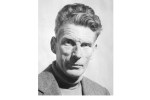
The die was miscast from the start, more’s the pity. As we reach the halfway point in this massy four-volume edition of the letters of Samuel Beckett, I cannot stifle a small sigh or whimper, of the type exhaled by one of those Beckett characters buried up to their necks. And there is no one to blame but the author of the letters. For it was Beckett himself who in his letter of 18 March, 1985, gave his blessing to Martha Fehsenfeld ‘to edit my correspondence in the sense agreed on, i.e. its reduction to those passages only having bearing on my work’. So the tussle began and continued long after the author’s death four years later.  What did ‘only having bearing on my work’ mean exactly?

The Golden Hour by William Nicholson

From our UK edition

He’s got a winning formula, this writer, and he’s sticking to it. Set the action over seven days, in and around the Sussex town of Lewes, with occasional day trips to London; write about what you know (Sussex, script-writing, being 54, long marriages, worrying about your post-university children as well as your aged parents with Alzheimer’s, career anxiety, dinner-party anxiety); keep the chapters short (never more than ten pages) and avoid slabs of prose, so the pages are broken up into highly readable short paragraphs and dialogue; write in the present tense; and, within each chapter, keep a strict observance of the Unity of Person, so that the reader steps inside the mind of one character and sees the world solely through his or her eyes.

Georgette Heyer: Biography of a Bestseller by Jennifer Kloester

From our UK edition

Those of us who have spent an embarrassing number of hours immersed in the Regency novels of Georgette Heyer have learned to live dangerously. We have been overturned in high perch phaetons, held up innumerable times by highwaymen, been kidnapped and spirited across the Channel, lost several fortunes at Faro or Bassett and have even witnessed and survived every moment of the Battle of Waterloo. The same cannot be said of the author, whose life was somewhat less eventful. Heyer was a creature of habit and for many years followed a regular annual routine: two novels published, one detective story and one Regency romance, a summer holiday in the same hotel in Scotland, with golf for her husband and son, a dispute with her publisher or agent and a real or imagined crisis in her finances.

Pakistan: A Personal History by Imran Khan

From our UK edition

Imran Khan’s Pakistan: A Personal History describes his journey from playboy cricketer through believer and charity worker to politician. His story is interwoven with highlights from Pakistan’s history. At times he seems to conflate his own destiny with that of Pakistan, and at others to be writing a beguilingly honest personal account. Khan describes how youthful hedonism eventually gave way to faith. His cricketing life led him to realise that talent and dedication were no guarantee of success. In the end, he says, it comes down to luck. ‘Over the years I began to ask myself the question — could what we call luck actually be the will of God?’ Khan’s religious awakening was further stimulated by physical vulnerability.

The Thread by Victoria Hislop

From our UK edition

Oh what a tangled web she weaves! Victoria Hislop’s third novel, the appropriately titled The Thread, is pleasingly complex. The story traces several generations of a fictional Greek family called Komninos against the historical backdrop of the rise and fall of Greece’s second city, Thessaloniki, in the 20th century. To make things even knottier, most of the characters have some connection to the textile industry, and while for some this is booming, for others it remains a labour of love. The most fascinating element of the book develops out of the history of Thessaloniki itself. Historically, the city has an impressive heritage at stake.

A Bigger Message: Conversations with David Hockney by Martin Gayford

From our UK edition

Like his contemporary and fellow Yorkshireman, Alan Bennett, whom he slightly resembles physically, David Hockney has been loved and admired throughout his lifetime. He painted one of his greatest works, ‘A Grand Procession of Dignitaries in the Semi-Egyptian Style’ in 1961 while still at the Royal College of Art. He has dazzled, surprised and often upset the world of art ever since. Picasso aside, he is the wittiest modern painter, in the sense not just of being funny, but intelligent; a whole history of Western art is both contained and extended by his originality. For example, it was both funny, and in the 1960s brave, to apply Boucher’s soft pornography to bums as well as bosoms.

The Price of Civilization by Jeffrey Sachs

From our UK edition

Half a century ago J.K. Galbraith’s The Affluent Society changed the political consciousness of a generation in the English- speaking world and beyond. It vividly re-established in the minds of civilised men and women the paradox of private affluence in a sea of public neediness — for which, as Matthew Arnold reminds us, Cato reported by Sallust had a name in his description of ancient Rome: ‘publice egestas, privatim opulentia’ (public poverty, private opulence). From this premise he made the case for the mixed economy, one in which the genius and power of market forces is balanced and harnessed by effective government in promoting public goods and correcting market failures — including gross inequality — that mar unconstrained laissez-faire.

An intemperate zone

From our UK edition

Two years before the outbreak of the first world war, a Royal Navy officer, addressing an Admiralty enquiry into the disturbing question of lower-deck commissions, ventured the cautionary opinion that it took three generations to make a gentleman. It is hard to know exactly what he meant by that endlessly morphing concept, but if it bore any resemblance to the historical compound of avarice, bad faith, dynastic ambition and family selfishness that dominates the pages of Adam Nicolson’s dazzling narrative, then the one consoling mercy is that it has always taken a good deal less than three to unmake one.

Day of reckoning | 3 September 2011

From our UK edition

No one could say that we didn’t have warning of these events in the most specific terms. A month before 11 September 2001, the President’s daily intelligence brief was headed ‘Bin Laden Determined to Strike in US.’ Other official warnings from this time and earlier were so specific, and so specifically ignored, that a former National Security Adviser at the White House, Sandy Berger, would on four separate occasions in 2002 and 2003 abstract official top secret documents from the National Archives by stuffing them in his socks. (Because of Berger, we now don’t know what these warnings consisted of). There were any number of commentators, too, who saw exactly what was coming.

Friendships resurrected

From our UK edition

A fact which often surprises those who pick up the Bible in adulthood, having not looked at it for years, is how very short the stories are. Adam and Eve, Noah’s Ark, the Feeding of the Five Thousand — in spite of their familiarity they are raced through in just a few lines. It is, however, perhaps the very terseness of the Bible that has caused at least as much ink as blood to be spilled in its cause; had it spelled the answer out, for instance, medieval scholars could never have whiled away so many jaw-droppingly fatuous hours in wondering how many angels could dance on the head of a pin, and other pressing questions. In his new novel Richard Beard draws attention to this brevity and uses it as a springboard.

Thus do empires end

From our UK edition

‘This book is a chronicle of one day in the history of one city.’ As first sentences go, that one is hard to beat — particularly given that the ‘one day’ is the last day of the Soviet Union, the city is Moscow and the author, an Irish journalist, was there and knew most of the principal actors. ‘This book is a chronicle of one day in the history of one city.’ As first sentences go, that one is hard to beat — particularly given that the ‘one day’ is the last day of the Soviet Union, the city is Moscow and the author, an Irish journalist, was there and knew most of the principal actors.

The enemy within | 3 September 2011

From our UK edition

The most telling figure in Carey Schofield’s book on the Pakistan army is Faisal Alavi, a major general who was murdered in November 2008. The most telling figure in Carey Schofield’s book on the Pakistan army is Faisal Alavi, a major general who was murdered in November 2008. As head of Pakistan’s special forces, Alavi found himself in a bitter struggle against influential military opponents in the Pakistan army. They favoured secret deals, paying large sums to the Taleban leader Baitullah Mehsud so that his supporters should not target the army. Alavi was by contrast desperate to attack the Taleban, and made no secret of this when on a visit to SAS headquarters at Hereford in 2005.