Book review

Tori rebel

In her new book, the singer-songwriter Tori Amos advises aspiring artists to be wary of those who would lead them astray. ‘Most people cannot raise their hand and say, “Your expression, your piece, your song, your art, is not to my taste; in fact I have an aversion to it, but I think it’s brilliant.” And that means that... some people judge something to be good or not good by what they personally like. Beware of this, I say to all artists.’ The simple sentiment encapsulates why so much creative potential is stifled before it can flourish. An artist whose principal goal is to please an imagined audience, or to adapt his or her work to critical trends, is no kind of artist at all.

tori amos

Can we believe Ilhan Omar’s autobiography?

Political autobiographies are written to conceal, not to reveal. They come in two eminently pulpable forms. One is the twilight apologia of the retired or defeated politician, the other the resumé-polishing pitch of the rising star. Which category Ilhan Omar’s autobiography falls into depends on whether you, like her, think she’s a cruelly traduced beacon of hope in a land of benighted bigotry; or whether, as one investigative journalist concluded, she has committed the ‘worst spree of felonies by a congressperson in history’.‘I’m not here to undo or rewrite history,’ Omar tells us. But the truth slips away from her like a greased pig.

ilhan omar

Going both ways

Probably most of the world is bilingual, or more than bilingual. It is common in many countries to speak a national language alongside an international lingua franca such as Arabic, Spanish or English. On top of that, there may be a mother tongue that is not the same as a national language. A Nigerian, for instance, may be at once one of the million speakers of Berom, one of the 64 million speakers of Hausa and one of the 1.13 billion speakers of English. The same pattern is repeated across the globe.

bilingual brain

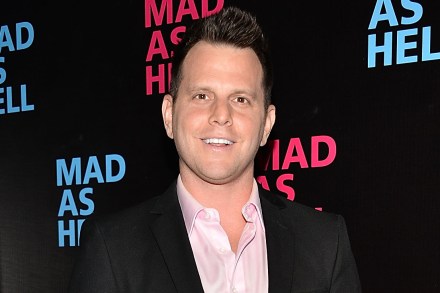
Dave Rubin’s ode to the so-called ‘independent thinker‘

Dave Rubin loves to talk about ideas. In his new book, Don't Burn This Book, he tells the reader:‘I want you to walk into a bar and order yourselves a full-bodied opinion. I want you to get absolutely wasted on facts until 3:00 a.m., and then, when you’re just about ready to pass out, I want you to get another large glass of reality and chug it.’It's telling that Rubin suggests that we order the opinion before the facts. Would it not make more sense to suggest, say, blending a cocktail of facts into an opinion? Rubin’s advice seems backwards to me.But it would be wrong to take this suggestion seriously. Don't Burn This Book is not a serious work. It is, in fact, extremely lazy, bearing all the hallmarks of a project that was knocked together over a few wet weekends.

dave rubin

Around the world in 49 days

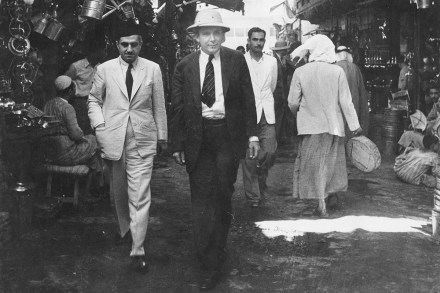
This article is in The Spectator’s March 2020 US edition. Subscribe here. No one remembers Wendell Willkie. If you don’t believe me, mention him as a man worth looking up at your next cocktail hour. Then watch as even well-informed acquaintances wonder when, exactly, you started taking an interest in adult-entertainment performers or bothered to locate the inspiration for Arrested Development’s hit ‘Mr Wendal’. Even the learned (and let’s throw in friends who subscribe to the New Yorker to even things out), will struggle to recall that Willkie was not only referred to as ‘Private Citizen Number One’ by FDR.

wendell willkie

Birth of a nation

This article is in The Spectator’s March 2020 US edition. Subscribe here. The 20th century was a crowded century. Event piled upon world-historical event to produce a mass of history so heavy with the prospect of annihilation and so alive with the possibilities of individual emancipation that one of humanity’s most extraordinary accomplishments, the constitution of a liberal democratic republic on the Indian subcontinent, went largely unnoticed in the West. The significance of India’s birth was, however, not lost on a colonial world clamoring for freedom, or African Americans striving to unlock the full promise of America. India’s founding on August 15, 1947, W.E.B. DuBois rhapsodized, would be ‘remembered as the greatest historical date of the 19th and 20th centuries’.

india

Nordic noir

From our UK edition

Anyone mildly interested in the second world war probably knows two things about our wartime alliance with Norway, following its invasion by Germany. One is the great Christmas tree that appears in Trafalgar Square every year, a gift from the Norwegian government in recognition of that alliance. The other is the daring raid to sabotage the Norwegian heavy-water plant essential to the German attempt to build an atomic bomb, an operation subsequently filmed as The Heroes of Telemark. But few are likely to know that the idea of an annual tree gift probably originated with two Norwegians manning one of the many SIS coast-watching stations in occupied Norway from which German shipping was monitored. The men lived for months in a sheepfold, unable to wash or change their clothes.

Donald Trump and the art of the lawsuit

When Donald Trump proffered advice to then-UK prime minister Theresa May in her Brexit negotiations, he told her to sue the EU. It might have seemed a laughable throwaway line; but suing is second nature to Trump. More than that, it’s a whole way of life. Just to what extent the litigation is the man is comprehensively detailed in Plaintiff in Chief: a Portrait of Donald Trump in 3,500 Lawsuits. James D. Zirin, respected lawyer, legal commentator and broadcaster as well as a  litigator himself in federal and US courts, delivers a fascinating insight into Trump’s legal history — exposing his motives and methods, psychology and morals.

lawsuit

Race to the finish

This article is in The Spectator’s October 2019 US edition. Subscribe here. ‘I have observed,’ Joseph Addison wrote in 1711 in the first article in the first issue of the first version of The Spectator, ‘that a Reader seldom peruses a Book with Pleasure, ’till he knows whether the Writer of it be a black or a fair Man, of a mild or cholerick Disposition, Married or a Batchelor, with other Particulars of the like nature, that conduce very much to the right understanding of an Author.’ Thomas Chatterton Williams has earned a reputation as a tough, thoughtful and genuinely interesting commentator on race.

chatterton

When the Grand Design met ‘le Grand Non’: Britain in the early 1960s

From our UK edition

Peter Hennessy is a national treasure. He is driven by a romantic, almost sensual, fascination with British history, culture, and the quirky intricacies of British democracy and the government machine. His curiosity is insatiable, his memory infinitely capacious. His innumerable contacts confide in him freely because his discretion is absolute. His tireless work in the archives is spectacularly productive. His generosity towards his students is boundless. His books — 14 at the last count — are gossipy, erudite, discursive, intensely personal: not your conventional academic history, but all the better for that. His latest book — the third in a history of post-war Britain — ranges over the early 1960s.

Something in the air: Broken Ghost, by Niall Griffiths, reviewed

From our UK edition

Broken Ghost begins in the aftermath of a rave on the shores of a mountain lake above Aberystwyth, with three partygoers gathered in the dawn light, waiting for one last buzz off a tab of ecstasy. At that moment a strange glow appears in the morning air, in the middle of which seems to be a shadow in the shape of a woman. A hallucination? Not if all three are seeing the same thing. They barely know each other, but they walk away from that precipice changed by their shared vision. And change is what they need: Adam is a recovering addict trying to piece his life back together; Emma is a single mother living hand to mouth; Cowley is broke and trapped in a cycle of violence by the traumas in his past.

When Decca records were part of everyday life

From our UK edition

In 1929 in America, Dashiell Hammett published his debut hardboiled novel Red Harvest, over in Paris Buñuel and Dalí began showing their film Un Chien Andalou at a small cinema, while in Britain the fledgling Decca Record Company opened for business. Issued to mark 90 years of the label’s existence, this large format, fully illustrated volume benefits greatly from access to its extensive archive of the days when Billie Holiday, Kathleen Ferrier, Tom Jones, Pavarotti, Bing Crosby, Buddy Holly, Herbert von Karajan, Billy Fury, Marianne Faithfull, George Formby, Slaughter & the Dogs, Georg Solti, Benny Hill, Winston Churchill and even the Playboy Club Bunnies appeared on Decca or its subsidiaries.

If only Georges Simenon had been a bit more like Maigret

From our UK edition

Georges Simenon, creator of the sombre, pipe-smoking Paris detective Jules Maigret, pursued sex, fame and money relentlessly. By the time he died in 1989, he had written nearly 200 novels, more than 150 novellas, several memoirs and countless short stories. His demonic productivity and the vast sales and fortune it brought him were matched by a vaunted sexual athleticism. Simenon claimed to have slept with 10,000 women. (‘The goal of my endless quest,’ he explained, ‘was not a woman, but the woman’ — which is French for wanting lots of it, very often.) It was not love-making, but a desire for brute copulation that drove Simenon to demand sex at least once daily of his wives, secretary and housemaid-mistresses.

Taking pride in household chores really can ease depression

From our UK edition

There are many books about what it’s like to live with mental illness and the aftermath of child sexual abuse. Most of them, though, fall into that deeply off-putting category of ‘misery memoir’: greyscale covers and cloying titles such as ‘The Child Who Everyone Hurt’ and ‘When the Darkness Never Lifts’. You’re unlikely to want to read 300-odd pages of pain porn when healthy, let alone find yourself looking forward to the next page if, like me, you end up reading the book when you’re depressed too. I Never Said I Loved You isn’t like that. It’s funny.

Did Christianity make the western mind — or was it the other way round?

From our UK edition

Nobody can accuse Tom Holland of shying away from big subjects. Dominion is nothing less than a history of Christianity with an underlying theme. The subtitle says it all. It is dedicated to the idea that Christianity has formed the western mind, not just in its moral and intellectual conventions but in their opposites, such as atheism or the natural sciences. An argument so paradoxical provokes thought, whether one agrees with it or not. This one is sustained with all the breadth, originality and erudition that we have come to associate with Holland’s writing. The technique is a sort of literary pointillism. An incident, an image, an individual, a place are presented as capturing the spirit of an epoch.

A hazardous crossing: The Man Who Saw Everything, by Deborah Levy, reviewed

From our UK edition

Serious readers and serious writers have a contract with each other,’ Deborah Levy once wrote. ‘We live through the same historical events, and the same Pepsi ads. Writers and readers, nervously sharing this all too fluid world, circle each other to find out what the hell is going on.’ Figuring out what the hell is going on within the fluid worlds of Levy’s fiction is not always straightforward. While other authors are increasingly drawn to autofiction, for Levy, uncertain times, it seems, call for uncertain realities. The characters in The Man Who Saw Everything shape-shift, and time bends back and then twists upon itself again.

Spicing up local history —with a giant, a dragon and an ancient yew

From our UK edition

How interesting is local history? The history of my Cotswold village — recently celebrating the centenary of the Armistice with a well-researched exhibition and booklet on events in the Sibfords in the first world war — fascinates me, but I am not sure that people from other parts of Oxfordshire, let alone further afield, would agree.  This is the perennial problem of the local: unless it offers, in microcosm, insight into larger themes and topics, an element of ‘so-whatness’ colours the reader’s response. Christopher Hadley’s Hollow Places takes its inspiration from a mysterious stone let into the wall in his Hertfordshire village.

We should all share the blame for the Rohingya tragedy

From our UK edition

My local shop in Yangon was owned by a retired army officer and his wife and guarded by their handsome coal-black dog. When I asked the name of the hound the man smiled and said ‘Kalar’, before enquiring if I knew the meaning of the word. I did. Kalar is a racial slur, employed originally by the Burmese to describe the darker-skinned immigrants from India brought to Burma by the British as cheap labour in the colonial era. More recently, the word has come to be used as a derogatory reference to Burma’s Muslims, and especially the reviled Rohingya minority in the far western state of Rakhine.

Novel explosives of the Cold War

From our UK edition

One autumn night in 1991, I stood on the rooftop terrace of a tacky villa in Saranda once owned by Albania’s Stalinist dictator Enver Hoxha, beside three elderly former SOE officers who were returning to Albania for the first time since 1945. In an image that summed up the waste and the horror of the Cold War, David Smiley stared out over the dark water at the lights of Corfu, from where, on a similar night in October 1949, he had sent a group of dissidents, code-named the ‘Pixies’, to launch an insurgency — and wiped his eye in silence. Smiley’s men had been ambushed as they landed, and then killed, on the tip-off from Kim Philby, the highest Russian agent to infiltrate British Intelligence, and in charge of anti-communist espionage.